Scorata scores summarize analyzed review evidence on a 1–5 scale; they are not laboratory measurements or a simple average of customer star ratings. Feature scores summarize the reviews covering that feature. The overall score averages feature scores within each review, then combines review averages. When both expert and customer evidence are available, those two groups receive equal weight. Products can have different review coverage, so small score gaps do not establish a winner.
Recommendations prioritize important features for the category, with a score of at least 3.5, a gap of at least 0.25 points and at least two supporting reviews per product. Features with widely varying scores or broad connectivity contexts are excluded from recommendations. These safeguards do not establish statistical significance.
Quick verdict
What each product is best for
The review evidence points to a tradeoff: Sound quality and Microphone noise reduction versus Included accessories. Choose according to which strengths matter more to you; the overall score alone does not settle that choice.
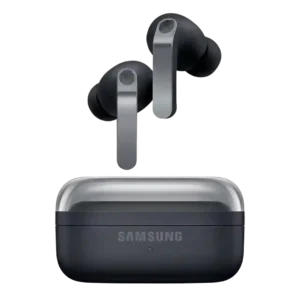
Choose Samsung Galaxy Buds 4 Pro for Sound quality and Microphone noise reduction.
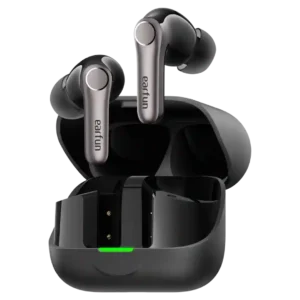
Choose EarFun Air Pro 4 Plus for Included accessories.
Why these recommendations?
Samsung Galaxy Buds 4 Pro
Where It Has the Edge
Sound quality is 4.5 vs 4.3. Sound quality is the standout strength. Reviewers repeatedly describe the Buds 4 Pro as detailed, clean and engaging,...
Microphone noise reduction is 4.6 vs 3.3. Background-noise rejection during calls is a major strength, especially for traffic, wind and steady environmental noise. A few...
Lossless audio support is 4.5 vs 3.4. Compatible Samsung playback can deliver very high-resolution audio, and reviewers say it handles lossless source material convincingly. The...
EarFun Air Pro 4 Plus
Where It Has the Edge
Included accessories is 4.2 vs 2.0. The accessory package is simple but useful, especially the unusually broad selection of ear-tip sizes. Reviewers liked having...
Samsung Galaxy Buds 4 Pro4.2 overall score
EarFun Air Pro 4 Plus3.9 overall score
Compare features
Scores are out of 5. Missing scores mean missing review evidence, not a missing feature.
Scored on both products
Performance
Sound quality
Samsung Galaxy Buds 4 Pro
4.5
EarFun Air Pro 4 Plus
4.3
Details and evidence for Sound quality
Samsung Galaxy Buds 4 Pro
Sound quality is the standout strength. Reviewers repeatedly describe the Buds 4 Pro as detailed, clean and engaging, with several calling them among Samsung’s best-sounding earbuds.
Sound quality is the product's strongest consensus win, with rich, detailed and unusually mature performance for the price. A few reviewers wanted more refinement, but many thought it competed surprisingly close to much more expensive earbuds.
Details and evidence for Microphone noise reduction
Samsung Galaxy Buds 4 Pro
Background-noise rejection during calls is a major strength, especially for traffic, wind and steady environmental noise. A few tests found occasional pickup quirks, but the overall pattern is strongly positive.
Microphone noise reduction works well in ordinary indoor or moderately noisy settings, but heavy wind and busy streets expose its limits. Background suppression can also make the user's voice quieter or less stable.
Compatible Samsung playback can deliver very high-resolution audio, and reviewers say it handles lossless source material convincingly. The benefit is tied to Samsung’s codec and device support rather than universal Bluetooth lossless.
Lossless-oriented codec support is impressive for a budget model, but reviewers were careful about its limits. It can improve the available wireless quality with compatible devices without turning Bluetooth into truly wired lossless playback.
Details and evidence for Active noise cancellation
Samsung Galaxy Buds 4 Pro
ANC is widely considered strong and useful, particularly against steady travel, fan and city noise. It is not universally class-leading, and some reviewers report weaker performance, fit sensitivity or occasional ANC glitches.
Noise cancellation is the main point of disagreement. Some reviewers found it impressively effective on steady low-frequency noise, while several others called it average, confusing to configure, or clearly behind the strongest rivals.
The presentation is commonly described as open and spacious for true-wireless earbuds. Reviewers hear a broad sense of width that helps music feel less congested.
The stage is generally wide and spacious for budget earbuds, helping music feel open and immersive. A few reviewers still found it narrower than premium alternatives or wider than it is deep.
Spatial audio is polarizing. Some users find head-tracked 360 Audio immersive and excellent, while others call it gimmicky, disruptive or not meaningfully different from standard playback.
There is no dedicated spatial-audio processing, but reactions to that omission are mostly mild. Some reviewers missed the feature, while others felt the natural width and depth made artificial spatial modes unnecessary.
Details and evidence for Noise isolation (passive)
Samsung Galaxy Buds 4 Pro
Passive isolation depends heavily on getting the right seal. A good fit can block a meaningful amount of outside sound, while poor tip matching noticeably weakens isolation and ANC.
Passive isolation is a useful foundation for ANC. Reviewers who discussed the seal found it capable of blocking a fair amount of outside sound even before electronic cancellation is applied.
Bass is generally deep, energetic and well controlled without burying the rest of the mix. A smaller group finds the low end too boomy or colored and prefers dialing it back with EQ.
Bass is one of the sound profile's strengths: deep, punchy and generally well controlled without swamping the mids. A minority found the default low end a little thick or less forceful than expected.
Details and evidence for Audio-video sync accuracy
Samsung Galaxy Buds 4 Pro
Latency is generally manageable and a gaming mode can reduce delay, but one reviewer found the highest-quality audio mode could create noticeable lip-sync mismatch. The experience therefore depends on the selected mode.
Low-latency and gaming performance is generally strong. Game Mode often brought audio close to the action, although Bluetooth still leaves enough delay or directional imprecision to limit competitive use.
Details and evidence for Frequency response accuracy
Samsung Galaxy Buds 4 Pro
Most reviewers hear a balanced, coherent tuning, especially after minor EQ adjustment. A few object to the bass-to-treble balance and describe the stock response as somewhat off.
The default tuning is usually described as balanced, warm and natural rather than aggressively V-shaped. A few reviewers heard too much brightness or bass, but the overall frequency balance earned positive marks.
Several reviewers disliked Samsung’s proprietary tip system, describing removal as fiddly and sometimes needing aftermarket tips or earhooks. This is one of the clearest usability drawbacks for fit-sensitive buyers.
Details and evidence for Warranty and support service
Samsung Galaxy Buds 4 Pro
The only scored support-service report is negative, describing a poor experience when seeking help for a charging-related problem. There is not enough data here to generalize beyond that case.
Firmware support earned positive comments when updates arrived during testing and fixed real issues. Reviewers saw the active update cadence as a reassuring sign that EarFun is still refining the product.
Details and evidence for Multipoint connectivity reliability
Samsung Galaxy Buds 4 Pro
True multipoint is one of the most repeated weaknesses. Samsung-device handoff can work well, but reviewers who mix Galaxy phones with Windows, iPad, Mac or other hardware frequently dislike the lack of universal automatic switching.
Multipoint is usually convenient and reliable, with some reviewers calling switching seamless or flawless. A smaller group encountered stutters or instability, particularly when combining two-device use with LDAC.
Auracast is viewed as a forward-looking and genuinely useful addition for shared or public Bluetooth broadcasts. The reviewers who discuss it are clearly positive about the flexibility it adds.
Auracast is mostly viewed as a welcome future-facing extra rather than an everyday necessity. Reviewers like seeing it at this price even though several had little opportunity to use it.
Value depends strongly on the buyer’s ecosystem and priorities. Fans of the sound, ANC and Samsung integration often justify the premium price, while others see too little improvement or too many platform limits for $249.
Value for money is the strongest point of agreement. Reviewers repeatedly say the combination of sound, battery life, codecs and customization delivers far more than the sub-$100 price suggests.
Samsung’s own high-quality codecs are praised for sound and stability on compatible Galaxy devices. The benefit is ecosystem-dependent, which limits the appeal for listeners using other phones.
Codec breadth is exceptional for the price, with reviewers repeatedly praising the unusually complete set of modern wireless audio options. That flexibility is especially valuable for Android users and audio tinkerers.
Accessory complaints focus on what is not included, such as a charging cable or broader fit accessories. The supplied package is functional, but some buyers expected more at this price.
The accessory package is simple but useful, especially the unusually broad selection of ear-tip sizes. Reviewers liked having enough fit options without unnecessary extras.
The lack of aptX support is criticized as part of Samsung’s codec lock-in. Reviewers who want platform-agnostic hi-res options see that omission as a drawback.
aptX support is repeatedly treated as unusually generous at this price. Reviewers value having it alongside other high-resolution options, though the audible advantage depends on the source device and settings.
One reviewer specifically praised the buds for keeping the sound clean and avoiding distortion at high output. There is not enough broader commentary to establish a wider pattern.
Clarity at extreme volume is only middling. Reviewers noted that treble can become hot or more aggressive near the top of the volume range even though normal listening stays controlled.
Voice detection, siren awareness and related sensors are among the smarter features reviewers actually appreciate. They generally trigger promptly and make conversations or safety alerts easier without removing the buds.
Wear detection is inconsistent across reviewers. Some found it responsive and improved, while others experienced false pauses or fit-related detection problems.
LDAC is likewise absent, which limits high-resolution codec choices outside Samsung’s ecosystem. That matters most to buyers who do not plan to use a compatible Galaxy phone.
LDAC is valued for giving Android users another high-bitrate option and sometimes a little more body or detail. Its drawback is higher battery use and, in some setups, more connection instability or reduced multipoint flexibility.
The clear or glossy case surfaces pick up fingerprints and scratches more readily than some reviewers would like. Cosmetic durability is a minor but recurring presentation complaint.
The matte finish can resist fingerprints well, but the case is not equally resistant to cosmetic wear. One reviewer specifically found it easy to scratch.
Details and evidence for Preset EQ profile quality
Samsung Galaxy Buds 4 Pro
The preset profiles are well received, with Dynamic mentioned repeatedly as a strong choice. Reviewers say the better presets add punch or balance without requiring manual tuning.
The large preset library gives plenty of quick tuning options, but quality and usability are mixed. Some reviewers liked the choice while others found the presets excessive, poorly organized, or less useful than the manual EQ.
Details and evidence for Multi-platform compatibility
Samsung Galaxy Buds 4 Pro
Basic Bluetooth use across phones and computers is possible, but the product is much less complete outside Samsung hardware. Reviewers repeatedly cite missing customization, codecs and automatic switching on mixed-device setups.
The earbuds work across a broad mix of phones, computers and portable gaming devices, and reviewers generally had few compatibility problems. Android gets the richest codec options, but basic use remains strong across platforms.
Live translation is useful for some Samsung users and can make face-to-face conversations more practical through the earbuds. Reliability is mixed, with at least one detailed test calling Samsung’s translation inconsistent and unusable.
AI translation drew mixed reactions. It can handle basic exchanges reasonably well, but reviewers also found the workflow slow or awkward and questioned how accurately the feature is marketed.
Details and evidence for Built-in DAC and hi-res playback
Samsung Galaxy Buds 4 Pro
Samsung’s UHQ/SSC playback is repeatedly praised for added detail, spaciousness and resolution on compatible Galaxy phones. Reviewers who switch it on often hear a meaningful upgrade.
High-resolution wireless playback is a notable value advantage, with reviewers appreciating access to advanced codecs at a low price. The improvement over standard AAC can be subtle, but compatible sources can extract extra detail.
Details and evidence for Transparency mode quality
Samsung Galaxy Buds 4 Pro
Transparency or Ambient mode earns broad praise for sounding natural and keeping speech easy to hear. Several reviewers place it near the best modes they have used, with only scattered complaints.
Transparency mode is useful for conversations and basic awareness, but it is rarely described as class-leading. Reviewers commonly called it decent or good enough, with less natural amplification than premium rivals.
Volume is generally ample, with several reviewers saying the buds get very loud. A few users reported low-output issues or found the level less impressive until settings or firmware were addressed.
Volume output is strong enough for demanding listening. The reviewer who assessed it directly found useful loudness around mid settings and plenty of headroom above that.
Vocals and midrange instruments usually come through cleanly and with strong presence. The few reservations are mild, mostly asking for richer or more natural tonal balance.
Midrange performance is generally clear, full and natural, with vocals and instruments staying distinct from the bass. A few reviewers found the mids recessed, thin or less energetic, making this less unanimous than the bass praise.
Details and evidence for Water/sweat resistance rating
Samsung Galaxy Buds 4 Pro
Reviewers view the IP57 protection as a useful advantage for workouts, sweat and wet weather. They still caution that the buds are not meant for swimming or routine submersion.
The IP55 protection is widely viewed as sufficient for workouts, sweat, rain and everyday outdoor use. Reviewers treat it as a useful durability upgrade, while noting that the earbuds are not meant for submersion.
Find My is useful when it updates correctly, including locating buds from Samsung’s ecosystem. One customer reported stale location information, making reliability less consistent than the feature promise suggests.
The Find Headphones function is a useful practical extra for locating a misplaced bud. Reviewers who mentioned it treated the audible locator as a welcome feature in an already deep app.
The case is portable enough for most pockets, and several reviewers call it compact. Others find the squarer shape blocky or more noticeable in a pocket than slimmer competitors.
Portability is good thanks to the light earbuds and generally compact case. A few reviewers thought the case could be slimmer, but it remains easy to carry in most pockets or bags.
Stability follows the same ear-shape split as fit: many users can run, work or move without trouble, while others experience frequent loosening or outright fallouts.
Physical stability is good for walking, running and workouts when the correct tips are used. Reviewers generally found the buds secure enough to stay in place through movement.
Overall satisfaction is very high, especially among Samsung-phone owners who prioritize sound and comfort. The main reservations come from fit, battery, ecosystem lock-in and whether the upgrade is worth the price.
Overall satisfaction is very high: most reviewers consider these among the strongest sub-$100 earbuds and several gave unusually enthusiastic recommendations. The few reservations center on ANC, calls and budget-feeling materials rather than the core listening experience.
Treble is usually praised for crisp detail and clarity, but it is more divisive than the mids. Some listeners hear the top end as recessed, bright, scratchy or insufficiently balanced against the bass.
Treble is usually clean, detailed and better resolved than on earlier EarFun models, helped by the balanced-armature driver. Depending on listener and volume, it can also sound too bright, too safe or slightly hot.
The redesigned case gets praise for easier bud placement, premium looks and wireless charging. Criticism centers on its thickness, scratches, battery reporting and occasional case-battery drain.
The charging case is usually considered compact, practical and pocketable, but opinions on its feel are mixed. Some praised its sturdy design, while others found it slippery, awkward to open, or less premium than the earbuds' performance suggests.
Galaxy phones provide the fullest and smoothest experience, with quick pairing and access to Samsung-only audio and smart features. Other Android phones can still work well, but some premium functions remain unavailable.
Android use is a good fit, especially for access to Fast Pair and higher-resolution codec options. Reviewers who tested Android generally found pairing and app support straightforward.
Instrument separation is a consistent strength in the reviews that discuss it. Individual parts remain distinct even in busy mixes, reinforcing the buds’ detailed presentation.
Instrument separation is a major sound-quality strength for the price. Reviewers repeatedly heard distinct instruments and vocals with good left-right organization even in busier mixes.
Details and evidence for Touch control responsiveness
Samsung Galaxy Buds 4 Pro
Pinch-and-swipe controls are often convenient and better positioned than before, but reactions are mixed. Some users find volume gestures exacting, hard to locate or less responsive than they want.
Touch controls are customizable and usually responsive, but they are not universally loved. Some reviewers found them sensitive, fiddly or less satisfying than pressure-based controls.
The cleaner metal-accented redesign is broadly liked and feels more distinctive and premium than the prior generation. A few buyers are less impressed by the styling or materials, but positive reactions dominate.
The familiar stem design is functional and often described as attractive or understated, but it does not hide the budget materials. Several reviewers liked the clean look while others called it plasticky or generic.
The included tip sizes work well for many people but do not cover every ear shape. Small-ear users and those between sizes are the most likely to need third-party alternatives.
The broad ear-tip selection helps accommodate different ear sizes and was repeatedly useful for achieving a secure seal. Reviewers with small ears in particular benefited from the extra sizing choices.
The earbuds are repeatedly described as extremely light, which helps reduce fatigue over long sessions. Several users compare them favorably with heavier earbuds they previously wore.
Long-wear comfort is one of the most consistently praised traits, with many reviewers forgetting the buds are even in their ears. Ear shape still matters, and a small minority reports pressure, soreness or irritation.
Long-wear comfort is consistently strong. The light earbuds sit comfortably for multi-hour listening, commuting, workouts and gaming without the pressure or fatigue some reviewers experience with other ANC buds.
Fit is highly ear-dependent. Many reviewers get a snug, secure seal for hours, while a substantial minority reports looseness, slipping or buds that will not stay put during movement.
Fit is generally secure and comfortable, with the revised oval tips helping many reviewers get a good seal. Individual ear shape still matters, and a few testers needed to experiment with sizes or experienced fit-related sensor quirks.
Build quality is usually seen as solid, durable and appropriately premium. A few customer reports mention cosmetic wear, scratches or a cheaper-than-expected feel after use.
Build quality is solid for the price but visibly budget-oriented. Reviewers generally trust the earbuds' durability while noting plasticky materials and a few case or hinge details that feel less premium.
Battery life is adequate for many daily routines but is one of the most common complaints. Roughly five to seven hours per charge is often viewed as merely average, and some users also report disappointing case endurance.
Battery life is one of the clearest strengths, with reviewers repeatedly praising long single-charge endurance and generous case reserves. Higher-bitrate codecs and ANC reduce runtime, but the overall result remains excellent for the class.
Charging is generally convenient, with fast top-ups and wireless charging earning praise. A small number of customers report charging faults, but those are exceptions to an otherwise positive pattern.
Charging is a strong convenience feature thanks to wireless charging and useful quick-charge performance. Reviewers repeatedly liked getting these extras in a budget-priced set.
Details and evidence for Microphone quality for calls
Samsung Galaxy Buds 4 Pro
Call quality is usually clear and dependable, with many reviewers impressed by voice pickup. Some calls can sound fuzzy, digitized or muffled, especially in difficult conditions or with an imperfect fit.
Call quality is good for everyday use, with clear speech in quiet and moderate noise. It is not consistently flagship-level, and several reviewers reported weaker intelligibility or voice stability in wind and very loud surroundings.
Details and evidence for Software/setup simplicity
Samsung Galaxy Buds 4 Pro
Setup is usually fast and nearly automatic on Samsung phones. The main friction comes from finding integrated settings, learning the newer control location or troubleshooting occasional pairing/software issues.
Initial pairing and everyday setup are generally easy, particularly with Fast Pair. The main usability complaint is the large number of ANC and tuning options, which can make the software feel more complicated than necessary.
The nine-band EQ and custom tuning options are a major plus for listeners who want control over the sound. Reviewers frequently use EQ to sharpen strengths or tame excess bass and treble.
Sound customization is a standout feature. The 10-band EQ and personal profiles can meaningfully reshape bass, mids and treble, and several reviewers used them to correct aspects of the stock tuning they disliked.
Samsung’s controls expose a broad set of sound and convenience options, especially on Galaxy phones. Opinions cool outside that ecosystem, where the app experience can be limited, bare-bones or less straightforward.
The EarFun Audio app is widely praised for its depth, useful layout, and extensive controls. A few reviewers found parts of it unstable or overly busy, but customization is a consistent strength.
Bluetooth is very smooth inside Samsung’s ecosystem, and many users report instant pairing and stable connections. Cross-device use is less consistent, with some dropouts, reconnect hassles and manual switching complaints.
Bluetooth performance is usually quick and dependable, with easy pairing and few dropouts in normal use. The main caveat is that demanding combinations such as LDAC plus multipoint can introduce instability.
The physical pinch area is easier to find for many reviewers and avoids accidental touches while adjusting the buds. Others find the control point awkward or more demanding than expected.
Details and evidence for Voice assistant integration
Samsung Galaxy Buds 4 Pro
Voice control and assistant access can be convenient for hands-free use, and several reviewers like the implementation. Others dislike the assistant choices or the way features are tied to Samsung’s software.
There is no low-latency wireless dongle, which limits suitability for serious competitive gaming. Game Mode helps substantially, but Bluetooth remains the underlying connection.
Headwear compatibility has a specific caveat: one reviewer found that wearing a beanie could accidentally trigger the touch controls and pause playback.
Head gestures receive positive early feedback where reviewers actually use them. Nodding or shaking to handle calls works well, though the feature is not tested by everyone.
Details and evidence for Sidetone adjustment quality
Samsung Galaxy Buds 4 Pro
Sidetone is useful for hearing your own voice naturally during calls, and CNET-style testing praised its presence. One customer found the behavior less convincing, so the small sample is mildly positive rather than unanimous.
Case-hinge confidence is a minor durability concern. Reviewers noted a less-secure lid and wished for a sturdier metal hinge, even though neither described an outright breakage.
Imaging is good for music, with convincing left-right placement and useful spatial cues. For competitive gaming, however, at least one reviewer found direction and distance too imprecise for pinpoint positioning.
Soundstage depth is weaker than width. Reviewers described the presentation as relatively flat or merely adequate in front-to-back depth even when the overall stage remained spacious.