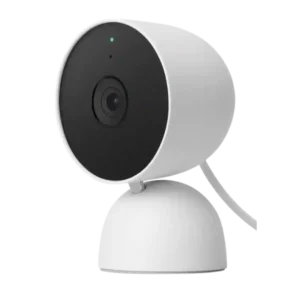
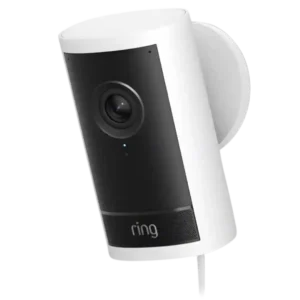
Google Nest Indoor Camera (Wired), 2nd Generation
Where It Has the Edge
- Power options (battery) is 3.5 vs 1.8. The lack of battery was a placement drawback for one reviewer but also removed recharge worries for another.

Scorata scores summarize analyzed review evidence on a 1–5 scale; they are not laboratory measurements or a simple average of customer star ratings. Feature scores summarize the reviews covering that feature. The overall score averages feature scores within each review, then combines review averages. When both expert and customer evidence are available, those two groups receive equal weight. Products can have different review coverage, so small score gaps do not establish a winner.
Recommendations prioritize important features for the category, with a score of at least 3.5, a gap of at least 0.25 points and at least two supporting reviews per product. Features with widely varying scores or broad connectivity contexts are excluded from recommendations. These safeguards do not establish statistical significance.
Quick verdict
The review evidence points to a tradeoff: Power options (battery) versus Mobile app reliability and wired. Choose according to which strengths matter more to you; the overall score alone does not settle that choice.
Choose Google Nest Indoor Camera (Wired), 2nd Generation for Power options (battery).
Choose Ring Outdoor Cam 4K Pro for Mobile app reliability and wired.
Scores are out of 5. Missing scores mean missing review evidence, not a missing feature.
The status light was useful for making recording state and privacy mode visible.
One customer strongly disliked the bright blue LED that appears with nighttime motion and wanted an option to disable it. For discreet placement, the status light can be intrusive.
Noise handling was a weak spot in baby-room and garage contexts, where background noise or echo made speech harder to distinguish.
Noise handling is mixed: one test found conversations stayed clear through rain and wind, while another customer reported exaggerated wind noise. Outdoor audio may therefore vary by placement and conditions.
Low-light footage was reported as clear, bright, and strong enough in full dark.
Low-light results are generally good when some ambient light is present, with several reviewers praising usable color and detail. In darker scenes, opinions become more mixed and the camera often falls back to infrared.
Color accuracy was praised as true-to-life or pretty good.
Daytime color was consistently praised as saturated, faithful, or strong, and some customers liked color across multiple lighting conditions. Color is a clear strength when enough light is available.
One reviewer found no connectivity issues across weak and strong dual-band Wi-Fi areas.
One customer specifically praised 5GHz for making the camera faster and more responsive than older units. Dual-band performance can be a real benefit when signal conditions are good.
Audio was usually clear, loud, or superb, but a few reviewers reported delay, echo, unclear speech, or unreliable two-way talk.
Audio quality is inconsistent across units and reviewers. Some found two-way speech loud and clear, while others reported low playback volume, persistent noise, or a clear downgrade from earlier Ring models.
False alert filtering was mostly strong, though one reviewer had a dog misidentified as a human.
Radar, Bird’s Eye View, zones, and sensitivity controls generally reduce unwanted alerts very well. Most detailed tests were strongly positive, although one critical review reported false alarms and one customer found sensitivity excessive.
Reviewers flagged that this indoor wired camera is not weatherproof or outdoor-ready.
Most testing found the camera held up well through rain, wind, and outdoor exposure, and multiple reviewers praised its weather-ready build. One customer had a unit fail after heavy rain, though the replacement survived later storms.
IFTTT support was absent, while Google’s geofence-style automation was praised.
IFTTT and Alexa routines worked well in testing, including a motion-triggered smart-bulb routine. Automation support is strong where Ring’s supported platforms are acceptable.
The wired design avoids battery maintenance but limits placement and uses a non-replaceable cord.
Customers who wanted a plug-in or hardwired installation were very positive about the stable, always-powered setup. Wired power works especially well where an outlet or existing wiring is already available.
Microphone pickup was sensitive enough to hear throughout a home, but one review found it captured too much background noise for baby monitoring.
One detailed test found the microphone captured speech clearly even with rain and wind in the background. That suggests strong pickup in challenging outdoor conditions.
Mounting and positioning were mostly flexible, especially with the ball/socket and built-in mount.
Mounting feedback is mixed. Many reviewers liked wall, ceiling, shelf, and relocation options, but several customers were frustrated by limited angles, no image flip, and the placement constraints of AC-only power.
Local storage convenience was mixed: outage buffering was appreciated, but the lack of true local or microSD storage drew criticism.
Reviewers consistently disliked the lack of local storage. Buyers who want microSD, onboard recording, or a local hub must rely on another system instead.
Connectivity evidence was positive from one whole-home test with no Wi-Fi issues.
Wi-Fi and Ethernet/PoE give useful connection choices, and many users reported strong range or easy setup. Others found the 4K model unusually demanding, with weak-signal sensitivity, disconnections, or better results only after network changes.
One reviewer warned that below-freezing locations could be problematic.
One reviewer warned that direct sunlight can push a mounting location beyond the camera’s rated heat limit. Shaded placement may matter in very hot climates.
Night vision generally earned praise for bright, clear black-and-white footage, though reviewers noted the lack of color night vision and one called it only OK.
Night vision drew split reactions: many found IR footage impressively clear and better than prior generations, while others reported dark distance detail or unreliable color night vision. Color performance depends heavily on available ambient light.
Speaker and two-way volume were considered clear and loud enough, sometimes louder than needed.
Two-way output and the siren are generally loud enough for practical use, but one customer found playback volume very low. Overall loudness is more positive than the broader audio-quality feedback.
Cable feedback was mixed: length and concealment helped, but the fixed white cord created placement and aesthetic issues.
The long power cord is frequently useful and makes outlet placement easier, but the inline adapter can be bulky or unattractive. Overall, cable length earns more praise than the power-brick design.
Motion zones were useful and flexible, with free access praised, though setup ranged from opaque to easy across reviews.
Motion-zone controls were strongly praised for excluding streets, neighbors, and other irrelevant areas. Reviewers found the controls practical for focusing alerts on the property itself.
The 135-degree view was useful for covering more space and generally balanced width with limited distortion, despite a slight fish-eye caveat.
The wide view is one of the most consistently praised traits, covering entrances, driveways, and larger areas effectively. Reviewers also liked that edge detail generally stays useful.
HomeKit support was explicitly absent.
The Outdoor Cam Pro does not work with Apple HomeKit in the tested configuration. Reviewers who prioritize Apple’s smart-home platform should look elsewhere.
Lens distortion was minimal overall, with no barrel or pincushion distortion and only slight fish-eye that did not hurt clarity.
One customer specifically praised very clear night imagery with little distortion. That feedback suggests the wide view can remain visually controlled rather than heavily warped.
Detection features were a core strength, with reviewers praising object, animal, person, and face recognition despite one spotty-performance caveat.
Motion and AI detection are generally excellent, with strong praise for person, vehicle, animal, radar, and Bird’s Eye capabilities. A minority of customers reported missed motion or less pickup than older Ring cameras.
Continuous recording is available, but reviewers treated it as cost-bound because it requires the paid Nest Aware Plus tier.
24/7 recording is appreciated as a serious surveillance feature, but it comes with premium-plan cost and potentially huge upload demands. Reviewers liked the capability more than the bandwidth and subscription tradeoff.
Most reviewers found the 1080p footage clear or sharp, though some said it was merely okay or fine and lost detail versus higher-resolution cameras.
Most reviewers praised the jump in clarity, with many calling daytime 4K footage crisp, sharp, or a major upgrade over older Ring cameras. A notable minority saw heavy compression, murky distance detail, or little improvement over 2K.
Scalability was favorable when multiple Nest cameras share one subscription.
Multi-camera users reported good results building coverage across entrances and multiple cameras. The system works well for expanding a Ring setup when power, network capacity, and subscription cost are acceptable.
Digital zoom was acceptable in some tests but often lost detail or became muddy when cropping in.
Digital zoom can look excellent in good conditions, and some reviewers saw a clear improvement over 2K models. Others found plates and faces became grainy or unreadable at distance, making 10x performance one of the more divisive areas.
Manual articulation was mixed: some found aiming easy, while wall mounting and the small arm limited range.
The stand can offer good adjustment in normal installs, but several customers found positioning too limited for ceiling, soffit, or unusual angles. No image rotation makes some orientations especially awkward.
Remote pan/tilt movement is absent, and reviewers wanting room scanning or more accurate aiming marked this as a limitation.
The camera lacks motorized pan and tilt, and reviewers who wanted active repositioning saw that as a major omission. This is a fixed-view camera rather than a true PTZ option.
Mobile app reliability drew complaints around setup glitches and two-way talk failures.
The Ring app is usually fast and stable, with quick loading and responsive controls. One troubleshooting review still found the hardware’s 4K behavior inconsistent even when the app itself responded quickly.
Notification controls were praised for customization, categories, push choices, and alert reduction.
Ring offers useful controls for reducing or snoozing notifications, and one customer found it easy to minimize alerts. Another disliked persistent trial-expiration reminders that could not be turned off.
App opinions were mixed: Google Home could be easy and powerful, but some reviewers found it clumsy, glitchy, or awkward.
The Ring app is one of the clearest strengths, repeatedly described as intuitive, comprehensive, and easy to configure. Motion zones, live view, schedules, and device settings are generally straightforward even for new users.
Google display and accessory compatibility worked well, while broader security-system and ecosystem compatibility was narrower.
A motion-triggered Alexa routine controlling a third-party smart bulb worked flawlessly in testing. That shows strong compatibility with supported smart-home accessories.
Smart history and search tools helped reviewers filter or browse events by object and thumbnail.
AI search was one of the strongest premium features in testing, accurately finding wildlife and making older clips easier to locate. Reviewers who tried it described the results as excellent or spot-on.
Reviewers generally saw fast or instant notifications, even though one cooldown-focused review later exposed repeat-alert problems.
Alerts were consistently described as fast, with several tests reporting near-instant phone notifications after motion. Customers also liked reliable driveway and front-door alerts.
Google integration was repeatedly praised, while non-Google ecosystems were weaker or unsupported.
Alexa and the broader Ring ecosystem are a major strength, with smooth voice control and Ring Alarm integration. The main limitation is narrower support outside Amazon’s ecosystem, particularly no HomeKit or Google Assistant support in the tested setup.
Durability evidence was limited but positive from one reviewer’s well-made impression.
Longer-term durability feedback is mixed. Some cameras held up well outdoors, but several customers reported very early failures and one first unit failed after heavy rain.
Reviewers liked the small, compact, discreet footprint and attractive appearance.
The camera is compact enough for flexible placement according to one expert, but one customer found it much larger than expected from product photos. Size perception depends heavily on the intended mounting spot.
Build quality was widely praised as well-made, sturdy, premium, and durable-feeling.
Most reviewers found the camera solid, well made, and premium-feeling, with strong fit and finish. A small number of PoE-focused customers criticized the mount and connector design as poorly built or overengineered.
Live viewing was generally reliable and low-lag, though one baby-monitoring review reported reconnect delay.
Streaming reliability is one of the biggest trouble spots in the feedback. Some reviewers saw fast, stable app performance, but several customers and two YouTube tests reported resolution drops, disconnects, or unreliable 4K delivery.
Event recording reliability was split: outage buffering and recording consistency earned praise, but baby-monitoring and cooldown tests exposed missed or impractical recording.
A small group of customers reported skipped footage, missed events, or units that failed to show video. Replay could also be slow, making event reliability less consistent than the strong motion-detection scores suggest.
Cloud storage value was the most repeated concern, with many reviewers criticizing the short free window and paid Nest Aware dependence despite one positive view of free lookback.
Ring’s cloud plans were widely criticized as expensive, especially for one camera or for premium 24/7 and AI features. Multi-device plans can improve the value, but subscription cost remains a recurring concern.
Value was sharply mixed: some praised the smart-feature package, while others called the price high or overpriced versus cheaper competitors.
Value is sharply divided: sale buyers and users who prioritize 4K often felt the camera was worth it, while many others thought the upgrade over 2K was too small for the price. Subscription costs further weaken the value case.
Setup and mounting were consistently described as easy, quick, or painless.
Setup is one of the strongest consensus positives, with QR-code onboarding and physical installation repeatedly described as easy or straightforward. A few mounting-specific edge cases, especially ceiling orientation and PoE hardware, caused frustration.
The lack of battery was a placement drawback for one reviewer but also removed recharge worries for another.
The lack of a battery option is a repeated complaint and removes backup power and wire-free placement. A few plug-in users did appreciate never having to manage battery life.
Support experiences vary widely. Some reviewers received helpful troubleshooting or fast warranty replacements, while others reported incorrect first-tier advice, long calls, delayed responses, or no practical solution.
One PoE buyer could not obtain a needed Ring power injector because it was out of stock with no restock date. That made the specialized PoE package harder to complete.
Most reviewers like the sleek, discreet appearance and familiar Ring styling. Criticism centers more on the PoE connector and mounting implementation than on the camera’s exterior look.
Detection range was strong in several driveway and yard tests, including useful pickup around 40 feet or more. A few customers reported much shorter effective range or poor identifying detail at distance.
Firmware support drew criticism from users who encountered early 4K and bandwidth bugs. One issue was fixed after about a month, while another reviewer was still hoping a later software update would stabilize resolution.
Mounting hardware and cable-management pieces are generally useful, and one expert appreciated the complete accessory set. PoE buyers were less satisfied when a needed power injector was not included.
Free and on-device features stood out, especially smart alerts and no-subscription event history, though value depends on storage needs.
On-device AI processing was viewed positively for local object recognition and privacy.
Overall sentiment leans positive, driven by sharp 4K imagery, easy setup, and strong Ring ecosystem features. Still, a substantial minority were disappointed by price, subscription dependence, inconsistent 4K delivery, night performance, or power and mounting limitations.
PoE can be excellent for one-cable power and more reliable networking, and several customers strongly preferred it. The costly adapter, awkward mount design, and missing injector in some packages produced equally strong complaints.
The absence of direct solar support is a consistent negative for buyers coming from battery-and-solar Ring setups. Several reviewers explicitly wanted a solar-capable version before buying again.
A small number of reviewers raised privacy concerns around cloud dependence and Ring’s handling of stored video. These concerns were separate from the app’s practical privacy-zone controls.
Privacy zones were easy to set up in the app and useful for masking a neighbor’s property or other areas that should not be recorded. The controls were described as practical and flexible.
One reviewer found a cooldown period that could block repeat alerts and recordings.
The Outdoor Cam Pro’s lack of a built-in motion spotlight disappointed several customers who expected active lighting. One expert test did not miss the light and even appreciated the more discreet nighttime behavior.
Subscription dependence is a major recurring negative. Live view and basic alerts remain available without a plan, but recordings and many advanced AI or 24/7 features require paid tiers.
Sound detection was seen as a useful emergency-alert add-on, though evidence was mostly limited to feature usefulness rather than deep testing.
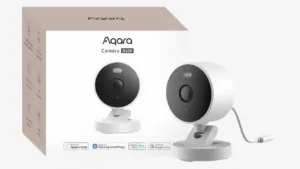
Best for excellent value, flexible local storage, strong HomeKit support, and indoor/outdoor versatility. Skip it if you need battery power, premium image quality, or the simplest app experience.
Pros: Overall satisfaction, Video resolution and detail
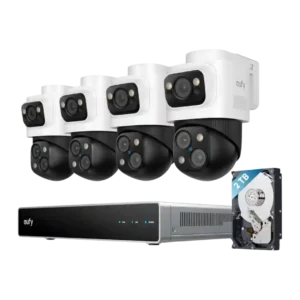
Choose the S4 Max for serious wired security, local AI, sharp 4K footage, and strong tracking. Skip it if you need easy wireless setup, broad smart-home integration, or a budget...
Pros: Cross-camera tracking, Smart search accuracy
Cons: Installation and Mounting, Smart-home integration (Alexa, Google, Siri, HomeKit, Matter, Thread)
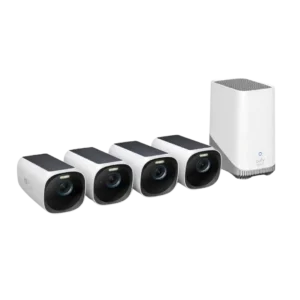
Choose the Eufy S330 if you want sharp 4K outdoor video, solar charging, local storage, and strong AI without monthly fees. Skip it if you need HomeKit/IFTTT, 24/7 recording, or...
Pros: Video resolution and detail, Power options (solar panel)
Cons: HomeKit integration
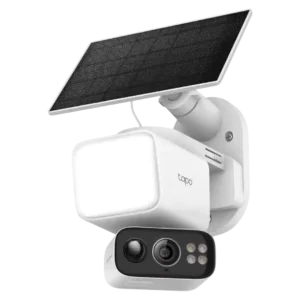
Best for solar-powered, wire-free yard coverage with strong value and bright lighting. Skip it if you need flawless app reliability, true continuous video, or premium low-light tracking.
Pros: Floodlight brightness, Detection features
Cons: Continuous recording capability, Detection range