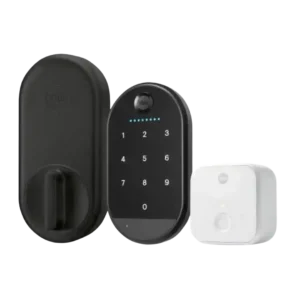
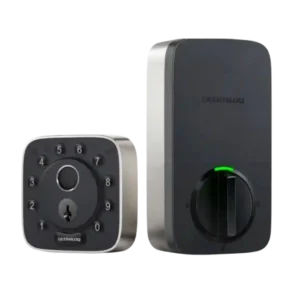
Yale Approach Smart lock
Where It Has the Edge
No clear scored advantage over the other product.

Scorata scores summarize analyzed review evidence on a 1–5 scale; they are not laboratory measurements or a simple average of customer star ratings. Feature scores summarize the reviews covering that feature. The overall score averages feature scores within each review, then combines review averages. When both expert and customer evidence are available, those two groups receive equal weight. Products can have different review coverage, so small score gaps do not establish a winner.
Recommendations prioritize important features for the category, with a score of at least 3.5, a gap of at least 0.25 points and at least two supporting reviews per product. Features with widely varying scores or broad connectivity contexts are excluded from recommendations. These safeguards do not establish statistical significance.
Quick verdict
The available evidence supports the recommendation below, but does not establish an overall winner. Check the remaining features against your priorities.
There is not enough comparable review evidence to recommend Yale Approach Smart lock over the other product.
Choose ULTRALOQ Bolt Fingerprint Smart Lock for Fingerprint and Guest Codes and Access.
No clear scored advantage over the other product.
Scores are out of 5. Missing scores mean missing review evidence, not a missing feature.
Remote access was praised where tested, with reviewers saying away-from-home checks and remote lock/unlock worked well.
Remote access was a major failure point for one reviewer because unstable Wi-Fi made remote control impossible.
Motor feedback was split: some found it quiet or sturdy, while others reported grinding, skipping, or a deadbolt that did not move.
The Matter model’s motor was the sharpest hardware complaint, described as grinding, whining, and unpleasant.
User access management split reviewers: one praised easy sharing and admin/guest levels, while another found adding users and saving codes clunky.
User access management was praised for scheduled codes, admin/normal/temporary roles, and flexible control over who can enter and when.
Fingerprint support was treated as a tradeoff: one review criticized the standard keypad for lacking it, while another called the optional fingerprint keypad convenient but pricier.
Fingerprint access was the strongest consensus feature: nearly every reviewer found it fast, accurate, reliable, or instantly responsive, with only occasional issues noted.
The keypad was useful for codes and one-touch access in several reviews, but complaints included finicky input, basic features, awkward placement, and flimsy construction.
The physical keypad was a recurring positive because reviewers liked the tactile feel, responsiveness, and guest-friendly button design.
Auto-lock worked reliably for some reviewers, but others disliked its timer-only behavior, lack of leave-range locking, or wonky performance.
Auto-lock was highly valued when it worked, with multiple reviewers praising its usefulness, but one reviewer could not enable it reliably.
Reviewers generally liked keeping exterior hardware and existing keys, especially for renters, though one questioned whether the retrofit concept justified the extra hardware and effort.
Existing hardware reuse was mixed: one reviewer thought reusing the old strike would save time, but that choice made installation take longer.
Weather resistance was only discussed for the keypad, where reviewers treated the IPX5/weather-resistant build as useful for flexible exterior placement.
Weather resistance received positive support from the reviewer who connected the IP65 rating with durability for rain and dust exposure.
Guest codes were generally praised for visitors, kids, rentals, and temporary access, though one reviewer found the user-code interface clunky.
Guest and temporary access was a clear strength, with reviewers appreciating scheduled access, single-use or limited codes, and easy access for neighbors or service visitors.
Most reviewers found locking and unlocking responsive or snappy, but one reported app delays and repeated taps before the lock engaged.
Unlock speed was praised across most reviews, especially through fingerprint and app commands, though one Matter review found Matter actions slightly slower.
Security controls were praised around hidden entry codes, verified access, and extra protection settings, though encryption itself was not evaluated.
Security features beyond the core lock were praised, especially anti-peep PIN entry and the usefulness of random digits when someone may be watching.
Reviewers frequently disliked needing a separate hub/bridge and outlet, though one reviewer said they personally did not mind it.
Hub requirements depended on the version and workflow: built-in Wi-Fi avoided a separate bridge for one reviewer, while the Matter model drew criticism for bridge needs.
Access logs were praised by two reviewers as comprehensive and easy to like for tracking lock activity.
Access logs were praised where reviewers discussed them, especially for showing who entered or left and maintaining a robust lock/unlock history.
DoorSense and door-open detection were mostly viewed as reassuring and helpful, though setup and flush-mount installation caused friction for some reviewers.
The door sensor was useful for door-open awareness and auto-lock behavior, but reviewers disliked its looks and noted it was not exposed to Apple Home.
One reviewer disliked using a physical key with the lock because the key turn felt more resistant than other locks they had used.
The backup cylinder/keyway drew a critical expert reaction because the key bow and blade combination was described as highly unusual for North American locks.
Geofencing and auto-unlock were often praised as accurate, smooth, or helpful, but one reviewer found it worked only about a third of the time.
Geofencing and auto-unlock were mixed: some reviewers found it useful or better than most, while others found it slow or inconsistent.
Reliability was the biggest split: some reviewers reported smooth operation, while others described unresponsiveness, weak trust, or marginal effectiveness.
Core lock operation was usually reliable in testing, but app-based locking and unlocking was inconsistent for one reviewer and the Matter model had a loud motor caveat.
Physical installation was often described as fast and simple, but setup quality varied because Wi-Fi bridge pairing, calibration, and accessory setup caused problems in several reviews.
Installation was one of the clearest strengths: reviewers repeatedly called setup easy, quick, straightforward, or manageable with only a few screws.
One review specifically praised that the original or landlord key still worked normally after installation.
Mechanical key backup worked in the hands-on demo, with the reviewer noting the keys looked good and successfully operated the lock.
Most reviewers liked the price and value for a retrofit lock, but value dropped sharply in reviews that experienced setup, keypad, or reliability failures.
Value was mixed: reviewers said it offered a lot or a reasonable price, but several still called it expensive or undercut by software flaws.
Voice control was praised in the reviews that tested it, especially for easy Alexa and Google Assistant setup and control.
Voice control was positive in one professional review with Alexa and Siri working well, but another review captured a Siri non-response.
Bluetooth drew negative marks where reviewers experienced limited bridge-to-lock range or settings that required a Bluetooth connection instead of Wi-Fi.
Bluetooth drew a limited but important caveat: one Apple Home-focused reviewer found Bluetooth-based control a little slow at times.
Smart-home integration was useful with Alexa, Google, SmartThings, and Hue, but reviewers repeatedly flagged missing or delayed HomeKit/Matter support.
Smart-home integration was a major selling point across reviews, but enthusiasm was tempered by missing Home Key, Home Assistant issues, and model-specific platform limits.
Wi-Fi was a recurring weak point because the separate bridge had pairing, range, or signal issues and reviewers wanted more native connectivity.
Wi-Fi was polarizing: built-in Wi-Fi was a major idea, but one reviewer had severe reliability failures and another criticized a Matter version for lacking built-in Wi-Fi.
Notifications were viewed positively, with prompt alerts and helpful door-status notifications standing out.
Notifications were consistently praised as helpful, especially for open-door alerts, user-specific activity, and keeping track of household or guest access.
The Yale app was broadly praised as responsive, helpful, intuitive, and easy to use, with one negative review reporting repeated taps and delays.
App feedback ranged from excellent and simple to inconsistent; some reviewers found the app easy or seamless, while one had repeated connection problems.
Battery evidence was mixed to negative: one reviewer praised expected life, but others noted no lock battery indicator or severe keypad battery drain.
Battery impressions were mixed: reviewers liked the long-life claims or early battery status, but disliked replaceable AAs, limited battery detail, or the number of cells.
Build impressions were mixed: the lock/keypad design drew some positive durability comments, but one reviewer found the keypad cheap and flimsy.
Build impressions were mostly positive, with reviewers praising solidity and materials, though one Matter review raised longevity concerns because of the motor noise.
Compatibility was not universal: reviewers flagged unusual deadbolt tailpieces, sticky bolts, and misaligned strike plates as potential fit or motor-operation problems.
Feature-update evidence centered on Matter/Thread: some saw it as future-ready, while others criticized the lack of a firm timing commitment.
Physical attack resistance had strong evidence from ANSI-grade commentary and especially from an expert’s praise for bump resistance.
Pick resistance was criticized by the lock-picking review, which was not impressed with the anti-pick features.
Finish durability evidence was positive, with praise for fit and finish and expectations that the revised keypad materials and printed numbers would wear better.
Industrial design split reviewers: some liked the size, solidity, or simple look, while others found it cheap-looking or unattractive.
Touchscreen/keypad evidence was mixed: one reviewer said presses did not always register, while another praised the backlit, durable touch screen.
Support evidence was negative in one review, where replacement and backend help came only after extensive troubleshooting and customer-service time.
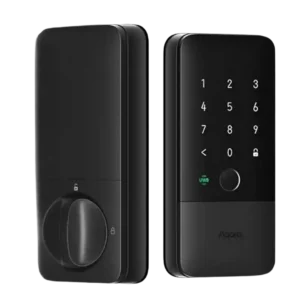
Choose the Aqara U400 if you want hands-free UWB unlocking, strong Apple Home integration, and many backup entry methods. Skip it if you dislike bulky smart-lock hardware or need a...
Pros: Battery, Smart-home integration (Alexa, Google, Siri, HomeKit, Matter, Thread)
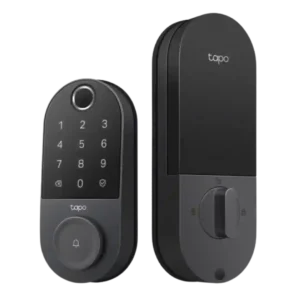
Choose the Tapo DL110 if you want fast fingerprint entry, strong app control, long battery life, and premium features under a lower price. Skip it if your door/strike alignment is...
Pros: App, Guest Codes and Access
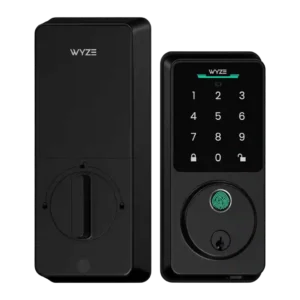
Choose the Wyze Lock Bolt v2 for low-cost Wi-Fi, fast fingerprint entry, and flexible codes. Skip it if you need Matter/HomeKit support, rechargeable batteries, or stronger door-sense behavior.
Pros: Fingerprint, Value and Price
Cons: Smart-home integration (Alexa, Google, Siri, HomeKit, Matter, Thread)
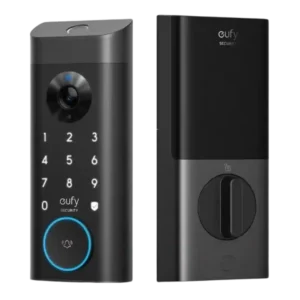
Good if you want one polished lock, camera, and doorbell with excellent fingerprint access. Skip it if short battery life, screen/storm doors, or a narrow camera view would frustrate you.
Pros: Camera and doorbell performance, Installation and Setup
Cons: Keyway quality, Door compatibility (deadbolt fit)