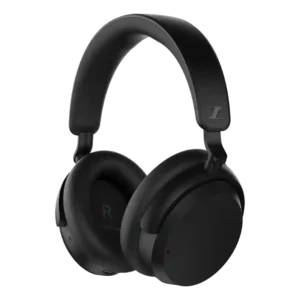
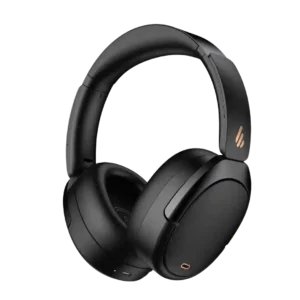
Sennheiser ACCENTUM Wireless Headphones
Where It Has the Edge
- Multipoint connectivity reliability is 4.5 vs 4.3. Multipoint was consistently positive where tested, with reviewers praising easy device management, hot swapping, and flawless switching.

Scorata scores summarize analyzed review evidence on a 1–5 scale; they are not laboratory measurements or a simple average of customer star ratings. Feature scores summarize the reviews covering that feature. The overall score averages feature scores within each review, then combines review averages. When both expert and customer evidence are available, those two groups receive equal weight. Products can have different review coverage, so small score gaps do not establish a winner.
Recommendations prioritize important features for the category, with a score of at least 3.5, a gap of at least 0.25 points and at least two supporting reviews per product. Features with widely varying scores or broad connectivity contexts are excluded from recommendations. These safeguards do not establish statistical significance.
Quick verdict
The review evidence points to a tradeoff: Multipoint connectivity reliability versus Included accessories and Carry case quality. Choose according to which strengths matter more to you; the overall score alone does not settle that choice.
Choose Sennheiser ACCENTUM Wireless Headphones for Multipoint connectivity reliability.
Choose Edifier WH950NB Gen 2 Wireless Headphones for Included accessories and Carry case quality.
Scores are out of 5. Missing scores mean missing review evidence, not a missing feature.
Reviewers mostly liked the sound, especially for the price, but one review found it bland and several noted detail or clarity limits.
Sound quality was generally praised as good, engaging, clear, and strong for the price.
Microphone noise reduction was a recurring weakness, especially with wind, chatter, road noise, or other background noise.
Microphone noise reduction was mostly strong, separating voice from background chaos, with minor ambient noise leakage noted.
Immersive audio impressions split: one review praised spacious, raw performance, while another found the presentation emotionally flat.
Immersive listening was praised in theater use, where one reviewer felt the experience resembled a big-screen setup.
Soundstage feedback was mixed, ranging from surprisingly spacious to narrower than the Momentum 4.
Soundstage was praised as surprisingly wide for closed-back headphones.
ANC was the most divisive core feature: some called it good for the price, while others found it weak, subpar, or merely okay versus premium models.
Reviewers generally found ANC effective for daily noise and low-frequency sounds, though one reviewer said it does not block everything.
Passive isolation benefited from the cup design and padding, with reviewers noting a decent seal and meaningful physical noise blockage.
Passive isolation was praised through the protein-leather seal's ability to reduce outside noise.
Bass impressions split: many heard satisfying punch, warmth, and rumble, while a few found the bass either too intense or lacking impact.
Bass feedback was mixed: some reviewers liked the punch and quantity, while one found heavy-bass tracks crackly and another called it bassy.
Frequency balance was generally considered organized or balanced, though reviewers also noted sub-bass emphasis and upper-mid under-emphasis.
Frequency balance was described positively as well balanced.
Wind handling was mixed: app wind reduction helped listening, but microphones still struggled in windy conditions.
Wind handling was mixed: one reviewer found minimal interference, while another did not find wind reduction especially useful.
Background hiss was not a major concern in the reviews that mentioned it, with one ANC test noting little hiss and another hearing no hiss.
ANC background-noise handling was praised for treadmill, commute, and low-frequency noise reduction.
Included accessories were sparse, with reviewers criticizing the lack of case and the need to buy extra cables or adapters.
Included accessories were praised as a thoughtful, complete bundle.
The missing case or pouch was a repeated complaint across reviews and hurt travel confidence.
The travel case was repeatedly praised as sturdy, stylish, and protective.
Portability was a weakness because the headphones do not fold compactly and can feel bulky in a bag.
Portability was praised for compact folding and easy case storage.
Travel friendliness was hurt by no case, no compact fold, and limited airplane convenience despite strong battery life.
Travel friendliness was praised through the slim case, foldable design, commuting fit, and compact storage.
LDAC was a limitation in the one review that compared aptX HD with LDAC bit-rate capability.
LDAC support was praised for higher-quality Bluetooth streaming, though one reviewer noted it was wasted on iPhone.
Fit stability was a caveat in one review, where the cups shifted with head movement.
Stability was praised during running, with no distracting or unstable feel.
Premium feel was inconsistent, ranging from better than expected to clearly cheap or subpar beside more expensive models.
Premium feel was a repeated strength, with reviewers saying the headphones feel more expensive than they are.
Maximum-volume clarity was strong in one review with no distortion, but another found lower safe volumes too quiet for full instrumental enjoyment.
Maximum-volume clarity was limited by irritating bass crackle at louder listening levels.
Instrument separation was a strength in some reviews, but comparisons to higher-end models exposed reduced layering and finer detail.
Instrument separation was praised for revealing individual instruments and layers clearly.
Preset and sound-check features were mixed: podcast and bass tools helped, but preset availability and subtle sound-check differences drew criticism.
Preset EQ feedback was positive for Dynamic and Rock settings, which reviewers found more enjoyable or lively.
The integrated microphone setup was praised in one review for delivering on clearer voice-call pickup.
The integrated microphones were praised as surprisingly excellent.
Headband padding was generally praised, although one reviewer found the cushioning insufficient for larger heads.
Headband padding was praised as soft and comfortable.
Swivel/rotation was useful where mentioned, with reviewers noting lay-flat or 180-degree rotation, though it did not solve foldability concerns.
Ear cup rotation and tilt were praised for helping the headphones fit the user's head shape.
Headband adjustability was positive where evaluated, with smooth sliding arms that tucked into the band.
Headband adjustment was mixed, with one reviewer finding the slider slightly awkward and another praising the defined clicks.
Overall recommendations leaned positive for value and everyday use, but a few reviewers warned that ANC, fit, or build compromises limit the appeal.
Overall recommendations were strongly positive, especially for value-focused buyers.
USB-C was a consistent plus for charging and, in several reviews, wired USB-C audio.
USB-C charging was explicitly welcomed as the expected modern standard.
Midrange and vocal clarity were often praised after EQ or in balanced listening, though some reviews heard veiling or a hollow midrange.
Midrange and vocal clarity were generally praised, though one reviewer found the mids less refined than the Sony XM6.
Ear padding was usually praised as soft, plush, deep, or spacious, but one review criticized cheaper, less form-fitting cushions.
Ear cup and pad comfort drew consistent praise for plushness, softness, and a comfortable seal.
Transparency mode ranged from very natural and useful to artificial or only adequate, depending on the reviewer.
Transparency or ambient mode was praised as useful for awareness and dialing in outside sound.
USB-C audio and built-in playback capabilities were viewed positively for lossless or wired listening, with no hiss noted in one review.
Hi-res playback and LDAC were praised for capability, but one iPhone-focused reviewer found LDAC less useful.
Connectivity options were a strength, especially USB-C wired audio, Bluetooth, and two-device use.
Connectivity options were praised for dual-device use without constant reconnecting.
The discreet profile was praised for minimal branding and a sleek, understated appearance.
Reviewers consistently liked the understated, stylish, premium-looking design.
Treble was described as crisp, clear, and non-harsh by several reviewers, but others heard dullness, roll-off, or limited upper-end nuance.
Treble and high-end clarity were praised as clear, detailed, and able to let guitar layers shine.
Android compatibility was positive in the one review that described Android pairing as quick and easy.
Android users were presented as getting the strongest wireless-quality benefit from LDAC support.
Bluetooth 5.2 was called a bummer in one review because it raised concerns about future LE Audio features.
Bluetooth 5.4 was framed as a future-proofing improvement.
Physical controls were often praised as simple, tactile, and reliable, though some reviewers found small buttons or the lack of touch controls annoying.
Onboard button controls were criticized as frustrating and confusing because functions are doubled up.
Advanced software features were seen as plentiful, but they could feel overwhelming or restricted behind account-based tools.
Software features were praised for giving broad control over listening modes, EQ, sound limits, and other headphone functions.
Smart listening features were mixed: Sound Zones and sidetone-related tools impressed some reviewers, but account restrictions and subtle sound-check changes frustrated others.
Smart listening features such as hearing protection and sound limits were viewed as useful additions.
Call microphone quality was serviceable but mixed, with some clear-call praise and several complaints about thin, robotic, muffled, or merely decent voice quality.
Call microphone quality was praised, including calls going smoothly and the mics sounding excellent.
EQ control was a major strength for many reviewers, though PCMag and one YouTube review found the EQ interaction or results frustrating.
EQ customization was praised for letting listeners reshape the sound to their preferences.
Setup simplicity was a strength, with fast pairing and stable app/headphone connection reported.
Software setup and control were praised as easy through the Edifier app.
The app was useful and feature-rich, but some reviewers found it crowded or dependent on optional account-based features.
The app was praised for fun listening control and useful ANC adjustment.
Bluetooth behavior was praised for fast reconnection in one review, while another reported a brief stutter after pairing.
Bluetooth range was praised as a practical bonus in everyday movement around the home.
Durability confidence was split between a tank-like build impression and concern that the plastic would not last.
The reinforced steel headband was credited with giving a durable impression.
Clamping force was the most common comfort caveat, ranging from well judged to tight enough to ruin the fit for some reviewers.
Clamp comfort was split: some reviewers found the fit gentle or glasses-friendly, while another warned that clamp force builds over time.
Build quality split reviewers sharply, from cheap-feeling plastic to solid or tank-like construction.
Build quality was described as solid, sturdy, and more premium than the price suggests.
Design opinions were mostly positive for the clean, understated look, though What Hi-Fi found the styling plain.
Design was praised as sleek, understated, stylish, and elegant.
Comfort varied by head shape: many reviewers found it comfortable for hours, while others disliked warmth, tightness, or glasses pressure.
Long-use comfort was mostly praised, but the rigid headband created a notable comfort caveat in one review.
Low weight was a clear advantage, repeatedly helping the headphones feel easy to wear for long sessions.
Weight comfort was praised as balanced and not heavy.
Value for money was one of the strongest themes overall, though What Hi-Fi and one YouTube review felt compromises made the price less convincing.
Value for money was one of the strongest themes, with reviewers repeatedly comparing performance favorably against the price.
Multipoint was consistently positive where tested, with reviewers praising easy device management, hot swapping, and flawless switching.
Multipoint connectivity was useful and mostly seamless, with only minor reminders needed in one review.
Codec support was generally viewed favorably thanks to AAC, aptX, and aptX HD, though codec-related limits remained for some users.
Codec support was valued for LDAC and hi-res audio, with the main caveat being limited benefit for iPhone users.
Charging was generally positive thanks to quick-charge usefulness, though one reviewer called the fast-charge result only average.
Fast charging was viewed positively, especially the short top-ups that provide several hours of playback.
Battery life was one of the strongest points, repeatedly described as impressive, long-lasting, or anxiety-free.
Battery life drew some of the strongest praise across reviews, including long weekly use and strong remaining charge after hours.
Analog input availability was weak because reviewers noted the absence of a 3.5mm/TRS jack, sometimes as a clear con.
aptX support was treated as a meaningful advantage, with reviewers noting aptX HD support and better results from aptX sources.
Ecosystem integration was positive in the one review that emphasized two-device Bluetooth use regardless of ecosystem.
Feature set was generally strong for the price, with modern ANC, app, multipoint, and battery features repeatedly noted.
Gaming or mode presets were not strongly convincing, with reviewers either noticing no difference or not finding the modes useful.
Multi-platform compatibility was strong where tested, especially two-device use across different ecosystems and wired-plus-Bluetooth use.
Sidetone was well received where evaluated, helping calls feel more natural or letting users hear their own voice.
Volume output was usable but not exceptional, with reviewers noting it was not the loudest and could feel quiet below high volume settings.
Water resistance was weak: reviewers flagged the lack of ingress protection or water resistance as a reason to avoid wet or workout use.
Audio-video sync was excellent in the one review that tested it, with zero latency reported across phone video use.
One reviewer noted earpad or fit-related walking noise and faint rustle as a limitation.
LE Audio readiness was a limitation where discussed, with reviewers noting it may not arrive or will not be supported.
Spatial and theater-style audio was mixed: theater mode impressed one reviewer, while another did not find extra modes useful.
Hinge durability received positive confidence in one review and was tied to sturdy build impressions in another.
The transparency-triggered conversation mode was considered useful where configured, even if it was limited by app behavior.
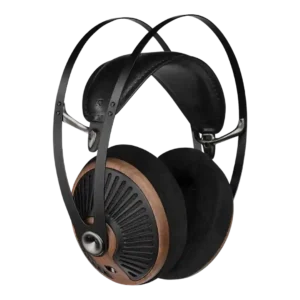
Choose the 105 Silva for beautiful, repairable construction, superb comfort, easy driveability, and an engaging spacious sound. Skip it if you need isolation, balanced connectivity, heavy sub-bass, or consistently smooth...
Pros: Design and Aesthetics, Overall recommendation
Cons: Noise isolation (passive), Connectivity options

Choose it if your workday revolves around calls and you want exceptional mic isolation, huge battery life, all-day comfort, and a slim travel-friendly design. Skip it if music fidelity, class-leading...
Pros: Battery, Charging
Cons: Value for money, Codec support

Choose the Aventho 100 for standout battery life, portable retro styling, strong ANC, and flexible wired/wireless use. Skip it if you dislike on-ear pressure or want a wide, consistently neutral...
Pros: Battery, Design and Aesthetics
Cons: Clamping force comfort, Soundstage width
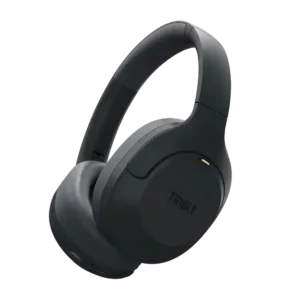
Best for exceptional battery life, useful ANC, flexible EQ, and strong budget value. Skip it if refined, detailed sound or polished controls matter more than price.
Pros: Value for money, Sound quality
Cons: Button control usability, App