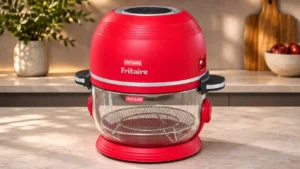
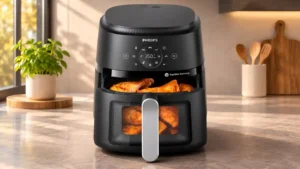
Fritaire
Where It Has the Edge
- controls is 4.8 vs 3.8. The top touchscreen and manual time and temperature controls are generally intuitive.
- appearance is 4.7 vs 4.2. The colorful, rounded retro design is a standout on the countertop.

Scorata scores summarize analyzed review evidence on a 1–5 scale; they are not laboratory measurements or a simple average of customer star ratings. Feature scores summarize the reviews covering that feature. The overall score averages feature scores within each review, then combines review averages. When both expert and customer evidence are available, those two groups receive equal weight. Products can have different review coverage, so small score gaps do not establish a winner.
Recommendations prioritize important features for the category, with a score of at least 3.5, a gap of at least 0.25 points and at least two supporting reviews per product. Features with widely varying scores or broad connectivity contexts are excluded from recommendations. These safeguards do not establish statistical significance.
Quick verdict
The review evidence points to a tradeoff: controls and appearance versus Heating speed and Energy efficiency. Choose according to which strengths matter more to you; the overall score alone does not settle that choice.
Choose Fritaire for controls and appearance.
Choose Philips 2000 series 4.2L NA220/00 for Heating speed and Energy efficiency.
Scores are out of 5. Missing scores mean missing review evidence, not a missing feature.
Basic controls are simple, but accessories, lid handling and recipe adjustments can make the workflow fiddly.
Routine operation becomes fairly straightforward once the touchscreen icons are familiar. Initial learning and manual recipe adjustments take extra effort.
Slow heating and difficulty reaching the set temperature were reported.
Fast heat-up is a prominent advantage for short meals, especially compared with a conventional oven.
The exposed glass and lid can get uncomfortably hot, with some reports of burns or melting vents.
The exterior stays relatively cool in operation, with the front window and a narrow strip becoming warmer than the sides and base.
Handling hot mesh, glass and the removable heater can be awkward despite the supplied grabber.
Cool handles and a relatively manageable exterior help when removing hot food, although some surfaces become warm.
Lower measured short-cycle energy use is tempered by failure to reach the target and heat escaping from the exterior.
Heating a small chamber instead of a conventional oven can save energy for everyday meals. The benefit is less certain versus a smaller fryer for a single portion.
Manual temperature control is welcome, though coarse increments can limit fine adjustments.
Cooks who need granular manual temperature control for specialized recipes may find the preset-centered approach restrictive.
The naturally smooth glass releases residue easily without an applied coating.
Nonstick surfaces release food and wash easily. However, one 30-day owner discovered coating rubbing off the crisper rack, a serious durability concern.
Grease and juices can collect on mesh and bowl walls, adding cleanup effort.
Some cooking sessions leave surprisingly little grease or splatter, but excessive fat rendering can leave meat dry.
The appliance is relatively easy to move for some users, although its glass construction calls for care.
Most hands-on accounts find the appliance light and easy to move, although another describes its weight as inconvenient.
Some small meals finish quickly, but many tests took longer than competing air fryers or required extra time.
Small frozen snacks and modest batches cook quickly, sometimes finishing well ahead of the preset. Dense vegetables and moist proteins can take considerably longer.
The narrow round stand has limited room to spread food in one layer.
The surface area is adequate for small single layers, but crowded fries, bread or bulkier foods have less room than the nominal volume suggests.
Heat recovery is slow after opening, though temperature is steadier once the target is reached.
One hands-on owner praises heat retention and temperature regulation, while meat tests show substantial temperature fluctuations.
Reports conflict on which accessories tolerate the dishwasher; the fixed glass bowl is generally described as hand-clean only. Check the instructions for your exact unit.
Dishwasher-safe removable cooking parts make cleanup more convenient than scrubbing by hand.
The tumbler can eliminate manual shaking; stationary foods usually still need to be flipped.
Turning or shaking is important for even browning, particularly with toast, fries and crowded batches. Some potato dishes need less frequent shaking.
A broad temperature range supports different tasks, but actual temperature performance can limit its usefulness.
The temperature range covers ordinary air frying but is too limited for dehydration and quick high-heat searing.
The glass bowl is heavier than a typical basket and can be awkward to handle.
Built-in grips help move the fryer, although the weight of the unit and basket can make handling harder for some users.
One-touch settings are convenient but can be too aggressive or insufficient for particular foods.
Food-specific presets provide a convenient starting point, not a guarantee of doneness. Some recipes finish much sooner than the preset suggests.
Crowding and top-directed heat can leave the underside undercooked; the tumbler helps redistribute food.
Air circulates effectively around properly spaced food, but overlapping pieces can restrict airflow and trap moisture.
The different cooking setups add meaningful versatility, though baking and other modes can be limited by airflow and temperature.
Baking, toasting and reheating can work well with manual settings, but the narrow fan and temperature ranges limit specialized methods.
Some cooks achieved satisfying meals with less oil, though extra oil was needed to improve fries in one test.
Low-oil cooking is praised for producing a texture reminiscent of deep frying.
The appliance can fit some cupboards, but the extra accessories and non-nesting lid need storage room.
Compact dimensions and manageable weight help with storage in many kitchens, though one account found the unit bulky on shelves.
The round bowl works for modest portions, but its usable capacity is limited by accessory clearance and food shape.
The basket is widely considered comfortable for two people or small portions, although one account found it sufficient for a whole chicken and four-person portions.
Texture varies substantially: some meals are juicy and crisp, while others turn dry, tough or chewy.
Bread and chicken can emerge tender, with a crisp exterior. Some meat tests instead produced dry, rubbery patches.
Browning can be uneven, especially on the stationary stand; rotating foods or flipping can help.
Frozen snacks are generally golden, but fresh fries and wings can have pale patches. Other cooking experiences describe very even browning.
Recipe timings often need adjustment to achieve the right doneness or crispness.
Preset time is not always predictive for smaller batches; fresh fries were ready with substantial time remaining.
Rotating accessories can improve evenness, but stationary food often cooks unevenly and may require turning.
Small batches often cook evenly, but fresh fries, wings and unflipped toast can brown unevenly.
Moist cooking can fog the glass and reduce the benefit of the clear bowl.
Grease or condensation on the window can make it harder to see food clearly.
Crisping depends heavily on food and setup; the tumbler sometimes excels, while other tests produce pale or soft fries.
Frozen foods crisp well, while fresh fries can brown unevenly or soften shortly after cooking.
Material disclosures are useful but claims of a wholly plastic-free design need qualification.
The related model's food-contact coating is disclosed as PTFE, but a PFAS-free claim is not established.
The fixed fan speed limits control for delicate cooking tasks.
The narrow, non-adjustable fan-speed range reduces flexibility compared with more versatile models.
Some cooks appreciate being able to start without preheating, while others found heating and preheat guidance inconvenient.
Fast heating makes preheating less burdensome for small meals compared with an oven. One account finds heating the chamber inefficient for very small single portions.
Overall impressions are mixed: the distinctive design and useful extras win fans, while cooking consistency and handling disappoint others.
The compact windowed design and successful everyday cooking earn substantial praise. Limited versatility and an early coating-wear report temper enthusiasm.
Successful meals can taste delicious, although some tests yielded dry or disappointing food.
The fryer can deliver flavorful meat with a juicy interior when cooking conditions are right.
Published material, capacity and warranty descriptions contain inconsistencies that deserve clarification.
Electrical specifications for the related NA221/00 listing are incomplete, so exact wattage and frequency may need confirmation from the appliance label.
Some units worked consistently, but thermostat defects and unreliable motor or settings behavior raise concerns.
Consistent results across food types are praised in one account of everyday use.
Short and inconsistently described warranty terms reduce confidence in a premium appliance.
The two-year limited warranty is appreciated as longer than some competing warranties.
The premium price is easier to justify for the glass and rotating accessories than for cooking speed or convenience alone.
A discounted price can make the fryer compelling, and energy savings are another attraction. Larger competing baskets may offer better capacity for similar money.
Temperature tracking is inconsistent across tests, with both overheating and failure to reach the target reported.
Temperature control worked well for slow roasting, although a thermometer test showed an overshoot of about 25°F at the highest setting.
Air-frying results vary widely by tester, food and accessory; several tests fell short of conventional drawer fryers.
Frozen snacks generally come out crisp and well cooked, and hands-on users praise the frying results. Fresh proteins and crowded baskets are less consistent.
Glass wipes clean easily, but the fixed bowl, mesh attachments and trapped water complicate a thorough cleanup.
Nonstick surfaces and removable parts generally simplify cleanup. The swirled basket base can make hand washing more awkward.
The heater can run quietly, but the rotating basket and motor can be noisy.
Operation is notably quiet, including compared with several other basket air fryers.
The illuminated display is easy to read for some testers, but bright light can make it difficult.
The display can be easy to read, but the small icons are not immediately intuitive for everyone.
The glass bowl makes browning and rotation easy to follow without lifting the lid, although moisture can fog it.
The lighted viewing window is a standout convenience for checking browning without opening the drawer.
Some units felt sturdy, but flimsy plastic, loose motor supports and warped vents were reported.
A sturdy base, secure basket and metal chamber contribute to a solid feel.
Handles help lift hot parts, although gloves or a grabber are still needed.
The basket handle is comfortable to hold and is described as remaining cool during cooking.
Glass and stainless food-contact surfaces appeal to coating-conscious cooks, but plastic parts and quality concerns temper enthusiasm.
The metal chamber is appreciated for heat retention, but the crisper rack's coating quality caused major concern after a month of use.
Several testers liked the compact footprint, while others found the wide body and separate lid bulky.
Most accounts appreciate the compact body and counter space it saves. One source found its width inconvenient on especially small counters.
The rotating mesh basket can improve redistribution but is awkward to load, unload and clean.
The basket opening can make loading convenient, but its shaped base complicates direct cooking and cleaning, and bulky foods may not fit well.
Early durability reports range from sturdy accessories to melting vents and concern about flimsy construction.
Coating longevity is disputed: one account praises its resistance to washing, while another reports visible rack coating wear within 30 days.
The top touchscreen and manual time and temperature controls are generally intuitive.
The touchscreen usually responds well and offers direct time and temperature adjustment. Small, crowded icons and occasional missed touches can be frustrating.
Water can leak from the motor opening or collect beneath the bowl during cleanup.
Water can get trapped between the window panes after cleaning and may take a long time to dry.
The colorful, rounded retro design is a standout on the countertop.
The sleek, understated styling and shaped basket are visually appealing.
Manual adjustments are useful, but fixed fan speed and limited settings reduce flexibility.
Time and temperature can be changed during cooking, and manual baking is possible. Precision-oriented cooks may still prefer more flexible settings.
A six-inch pan fits, but an eight-inch round pan does not. Smaller accessories are needed to work around the basket's shaped base.
The entire heater lid must be lifted and set on a heat-safe surface, making access more cumbersome than a drawer.
The beeps are soft relative to other air fryers, making alerts less intrusive.
Experiences differ: some found automatic resumption convenient, while another reported settings reset when lifting the lid.
The shaped basket base makes direct cooking of foods such as bread more awkward without a suitable pan.
Recipe guidance and presets are not consistently accurate; some cooks appreciate the online recipes.
A month of use produced no smoke problems in one hands-on account.
The rear cord holder is a useful way to keep the power cord tidy when the fryer is stored or moved.
The sturdy base and secure basket fit are reassuring during operation.
The crisper tray can be difficult to insert initially, but angling it into the basket and practice make the process easier.
The relatively high power draw makes circuit planning important, especially if other appliances share the outlet circuit.
The glass bowl does not detach from its base, making sink washing and draining less convenient.
Food residue can cling to the bare metal rack or mesh, especially with oily or saucy foods.
Stirring or adding food requires lifting the hot lid, complicating otherwise simple cooking.
Power is sufficient for rapid cooking of many foods, but the maximum heat is not adequate for quick searing of fatty proteins.
Food remains pleasantly warm in the chamber for roughly 10–15 minutes after cooking in one owner's experience.
The rack, rotating basket, spit and grabber expand cooking options, but add fiddly parts and cleanup.
The manual can omit practical setup and handling details, leaving cooks to experiment.
A tester reported a persistent heated-plastic smell from the lid, despite no detectable transfer to food.
The unit was reported to arrive well protected.
The cord offers a useful amount of reach for countertop placement.
The cord sits close to the removable heater, so care is needed when lifting it.
The presets cover common foods, but general-purpose modes such as a dedicated bake setting are limited.
The stand can tip or slide when loaded unevenly, although it is simpler to use than the tumbler.
Rotating accessories have tight load limits, and food must be balanced and able to turn freely.
The external motor and rotating attachments can be fiddly to attach and may need support.
Automatic shutoff when lifting the lid is helpful, but hot exposed surfaces still require care.
Switching from Fahrenheit to Celsius was not apparent to one hands-on user.
The removable hot lid needs clear space above and a heat-safe resting surface.
This single-drawer design is not a good match for shoppers who require connected app control.
Shoppers expecting remote cooking control will find the locally controlled design restrictive.
The separate battery-powered rotisserie motor is widely criticized for needing batteries and adding setup steps.
The tested unit arrived in excellent condition.
The manufacturer provided some clarification, though important specification questions remain.
Basic assembly is straightforward, although the separate motor and batteries add steps.
Alert sounds cannot readily be muted, although their relatively soft volume reduces the annoyance.
Airflow can displace light food pieces or delicate toppings.
The rotisserie can produce good small cuts, but the limited clearance and separate motor make it less convenient.
The swirling soapy water loosens grease at the bottom; upper walls and accessories still require attention, and some testers found hand washing faster.
The round air stand is useful for flat foods but offers limited surface area.
The range of bright and pastel finishes gives kitchens more decorating options than ordinary black appliances.
Removing the heater lid allows heat to escape, making recovery after adding food slow.

A roomy basket, crispy results, quiet fan, and easy cleanup make the TurboBlaze a versatile everyday choice. Inconsistent cooking on some foods, no shake reminder, and a single basket are...
Pros: crisping ability, cooking speed
Cons: Finish resistance to smudges, Shake reminder
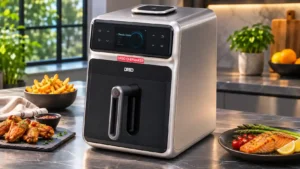
Its probe-guided, moisture-assisted programs can deliver remarkably juicy meat and fish with little guesswork. The premium cost, sometimes overenthusiastic manual heat, and single basket make it a specialist rather than...
Pros: food texture quality, app connectivity
Cons: basket capacity, temperature accuracy
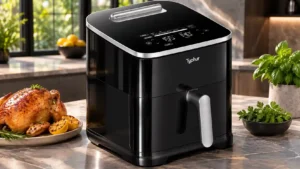
The built-in meat probe, generous basket and easy cleaning make family roasts impressively convenient. Allow plenty of counter depth, and expect a few crisping and app-control compromises.
Pros: Meat thermometer convenience, basket capacity
Cons: footprint size, Setup simplicity
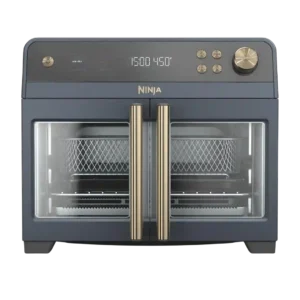
Best for fast, even air frying, family-sized capacity, and a genuinely useful mix of oven functions. Skip it if you need cool sides, effortless dishwasher cleanup, or independent two-level cooking.
Pros: ease of cleaning, ease of use
Cons: exterior heat management, dishwasher-safe parts