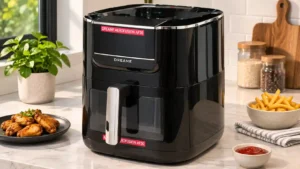
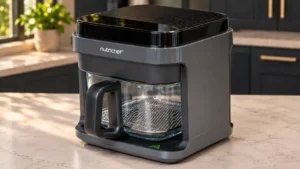
Dreame AeroFusion AF30
Where It Has the Edge
No clear scored advantage over the other product.

Scorata scores summarize analyzed review evidence on a 1–5 scale; they are not laboratory measurements or a simple average of customer star ratings. Feature scores summarize the reviews covering that feature. The overall score averages feature scores within each review, then combines review averages. When both expert and customer evidence are available, those two groups receive equal weight. Products can have different review coverage, so small score gaps do not establish a winner.
Recommendations prioritize important features for the category, with a score of at least 3.5, a gap of at least 0.25 points and at least two supporting reviews per product. Features with widely varying scores or broad connectivity contexts are excluded from recommendations. These safeguards do not establish statistical significance.
Quick verdict
The available evidence supports the recommendation below, but does not establish an overall winner. Check the remaining features against your priorities.
There is not enough comparable review evidence to recommend Dreame AeroFusion AF30 over the other product.
Choose NutriChef 5.8 Quart NCAF539TB for footprint size and visibility while cooking.
No clear scored advantage over the other product.
Scores are out of 5. Missing scores mean missing review evidence, not a missing feature.
The single-zone design is straightforward for preparing one meal at a time, though it cannot handle two independently controlled dishes.
The presets and wipeable touchscreen make everyday operation fairly simple, although learning manual settings and seating the bowl can take care.
A missing preheat reminder means you must watch the appliance or track readiness yourself.
One account praises clear preheat indicators, though another describes preheating as a separate manual cycle rather than a dedicated function.
Fries crisp nicely, but chicken wings frequently develop crisp skin on only one side. Uniform all-around crisping is not a strength.
Bacon and some smaller portions can get nicely crisp, but fries and crowded batches may turn out unevenly or lack crunch.
Preheating is exceptionally quick, making it easy to start a batch with little delay.
Preheating is quicker than a conventional oven in some accounts, but slower than competing air fryers. It can require a separate manual cycle.
Heat bounces back quickly after food goes into the basket, even though the temperature is not especially stable through a full cook.
The 1,200-watt heater is described as adequate for everyday cooking, but comparison tests found it underpowered and slow to recover heat.
The 400°F maximum rules out some higher-heat recipes available on rival air fryers.
The temperature ceiling limits high-heat crisping and searing, and the minimum is too high for effective dehydration in lab testing.
Six cooking methods and less-common menu options offer variety, but the 400°F maximum, fixed fan speed and missing probe limit control over recipes.
Food-specific presets and manual settings cover common meals, but the limited temperature and fan-speed range makes it less versatile than some alternatives.
Temperature swings make the finish time for some meats difficult to predict, particularly leaner cuts that need careful timing.
Thickness and quantity can change cooking times, and slow heat recovery can make timing less predictable.
Most fries emerge with consistent doneness and little overcooking, although some can remain slightly underdone.
Golden fries are possible, but laboratory testing found uneven browning, especially with homemade fries.
Programs for yogurt, dried fruit and pastries add uncommon choices beyond ordinary air-frying presets.
Eight presets are helpful for common foods, though only two distinct cooking methods are identified in the detailed lab review.
Fresh-cut fries and some meats cook unevenly, even though the dual heating system is promoted as a way to brown both sides without flipping.
Evenness is a significant question mark: several accounts praise uniform results, while lab testing found substantial variation even after shaking.
Fan speed is fixed, reducing the ability to fine-tune airflow for different dishes.
The relatively low maximum fan speed limits airflow and flexibility compared with stronger air fryers.
Temperature recovers rapidly when food is inserted, but heat varies noticeably rather than staying steady throughout cooking.
Temperature stability is disputed: some accounts describe steady heat, while lab testing found major fluctuations and slow recovery after food was added.
Quick preheating and crisp frozen fries are its strongest qualities, alongside a distinctive design. Results with wings are less consistent, and the cooking controls are fairly limited.
Overall satisfaction is strongest among cooks who prioritize visibility, easy cleanup and quiet operation. Performance-focused shoppers have stronger alternatives.
The steam-fry and conventional air-fry modes have clear suggested roles, with steam-oriented choices for proteins and standard air frying for fries and frozen snacks.
Food-specific presets simplify routine cooking and provide useful starting points that can be adjusted for portion size or recipe.
Frozen fries, tater tots and small appetizers cook relatively quickly; thicker cuts such as wings and bone-in thighs require substantially longer.
Some foods cook quickly compared with an oven, but the 1,200-watt system is slow against competing air fryers, especially for thicker foods and repeated batches.
Frozen fries develop an appealing golden-brown, crunchy finish without much overcooking.
Some cooks describe juicy interiors and crisp exteriors, but controlled testing found proteins can lose moisture and turn dry.
The basket holds several servings, but its usable single-layer cooking area is not proportionately large, so fuller loads need batches.
The 5.8-quart bowl fits modest family portions, but usable single-layer space is more limiting than the capacity suggests.
Chicken wings often crisp mostly on one side, even though the dual-heating design is promoted as eliminating flipping.
Some cooks report good results without flipping, but others still find hotspots or uneven cooking even after shaking or rotating food.
The ceramic-coated tray is designed to reduce food sticking, a practical advantage for unloading meals.
Food residue can release readily, but any coated insert requires gentle cleaning to preserve its surface.
A larger basket also demands more counter space than smaller single-basket fryers. The seven-quart format can feel bulky when cooking for two.
The appliance makes efficient use of counter space for its stated capacity, although its glass bowl is relatively heavy.
A spacious but relatively shallow basket accommodates several portions yet restricts tall foods such as whole chickens.
The transparent bowl and raised insert are practical design touches. The heavy bowl requires careful alignment and handling.
The cooking temperature can fall below the selected setting, contributing to inconsistent results with temperature-sensitive foods.
One test praises well-calibrated settings, but another finds actual temperatures fall below the selected target.
The illuminated window makes it easy to see food cooking without pulling out the basket.
The clear glass bowl is the standout feature: you can check browning and cooking progress without opening the fryer and losing heat.
Fried foods are a highlight, especially golden, crisp frozen fries. Thicker items and wings expose more uneven results.
Frying results are sharply disputed. Some cooks report excellent results, but controlled testing found many fries and spring rolls undercooked or burnt.
The AF30 costs less than the more elaborate DS50 while retaining its distinctive styling. Its premium is most worthwhile for cooks who value the steam-assisted approach.
Several sources call it an affordable route to glass cooking, though lab testing questions its value against faster, more capable alternatives.
The distinctive, design-forward look is a key appeal, especially compared with the higher-priced model in the same range.
The understated finish and modern touchscreen give the appliance a clean, attractive countertop appearance.
One roundup describes the fryer as reliable for routine cooking, although long-term reliability is not well established.
Initial setup and choosing the first cooking settings are described as straightforward.
Warranty coverage is less reassuring than some competitors for heavy daily users seeking long-term protection.
The raised insert allows air underneath food, and several accounts praise circulation. Crowded portions and weak airflow in lab tests can leave food unevenly cooked.
The fryer pauses when the bowl is pulled out and resumes the previous time and temperature when reinserted, a convenient safety feature.
The square basket offers room to lay food out, but larger portions can still overlap and reduce crisping.
The glass bowl is noticeably heavy, particularly when full. The second handle helps, but two-handed lifting and careful placement may be needed.
Some users praise the clear touchscreen layout, while others find the unlit buttons difficult to see.
Preset instructions could be more helpful, particularly for users who find the control panel frustrating.
One account reports no lingering oil smell compared with traditional deep frying.
Some accounts praise anti-slip stability, but the front-heavy bowl can make the appliance tilt when pulled out.
Dishwasher-friendly removable parts make post-cooking cleanup more convenient.
The flat control panel avoids crevices where dust and oil could otherwise accumulate.
Quick heating compared with an oven and automatic pausing during bowl removal are cited as energy-saving conveniences.
The exterior and handle are described as cool in some accounts, but the glass gets hot and the handle may warm during longer cycles.
The glossy touchscreen can collect fingerprints and grease, although it is relatively easy to wipe clean.
Positive accounts praise flavorful, satisfying food with little oil, particularly crisp wings and fries.
The enclosed bowl reduces bacon spatter, and cooking without deep-frying oil simplifies grease disposal.
The raised mesh insert, extra handle and silicone trivet are appreciated for practical cooking and safe handling.
The manual is criticized for not explaining the presets clearly.
Several sources describe satisfying crispness and flavor with little or no added oil, although overall frying consistency remains disputed.
There is no integrated temperature probe to track internal meat temperature as food cooks.
The steam feature is designed to help retain juices in lean chicken and seafood. Its effectiveness has yet to be demonstrated in the cooking results discussed here.
The basket interlock and shutoff are valued, but correct seating is important and the hot, heavy bowl warrants caution.
The relatively compact shape is convenient to store, but the heavy glass bowl can make lifting it into a cupboard awkward.
Fine temperature adjustment is appreciated for tailoring cooking to specific foods and recipes.
Adjustable cooking times make it easy to extend a preset or customize a manual cooking cycle.
The housing and materials generally feel solid and well constructed.
Construction feels sturdy, but glass and coated accessories require careful handling and long-term durability is less established.
The extra handle helps lift the heavy bowl, although the main handle may become warm during longer cooking sessions.
Glass and metal construction receive favorable comments, though the exact food-contact materials are described inconsistently across sources.
Presets and adjustable time and temperature earn praise, but manual settings can take several steps and unlit controls can be hard to see.
Manual time and temperature adjustment is a welcome option, including the ability to modify presets instead of accepting their defaults.
Display legibility varies by account: some praise the bright panel, while others struggle to see the setting buttons.
The smooth glass bowl is repeatedly praised for easy washing and minimal stuck-on residue. The flat controls are also easy to wipe down.
Glass surfaces and removable parts make cleanup a recurring strength, with little scrubbing needed in many accounts.
Quiet operation is one of the most consistent strengths, with several cooks describing it as quieter than other air fryers.

A roomy basket, crispy results, quiet fan, and easy cleanup make the TurboBlaze a versatile everyday choice. Inconsistent cooking on some foods, no shake reminder, and a single basket are...
Pros: crisping ability, cooking speed
Cons: Finish resistance to smudges, Shake reminder
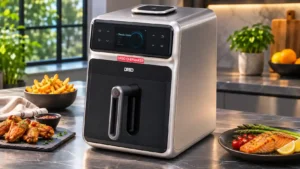
Its probe-guided, moisture-assisted programs can deliver remarkably juicy meat and fish with little guesswork. The premium cost, sometimes overenthusiastic manual heat, and single basket make it a specialist rather than...
Pros: food texture quality, app connectivity
Cons: basket capacity, temperature accuracy

The built-in meat probe, generous basket and easy cleaning make family roasts impressively convenient. Allow plenty of counter depth, and expect a few crisping and app-control compromises.
Pros: Meat thermometer convenience, basket capacity
Cons: footprint size, Setup simplicity
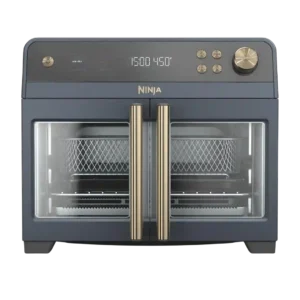
Best for fast, even air frying, family-sized capacity, and a genuinely useful mix of oven functions. Skip it if you need cool sides, effortless dishwasher cleanup, or independent two-level cooking.
Pros: ease of cleaning, ease of use
Cons: exterior heat management, dishwasher-safe parts