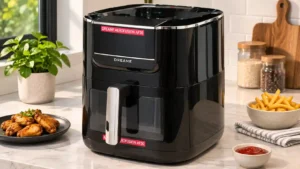
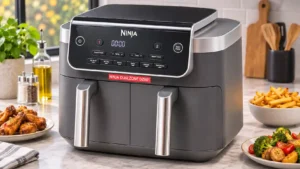
Dreame AeroFusion AF30
Where It Has the Edge
- value for money is 4.0 vs 3.1. The AF30 costs less than the more elaborate DS50 while retaining its distinctive styling. Its premium is most...

Scorata scores summarize analyzed review evidence on a 1–5 scale; they are not laboratory measurements or a simple average of customer star ratings. Feature scores summarize the reviews covering that feature. The overall score averages feature scores within each review, then combines review averages. When both expert and customer evidence are available, those two groups receive equal weight. Products can have different review coverage, so small score gaps do not establish a winner.
Recommendations prioritize important features for the category, with a score of at least 3.5, a gap of at least 0.25 points and at least two supporting reviews per product. Features with widely varying scores or broad connectivity contexts are excluded from recommendations. These safeguards do not establish statistical significance.
Quick verdict
The review evidence points to a tradeoff: value for money versus cooking versatility. Choose according to which strengths matter more to you; the overall score alone does not settle that choice.
Choose Dreame AeroFusion AF30 for value for money.
Choose Ninja DualZone DZ801 for cooking versatility.
Scores are out of 5. Missing scores mean missing review evidence, not a missing feature.
Frozen fries develop an appealing golden-brown, crunchy finish without much overcooking.
Wings and chops can develop crisp patches while other parts stay rubbery or dry. Shoppers focused on excellent meat texture should consider alternatives.
Frozen fries, tater tots and small appetizers cook relatively quickly; thicker cuts such as wings and bone-in thighs require substantially longer.
Its fast cooking is a repeat advantage, particularly for frozen snacks. Dense vegetables and meats take longer, though still at a reasonable pace.
Fan speed is fixed, reducing the ability to fine-tune airflow for different dishes.
Variable fan speeds help adapt the cooking method, but some rivals offer a wider range for fine control.
Temperature recovers rapidly when food is inserted, but heat varies noticeably rather than staying steady throughout cooking.
Once it reaches its cooking temperature, heat fluctuates little. However, the stable temperature itself can sit above the setting selected.
The basket holds several servings, but its usable single-layer cooking area is not proportionately large, so fuller loads need batches.
Eight quarts across two drawers is useful for a family meal, but each four-quart compartment is relatively small. Larger items and thickly piled batches can run out of room.
The 400°F maximum rules out some higher-heat recipes available on rival air fryers.
The six modes cover low-temperature dehydrating and hotter roasting or broiling. Reports differ on the maximum in some listings, so the precise program matters.
Fries crisp nicely, but chicken wings frequently develop crisp skin on only one side. Uniform all-around crisping is not a strength.
Frozen fries and nuggets develop a satisfying crunch quickly. Homemade fries and some larger pieces are less consistent, especially beside higher-performing models.
Quick preheating and crisp frozen fries are its strongest qualities, alongside a distinctive design. Results with wings are less consistent, and the cooking controls are fairly limited.
The refreshed dual-basket design receives strong praise for its incremental refinements. Longer-term testing and comparison with cheaper alternatives temper the enthusiasm.
Six cooking methods and less-common menu options offer variety, but the 400°F maximum, fixed fan speed and missing probe limit control over recipes.
Separate baskets support air frying, broiling, roasting, baking, reheating and dehydrating. The flexibility is a strength, although inconsistent mode labeling and narrower fan controls temper it.
Heat bounces back quickly after food goes into the basket, even though the temperature is not especially stable through a full cook.
It gets back up to cooking heat quickly after a drawer is opened, limiting the interruption from checking or adding food.
Most fries emerge with consistent doneness and little overcooking, although some can remain slightly underdone.
Browning can be uneven, particularly on homemade fries or next to premium dual-basket competitors. Some side-by-side testing also reports incremental improvement over the older DZ201.
Programs for yogurt, dried fruit and pastries add uncommon choices beyond ordinary air-frying presets.
Six available methods cover considerably more than simple frying, with low-temperature settings for dehydrating and higher modes for roasting or broiling.
Fresh-cut fries and some meats cook unevenly, even though the dual heating system is promoted as a way to brown both sides without flipping.
Frozen snacks cook fairly consistently, but proteins and certain homemade foods have more uneven results than the strongest rivals. Other testing reports modest airflow improvements over its predecessor.
Temperature swings make the finish time for some meats difficult to predict, particularly leaner cuts that need careful timing.
Because it typically runs hot, following recipes without checking them may lead to earlier or stronger browning than expected.
There is no integrated temperature probe to track internal meat temperature as food cooks.
The absence of a built-in meat probe is a drawback versus higher-end models that stop cooking at a target doneness.
The ceramic-coated tray is designed to reduce food sticking, a practical advantage for unloading meals.
The PTFE-coated baskets are credited with easy cleanup and release, although shoppers trying to avoid this coating will need another product.
Preheating is exceptionally quick, making it easy to start a batch with little delay.
Fast preheating is a repeatedly noted strength, including against otherwise higher-performing dual-basket competitors.
The illuminated window makes it easy to see food cooking without pulling out the basket.
Without a basket window, you cannot watch food brown without opening a drawer. That makes it less attractive for visual monitoring.
Fried foods are a highlight, especially golden, crisp frozen fries. Thicker items and wings expose more uneven results.
Frozen fried food generally turns out golden and crispy, and one comparison found slightly improved wing and nugget results. Meat remains considerably less reliable than potato snacks.
The cooking temperature can fall below the selected setting, contributing to inconsistent results with temperature-sensitive foods.
The fryer tends to run hotter than the selected temperature, so standard recipes can brown sooner than expected. This is one of its clearest tested drawbacks.
The AF30 costs less than the more elaborate DS50 while retaining its distinctive styling. Its premium is most worthwhile for cooks who value the steam-assisted approach.
Its value is strongest for regularly cooking different dishes simultaneously. For mostly single-food batches, the cost and space premium buys functionality that may go unused.
The distinctive, design-forward look is a key appeal, especially compared with the higher-priced model in the same range.
A refreshed, more modern housing improves its visual appeal compared with the earlier model.
A larger basket also demands more counter space than smaller single-basket fryers. The seven-quart format can feel bulky when cooking for two.
It is somewhat more compact than several 10-quart Ninja models, but still takes meaningful countertop space. Drawer clearance and its weight matter in tight kitchens.
A spacious but relatively shallow basket accommodates several portions yet restricts tall foods such as whole chickens.
Side-by-side drawers keep foods separate and are simple to access, but their small individual cooking floors limit single-layer spreading and large cuts.
The single-zone design is straightforward for preparing one meal at a time, though it cannot handle two independently controlled dishes.
More than one account notes that pulling a basket out does not automatically pause the cooking cycle. Manually stopping it adds an extra step.
Several guides find the coating specifications unclear or incomplete. Other reporting distinguishes ceramic crisper plates from PTFE-coated baskets, so buyers should check exact surfaces.
Conflicting descriptions of certain specialty presets make the documentation less reassuring for people buying specifically for those modes.
Chicken wings often crisp mostly on one side, even though the dual-heating design is promoted as eliminating flipping.
The crisper plates are repeatedly described as dishwasher-safe, while descriptions of basket care vary. Check exact-model instructions before putting the baskets in the dishwasher.
Smart Finish is the most consistently praised convenience: it staggers starts so two different recipes complete together without manual timing.
High appliance wattage and incomplete exact-model electrical documentation warrant checking outlet suitability before use.
The continued airflow reported when a drawer is removed creates avoidable energy use.
Separate airflow paths are credited with keeping aromatic foods from influencing what cooks in the neighboring drawer.
An accessible exact U.S. owner guide was not established in one comparison, leaving program and electrical details less clear.
One hands-on account reports deep-fry-like crispness without submerging French fries in oil.
Match Cook copies one zone’s settings to the other, making two identical batches easier to run without entering everything twice.
The steam feature is designed to help retain juices in lean chicken and seafood. Its effectiveness has yet to be demonstrated in the cooking results discussed here.
The updated unit is lighter than some older or higher-capacity counterparts, though at roughly 17 pounds it is not a featherweight.
A missing preheat reminder means you must watch the appliance or track readiness yourself.
The steam-fry and conventional air-fry modes have clear suggested roles, with steam-oriented choices for proteins and standard air frying for fries and frozen snacks.
Some descriptions report that cooking continues when a drawer is pulled out. Remembering to pause manually matters when checking hot food.
A guide credits the independently routed airflow with keeping temperature conditions separate between baskets.
Early feedback is encouraging, but the 2026 model has far less long-term owner history than established Ninja alternatives. Some commentators prefer a longer-proven model.
Its newer, active model status is considered a possible advantage for continued parts availability, though actual long-term support is not proven.
The one-year limited warranty is shorter than the two-year coverage available from some compared competitors.
The refreshed touch panel is considered more responsive and straightforward to follow for two-dish cooking.
The nonstick drawers wipe clean and removable plates simplify washing. Two separate baskets still mean more surfaces than a single-drawer fryer.
Noise surfaced as a complaint in a small set of early owner ratings, although the limited sample does not establish how common it is.
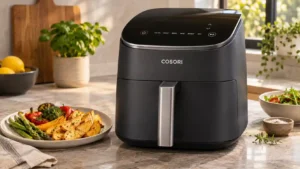
A roomy basket, crispy results, quiet fan, and easy cleanup make the TurboBlaze a versatile everyday choice. Inconsistent cooking on some foods, no shake reminder, and a single basket are...
Pros: crisping ability, cooking speed
Cons: Finish resistance to smudges, Shake reminder
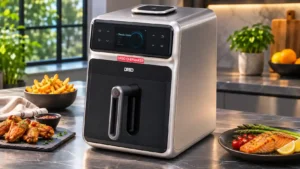
Its probe-guided, moisture-assisted programs can deliver remarkably juicy meat and fish with little guesswork. The premium cost, sometimes overenthusiastic manual heat, and single basket make it a specialist rather than...
Pros: food texture quality, app connectivity
Cons: basket capacity, temperature accuracy
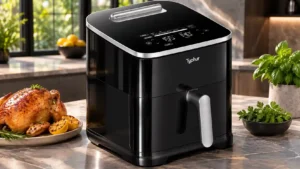
The built-in meat probe, generous basket and easy cleaning make family roasts impressively convenient. Allow plenty of counter depth, and expect a few crisping and app-control compromises.
Pros: Meat thermometer convenience, basket capacity
Cons: footprint size, Setup simplicity
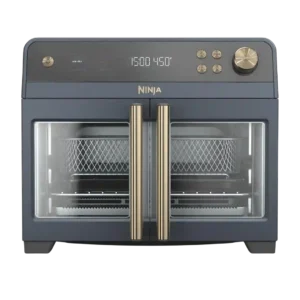
Best for fast, even air frying, family-sized capacity, and a genuinely useful mix of oven functions. Skip it if you need cool sides, effortless dishwasher cleanup, or independent two-level cooking.
Pros: ease of cleaning, ease of use
Cons: exterior heat management, dishwasher-safe parts