

Amazon Ember Artline 2026
Where It Has the Edge
No clear scored advantage over the other product.

Scorata scores summarize analyzed review evidence on a 1–5 scale; they are not laboratory measurements or a simple average of customer star ratings. Feature scores summarize the reviews covering that feature. The overall score averages feature scores within each review, then combines review averages. When both expert and customer evidence are available, those two groups receive equal weight. Products can have different review coverage, so small score gaps do not establish a winner.
Recommendations prioritize important features for the category, with a score of at least 3.5, a gap of at least 0.25 points and at least two supporting reviews per product. Features with widely varying scores or broad connectivity contexts are excluded from recommendations. These safeguards do not establish statistical significance.
Quick verdict
The available evidence supports the recommendation below, but does not establish an overall winner. Check the remaining features against your priorities.
There is not enough comparable review evidence to recommend Amazon Ember Artline 2026 over the other product.
Choose Samsung The Frame Pro 2026 for low-resolution content handling and dialogue clarity.
No clear scored advantage over the other product.
Scores are out of 5. Missing scores mean missing review evidence, not a missing feature.
Picture assessments range from enthusiastic approval of bright, colorful daily viewing to serious criticism of motion and processing. It looks far stronger as decorative art than as a performance-first TV.
Color accuracy and daytime sharpness are strong for an art-focused TV, but deeper cinema contrast and motion quality trail traditional premium sets.
Out-of-box whites can have a noticeably reddish, warm cast that benefits from calibration.
Out-of-box white balance is extremely good, with only a barely noticeable cool cast.
Bass provides a modest amount of body without offering the depth or control expected from a separate speaker system.
The slim built-in speakers struggle to produce meaningful bass, making an external sound system worthwhile.
Compression artifacts and blockiness are not cleaned up especially well, making lower-quality streams look rough.
Compression blocks are reduced effectively without obvious smoothing away of fine textures.
Factory picture settings are not consistently accurate, with a warm white balance and darker-than-intended scenes despite decent saturated colors.
The picture is very faithful in most modes, with particularly good white balance and careful HDR mapping.
Dark-scene contrast is the biggest visual compromise: blacks often look gray and paintings can lack convincing texture. Some viewers find the image adequate for everyday shows, but it trails stronger-performing sets.
Deep blacks and contrast impressed some viewers, but instrumented testing found weak native contrast and ineffective edge-lit dimming.
Casual and slower games are playable, but input lag, poor motion clarity and unreliable VRR make serious gaming disappointing.
Games can be vivid and enjoyable, but slow pixel transitions and latency make responsiveness inconsistent, particularly for fast action.
Maximum HDR brightness is adequate for many scenes but does not make small specular highlights stand out.
Strong daytime brightness sets it ahead of many art-TV rivals, although peak HDR highlights still have limits.
Some viewers enjoy sharp, textured artwork and detailed 4K images, but low-resolution upscaling and matte-screen softness undermine fine video detail.
Fine textures are clear in upscaled video, natural scenery and artwork; very bright HDR highlights are less nuanced.
Color can look pleasingly natural, particularly in skin tones and vivid artwork, but some settings shift toward warm reds and less accurate neutrals.
Colors are particularly accurate without calibration, including convincing skin tones, though the measured HDR reds and blues are not flawless.
eARC support is restricted by limited formats and two-channel LPCM, so multichannel sources may need to connect directly to the audio system.
LPCM surround passthrough takes extra setup for seven channels, with a five-channel limit otherwise; DTS soundtracks are another obstacle.
Sound modes offer limited variation, with Smart creating a little extra spaciousness and Clear Voice sounding sharper.
Voice and music adjustments have useful ideas but may reset unexpectedly; speaker-output selection can also demand manual intervention.
The absence of local dimming is a major weakness for dark films and HDR, especially because cheaper conventional QLED TVs can include it.
The basic edge-lit system offers limited contrast improvement and cannot control small light and dark areas precisely.
Standard-range video is often easier to enjoy than HDR, with enough light output for moderately lit rooms and fewer distracting dark-scene problems.
Bright SDR images remain punchy in daylight, with excellent accuracy and readable detail.
Without local dimming, dark scenes can look gray, muddy or excessively crushed rather than cinematic. This is a poor match for viewers who prioritize lights-off movies.
Weak dark-scene contrast, uneven blacks and distracting dimming artifacts make a dark home theater a less convincing fit.
SDR brightness and a matte surface keep everyday programming watchable with daylight in the room. Intense ambient light still takes a toll on image depth and color saturation.
The screen remains legible and art-like during daytime, with bright rooms playing to its anti-reflective finish.
HDR content generally looks bright enough, yet small highlights lack the punch needed to make the image feel truly dynamic.
HDR has worthwhile brightness for much content, but tiny highlights do not pop as strongly as on the best HDR sets.
Paintings and photos can look surprisingly convincing on the matte screen, particularly with a decorative frame. The art effect is less persuasive in very dark rooms, and the gallery controls have some restrictions.
On its matte screen, paintings can convincingly resemble framed canvas rather than a glowing television. This is the standout reason to choose the Frame Pro.
Dolby Vision and HDR10+ compatibility does not translate into consistently impressive HDR playback. Some scenes look vibrant while dark detail and highlights can be disappointing.
HDR color and accurate tone mapping are positives; limited small-highlight impact and dark-scene contrast stop it short of premium cinema performance.
The integrated speakers are acceptable to some listeners but hollow, harsh or boxy to others. A separate soundbar is the safer choice for films.
Voices are balanced at moderate loudness, but harsh treble, light bass and compression limit standalone audio quality.
Brightness can adapt subtly to room lighting, making the display more comfortable and its framed-art presentation more natural.
Ambient-light sensing adjusts the art image's brightness and tone, helping it look realistic throughout changing room light.
Fast movement often appears smeared or blurry, though one lab rated motion acceptable with some blur. It is not a strong action-first display.
A weak point: response times are slow and fast action can look soft, even though some casual games appear smooth.
Controls can feel less immediate than on stronger gaming televisions, especially in racing or competitive action.
The wireless One Connect link can introduce substantial delay, though a direct Micro-HDMI connection is much quicker; casual testing found less noticeable lag.
Most app and picture controls are straightforward, especially compared with more layered competing interfaces. Ads and unusual remote shortcuts complicate a few tasks.
The refreshed Tizen setup and everyday navigation are friendlier, though art settings and authentication still require extra effort.
Thick vertical bands can be seen on the panel, particularly toward one side, adding to its uniformity shortcomings.
Gradients are exceptionally clean, with no obvious color banding during testing.
Incorrect chroma reproduction makes small desktop text blurry, even though this does not noticeably affect console gaming.
Correct chroma rendering keeps desktop lettering crisp across supported PC signal modes.
The narrow working range leaves no effective low-frame-rate compensation and limits VRR usefulness.
Variable refresh works across the screen's full supported range and handles lower frame rates with compensation.
Although VRR is offered on one HDMI connection, its inconsistent timing can make the picture worse instead of smoother.
FreeSync, HDMI VRR and G-SYNC compatibility help avoid tearing throughout the supported frame-rate range.
The native 60 Hz panel is a clear limitation for modern gaming and smooth sports, even though it is adequate for basic viewing.
The TV accepts up to 4K/144 Hz and 1080p/240 Hz, but those refresh rates deliver less motion benefit than the numbers suggest.
The supplied template and instructions can help placement, although several installers found the printed directions confusing or out of sequence.
Sparse and confusing printed mounting guidance undermines the polish expected of a premium television.
Low-resolution material may look soft, with small details difficult to recover. Other testing liked its HD-to-4K edge treatment, so assessments are not unanimous.
Older HD and DVD material gains clear, natural-looking detail without harsh over-sharpening.
A specialized wall mount, mounting template and chosen decorative frame add convenience and value without buying a full separate installation kit.
A wall mount and stand are supplied, but the signature decorative bezel requires another purchase.
The screen looks fairly slim face-on but leaves a visible gap from the side. Outlets, cables and optional wall magnets can increase the protrusion.
The thin body and included mounting hardware let the TV rest close to the wall like a real framed artwork.
Searching for shows by voice is often quick and accurate, but finding individual artworks and less obvious titles can fail.
The Art Store lacks straightforward artwork search and can make specific pieces hard to locate.
Older streams and heavily compressed cable channels can look rough, with limited cleanup and soft fine details.
HD, DVD and compressed video benefit from competent upscaling and artifact cleanup, preserving respectable detail.
The speakers can get fairly loud, but turning them up does not guarantee a pleasant or balanced sound.
Sound becomes compressed at high output levels, reducing the usefulness of the built-in speakers at maximum volume.
Rear channels can guide wires neatly away from the screen, but an external device or poorly placed outlet can leave visible cables and spoil the picture-frame effect.
The wireless connection box hides HDMI clutter away from the wall-mounted screen; the TV and hub still each need power.
Dark scenes lose fine textures, faces and near-black detail, while better-calibrated settings can recover only part of that information.
Some viewers see notably rich details in dark content, but limited contrast and dimming constrain the darkest scenes.
Recessed rear ports help the wall-mounted look but can be difficult to reach. The articulating mount provides some access when cables need changing.
The wireless hub makes routine cable swaps easy, but getting to the TV's own port may require removing it from the wall.
Low-latency configuration is available, but VRR only works through the first HDMI input and does not provide a consistently smooth experience.
Supported consoles can trigger Game Mode automatically, although this does not solve the latency added by the wireless hub.
With no local dimming, the set avoids isolated halos around subtitles, but that benefit comes with an overall washed-out image.
Edge-lit zones create intrusive halos around moving highlights against darker backgrounds.
Calibration is fairly approachable and can correct much of the warm cast, but adjustment limits remain and very bright scenes may still look too dark.
Picture accuracy is already strong out of the box and can be made even better, although most owners will gain little from calibration.
Speech can sound recessed or poorly detailed; the voice-enhancement mode improves intelligibility but may introduce a tinny sound.
Speech stays clear at normal volume, and sound processing can raise voices above music or sports crowds.
Dark gradients and some blue or green transitions can show conspicuous banding, although another assessment found smooth shading acceptable.
Subtle color transitions look smooth, without obvious steps or banding.
Motion smoothing can introduce an exaggerated soap-opera appearance without solving uneven film cadence.
Mild interpolation reduces some stutter but cannot fully remove it and is undesirable for film purists.
High frequencies are generally clear, though they can also sound somewhat thin or bright.
Thin speakers can sound sharp and shrill, particularly without a soundbar to balance their output.
The panel struggles to keep fast objects sharp, and blur is particularly obvious in fast games and action scenes.
Fast movement blurs noticeably despite the headline high-refresh capabilities.
Built-in speakers sound thin and lack depth, making external audio worthwhile even for an attractive wall installation.
The thin cabinet offers acceptable dialogue but lacks bass and loses composure when played loudly.
Dark areas are not particularly deep, with noticeable gray blacks and occasional loss of shadow definition. The limitations stand out most in movies and nighttime viewing.
Black depth is divisive: some viewing impressions are impressed, but measured contrast and dark-scene blacks are disappointing.
The remote is easy to pair and has useful buttons, although some app-specific menu behavior is confusing.
Reactions to the remote are divided between its simplicity and frustration with small controls and the missing dedicated Mute key.
A free Amazon account is required for setup, but Prime is not necessary for the basic TV interface or included art.
Streaming and Art Store functions demand account authentication, adding an irritating step to an otherwise convenient setup.
Separate art controls let you fine-tune brightness, framing and schedules without disrupting your regular television picture.
Personal photos and display layouts can be customized, but artwork playlists and convenient global mat settings are lacking.
Fast transitions can leave distracting color artifacts because pixels change at inconsistent speeds.
Uneven pixel transitions introduce minor intermediate colors around moving edges.
Uneven lighting and potential reflector-sheet problems raise concerns about consistent brightness across the screen and its appearance over time.
Near-black scenes can look even, but broad gray scenes reveal a distracting patchy finish.
Motion-triggered artwork is appealing and often quick to wake, but reliability varies across users, with occasional missed detections.
The screen can react to someone entering the room, keeping artwork off when nobody is present and saving power.
Prompt-based art is an entertaining extra for personalized displays, but some results are generic or inaccurate.
Generated artwork can be attractive, but voice-based requests and the keyword-driven creation process feel less intuitive than on Amazon's art TV.
Strong suppression of mirror-like reflections helps artwork look less electronic and TV shows remain visible near windows. In very bright spaces, diffuse glare can still wash out color and contrast.
Window and lamp reflections are greatly reduced, although scattered ambient light can still slightly wash across the matte surface.
Large sponsored sections and persistent promotions make Fire TV feel cluttered and distracting, particularly next to the elegant artwork interface.
Ads cannot be completely removed from the TV interface, even when targeted advertising is disabled.
Slow pixel response softens typical frame-hold stutter, though slow camera pans can still reveal it.
Film pans can retain mild stutter, while some firsthand gaming appeared smooth and only cloud streaming showed occasional delays.
Many colors are vibrant and well saturated, especially in ordinary scenes. Very bright and very dark images can wash out or lose deep color richness.
Bright, vivid artwork and video impress, but pale and very dark saturated colors are not reproduced equally well.
One lab found the TV unable to remove 24p film judder, while separate testing liked its 1080i film compensation.
Most film sources play without major judder, but mismatched 60p playback may need extra settings or show mild micro-judder.
Players wanting 120 Hz or higher should choose another TV; 60 Hz and blurry motion restrict responsiveness.
Rapid-refresh modes sound enticing, but blurry transitions and input lag keep this from being a top competitive-gaming screen.
Its art-first design delights many owners and testers, but enthusiasm weakens sharply when evaluated as a primary movie or gaming television.
Its realistic art appearance makes a strong impression, but picture and gaming tradeoffs prevent universal enthusiasm.
Picture brightness and color fall off from the sides, so the best seat is directly in front of the TV.
The picture loses color and black depth quickly from the sides, so centered seating is preferable.
The art collections are attractively organized for casual discovery, but missing search, favorites and cross-collection playlists frustrate more selective browsing.
The artwork categories are expansive, but a missing or hard-to-find direct search function makes hunting for particular pieces frustrating.
The large, subscription-free mix of paintings, photographs and moving landscapes is a major attraction. Some shoppers may miss deeper museum collections or easier access to individual artists.
Thousands of museum and gallery images offer impressive variety through the paid store, while the free rotating selection is relatively small.
The supplied wall mount makes an art-focused installation possible, but the heavier chassis and precise hook alignment can make mounting tricky.
The included two-bracket mount achieves an elegant flush finish but needs accurate alignment and suitable wall support.
Bright corners and flashlighting are noticeable on dark screens, reducing the sense of an even black background.
Uneven dark patches disturb otherwise black scenes even though near-black uniformity can be good.
The LED panel avoids the permanent image retention concerns that can come with displaying static artwork for long periods.
Permanent image retention is considered extremely unlikely, an advantage for displaying static art for long periods.
The QLED panel reproduces a broad, lively range of colors, giving paintings, animation and everyday video appealing saturation.
Strong coverage of the main HDR color gamut is offset by a limited range of the deepest reds and greens.
The outer portion of the panel can look darker than the center, creating visible unevenness even in ordinary video.
Patchy gray uniformity can distract during bright, evenly colored scenes, particularly sports broadcasts.
Low-frequency backlight pulsing may bother people who are sensitive to flicker, especially with the brightness lowered.
Fast flicker in Game and Filmmaker modes contrasts with a slower 120 Hz backlight rhythm elsewhere that may bother sensitive viewers.
The matte screen substantially reduces direct window and lamp reflections, making both artwork and casual daytime viewing more pleasant. It can scatter ambient light across the image instead of eliminating it entirely.
The matte anti-reflective surface suppresses reflections from bright windows and lamps exceptionally well.
Bright HDR highlights do not separate cleanly from the surrounding image, with some fine detail disappearing at the top end.
Small specular details tend to blend into their surroundings, while the brightest areas lose fine texture.
Slow pixel transitions cause pronounced motion smearing, even when the content itself is relatively sharp.
Slow pixel changes cause visible blur in both video and games.
Panel construction raises concerns about future backlight and uniformity failures, and one owner encountered persistent horizontal lines on two units.
Solid initial build quality contrasts with concerns that tightly packed edge-lit backlights may fail or develop uniformity issues over time.
The panel cannot display 4K at 120 Hz, so newer consoles cannot reach their high-frame-rate modes.
Both major current consoles can supply 4K at 120 Hz, although motion clarity and wireless input delay remain important limitations.
Luna and Xbox cloud options make some console-free games accessible with a controller, an appealing convenience for casual players.
Xbox Cloud Gaming was mostly usable with a little stutter, while GeForce NOW could not complete authentication.
Connection labeling is more ambitious than the gaming hardware: the input setup cannot deliver 4K/120 Hz benefits.
Four wireless-box HDMI 2.1 inputs provide full-bandwidth connections, though the rear direct-input port is more responsive for gaming.
HDR10+ is available, but one detailed evaluation found its dark-scene presentation just as disappointing as Dolby Vision.
HDR10+ offers a useful alternative to Dolby Vision for compatible programming.
The included artwork, frame and mount help make this a tempting alternative to pricier art TVs. At full price, some rivals offer substantially stronger video performance.
The art realism and smart cable management are premium benefits, but high pricing, a separate bezel and subscription fees reduce value.
Initial software sign-in and frame attachment are easy, but heavier wall installation and occasional confusing mounting instructions require preparation.
The on-TV setup is straightforward, while physical mounting and hidden-power planning can take more effort.
Virtual mat colors and textures add an unexpectedly effective finishing touch to the framed-art illusion.
Virtual mat colors and widths are available, but each artwork needs individual attention and texture choices are limited.
Midtones track reasonably well, but the TV struggles to distinguish near-black details and clips very bright information.
Midtones track the HDR brightness target remarkably well, with only modest limitations at the very brightest levels.
Some find the redesigned navigation quicker and cleaner, while others encounter sluggish reactions and temporary freezes.
The updated menu can feel quick and fluid, although other testing encountered sluggish startup and laggy remote responses.
Simple commands and straightforward program searches work well; complex, vague requests can still return the wrong titles.
Voice-driven AI art creation is weaker than Amazon's implementation and relies too much on preset keywords.
Ten included frame-color choices and easy magnetic attachment make it simple to match changing room decor.
Magnetic decorative bezels help the TV look like a framed painting, but attractive alternatives cost extra and Samsung's own selection is limited.
Menu speed is inconsistent: some units feel responsive, while others pause before opening apps or registering commands.
Tizen responsiveness varies: one tester saw laggy starts while another found apps and menus consistently quick.
Streaming apps generally work, but occasional freezes and noticeable launch delays interrupt an otherwise usable selection.
Most streaming use is capable, but an authentication bug kept GeForce NOW from starting in one test.
A software update can deliver the redesigned, easier-to-navigate Fire TV interface, even if the unit initially arrives with an older version.
A long promised update window is reassuring, though no update schedule can guarantee trouble-free operation.
The screen feels solidly assembled, and the magnetic frame pieces fit securely without obvious construction problems.
The plastic construction feels sturdy, well fitted and free of obvious defects.
The sleek framed presentation wins praise, especially for a first-generation art TV. A protruding sensor, chunky frame edges and a slight wall gap keep it from looking exactly like a hanging painting.
Slim construction and a customizable framed-art look make this an unusually attractive TV, especially mounted on a wall.
A protruding black power connection can keep the television away from the wall or draw attention below the frame.
A power cord still needs concealment behind the TV; a recessed outlet can be necessary for a genuinely wire-free look.
The fitted frame covers the ordinary screen border neatly, helping images extend to the visible edges.
A framed border supports the gallery illusion, though the slim basic bezel may look underwhelming on large sizes.
The screen accepts 4K at up to 144 Hz for compatible PCs. Its pixel response remains slow even at the highest supported refresh rate.
Modern 4K gaming modes are well supported, but specs are stronger than actual motion performance, particularly over the wireless connection box.
A 240 Hz mode is available only at 1080p, and the high refresh number does not overcome the panel's blurry motion or wireless-input delay.
AirPlay operated smoothly in direct use, despite trouble with competing casting methods.
The paid art library's range and curation can justify its fee for art lovers, but others regard another monthly bill as a disappointing extra.
Phone casting is inconsistent: AirPlay works, while Google Cast produced a streaming error in testing.
Google Cast produced an error when sending video from an Android phone, despite AirPlay working as intended.
Dolby Atmos playback can create an engaging sense of surround immersion with suitable external speakers.
Dolby Vision is missing, which matters for some film libraries and Xbox users despite HDR10+ support.
Missing DTS compatibility can complicate playback of Blu-rays with DTS lossless soundtracks.
Multiple eARC connection paths offer flexibility, but coordinating the hub, receiver and soundbar may take extra care.
FreeSync and other VRR standards keep games nearly tear-free across supported frame rates.
HDR10+ is supported, but no Dolby Vision leaves a notable gap for format-conscious viewers.
The larger size gives paintings and photographs more visual impact for a relatively modest price increase.
The absence of an ATSC 3.0 tuner is an inconvenience for viewers who want newer 4K over-the-air broadcasting.
Installation reports are mixed: straightforward for some, but awkward bracket spacing and unclear instructions complicate other setups.
PlayStation 5 input at 1440p and 120 Hz works, making the set compatible with popular console output modes.
AI picture processing lifts detail and contrast in dim scenes without losing the sense of a naturally lit setting.
The soccer-oriented sound enhancement improves the prominence of commentary while quieting crowd noise.
Black-frame insertion brings obvious double images instead of delivering cleaner moving objects.
The side-facing speakers create some width, but built-in audio cannot deliver convincing Dolby Atmos immersion.
Alexa+ can turn detailed taste and genre requests into helpful movie suggestions, though results are not consistently relevant.
Automatic occupancy detection can switch artwork off in an empty room, saving energy without leaving a permanent black screen.
The wireless input hub reduces signal cables, not power cords; a truly clean mount may require a hidden wall outlet.
G-SYNC Compatible mode works well with supported sources and handles frame-rate changes smoothly.
Game Mode retains decent HDR brightness, but highlights remain muted and motion still blurs at high refresh rates.
Processing falls noticeably behind some rival art TVs, especially for motion and imperfect source material.
Art textures and familiar skin tones look convincing, helped by strong color accuracy and the matte finish.
Broad backlight columns switch visibly during high-contrast movement, creating distracting halo flicker.
Room-photo matching can suggest art that genuinely complements an interior, although results are inconsistent and the feature can be difficult to locate.
Colors quickly lose accuracy and blacks turn gray as viewers move away from the center of the screen.
Protective packaging keeps the heavy screen contained, but lifting the display safely is more of a two-person task than its slim profile suggests.
The TV sometimes takes longer to wake and become responsive than comparable higher-end Samsung models.
The lightweight remote is convenient for some, but its compact button arrangement draws criticism.
Small monochrome buttons, rocker controls and a hidden mute action make the layout less intuitive.
Remote commands can feel noticeably laggy during parts of the Tizen experience.
Faint rolling horizontal lines appeared across multiple picture modes and persisted even after a replacement unit.
Snap-on feet are easy to install when wall mounting is not an option.
Adjustable feet support the set well but do little for its gallery-like appearance compared with mounting it flush.
The included blade feet hold the TV securely in tabletop setups.
A single USB connection is restrictive if you want to attach both a media drive and an accessory.
The movable wireless hub dramatically reduces cable clutter and works well for streaming, but its latency can frustrate fast gamers.
AI voice and background-sound adjustments are promising, yet controls reverting to their defaults make the feature unreliable.
The bottom-mounted sensor bar is useful for presence sensing but remains conspicuous enough to undermine the look of a real painting.
Changing gamma or switching picture presets can make dark scenes more watchable, although some modes add unnatural smoothing.
Two stand heights make room for nearly any soundbar without covering the picture.
Dolby Atmos output can spread effects around the room for an immersive experience with appropriate speakers.
The backlight maintains a consistent output across changes in scene brightness, avoiding distracting swings.
Fire TV brings the major streaming services together in a broad app catalog, making it convenient for everyday entertainment.
Bluetooth audio is convenient for wireless speakers but introduces a fidelity compromise compared with a wired connection.
Separate television and artwork settings make it easy to fine-tune the look for each purpose, a usability advantage over rival interfaces.
A physical microphone-mute switch gives users an immediate way to disable always-listening voice input.
Alexa and the Fire TV interface make connected lights, cameras and compatible Amazon devices convenient to manage from the television.
The updated Fire TV home screen is approachable and integrates popular services, but advertisements and occasional sluggishness divide opinions.
One UI Tizen is easier to navigate than before, but startup delays and awkward art-menu controls remain possible.
Major streaming services are simple to find through the Fire TV interface, allowing the set to function without an external streamer.
HDR midtones are accurate and bright gradients are controlled, although small or very bright highlights lose impact.
Alexa+ makes hands-free volume control, app launches and entertainment searches useful, though richer capabilities may require a separate membership.
Wireless streaming benefits from Wi-Fi 6 support, although the real advantage depends on the home network and the size of streamed files.
The decorative surround is attractive and symmetrical, but its thicker edges can look more like a bulky television bezel in certain finishes.
Only 55- and 65-inch sizes are offered, a good fit for many rooms but limiting if you need a smaller or oversized screen.
The solar-backed remote can recharge from room light, with USB-C available as a backup.
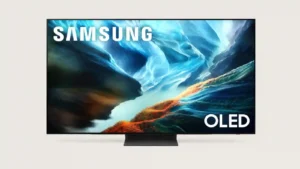
Choose the S90H for bright-room OLED viewing, deep blacks and top-tier gaming without flagship pricing. Skip it if you want Dolby Vision, a glossy screen or the simplest smart-TV software.
Pros: glare resistance, black levels
Cons: Dolby Vision support, color gamut
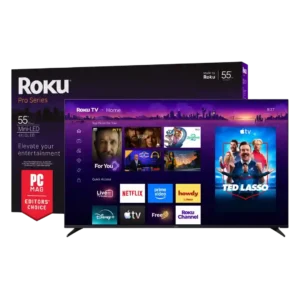
Best for bright Mini-LED picture, excellent built-in audio, easy Roku navigation, and responsive 4K/120 gaming. Skip it if you want ad-free menus, premium motion consistency, or stronger confidence in long-term...
Pros: overall satisfaction, picture quality
Cons: reliability, portability and versatility
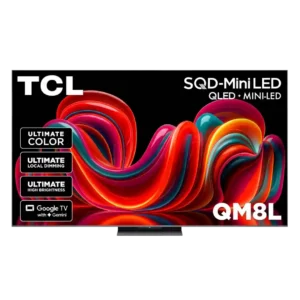
Choose the QM8L for a big, brilliantly bright TV with vivid HDR, deep mini-LED blacks, low input lag, and four HDMI 2.1 ports. Skip it if you need OLED-clean motion,...
Pros: picture quality, value for money
Cons: stand quality, judder handling

Choose the G6 for class-leading bright-room OLED picture, rich color, deep blacks and elite gaming. Skip it if you want strong built-in audio, polished launch firmware, no account sign-in, or...
Pros: picture quality, peak brightness
Cons: value for money, sound quality