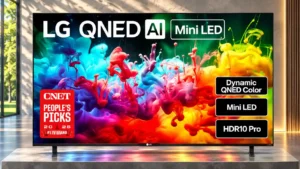
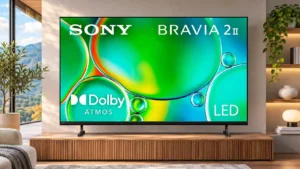
LG QNED75B
Where It Has the Edge
No clear scored advantage over the other product.

Scorata scores summarize analyzed review evidence on a 1–5 scale; they are not laboratory measurements or a simple average of customer star ratings. Feature scores summarize the reviews covering that feature. The overall score averages feature scores within each review, then combines review averages. When both expert and customer evidence are available, those two groups receive equal weight. Products can have different review coverage, so small score gaps do not establish a winner.
Recommendations prioritize important features for the category, with a score of at least 3.5, a gap of at least 0.25 points and at least two supporting reviews per product. Features with widely varying scores or broad connectivity contexts are excluded from recommendations. These safeguards do not establish statistical significance.
Quick verdict
The available evidence supports the recommendation below, but does not establish an overall winner. Check the remaining features against your priorities.
There is not enough comparable review evidence to recommend LG QNED75B over the other product.
Choose Sony BRAVIA 2 II for input lag and shadow detail.
No clear scored advantage over the other product.
Scores are out of 5. Missing scores mean missing review evidence, not a missing feature.
Colorful, sharp 4K content can look pleasing, particularly in favorable lighting, but washed-out blacks and low brightness keep the image from looking truly impressive.
Sharp, natural-looking images delight many everyday viewers, yet experts repeatedly find washed-out dark scenes and limited HDR impact.
Audio customization includes voice enhancement, speaker routing and other adjustments to match the room.
Equalizer and surround adjustments offer useful control, but complaints about lost volume and output selections reveal inconsistent behavior for some owners.
eARC can deliver high-quality, uncompressed audio to a soundbar or home-theater receiver.
Passing major audio formats to external systems is a strong point and helps compensate for the TV's modest built-in speakers.
Compression blocking from low-quality streaming sources is cleaned up well, though fine texture can become slightly waxy.
Compressed videos gain cleaner edges and fewer visible artifacts without excessive sharpening, helping lower-bitrate streaming sources.
Colors look natural to several viewers, especially skin tones, although lab testing finds some default white-balance and color-mapping inconsistencies.
Natural skin tones and convincing out-of-box SDR color are consistent strengths. Some HDR colors and highly saturated animated content can look less accurate.
A dark room exposes the panel’s gray blacks and low contrast, making this a weak pick for movie nights without ambient light.
Grayish blacks, backlight glow and shallow contrast make dedicated lights-off movie sessions a poor fit, despite respectable image processing.
Built-in sound draws mixed reactions: some owners find it plenty powerful for everyday television, while testing highlights thin bass and limited richness.
Built-in audio is fine or even impressive for many everyday viewers, but weak bass, muddy sound and sporadic audio failures prompt frequent criticism.
Black depth is a major divide: colorful scenes look contrasty to some, but very dark scenes turn gray and flat.
Weak native contrast is especially obvious with dark movie scenes and letterbox bars, although the 50-inch assessment is less severe.
Casual 60fps sessions can feel responsive, but pronounced motion blur can spoil faster gameplay.
Low lag and smooth 4K/60 console play win praise; the slower pixel response, lack of VRR and absence of 120 Hz limit its gaming ceiling.
HDR highlights remain restrained and bright outdoor scenes can look flat; simply enabling HDR makes only a modest difference.
Highlights rarely have the intensity HDR material deserves, and the weak peak brightness makes bright scenes look flat rather than spectacular.
HDR tracking and tuned picture modes can be impressively accurate, even though the panel cannot deliver strong HDR contrast.
Out-of-box SDR tuning is impressively faithful, with only small deviations in color and gamma.
HDR content lacks the punch and contrast expected from the format, though some viewers notice a slight improvement over SDR in controlled lighting.
This is a point of disagreement: some viewers enjoy colorful HDR10 movies, while measurements find weak highlights, low contrast and little advantage over SDR.
Bass is usually thin and lacks cinematic weight, so a soundbar is a better option for action films.
Bass is a recurring weak point: dialogue may stay clear, but music, effects and movie explosions lack the depth of an external sound system.
The TV struggles against daylight and nearby lamps because its screen output is low and direct reflections remain distracting.
Substantial daylight makes the relatively dim image and visible reflections difficult to ignore, reducing daytime usability.
The screen lacks effective zone-by-zone backlight control, so dark scenes wash out even though severe zone-related halos are not a problem.
Without independent dimming zones, the entire backlight affects blacks and highlights, leaving dark scenes washed out.
Neither SDR nor HDR gets particularly bright, limiting its ability to overcome glare or make highlights stand out.
Limited peak luminance prevents eye-catching HDR impact and leaves the screen struggling against strong ambient light.
Fine 4K detail and converted HD edges can look impressively crisp for a budget set.
Fine textures and faces look crisp, with especially strong results for HD material scaled up to 4K.
Standard, Cinema, Filmmaker and custom motion settings allow useful tradeoffs between brightness, accuracy, and smoothness.
Cinema and other presets offer natural starting points, but some owners find the default power-saving image disappointingly flat until adjusted.
Default grayscale can skew warm or blue depending on brightness. Fine calibration needs to be tailored to the individual panel.
SDR whites are well tuned, while HDR white balance has a slight cool or blue bias that calibration can reduce.
Judder and blur make motion a mixed point: viewers of 60fps content are more satisfied than those watching 24fps films or fast games.
Sports and action receive mixed marks: processing can smooth pans, but slow pixel response still creates visible blur.
Game Mode offers low input delay, with one hands-on test reporting about 9ms, so controller actions feel responsive.
Games register controller inputs quickly at 60 Hz, with hands-on figures around 9–10 ms and strong praise for responsiveness.
The basic smart-TV functions are approachable, while the fuller webOS menus can feel cluttered and overwhelming.
The simple remote and familiar apps please many households, but account setup, menu navigation and occasional faults can overwhelm less technical users.
Persistent low-frequency backlight flicker is a concern for viewers prone to eye strain or headaches.
Very high backlight-flicker frequencies make the picture effectively flicker-free under most normal settings.
Physical buttons are welcome, but close positioning of Home and navigation keys can cause accidental presses.
A straightforward button arrangement and uncomplicated remote design make the main controls easier to find than on many alternatives.
Dark scenes can obscure subtle details, leaving shadowed subjects harder to distinguish.
Subtle dark gradations can remain visible even though deep black levels are weak; some picture settings help preserve nuance.
Near-black scenes are surprisingly clean, with minimal visible vertical banding.
Most gradients are reasonably smooth, though dark grays and bright greens can show visible bands.
Direct lights and windows remain highly visible on the glossy screen, undermining daytime viewing.
Direct reflections remain distracting in bright environments, even though some hands-on viewing finds the screen acceptable under indoor lights.
Three HDMI inputs are enough for a modest setup but can feel restrictive alongside multiple consoles and audio gear.
Four HDMI inputs offer welcome flexibility for a console, set-top box and audio equipment without constant cable swapping.
A single USB connection limits simultaneously attached accessories and drives.
Two USB ports give owners convenient connections for media and accessories alongside the four HDMI inputs.
HD streaming and older sources generally look tidy after processing, but extremely low-resolution material can remain soft.
Old broadcasts, DVDs and compressed streams clean up surprisingly well while retaining faces and fine textures.
A traditional button-heavy remote is appreciated by some, but the optional Magic Remote and occasional navigation delays divide opinion.
The compact Sony remote is generally admired for its simplicity, though a few owners find the feel cheap or the buttons unreliable.
Some 24fps material judders, although film playback from native apps or suitable sources fares better.
Film-based 1080i and select 24p sources are handled well; native streaming apps and 60 Hz sources can still show unwanted judder.
Black areas often look uneven or gray, sometimes with warmer patches and darker edges.
Large areas of black can look bluish or cloudy, distracting from dark movies even when near-black banding is minimal.
Fine bright highlights lack visual sparkle; the sun or reflections can disappear into an underwhelming overall image.
Shadow and bright-area detail are sometimes retained quite well, but the brightest highlight textures can still disappear or look subdued.
Side viewing is inconsistent: the picture can remain accurate at modest angles, but colors and fine detail deteriorate farther off-center.
Off-center seats retain a reasonably consistent image on most assessed sizes, although the 50-inch version is more restrictive.
TruMotion can smooth camera movement but may introduce a soap-opera look or inconsistent frame pacing.
Motionflow can smooth lower-frame-rate video effectively, but people sensitive to an artificial soap-opera look may prefer to disable it.
Physical buttons simplify basic actions, although pointer navigation or unusual key placement takes adjustment.
Straightforward controls and Bluetooth operation make everyday navigation easy, but small buttons can be awkward for larger hands.
ALLM automatically engages the low-lag picture mode when compatible games start.
Automatic switching into a low-lag gaming mode simplifies console play and removes an otherwise fiddly part of gaming setup.
HDR color coverage does not reach the full range of modern HDR formats, so some vibrant tones cannot be reproduced.
The limited range of colors holds back HDR vibrancy, so advanced color presentations cannot rival richer QLED and Mini-LED sets.
Speech is serviceable, with voice-enhancement options, but the speakers lack some treble definition.
Spoken voices remain understandable at ordinary volumes and often sound impressively crisp, even where bass and soundstage have shortcomings.
Good compression cleanup and HD conversion help ordinary video, although some fine detail can be sacrificed.
Sony's natural-looking image tuning, compression cleanup and detail recovery are the strongest reasons to consider this entry-level set.
VRR exists and can tame tearing within its supported range, but it stops helping when frame rates dip too low.
Missing VRR is a clear drawback for gamers seeking smooth response to fluctuating frame rates, even if basic 60 fps titles play fine.
Dark scenes often appear gray or hazy rather than genuinely black, although some viewers perceive deeper blacks in brighter images.
Dark scenes expose the biggest weakness: blacks often look gray or slightly glowing rather than rich and deep. Some smaller-model assessments and positive impressions are more forgiving.
Game Optimizer reduces input delay and makes gaming controls easily accessible.
Game Mode delivers responsive 60 fps play with automatic low-latency switching, even though the advanced options remain basic.
Patchy gray fields and darker sides can stand out, especially in broad, even-color scenes.
Broad gray fields show dark corners and uneven patches; one customer also reports severe vertical black stripes on a defective panel.
A straightforward, lower-cost 4K TV gets enthusiastic endorsements for basic use, but its dark-scene picture quality and motion fall well behind stronger competitors.
Many buyers are delighted by Sony's familiar picture and ease of viewing, but reliability issues and weak contrast create a pronounced divide.
DVDs and 1080p sources are enlarged cleanly, avoiding obvious jagged edges and harsh sharpening.
Sony's excellent processing sharpens HD and lower-resolution material with few jagged edges or artificial-looking details.
Promotions can appear in the interface and on idle screens, with no simple universal way to disable them.
The Google TV home interface contains advertising that cannot be disabled, undermining an otherwise rich selection of content and apps.
The screen can reflect windows almost like a mirror, so placement away from bright light sources is important.
Lamps and windows can reflect prominently on the screen, particularly in darker scenes or well-lit rooms.
Volume impressions vary: some owners find it surprisingly loud, while testing shows the speakers have limited headroom in noisier rooms.
The speakers are adequate in ordinary rooms according to some assessments, but others find maximum output limited and less balanced.
Game Bar and Game Optimizer provide easy access to low-lag settings and VRR controls.
The built-in game menu offers helpful tools, but it is considerably more basic than the controls available on higher-end gaming TVs.
The native 60Hz panel is adequate for standard video and gaming, not the smoother 120Hz experience of more capable models.
The native 60 Hz ceiling is fine for ordinary shows and casual games but is a major drawback for anyone expecting 120 Hz motion.
Colors are lively enough for ordinary material, but deeply saturated HDR shades and very bright colors are harder for the panel to reproduce.
Vivid everyday color impresses many buyers, but technical measurements find that the panel struggles with very bright or dark saturated shades.
The direct-lit LCD panel has very low expected permanent burn-in risk even with static on-screen elements.
The direct-lit LCD panel is unlikely to suffer permanent burn-in, a practical advantage for static content and repeated everyday use.
A full calibration can make the image exceptionally accurate, and the settings offer useful adjustments rather than a universal one-size-fits-all recipe.
SDR colors start very close to accurate, leaving limited benefit from extra calibration. HDR calibration can improve accuracy more noticeably.
Sports and uniform backgrounds can reveal mild-to-noticeable blotches, particularly toward the edges.
Gray uniformity is imperfect, with darker corners and a patchy central area that can be noticeable on broad, even backgrounds.
A hard 60Hz ceiling rules out the native 4K/120fps experience sought by competitive gamers.
A native 60 Hz panel without VRR cannot meet the expectations of 120 fps competitive or high-refresh console and PC gaming.
Fast subjects can blur noticeably in tests, even though some owners consider sports and 60fps games crisp.
Fast-moving objects can smear or ghost, even though some owners find motion sufficiently clear for everyday games and shows.
Proper 4:4:4 chroma and an RGB layout keep computer text crisp.
The RGB layout and proper chroma handling keep on-screen computer text clean, making occasional desktop use feasible.
Some button presses and menu movements lag behind the user’s input.
The remote responds promptly for satisfied users, while others describe intermittent control failures or unresponsive buttons.
Slow pixel transitions leave moving subjects blurry rather than sharply resolved.
Slow pixel transitions create ghosting, dark-state smearing and noticeable blur in fast-moving content.
Widely spaced feet need a broad TV cabinet, with no narrower mounting position.
The fixed, widely spaced feet demand a generously sized cabinet; several owners had to reconsider their furniture or placement.
The direct-lit LCD design avoids several common panel-degradation risks, although an LED failure could affect a large portion of the screen.
Experiences diverge sharply, from trouble-free sets to repeated freezes, unexpected shutdowns, audio faults and early failures.
Initial software setup is manageable, but stand assembly can be fiddly on at least one demonstrated unit.
Many buyers report quick, simple assembly and setup, but required accounts and occasional bugs make the process difficult for others.
Conventional 4K 60fps games work, but higher-frame-rate 4K output is not available.
At the supported 4K/60 setting, console games can feel smooth and responsive; the panel cannot deliver the higher frame rates of premium gaming TVs.
An eARC connection makes it straightforward to pair the TV with a capable external audio system.
The eARC HDMI connection is useful for sending higher-quality audio to a soundbar or receiver without relying on the TV's internal speakers.
Apple devices can share or mirror media directly to the TV over AirPlay.
Apple device casting is generally convenient, with particularly smooth mirroring in positive tests. At least one owner reports repeated AirPlay disconnects.
The low price and vibrant everyday picture attract budget buyers, although similarly priced competitors offer better contrast and brightness.
Some shoppers are satisfied by discounts and familiar Sony quality, but many experts feel competitors offer better panel technology and gaming features for the price.
This TV cannot display native 4K at 120Hz, which limits premium console and PC gaming.
High-frame-rate 4K play is a serious limitation: the 60 Hz television cannot provide the 4K/120 experience sought by demanding console gamers.
One hands-on test finds the operating system frustratingly slow to respond.
Several users find Google TV responsive after it loads, though slower launches and crashes make software speed less consistent than premium models.
Apps can launch quickly, but webOS navigation may still feel sluggish when moving through menus.
App crashes, Hulu failures and freezes are among the most frustrating customer complaints, even though other users experience fast, responsive streaming.
Some navigation is fluid, but other use reports describe noticeable delays, especially with the included remote.
Some owners and demonstrations report quick menus and a responsive operating system, a welcome strength for daily navigation.
Netflix, YouTube and other familiar streaming services are easy to find within webOS.
Popular services are easy to access, but a few customers encounter missing apps or failures with specific services.
Midtones track well, though particular picture-processing settings materially affect HDR accuracy.
Sony's highlight roll-off helps preserve detail even when the panel is dim, while HDR color and tracking can require adjustment.
Dynamic processing preserves some highlight details but cannot overcome the display’s inherently limited peak brightness.
An aggressive HDR roll-off retains some bright detail, but the dim screen cannot reproduce many highlights at intended intensity.
webOS provides profiles, streaming choices, and free content, but some find its busy layout and sluggish behavior frustrating.
Google TV supplies familiar apps, recommendations and casting in one place, but crashes, menus and forced account steps frustrate some owners.
Most major streaming apps are represented, though one owner misses a specific TV-provider app.
Google TV offers a broad choice of major streaming services and downloadable apps, but individual customers miss services such as BritBox.
Slim borders help the screen blend into living-room and bedroom decor.
Slim framing makes the screen look expansive and helps the television blend into a room without bulky borders.
The TV has no obvious assembly defects, but flexible plastic panels and a plain rear give it a budget feel.
The plastic construction is simple but mostly functional and sturdy; a few customers have experienced serious damage or poor initial condition.
Thin bezels give the TV a tidy face, although the rear plastic and overall finish look basic.
Slim bezels and clean lines give it an understated, attractive appearance, though the predominantly plastic body is clearly entry-level.
The many available sizes make it easier to fit the TV into a bedroom, living room, or secondary space.
The 43-to-75-inch range gives households flexibility, with several buyers especially pleased by how their chosen size fits a bedroom or office.
An upgraded LG Magic Remote is available separately for buyers who prefer pointer-based controls.
Google TV account setup frustrates some owners, particularly those seeking a simple television without extra logins or service registration.
The optional blur-reduction mode produces duplicated images with 60 fps video, limiting how useful this feature is in practice.
A faint glow or haze can appear in dark scenes, though the absence of actual dimming zones avoids the more obvious halos seen on some TVs.
Simple clips help keep attached cables tidy.
Google TV places suggested shows and films from multiple services in one location, reducing time spent navigating separate apps.
Some deliveries arrive promptly and in excellent condition, while multiple reports of broken screens and delayed shipments raise caution about handling.
Supported HDMI, apps and mobile controls provide useful connections, but some cable-service and router combinations have proved unexpectedly troublesome.
Basic setup guides do not solve every issue: settings instructions and cable-provider compatibility information have left customers confused.
Lower electricity use and cool operation receive praise, though energy-saving picture defaults may need adjustment for a satisfying image.
Built-in free LG channels offer a no-additional-subscription way to find casual TV content.
Most HDR gradients look clean and nuanced, with only isolated banding in particular colors and brightness ranges.
Side-facing connectors make it easier to attach devices after wall-mounting, a small but useful improvement over the older layout.
The screen stays relatively cool during operation, which one owner especially appreciated versus an older LCD television.
Skin tones are often lifelike and colors avoid an overly artificial look, particularly in SDR movies and everyday programming.
Low-resolution video scales without conspicuous oversharpening, making old discs easier to watch.
The basic package covers ordinary installation, but one buyer reports receiving no remote and having difficulty resolving it.
Inputs on the rear can be awkward to reach once installed, although another unit’s unboxing describes a more accessible port layout.
A 75-inch picture offers appealing size for normal TV watching, but the larger canvas also exposes the weak blacks, reflections and motion blur.
The Mini LED branding may mislead shoppers because the backlight lacks local dimming control.
The overlapping BRAVIA generations and closely related numerical names make Sony's range harder to distinguish at a glance.
Fast action can produce visible intermediate-color artifacts, taking clarity away from sharp moving edges.
Protective cardboard, foam and corner pieces give the unpacking process a reassuring sense of care.
Some owners face slow or faulty startups, including black screens and delayed recognition of connected inputs.
A removable power cord makes handling and replacement more convenient than on sets with a captive cable.
The 4K panel shows native UHD material clearly and accepts standard resolutions, but it tops out at 60Hz.
Delivery and optional setup can be smooth and helpful, though one customer experienced a substantial shipping delay.
AirPlay lets iPhone users mirror their display to the larger screen.
Voice search can find programs across compatible apps, avoiding repeated navigation through individual service menus.
Attaching the feet or placing the TV on a stand is straightforward for owners who handle setup themselves.
Assembly impressions differ, ranging from easy-to-lock feet to frustratingly aligned stand screws.
The two plastic feet support the screen securely, even if their materials do not feel premium.
Slow camera pans produce only minor stutter, with motion interpolation offering a further improvement when desired.
High frequencies are generally clear and well defined, even if some voices and musical textures can sound a little bright or closed-in.
Recording service channels can require another box or service-specific hardware, frustrating buyers expecting one-device simplicity.
Unexpected shutdowns and unstable settings are serious annoyances in several ownership reports, sometimes making the set difficult to use at all.
A direct USB test handled common downloaded video formats smoothly, making local movie files straightforward to play.
Three HDMI inputs and one USB connection cover simple arrangements, but larger setups may require a switch.
The limited VRR range lacks low-frame-rate compensation, so tearing can return below 48fps.
The light body and slim frame make wall mounting practical for bedroom buyers, with standard mounting hardware patterns covered.
Relatively light construction makes moving and wall-mounting the set manageable for people replacing older, heavier TVs.
The available app space is adequate for typical installations, though the modest free capacity can feel restrictive compared with larger platforms.
Pairing headphones and controllers is straightforward, adding flexibility for private listening and gaming accessories.
Review contexts may differ, so use caution when interpreting the score gap.
A configurable last-input setting is useful, but the default tendency to start at the Google TV interface annoys viewers who just want live channels.
Numerous presets and quick adjustments are helpful, although changing unwanted processing can be cumbersome for some owners.
The television coordinates HDR settings with compatible PS5 consoles, making gaming setup more convenient and less manual.
Apple, Google and Alexa-related functions make the TV convenient for mixed-device households.
LG’s Re:New program promises additional webOS versions over several years, extending access to newer interface features.
Remote-based voice commands work well for quick searches, but Google TV's app-only mode can remove voice controls.
Wireless performance is divisive: some owners report stable streaming, but repeated disconnections and failed router pairing are common complaints.
The newer Wi-Fi implementation is seen as a welcome connectivity upgrade over the previous generation.
Gallery mode can show artwork as room decor, with some free selections and optional paid content.
Ambient-light adjustment adapts the picture to changing room brightness, a handy convenience appreciated during setup.
The Mini LED label does not bring the high-contrast local dimming buyers may expect from premium Mini LED sets.
An owner reports serious problems with the TV switching between speaker outputs, occasionally producing both audio paths or none at all.
Ordinary broadcast viewing is hindered by relatively low screen brightness, especially when sunlight competes with the picture.
Natural color and sensible Cinema settings give standard-range TV shows and older movies a satisfying look.
The included movie access and Sony's IMAX-oriented catalog add a useful extra, especially for people who explore the bundled films.
The raised feet leave useful space for a soundbar beneath the TV, despite the stand's wide footprint.
Stereo separation can feel wider than expected for a basic 20-watt television, giving dialogue and effects a little room to breathe.
Built-in Google Cast and AirPlay make phone-to-TV sharing easy for most users, although a few specific app and connection problems interrupt the experience.
Customer service leaves several dissatisfied owners without solutions after screen or audio faults, sometimes after hours of troubleshooting.
Atmos passthrough to compatible audio systems is a welcome feature, particularly for owners pairing the TV with a soundbar.
Missing Dolby Vision disappoints some home-theater viewers, though other assessments consider it a minor omission beside the panel's limited HDR capabilities.
DTS playback and passthrough support is absent, which matters for certain Blu-ray and disc-based soundtracks.
The absence of AMD FreeSync is one more gaming compromise alongside the 60 Hz refresh limit and lack of variable-refresh support.
HDMI 2.0-class bandwidth leaves the set short of the advanced features expected by buyers of newer gaming consoles.
A connected cable box can take several minutes to register after startup, making input switching less dependable than it should be.
HDR10 and HLG are available, but the missing Dolby Vision option is disappointing for viewers who specifically value that format.
Bluetooth listening remains an option, but a hands-on owner misses the physical headphone jack found on some televisions.
The right-angle power connector is a small but appreciated convenience.
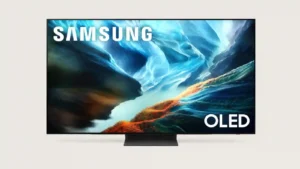
Choose the S90H for bright-room OLED viewing, deep blacks and top-tier gaming without flagship pricing. Skip it if you want Dolby Vision, a glossy screen or the simplest smart-TV software.
Pros: glare resistance, black levels
Cons: Dolby Vision support, color gamut
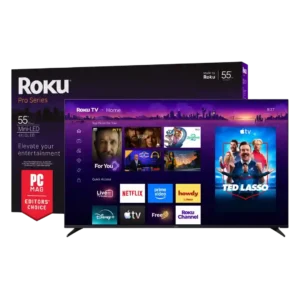
Best for bright Mini-LED picture, excellent built-in audio, easy Roku navigation, and responsive 4K/120 gaming. Skip it if you want ad-free menus, premium motion consistency, or stronger confidence in long-term...
Pros: overall satisfaction, picture quality
Cons: reliability, portability and versatility
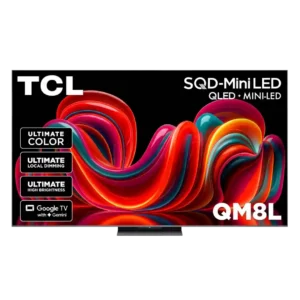
Choose the QM8L for a big, brilliantly bright TV with vivid HDR, deep mini-LED blacks, low input lag, and four HDMI 2.1 ports. Skip it if you need OLED-clean motion,...
Pros: picture quality, value for money
Cons: stand quality, judder handling

Choose the G6 for class-leading bright-room OLED picture, rich color, deep blacks and elite gaming. Skip it if you want strong built-in audio, polished launch firmware, no account sign-in, or...
Pros: picture quality, peak brightness
Cons: value for money, sound quality