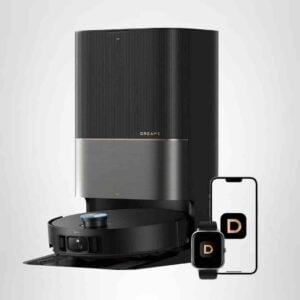
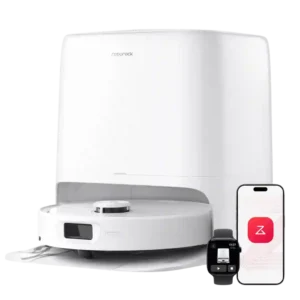
DREAME X50 Ultra Robot Vacuum and Mop
Where It Has the Edge
- Solution / Liquid system is 4.4 vs 3.4. Liquid-system evidence was positive, with reviewers praising detergent support and a water-hookup experience that made cleaning more automated.

Scorata scores summarize analyzed review evidence on a 1–5 scale; they are not laboratory measurements or a simple average of customer star ratings. Feature scores summarize the reviews covering that feature. The overall score averages feature scores within each review, then combines review averages. When both expert and customer evidence are available, those two groups receive equal weight. Products can have different review coverage, so small score gaps do not establish a winner.
Recommendations prioritize important features for the category, with a score of at least 3.5, a gap of at least 0.25 points and at least two supporting reviews per product. Features with widely varying scores or broad connectivity contexts are excluded from recommendations. These safeguards do not establish statistical significance.
Quick verdict
The review evidence points to a tradeoff: Solution / Liquid system versus Low-profile design and Area Rug Handling. Choose according to which strengths matter more to you; the overall score alone does not settle that choice.
Choose DREAME X50 Ultra Robot Vacuum and Mop for Solution / Liquid system.
Choose Roborock Qrevo Curv 2 Pro for Low-profile design and Area Rug Handling.
Scores are out of 5. Missing scores mean missing review evidence, not a missing feature.
Ease of use was praised in one review where the app, low maintenance, and visible results made day-to-day use straightforward.
The system is friendly to newcomers, with guided setup and an app that makes the core controls easy to understand before exposing deeper customization.
Fresh liquid pickup evidence was positive from one test that included wet spills and found the robot cleaned them with ease.
Fresh spills are a clear weakness. Spinning pads tend to spread coffee or other liquids instead of extracting them, so larger wet messes are better handled manually.
Crevice pickup was a weak point in Vacuum Wars testing, where the X50 Ultra had lackluster max-power groove results.
Concentrated airflow is strong enough to lift fine dust and debris from grout lines, giving the robot useful cleaning reach beyond the flat surface.
Clog prevention evidence centered on the dock’s revised self-cleaning filtration, which reviewers said helps prevent clogs during mop-wash maintenance.
The single-sided brush layout can leave hair or debris where the opposite wheel catches it. That wheel-area buildup is a weak point despite otherwise strong suction.
Small-space suitability was limited because the base station and docking clearance require a sizable permanent footprint.
The ultra-slim body is particularly useful in furnished apartments and low-clearance homes, cleaning under furniture that would otherwise require manual sweeping.
Hair-channel evidence was mixed in one synthetic-hair test: the brush had zero tangles, but hair collected on a wheel axle.
The left-side channel can collect clumps that the single brush arm fails to funnel into suction. In one test, cat hair became lodged around the opposite wheel.
Runtime was a drawback in TechRadar’s home test, where the reviewer got about 90 minutes and wanted more from a premium robot.
Standard mixed cleaning used roughly 40% of the battery over 50 square meters, implying about 100 square meters before returning to charge.
The bin system was viewed positively because debris compacting helped the robot avoid frequent dustbin-emptying stops during cleaning.
Auto-emptying works well, but the dock's deep, narrow dust-bag chamber drew criticism for its awkward shape. Pet-heavy homes may also fill bags much faster than low-shedding households.
Low-pile carpet evidence was mixed, with decent overall pickup but some powder and fine-debris residue left behind.
Low-pile carpet performance was strong in measured testing, reaching about 90% pickup in the cited test setup. It is a dependable surface for this robot.
Liquid-system evidence was positive, with reviewers praising detergent support and a water-hookup experience that made cleaning more automated.
There is no automatic detergent dispenser, so solution must be measured into the clean-water tank manually. Some testers disliked the omission, while others considered it a minor, rational compromise.
Mapping and path efficiency were mostly strong, especially fast mapping and coverage, but one reviewer criticized an inefficient cleaning route.
Mapping and navigation are generally excellent, with systematic paths and reliable dock returns. Room naming can need correction and an occasional route may be longer than necessary, but getting lost is uncommon.
Dried-on stain removal was consistently good, with reviewers citing easy cleanup of sticky spills, dried stains, ketchup, coffee, and sauces.
Performance on dried messes is inconsistent. Some tests removed dried jam or light dried residue after repeated passes, while others found persistent or sticky stains beyond what the spinning pads handle well.
Carpet hair pickup was a standout, with strong pet-hair test results and long-term praise for pet-hair-free floors.
Cat-hair pickup averaged a respectable 87% across the standardized hard-floor and low-pile tests. Hair collection is good, though not quite as dominant as the robot's debris pickup.
Area-rug handling was generally positive thanks to mop lifting and carpet protection, though carpet cleaning still had robot-vacuum limitations.
Rugs and carpets are handled confidently thanks to chassis lift, strong suction, and the ability to raise or leave mop pads behind. That combination keeps fabric surfaces drier while preserving strong vacuuming performance.
Hard-floor hair pickup was praised in pet-heavy household use, with the reviewer reporting pet-hair-free floors and no tangles.
Cat-hair pickup averaged a respectable 87% across the standardized hard-floor and low-pile tests. Hard-floor hair performance is solid, with the larger concern being occasional wheel-side accumulation.
Streaking evidence was mixed: one lab-style review found it not overly streak-prone, while household reviews noted small or dry streaks.
Spinning pads can leave sticky smears or tacky residue after liquid spills, especially ketchup or coffee. On ordinary damp mopping, however, some tests found very clean, residue-free results.
Stuck resistance was mixed: reviewers saw improved avoidance and fewer stuck events, but cords, papers, and flat obstacles could still require rescue.
Most navigation tests found the robot difficult to strand, even under furniture and in tight gaps. A loose shoelace did manage to tangle the brush badly enough to stop one test unit.
Odor control evidence was favorable but limited, based on the dock keeping mop pads and the dust bag fresh and clean.
Hot washing and heated drying keep mop pads noticeably fresher and help prevent mouldy or unpleasant smells. This is especially useful in homes that mop frequently.
Pet-focused evidence is favorable overall, especially hair pickup and pet modes, though fake-pet-waste avoidance improved only after settings were adjusted.
Pet owners benefit from excellent anti-tangle hair handling, strong carpet suction, and pet-aware behaviors that can stop the brush or divert the route. It is especially well suited to homes with shedding animals.
Maintenance requirements were favorable, especially for spinning mop pads and the revised washboard that reduced cleaning effort.
The dock removes much of the routine work by auto-emptying dust, washing and drying mops, detecting dirt, and in some cases triggering repeat cleaning. Manual detergent dosing and occasional tank or bag service remain.
High-pile carpet evidence was favorable in comparative testing, placing the X50 Ultra close to the top performers and ahead of prior flagships.
Thick-carpet cleaning is a major strength: strong suction plus the lifting chassis pulls out embedded grit and avoids bogging down on many deep-pile surfaces. Extremely dense carpet can still hold onto some buried hair or dust.
Hard-floor fine-debris pickup was strong overall, with high measured pickup and broad debris collection, though not every test was perfect.
Fine dust is lifted strongly from hard floors, helped by the high suction and concentrated airflow. This is one of the vacuuming strengths.
Mop lifting was praised for keeping carpets drier, and reviewers valued the option to lift or leave mop pads at the dock.
Automatic lifting and dock-side mop removal are genuinely useful on carpet. They keep rugs and carpet fibers drier and reduce cross-contamination compared with simply dragging raised wet pads over fabric.
Emptying and mess control was praised in one automation-focused review because the user only needed to respond to reminders.
The dock's auto-empty system is powerful enough to clear bins packed with pet hair, and the large bag keeps disposal infrequent. This meaningfully reduces hands-on mess handling.
Maneuverability evidence was favorable for crossing raised thresholds, with one reviewer describing the robot clambering over a problem threshold easily.
Movement is smooth, graceful, and confident through narrow spaces. The robot can thread between tight furniture and benefits from capable wheels and chassis control.
Under-furniture pickup was a strength when the retractable sensor let it reach low spaces and collect debris missed by other robovacs.
Low-clearance cleaning is exceptional. The retractable LiDAR lets the robot reach under sofas, beds, wardrobes, TV stands, and other furniture that blocks taller robots.
Medium-pile carpet evidence was strong, with Vacuum Wars reporting better-than-average embedded-sand pickup in its deep-clean test.
Medium-pile carpet also performs very well, with strong measured pickup and visibly more fine dust extracted than an older Curv in comparative use.
Obstacle avoidance was mostly strong and sometimes class-leading, but small, flat, dark, or low-contrast items could still cause misses.
Obstacle avoidance is the most divided area. Some tests saw excellent handling of cables, toys, and small cars, while others found the robot repeatedly hit low or tiny objects and even tangled on a shoelace.
Large debris handling was excellent in one hard test, where the robot handled pistachio shells and other snack debris without choking.
Cheerios and cat litter scored in the high 90s in standardized pickup testing, showing strong ability with chunky household debris.
The dock’s footprint was a drawback for smaller homes because one reviewer said users need to reserve a large dedicated space for it.
The rounded dock is wider and more visually prominent than some premium alternatives. It needs meaningful floor and overhead space, even if its styling works in modern rooms.
Water tank capacity was praised in one review where the reservoirs lasted through three weeks of testing without needing attention.
The dock's fresh-water capacity keeps refilling relatively infrequent in normal use, though owners still need to top it up and empty dirty water periodically.
Adaptive chassis lift was one of the strongest themes, with repeated praise for crossing thresholds that stopped other robot vacuums.
AdaptiLift is one of the standout hardware features, helping the robot cross tall thresholds and maintain better contact on thick carpets. It worked very well in most tests, with only the densest high-pile carpet exposing limits.
Hard-floor large-debris intake was consistently strong, including snack debris, rice, pumpkin seeds, and broad large-debris cleanup.
Large mixed debris is picked up very well on hard floors, including a 98% result on vinyl in one test. Some scattering can still happen near edges because of the side brush.
Hair-wrap resistance was one of the clearest strengths, with many reviews finding clean rollers or zero tangles, though side brushes could still catch hair.
The DuoDivide anti-tangle system is exceptionally effective with pet hair and long human hair. Multiple long-use tests reported little to no hair wrapped around the main brush.
Versatility was strong in one review because the X50 Ultra used a broad set of cleaning tools for vacuuming, mopping, edges, and low spaces.
The Curv 2 Pro handles mixed homes well by combining strong vacuuming, hard-floor mopping, carpet adaptation, configurable passes, and smart-home controls. It is at its best when floors and furniture vary room to room.
Overall opinion was very positive across reviews, with repeated best-in-class or high-performing judgments despite recurring caveats.
The overall impression is strongly positive: this is an advanced, highly capable robot vacuum with standout carpet cleaning, navigation, and low-clearance reach. Its biggest tradeoffs are inconsistent spinning-pad mopping, small-object avoidance, dock size, and premium pricing.
Innovation evidence focused on threshold climbing, retractable navigation, and other hardware features that reviewers considered leading-edge.
The retractable low-profile navigation, adaptive chassis, automatic mop handling, and hot dock cleaning make this feel meaningfully more advanced than older Curv models. The dynamic carpet-height adaptation is especially distinctive.
Energy evidence was limited to one comparison, where the X50 Ultra grouped with other efficient flagships rather than high-consumption outliers.
Measured consumption was around 10 kWh per month for daily 50-square-meter vacuum-and-mop cleaning, with standby draw described as manageable at about 3.5 W.
Edge-following accuracy was weak in one comparative hot-sauce test where the robot appeared to approach stains with the side brush rather than the mop.
Side sensing keeps the robot tracking closely along skirting boards, furniture, and table legs without unnecessary contact, giving it precise edge-following behavior.
First-year ownership cost evidence was favorable because the package included enough replacement parts to reduce early consumable spending.
Pet-heavy homes may burn through dock bags quickly, potentially needing a replacement every couple of weeks. Lower-shedding households should get much longer between changes.
Reviews split bench-test airflow from real-world cleaning: one source found average suction/airflow, while others praised powerful pickup and carpet cleaning.
The 25,000Pa vacuum system is a core strength, repeatedly praised for strong pickup on hard floors and carpet. It has enough airflow to lift fine dust, large debris, embedded grit, and hair.
Edge and baseboard cleaning was the most divided area, ranging from the best edge clean a reviewer had seen to serious misses near walls and furniture.
Extendable mop and brush hardware usually cleans close to skirting boards and furniture edges. Vacuum-only edge pickup can still leave scattered debris, so results are better than basic round robots but not flawless.
Corner cleaning was inconsistent: extending brushes helped in some reviews, but another found corners still left debris behind.
Extending side hardware reaches corners better than many circular robots, and several tests found it very effective. The single-sided brush layout can still leave some debris in the opposite corner channel.
Sanitizing evidence was positive but narrow, tied to UV lamp bacteria-removal technology in the dock and mop-cleaning system.
The 100°C mop-wash cycle is credited with reducing germs and leaving the pads cleaner. It adds a hygiene advantage for kitchens, bathrooms, and other frequently mopped areas.
Noise evidence is limited but positive, with one reviewer calling the X50 Ultra’s mopping action the quietest robovac mop they had tested.
Normal robot cleaning is generally acceptable to quiet, with one test citing about 58 dB and another calling it average on Normal mode. The robot itself is much less intrusive than the auto-empty dock.
The self-cleaning cycle was praised for hot-water cleaning, drying, reduced residue, and a redesigned washboard that lowered maintenance effort.
The dock is a major convenience feature, automatically washing and drying mop pads and in some cases re-washing or re-mopping dirtier areas. Mop maintenance is far less hands-on than with basic robot docks.
Comparative evidence placed the X50 Ultra near the top of flagship rankings, though not always first and not always worth upgrading from the X40.
The Curv 2 Pro stands out for carpet cleaning, slim clearance, and automation, but it is not a universal upgrade over every nearby model. Roller-mop rivals can clean wet messes better, and some competitors are stronger at small-object avoidance or cost less.
Mopping performance was broadly positive, from above-average lab results to very strong household reviews, but streaks and edge misses remained caveats.
Everyday mopping ranges from good to excellent on footprints and light stains, but the spinning-pad design is less consistent on sticky spills and stubborn messes. Some testers loved the pressure and coverage; others preferred roller-mop systems.
Cleaning convenience was a consistent strength, especially for busy homes, with reviewers highlighting set-and-forget operation and low maintenance.
The combination of strong vacuuming, automatic carpet adaptation, detailed scheduling, and a highly capable dock makes daily floor care unusually hands-off. The main manual exceptions are wet spills, detergent dosing, and periodic tank or bag service.
The dual-brush floorhead was repeatedly described as a major upgrade and a key reason for hair and debris pickup gains.
The missing second side brush hurts coverage on the left side and can let debris escape into the wheel area. The core DuoDivide brush works well, but the asymmetric edge hardware is a compromise.
Low-profile design was mixed: retractable navigation helped it clean under furniture, but some reviewers found it cautious or reluctant in tight spaces.
At roughly 8 cm tall with the LiDAR retracted, the robot reaches places many premium competitors cannot. The low body is a practical advantage under sofas, beds, TV units, and other tight furniture.
Build quality evidence was positive, with one reviewer describing the unit as solid and noting protective rubber around the robot body.
Construction feels premium and sturdy, with thick plastics, tight fit, and consistently strong workmanship. The Curv 2 Pro gives the impression of a machine built for regular long-term use.
Reviewers generally liked the look and finish, praising the stylish robot and dock, although the large base still has to live visibly in the room.
The robot itself is widely seen as compact, polished, and modern, while the rounded white dock divides opinion. Some find the igloo-like station stylish and distinctive; others consider it bulky or too noticeable.
Auto-empty reliability was mixed in one comparison because the X50 Ultra left more debris in its dustbin than some rivals after emptying.
Dock operation is notably dependable: the robot returns successfully, empties packed bins, and hands off mop care with little intervention. Several tests found the station faultless or especially well thought out.
Setup and initial mapping were consistently praised as simple, painless, and quick across multiple hands-on reviews.
Setup is consistently easy, with pre-assembled hardware, app-guided pairing, and quick mapping. Even first-time robot-vacuum owners should be able to get it running without much friction.
Value opinions were mixed: reviewers called it expensive, but several said discounts, flagship parity, or close competition helped justify the price.
The premium price is easier to justify for buyers who will use the advanced chassis, automation, and carpet performance. Budget-focused shoppers can get much of the everyday cleaning capability from cheaper models.
Value-for-money evidence was positive when discounts were available, making the premium feature set feel more justified.
Value is good for buyers who prioritize automation, carpet performance, and the slim adaptive chassis, but the premium is not essential for basic floor cleaning. Cheaper Roborock models deliver a large share of the core performance.
The app offers deep control, but one reviewer found the translated language and layout confusing enough to make settings hard to find at first.
The app is one of the product's clearest advantages: clean, highly configurable, and approachable despite its depth. Room editing, suction, water level, pass count, schedules, and dock behavior are all easy to tune.
Smart features and automation were a major strength, with reviewers praising the app, voice assistant, scheduling, controls, AI features, and pet options.
The Roborock app is a major strength, with deep scheduling, per-room settings, routines, SmartPlan-style automation, voice control, and Matter support. Automation is broad enough to make day-to-day cleaning largely hands-off.
Battery and charging evidence was mixed: Vacuum Wars found it above average, while several household reviews said it drained faster than expected.
Measured battery use points to roughly 100 square meters of mixed vacuuming and mopping before a recharge under standard settings. Charging takes several hours, but practical coverage is strong for typical homes.
Accessory coverage was praised because the review package included generous spare pads, brushes, filters, detergent, and cleaning tools.
Debris illumination evidence was positive but limited to the retained Fill Light, which the reviewer appreciated for dark areas.
Headlight evidence was positive but limited, with one reviewer glad the Fill Light feature was retained for darker cleaning areas.
The heating system was praised through hot-water mop wetting and hot-air drying, supporting the dock’s premium mop-care performance.
Heavy-duty suitability was limited by battery use: one reviewer warned larger homes may require a recharge during a thorough clean.
Automatic mop removal makes switching between vacuum-only carpet cleaning and hard-floor mopping effortless. The feature proved more useful in practice than it may sound on paper.
The robot is described as fairly hefty, which matters mainly when lifting or handling it manually rather than during autonomous cleaning.
The dock's auto-empty burst is clearly louder than normal robot cleaning and can exceed 70 dB, although it lasts only briefly. Mop drying is much quieter and generally unobtrusive.
Floor shine evidence came from one long-term review that said the robot could remove muddy pawprints and make floors shine.
The compact shell feels solid and well finished, with construction described as built to last rather than merely decorative.
Privacy-control evidence was cautiously positive, citing physical-button requirements for remote viewing and an audible camera-monitoring prompt.
Stable connectivity and regular firmware updates give the software side a mature feel and improve confidence that features will continue to be refined.
Day-to-day reliability is strong, with the robot characterized as an efficient workhorse that should not let owners down in routine household cleaning.
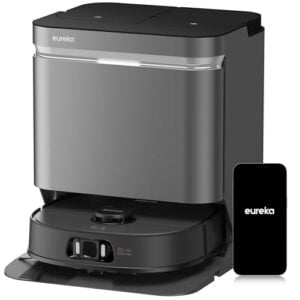
Choose the Eureka J15 Ultra for hands-free vacuuming/mopping, strong suction, edge coverage, and value. Skip it if you need the most advanced obstacle avoidance, compact dock, detergent dispensing, or quieter...
Pros: Obstacle Avoidance (Robot), Maintenance requirements
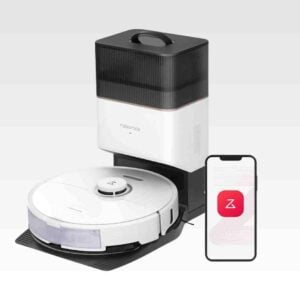
Best for excellent vacuuming, mapping, pet-hair handling, and low-touch daily upkeep. Skip it if you expect deep mop scrubbing, quiet auto-emptying, or premium value in a small or multi-story home.
Pros: Overall opinion, Map and Path Efficiency (Robot Vacuums)
Cons: Dock noise, Price and Value
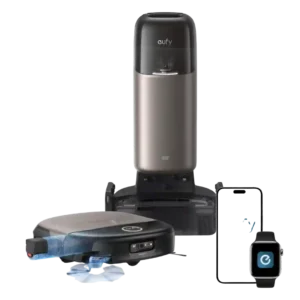
Best for excellent hard-floor mopping, sustained suction and nearly tangle-free hair handling. Skip it if precise edge cleaning, quiet maximum-power operation or flagship value matters more.
Pros: Overall opinion, Mopping performance
Cons: Support and Reliability, Price and Value
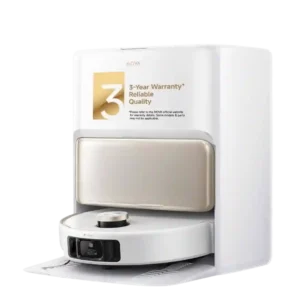
Best for powerful vacuuming, excellent mopping, pet-focused automation, and strong accessory value. Skip it if you need flawless obstacle avoidance, simple plug-and-play software, or the smallest possible dock.
Pros: Overall opinion, Obstacle Avoidance (Robot)