
The Dropout
Where It Has the Edge
No clear scored advantage over the other product.

Scorata scores summarize analyzed review evidence on a 1–5 scale; they are not laboratory measurements or a simple average of customer star ratings. Feature scores summarize the reviews covering that feature. The overall score averages feature scores within each review, then combines review averages. When both expert and customer evidence are available, those two groups receive equal weight. Products can have different review coverage, so small score gaps do not establish a winner.
Recommendations prioritize important features for the category, with a score of at least 3.5, a gap of at least 0.25 points and at least two supporting reviews per product. Features with widely varying scores or broad connectivity contexts are excluded from recommendations. These safeguards do not establish statistical significance.
Quick verdict
The available evidence supports the recommendation below, but does not establish an overall winner. Check the remaining features against your priorities.
There is not enough comparable review evidence to recommend The Dropout over the other product.
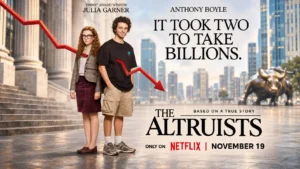
Choose The Altruists for cast chemistry.
No clear scored advantage over the other product.
Scores are out of 5. Missing scores mean missing review evidence, not a missing feature.
The synth-based score adds energy and reinforces the technological setting. Its uneasy textures suit the story’s darkly comic descent.
Overly obvious dramatic music can make the emotional cues feel manipulative.
The series satisfies the desire for a scam drama with both a complex central figure and a convincing sense of escalating deception.
The premise has everything a financial true-crime drama needs, but its reliance on relationship melodrama makes it less rewarding than stronger examples in the genre.
The balance of corporate farce, psychological drama and tragedy can be deftly controlled. Early silliness, failed comic detours and abrupt shifts make that balance uneven for other viewers.
A broad, occasionally cartoonish romantic comedy sits uneasily beside serious financial misconduct. Others find the contrast distinctive rather than off-putting.
Many appreciate that explaining Holmes does not mean forgiving her. Others feel the sympathetic early framing and limited downfall soften the responsibility of Holmes and her enablers.
The central ethical blind spot is the limited space given to people who lost money through FTX. The series is far more interested in the perpetrators’ feelings than in their victims.
Seyfried’s embodiment and the restrained dramatization often feel authentic. Concerns center on selective or softened depictions of people around Theranos.
The broad FTX story is recognizable, but considerable fictionalization of motives and relationships raises serious doubts about the human truth of this version.
The tension between understanding a person and excusing harm drives the strongest disagreements. Some value the balance of context and consequence; others find the humanization troubling.
The series asks viewers to understand two convicted figures without always giving equal attention to those harmed. For some this adds nuance; for others it crosses into unwarranted sympathy.
One account finds the investor-facing test deception insufficiently explained. The missing detail leaves the mechanics of the fraud less clear.
The FBI and journalistic investigations remain peripheral, leaving the mechanics of discovering and prosecuting the wrongdoing underexplored.
Eight episodes give the story space, but several accounts find the run stretched. Others want more attention to the collapse and trials rather than simply more buildup.
Eight hourlong episodes allow room for personalities and consequences, but the premise is frequently judged too thin to sustain the full runtime.
The broad cast can illuminate employees, victims and corporate partners. Its shifting focus sometimes feels episodic or interrupts the central story.
The wider ensemble has promising personalities and moving performances, yet the main romance monopolizes attention.
The fraud supplies suspense and a compelling moral transformation. Blunt presentation and tonal uncertainty can limit the force of the human drama.
The downfall is inherently dramatic and the performances often work, but the extended romantic focus leaves some feeling that a stronger crime story has been sacrificed.
The mainly chronological account makes a complicated rise and collapse accessible. Its deposition framing and explanatory distance work better for some viewers than others.
The repeated contrasts between the hopeful beginning and the collapse are sometimes illuminating. Frequent jumps and obvious parallels make the chronology frustrating for others.
The script connects personal ambition with a wider system of willing enablers. Sharp characterization and moral complexity compete with blunt symbolism, repetitive points and occasional overexplanation.
Crisp dialogue and psychological insight elevate the drama in places, but repetitive romance, simplified ethics, and clunky exposition undermine it elsewhere.
The off-the-record relationship is explored through dependence, cruelty and uneasy intimacy. This account finds that dynamic more revealing than a simple puppet-master explanation.
The pair struggles to communicate about commitment and polyamory, making their personal boundaries as messy as their financial ones.
Memorable speeches and verbal exchanges stand out. Other passages overstate Holmes’s ambition instead of allowing it to emerge naturally.
Sharp quips and absurd exchanges give the young traders personality, though extended financial explanations can feel wordy and contrived.
The mounting lies form a precarious narrative structure. Turns in the story create tension as personal and professional deceptions intersect.
The best staged revelations make the crisis more absorbing. At other times the story announces its destination far too plainly.
The opening can be painfully slow, while some later sequences rush. Another early assessment finds the progression effective.
Some episodes race through tense financial crises, especially toward the end. Others linger on the romance and slow down the central investigation.
The underlying fraud remains fascinating, and its accumulating lies frequently make gripping television. Uneven focus and familiar procedural stretches sometimes weaken the whole.
The FTX collapse provides a ready-made tragedy that many find riveting. The romantic framing also draws persistent criticism for oversimplifying the crimes.
The story can be easy to digest despite its complicated fraud. Jarring time jumps in the premiere make it harder to follow for another viewer.
The basic fraud and the route to bankruptcy eventually become clear, though the timeline and technical trading details are often needlessly confusing.
The damage to employees and patients creates unease, frustration and genuine heartbreak. Gibbons’s story and the whistleblowers’ dilemmas are especially affecting.
The rise-and-fall story can inspire anger, dread, and tragic sympathy, but frustration with the sympathetic treatment of its culprits limits that impact for others.
The Shultz family conflict is criticized for leaving out substantial context and resolution. That omission limits the portrayal of the damaged relationship.
Sam’s yearning for approval from his academic parents adds texture, and the actors make their brief scenes work. The family history is not explored deeply enough to explain every consequential choice.
Some find fresh psychological and cultural insight in a heavily covered case. Others regard the format as formulaic or the retelling as redundant.
The FTX case offers a distinctive setting, but familiar startup-scam devices and a predictable doomed-romance explanation make the show feel derivative.
The largely linear episodes are often welcomed as clear and satisfying. Their framing lets the story develop without constant timeline scrambling.
Distinct chapters and shifting viewpoints can reveal valuable dimensions of the inner circle. One later perspective-switch is also criticized for revisiting material already covered.
Ambition, greed and the institutions that protect charismatic founders give the story substance. A minority find these ideas familiar or insufficiently developed.
Ideas about greed, rationalization, love, and altruism give the series substance, but its fixation on a couple leaves the broader ethical reckoning incomplete.
Seyfried’s scenes with Fry offer warmth and emotional investment. Her dynamic with Andrews helps make the central relationship believable.
Boyle and Garner generate strange, vivid tension whether flirting or fighting. Their volatile connection is a major source of the series’ appeal.
One account finds the focus on personal motivation sidelines systemic failures. Another wants a clearer sense of how enormous Holmes’s public profile became.
The press, promotional hype, and celebrity aura surrounding FTX could have supplied a fuller picture of the scandal, but often remain background material.
The private Holmes–Balwani relationship can add tension and psychological insight. Its more conventional romantic framing also risks making the pair too sympathetic.
The intense, awkward chemistry is often compelling and makes dry finance dramatic. It also dominates the show, at times reducing an enormous fraud to a dysfunctional love affair.
The ending draws both strong praise and frustration. Its psychological revelation works for one account, while others want more collapse, consequence and trial coverage.
The final emphasis on the damaged relationship is moving, but an ambiguous conclusion offers little closure for the surrounding people and legal aftermath.
Holmes’s transformation from ambitious student to calculating executive is often compelling and layered. Critics disagree over whether the personal explanations reveal enough or become repetitive caricature.
The series traces how awkward idealists harden into defensive, entitled operators. Others find the characters reduced to easy nerd stereotypes rather than fully realized people.
Momentum divides opinion: the escalating fraud can be gripping, yet the early biography often drags. Some later passages also feel rushed.
Some find the crosscut story quick and bingeable; others say it takes half a season to reach the heart of the financial disaster.
Seyfried and the expansive ensemble are widely considered inspired choices. The main reservation concerns whether she convincingly passes for a college freshman.
The leads convincingly embody two socially awkward founders for many viewers, although exaggerated characterization occasionally overwhelms their plausibility.
Failed demonstrations, escalating lies and the whistleblower investigation generate powerful tension. The slow setup and extended episode count sometimes dilute that pressure.
The alternating timelines and mounting financial emergency create tension for some; others find foreknowledge of the collapse and constant resets draining.
Dry supporting turns and awkward dancing can be very funny. The broader comedy sometimes feels too silly, fails to land or clashes with the tragedy.
Absurd crypto-world jokes and eccentric workplace antics add lively dark comedy. The laughs are sometimes too sparse or tonally out of place.
Metcalf is a highlight whenever she appears, making her long absence through the middle episodes disappointing.
The two founders dominate the narrative, leaving promising colleagues, parents, and fraud victims with too little room.
The show relies more on its lead and extraordinary source story than a distinctive visual identity in this assessment.
Warm early scenes and cool collapse-era scenes make the loss of idealism visible. Some abrupt shifts and conspicuous flourishes get in the way.
Seyfried’s awkward gestures, changing voice and flashes of vulnerability usually make Holmes compelling. The chief dissent is that the performance never quite supplies her real-world charisma.
The two leads give committed portrayals that are frequently called exceptional, even by viewers who dislike the writing. Others feel some choices tip into caricature.
The extensive ensemble brings dry comedy, menace and heartbreak to scientists, lawyers and investors. Even accounts disappointed by the storytelling regularly praise the supporting work.
Karan Soni and Alex Lawther are frequent standouts, with several other actors making brief roles memorable. The complaint is less about talent than about limited screen time.
The performances are the most dependable attraction, led by Seyfried and a deep supporting ensemble. A few dissenting views find the lead mannered or miscast.
Boyle and Garner are repeatedly praised for expressive, transformative work. Some find their mannerisms cartoonish, with supporting performances often proving more consistently grounded.
For a viewer who knew the outcome but few details, the series does a strong job explaining how astonishing the scandal became.
It helps make the human motives behind the FTX scandal understandable without requiring technical expertise, although it is not a substitute for a detailed financial account.
The series is praised for sleek craft and first-rate production. The polished presentation supports an enthralling account of the fraud.
The slick, polished finish adds appeal to an entertaining streaming drama.
Most accounts find the series absorbing, often compulsively so. Familiarity with the scandal, sluggish setup and discomfort with its sympathetic framing can reduce the appeal.
The scandal, eccentric personalities, and strong cast deliver an engrossing watch for many. Others find the eight-hour focus repetitive or forgettable.
Distinctive vocal choices help establish the leads’ awkward personalities, but some stretched vowel sounds and affected delivery become distracting.
Supporters find that dramatization adds a distinct perspective and substantive ideas. Detractors see too much repetition of readily available reporting and an incomplete ending.
Recent AI developments add a topical wrinkle to the FTX scandal, though they remain a small part of a romance-centered story.
The unfolding deception is described as addictively engrossing from beginning to end, making continued viewing especially tempting.
The private uncertainty behind Holmes’s public persona gives the series its strongest psychological interest. Some find that exploration superficial, overly sympathetic or less engaging than the institutional story.
The portrayal of Sam as both calculating and supposedly blinded by love creates an internal contradiction that weakens his credibility.
Warm and cool color contrasts help distinguish timelines, but more conspicuous framing choices can feel forced and much of the camera work is ordinary.
The contrast between the young whistleblowers makes privilege tangible. Wealth and family connections change how freely each can challenge Theranos.
The series alternates between clear illustrations of risky decision-making and dense, jargon-heavy discussions of trading. Financial newcomers are especially likely to struggle.
Specialist crypto language often gets ahead of the drama and makes key events difficult to follow. A few viewers appreciate more accessible breakdowns.
The direction finds both pathos and corporate farce in the fraud. Its best stretches give the subject complexity while keeping the human cost visible.
One account celebrates the efficient coverage of many years. Others notice abrupt cuts, disjointed transitions and editing choices that disturb the flow.
The strongest material explores how charitable ideals turn into excuses for dangerous decisions. The examination sometimes stops short of questioning the philosophy and its real-world consequences.
Covering nearly two decades without hour-plus episodes earns praise for discipline. The individual running times help keep the large story manageable.
Repeating the same points across the early episodes makes the story drag. The late investigative energy arrives too slowly to compensate in this account.
Much of the retelling is praised as restrained and accurate, including the college years. A more critical account questions flattering portrayals and omitted context.
Sexual material and swearing keep this from being an easy family recommendation, even though one account considers it milder than some other adult series.
The show is effective when it links idealism, professional loyalty, and increasingly disastrous choices. Its fixation on the central romance sometimes takes attention away from the customers and colleagues betrayed.
It offers a human introduction to the FTX collapse, not a thorough lesson in cryptocurrency or financial regulation. Technical explanations swing from accessible to impenetrable.
Switching between early excitement and the looming collapse can sustain tension and chart the characters’ transformation.
The pressures facing a woman in Silicon Valley add meaningful context. The strongest praise is for exploring misogyny without treating gender as an excuse for fraud.
The combination of pathos, absurdity and corporate scam drama is a particular strength. Comedy can expose the fraud’s ridiculousness without erasing its damage.
The content-focused account explicitly disapproves of religious profanity. That objection concerns the language’s appropriateness rather than a quality reward for its frequency.
Some dark scenes are difficult to appreciate because the lighting is judged harsh and ineffective.
Transformative wigs, prosthetics, and altered teeth help establish the characters, but their visibility and exaggeration distract several viewers.
The show sharply observes how Caroline’s private fiction became more headline-worthy than financial wrongdoing, even while indulging the same fascination itself.
The emphasis on self-image, anxiety, and emotional denial gives the fraudsters recognizable vulnerabilities, though that emphasis can also make them too sympathetic.
The causes of the collapse become apparent early, making this more a study of self-deception than a tale with surprising answers.
Repeated financial jargon and restatements of the couple’s worst habits cause the story to feel stretched.
The instability of a multibillion-dollar exchange creates real tension even when the series is caught up in the founders’ personal conflicts.
The opening telegraphs the downfall so emphatically that its foreshadowing feels heavy-handed.
Some accounts value the way patient encounters expose the real stakes. Another finds the series understates how many people were affected.
The early-2000s setting relies on clunky period cues in this account. Musical choices can call attention to the era without making it feel more convincing.
Seyfried’s deliberately stiff, awkward dance is funny because the discomfort feels so precisely performed.
The opening introduces Holmes’s personal history and gives Metcalf a standout scene. Age credibility, slow setup and awkward transitions make its effectiveness divisive.
Its early humor about powerful tech personalities lands, but the satire rarely becomes as sharp as the subject invites.
Corporate ambition, investor anxiety and failed safeguards are among the most revealing strands. The workplace story connects Holmes’s choices to the culture that enabled them.
Presenting Sam as romantically helpless makes him less convincing as the person making major business decisions.
The weekly rollout frustrates a viewer who wants to watch the whole story at once. This judgment concerns the release experience described at the time.
The performances provide enough promise to keep watching despite reservations about the early treatment of Holmes.
The finale’s focus on Holmes fleeing accountability can make a strong character statement. Viewers seeking a fuller downfall may find it incomplete.
FTX’s enormous reach is described but rarely made personal. Customers, celebrity endorsements, and industrywide consequences remain too far outside the intimate story.
The conclusion favors a revealing final portrait over comprehensive legal closure. That choice feels incisive to some and unsatisfying to others.
The straightforward treatment gives the story weight, but this account wants more levity as its absurdities mount.
Several accounts praise the assault storyline for adding context without absolution. Another questions the fairness of how different allegations are framed.
The sustained interest in the leads’ polyamory and sexual lives is considered excessive by some, particularly when it distracts from the fraud.
The Gibbons storyline is praised for closely reflecting the tragic events. Its emotional weight comes from the person and consequences rather than sensational spectacle.
The visual shorthand and repeated ambition cues can be distracting. These accounts find the symbolism too obvious to deepen the drama.
A timely AI thread and the themes of crypto hype and billionaire self-deception keep the scandal connected to present-day technology culture.
The gradual construction of Holmes’s voice often helps reveal the persona underneath the fraud. Most praise the evocation or accuracy, while one prominent dissent finds the depth and consistency inadequate.
The series was widely loved on its initial release, suggesting broad appeal beyond its later resurgence in interest.
Sam and Caroline can be fascinating and charismatic without being pleasant company. Their entitlement and repeated romantic dysfunction will put some viewers off.
The series drew a warmly favorable critical reception on release, adding to the enthusiasm around its central performance.
Recognizable actors taking smaller parts add pleasure beyond the central performance. The extensive guest casting is a welcome attraction.
The promised criminal power-couple excitement is a poor match for a story that spends so much time on awkward domestic friction.
Pop songs often sharpen the period setting and Holmes’s manufactured persona. Their obvious lyrics and repeated cues can also feel clunky or forced.
The story stays inside a small circle of colleagues and lovers when a fuller view of the tech-finance culture would add meaning.

Best for sharp adult humor, magnetic chemistry and a deeply satisfying farewell. Skip it if familiar will-they-won’t-they plotting or deliberately messy leads are dealbreakers.
Pros: humor, writing quality

Choose Widow’s Bay for its dark laughs, richly haunted island and memorable ensemble. Skip it if you need straightforward scares, rapid answers to every mystery or a completely resolved finale.
Pros: humor, genre satisfaction
Cons: ending satisfaction, season pacing

Choose Season 15 for warm, character-driven comedy, meaningful growth, and a finale that rewards longtime fans. Skip it if the short binge format, uneven replacement voices, or occasional clumsy commentary...
Pros: franchise connection, character development

Best for sharply acted, compassionate, high-pressure hospital drama. Skip it if graphic procedures unsettle you or you need a neatly resolved season finale.
Pros: character development, acting performance
Cons: character consistency, dialogue quality