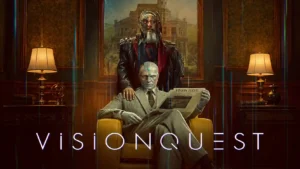
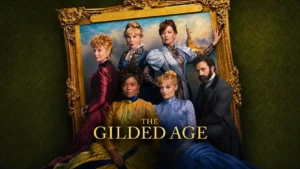
VisionQuest
Where It Has the Edge
- renewal interest is 5.0 vs 4.7. Enthusiastic viewers want more time with these characters and further work from the creative team. That interest reflects...

Scorata scores summarize analyzed review evidence on a 1–5 scale; they are not laboratory measurements or a simple average of customer star ratings. Feature scores summarize the reviews covering that feature. The overall score averages feature scores within each review, then combines review averages. When both expert and customer evidence are available, those two groups receive equal weight. Products can have different review coverage, so small score gaps do not establish a winner.
Recommendations prioritize important features for the category, with a score of at least 3.5, a gap of at least 0.25 points and at least two supporting reviews per product. Features with widely varying scores or broad connectivity contexts are excluded from recommendations. These safeguards do not establish statistical significance.
Quick verdict
The review evidence points to a tradeoff: renewal interest versus entertainment value and villain quality. Choose according to which strengths matter more to you; the overall score alone does not settle that choice.
Choose VisionQuest for renewal interest.
Choose The Gilded Age, Season 4 for entertainment value and villain quality.
Scores are out of 5. Missing scores mean missing review evidence, not a missing feature.
Repeated MCU reminders and lengthy origin explanations are among the most persistent complaints. Even viewers who enjoy the cast often wish the series would trust their memory and move forward.
The season earns praise for trusting attention and avoiding the repeated, unnatural explanations often associated with distracted viewing.
Long episodes can overstay their welcome when callbacks and detours displace character development. The criticism focuses on bloated runtime rather than duration alone.
Leaner episodes feel breezier while retaining the show’s pleasures, helping individual installments move without unnecessary lingering.
The eight-hour scope gives performances and episodic ideas room to develop for admirers. Critics see a thinner story stretched beyond what its central conflict can sustain.
The eight-episode run is praised for accomplishing a great deal without needing a longer season.
Vision’s intelligence and powers do not always match his decisions. Letting enemies escape, keeping Ultron nearby, and walking into traps are recurring sticking points.
Supporters appreciate choices rooted in established motives and nineteenth-century constraints. Others find George’s changed temperament frustrating and remain unconvinced by some familiar behavior.
The father-son relationships and late revelations can be deeply moving, with several accounts describing tears or gut punches. Others remain detached from the digital characters or find the emotions more stated than felt.
Maternal fear, strained marriages and the younger characters’ shame give the season more emotional force. The performances make fleeting tenderness and family self-blame especially affecting.
Momentum varies sharply across the season: a strong setup and emotional finish can surround a slower middle. Some find the dense plotting absorbing throughout; others feel reveals are delayed or arrive without breathing room.
Many accounts find the season brisker and more assured than before. Dissent centers on rushed resolutions, uneven attention and a marital conflict that can drag.
The pub attack gains energy from shafts of light through bullet holes. That specific lighting choice helps the physical-world action stand out.
Expressive lighting helps make the romantic intimacy beautiful and gives George’s scenes a more shadowed, uneasy weight.
Full-season reactions often praise an intimate, meaningful resolution to Vision’s journey. Others find the closure messy, disappointing, or less complete than the trilogy billing promises.
Several accounts find satisfying resolutions and welcome turning points. Others see convenient outcomes, dropped threads or a sense of finality that makes the season feel compressed.
Identity, memory, personhood, grief, and inherited family burdens give the series plenty to explore. Some find the ideas profound; others see overworked philosophy and little meaningful engagement with contemporary AI concerns.
Ambition, bodily autonomy, career identity and moral choice give the social spectacle more substance. The hopeful perspective remains part of the appeal rather than giving way entirely to cynicism.
The strongest reactions praise a compelling mystery anchored in synthetic identity and family. Less enthusiastic accounts describe an overextended premise whose best conversations struggle against formula and clutter.
The season’s richer consequences and new character combinations are widely welcomed. The main reservations concern uneven arcs, familiar devices and resolutions that can feel hurried or insufficiently earned.
Supporters enjoy the movement between comedy, thriller, horror touches, and serious family drama. Others find the competing styles busy or the genre detours unnecessary.
The mixture of heartbreak and hope works especially well in the premiere, and the broader season moves between serious and frivolous concerns with assurance.
Ultron’s sardonic remarks, computer-themed visual jokes, and the odd AI household provide much of the comedy. Reactions split over the broader supporting characters, whose antics can feel charming or forced.
The sisters’ cutting exchanges, Oscar and Enid’s camp scheming and Jack’s etiquette montage supply frequent comic highlights.
Ultron and Jocasta’s flirtation can be unexpectedly sexy, strange, and moving. Some appreciate where it ends up but think the relationship drags before getting there.
Oscar and Enid’s unconventional alliance is a recurring bright spot, and the Russells’ strained bond remains compelling. Marian and Larry divide opinion between rewarding historical longing and tiresome, contrived obstacles.
The premiere receives praise for remaining engaging and well paced despite its dark, identity-focused tone. Its action and psychological material provide an intriguing start.
The premiere is widely praised for jumping briskly among households and delivering immediate developments. Some arcs gather their real momentum only later.
The balance of lightness and darkness makes the drama charmingly absorbing in a favorable assessment. Earnestness helps the larger philosophical ideas feel emotionally grounded.
Social invitations and family decisions become absorbing conflicts, with the Russells’ instability adding welcome gravity. The heightened melodrama works best for viewers willing to embrace its extravagant priorities.
Revelations can be surprising and satisfyingly connected to earlier details. Some viewers instead find the repeated hidden-mastermind turns tiring or the destinations too predictable.
Changed alliances, revelations and confident reversals keep the season lively. The stronger accounts find the surprises rooted in continuing consequences rather than shock alone.
Some appreciate the careful reuse of past events and neglected MCU details. Others question gaps such as Vision’s absence from Wanda’s life or decisions that conflict with established powers.
The strongest accounts praise consequences that carry forward and a season that builds on earlier choices. The time jump and the couple’s unclear relationship status can still leave viewers disoriented.
Ultron is widely praised for his wit, menace, and added complexity. Paladin and Jocasta have strong supporters too, although some find Paladin diminished or the later villain machinery overcomplicated.
Rockefeller’s quiet menace provides a formidable new obstacle, while Sarah’s cold priorities make her an effective antagonist.
Bettany and Spader anchor a cast full of distinctive comic and dramatic performers. The human avatars give familiar AI roles more personality, although some casting choices prove less convincing to individual viewers.
The Broadway-rich ensemble remains a major asset, and the new mentor in William’s orbit creates useful room to explore his character.
The pub confrontation and transitions into the Mindspace draw praise for visual energy and thoughtful framing. Admirers also appreciate a series that feels more deliberately photographed than routine streaming fare.
George’s framing and surrounding shadows give his scenes a darker, more unsettled character than the series has previously achieved.
The show earns praise when it delivers costumes, powers, action, and recognizable superhero storytelling alongside its introspection. That balance helps keep the cerebral material entertaining.
The season delivers the extravagant clothes, social warfare and committed soap plotting that make this style of period drama appealing.
The weekly or paired-episode rollout receives approval for giving the story room to breathe or enough material per sitting. Reactions depend on how viewers handle the slower, denser sections.
The series earns praise for maintaining a comparatively reliable release rhythm, adding to its sense of steadiness.
The philosophical exchanges and character-focused scenes can be sharp, funny, and affecting. Contrived traps, repetitive explanations, and competing plotlines keep the writing from feeling equally assured throughout.
The strongest praise goes to sharper dialogue, layered character motives and consequences that carry forward. Repeated romantic obstacles, thin supporting arcs and convenient resolutions remain the key writing complaints.
Some talented supporting characters receive less to do than viewers want, particularly the silent AIs and briefly used J.A.R.V.I.S. Late reveals and Paladin’s diminishing role also frustrate some viewers.
The expanded focus helps some characters shine but leaves Gladys, the servants and several appealing supporting players short of attention. Marian’s prominence is a particular point of disagreement.
Vision’s struggle to connect inherited memories with present feelings provides the strongest character material. Tommy, Ultron, and the supporting AIs inspire sharply different reactions to their depth and growth.
Agnes’s insecurity, Ada’s independence and Peggy’s ambitions gain rewarding depth. Marian’s new emotional territory pleases some critics, while others still find the characterization thin or repetitive.
Enthusiastic viewers want more time with these characters and further work from the creative team. That interest reflects enjoyment of this series rather than any confirmed continuation.
The season leaves several writers and viewers eager for another chapter, with some explicitly pleading for a fifth season.
Fans admire how distinct AI personalities contribute to Vision’s story. Others feel the cast is crowded, repetitive, or less compelling whenever the focus moves away from the leads.
The large cast keeps the world lively, but opinions split on how evenly its stories are served. Downstairs characters and some favorite supporting players can lose out to the central romances.
The plot packs in reincarnations, layered identities, multiple villains, and shifting realities. Admirers find the threads well connected, while detractors struggle to follow the accumulating explanations.
The business mechanics can lose attention, with one discussion finding George’s railroad and financing problems difficult to stay engaged with.
Bettany and Spader’s verbal exchanges and reworked philosophical lines are frequent highlights. Some find the AI conversations overlong or too ornate to carry their intended emotional weight.
Barbed one-liners and theatrical exchanges are recurring pleasures. The main complaint is romantic evasiveness, when characters skirt the very things they need to say.
The pursuit, rising stakes, and mysterious client can make the story gripping. Not everyone feels genuine jeopardy, particularly when much of the conflict happens inside Vision’s head.
The presidential dinner and the assassin mystery create effective anticipation, turning both social logistics and unfinished danger into reasons to keep watching.
Personified AIs and a deliberately strange inner world give the show fresh possibilities. Critics disagree over whether those ideas overcome familiar superhero formulas and recycled existential questions.
The darker character direction refreshes the formula for some, while others see familiar twists and obvious romance devices. Even the clichés can remain enjoyable when performed with conviction.
Admirers value episodes with their own central ideas and self-contained movement. The format works best when it gives character scenes room without becoming another stretch of explanation.
The parallel wedding and childbirth establish an effective mix of pleasure and peril, while the premiere updates a sprawling ensemble. Its setup-heavy nature feels comfortable to some and only moderately satisfying to others.
Paul Bettany and James Spader’s verbal sparring is the clearest shared strength. Vision’s scenes with Tommy and Ultron’s exchanges with Jocasta also give the crowded story a more personal center.
Oscar and Enid’s gleeful scheming is a frequent highlight, while George and Bertha remain persuasive even apart. Marian and Larry’s spark divides opinion much more sharply.
The intertwined bonds between Ultron, Vision, and Tommy give the identity questions a personal stake. Their awkward attempts to connect are often the heart of the show, even when other plotlines crowd them out.
The Russells’ instability, the sisters’ shifting authority and Peggy’s family expectations generate much of the season’s strongest drama. Gladys and Hector’s growing mutual care provides a warmer counterpoint.
The opening is praised for a polished, movie-quality look. Its visual effects exceed expectations for a streaming production.
Digital effects are praised for remaining invisible, helping the constructed period world feel completely immersive.
Spader’s eccentric screen presence and delivery are a comic highlight. His performance gives even the more elaborate conversations an entertaining edge.
Acid delivery and sharply matched performers make the social exchanges sing, with Oscar and Enid’s timing a particular delight.
The series earns praise for feeling shaped as actual television, with purposeful sets and episode-level choices. Terry Matalas’s handling of the material is singled out positively.
Thoughtful staging supports both the lavish ensemble scenes and the more intimate distress. The premiere’s childbirth sequence is praised for how carefully it is handled.
Ultron’s long hair and wild beard enhance the performance’s eccentric, sensuous quality. The styling helps make his human avatar distinctive.
The hair styling is praised both for its polish and for communicating George’s disheveled, troubled state.
Mick Giacchino’s score receives an enthusiastic endorsement. The music is singled out as another strong creative contribution to the show.
The music contributes to the love scene’s beauty, helping the intimacy register even outside its narrative context.
The mix of accents can feel excessive, especially when the pub owner is difficult to understand. The complaint concerns the listening experience rather than whether the accents are authentic.
The formal accents make the verbal sparring especially enjoyable, adding bite to the elegantly delivered insults.
The combination of character work and continuity can attract both committed fans and occasional viewers. Its lore and detached protagonist also leave some people feeling excluded or unmoved.
The premiere’s familiar glamour, social maneuvering and emotional entanglements inspire enthusiastic reactions from returning viewers.
Retro television language and pop-culture touches help make the philosophical story more approachable. The deliberate cheesiness contributes to its charm for receptive viewers.
Jack’s etiquette-training montage successfully taps the affectionate pleasure of an old-fashioned 1980s movie convention.
Ultron and the unusual AI household win many fans through personality and wit. Vision’s detachment, Tommy’s distress, and the peripheral characters can leave others emotionally disengaged.
Agnes, Peggy, Enid and the household staff inspire strong affection, with Oscar and Enid’s alliance emerging as a particular pleasure. Marian, Jack and George draw more divided reactions depending on their stories.
Reactions to Paladin’s outfit divide sharply between praise for comic accuracy and criticism of its appearance. Ultron’s eccentric clothes and E.D.I.T.H.’s carefully chosen details fare better.
Elaborate gowns, hats and gloves remain an overwhelming attraction, with several accounts calling the clothes better than ever. The outfits reward close attention even when the plot frustrates.
The house inside Vision’s mind turns computer functions into an unusual domestic world. Its imaginative details delight many viewers, though some find the rules between that world and physical reality inconsistent.
Established supporting characters and the integration of American public events help the social world feel richer and more connected.
The bright, deliberately artificial Mindspace gives the series a distinctive look. Some find its visual play inventive and cinematic; others see conventional spectacle or distracting digital scenery.
The season’s gowns, rooms and polished spectacle remain visually sumptuous. A dissenting account finds the glossy nostalgia uncomfortable given the era’s inequalities.
The Mindspace house is a frequent highlight, filled with retro furnishings, computer puns, altered artwork, and deliberately wrong details. A minority find the artificial setting less engaging than its elaborate construction suggests.
Extravagant rooms and event settings remain a feast for the eyes, with meticulous detail and convincing homes making the period world immersive.
Enthusiasts find the unusual cast, mystery, and character exchanges consistently engaging. More reserved viewers still enjoy individual scenes but feel the overall show is merely serviceable or weighed down by lore.
The lavish social soap remains highly enjoyable for most sources, combining outrageous priorities with a committed ensemble. A few find it merely decent or below the series’ best, but enthusiasm dominates.
Bettany’s restrained confusion, flashes of humor, and eventual vulnerability earn strong praise. His intentionally colder version of Vision can also be harder to connect with initially.
Coon, Baranski, Nixon, Spector and Benton repeatedly stand out for command, wit and emotional range. Jacobson’s more demanding scenes also earn some of her strongest notices.
Spader’s Ultron frequently steals the show, with several other AI and human characters drawing praise for personality and emotional range. Some broader performances or underused roles work less well for individual viewers.
Curran and Ritson are frequent scene-stealers, while McDonald, Rashad and other supporting players give the world warmth and force. Brief appearances can provide disproportionate pleasure.
The ensemble earns substantial praise, led by Bettany and Spader. Some opening-episode performances and Tommy’s heightened emotion draw criticism, but the acting often sustains interest when plotting falters.
The ensemble is the season’s most dependable strength, turning barbed exchanges and private crises into compelling scenes. Even critics dissatisfied with individual storylines praise the actors for elevating them.
George’s loss of control is welcomed as a humbling corrective to his earlier certainty and blame toward Bertha.
Vision’s powers produce several forceful, visually exciting fights. Some appreciate the harder edge, while others find the action forgettable or want a better balance with the lengthy conversations.
The move toward substance abuse gives the usually polished drama a grittier social dimension and helps deepen its examination of George’s decline.
The explicit rejection of generative AI receives approval. That praise concerns how the show was made, separate from its fictional artificial intelligences.
The premiere brings welcome energy and more overt emotion to a world that can otherwise feel overly stiff and confined to drawing rooms.
Several enthusiastic viewers stayed hooked across the full season or wanted to watch it in one sitting. That pull depends heavily on investment in the mystery and characters.
Jack’s uneasy social ascent gives class exclusion a useful personal angle. Several critics remain uncomfortable with the rosy treatment of wealthy families and the cheerful-servant fantasy around them.
The assassin investigation and unresolved secrets give the premiere a useful forward hook, keeping interest alive beyond its initial weddings and crises.
Oscar and Enid’s clarity about their arrangement is a welcome contrast to other couples’ secrecy. Their agreement’s durability and the handling of Gladys’s medical information remain points of concern.
Peggy’s professional life and the affluent Black community receive welcome space, texture and joy. Their social expectations and prejudices are explored beyond the white households’ perspective.
The mix of accents, particularly the pub owner’s speech, can make lines difficult to follow. Context helps, but the delivery still creates a listening barrier for one viewer.
Precise scene lengths and the premiere’s birth-and-wedding cross-cutting create momentum and a striking contrast between celebration and danger.
Views differ on the moral framing, from praise for compassion and respect for a reincarnated character’s autonomy to concern about shaky hero ethics. Kind intentions are also shown to have dangerous consequences.
Paladin’s costume receives strong praise for preserving the comic design while making it intimidating on screen. That endorsement concerns the adaptation of his appearance rather than literal fidelity to an entire comic storyline.
Bloody violence, rough language, and morally uncertain behavior make this a conditional family choice. Even a sympathetic father-son story does not make it suitable for every household.
Deep MCU callbacks can enrich Vision’s story and reward long-term investment. The same connections can become intrusive reminders or a barrier for viewers who want a more independent adventure.
Peggy and Marian’s confidences and the staff’s support for Jack add warmth. Some critics want more time with the women together, particularly when their individual stories become difficult.
Women’s professional ambitions, reputational risks and limited control over medical information give the social drama substance. The best accounts value the specificity of those unequal pressures.
The show’s ability to mix serious questions of race and independence with parties, scandal and backstabbing is a particular strength.
Vision’s inherited memories offer a different angle on loss from Wanda’s story. That reversal and the consequences of sacrifice can be powerful, while some feel the trilogy has revisited the subject too often.
Recognizable historical figures help anchor the extravagant fiction, and the setting can make an unfamiliar period more approachable.
Frequent strong language is a stated drawback for viewers concerned about family suitability. The criticism targets its effect on the experience rather than using intensity as a quality score.
The unspoken recognition around Oscar’s sexuality gives the marriage arrangement and family exchanges a valued layer of subtext.
The premiere’s varied sets feel like convincing Gilded Age homes, creating a strong sense of being inside the period world.
Deep references and expanded synthetic history can make the MCU feel meaningfully interconnected. The density also risks becoming trivia homework or distracting from the immediate story.
The makeup receives explicit praise for its quality and for working with the hair styling to communicate character condition.
The childbirth crisis is gripping and sometimes judged realistically handled, but the immediate recovery, repeated danger teases and lack of consent draw reservations.
George’s unraveling adds meaningful weight to the drama, making his internal condition more consequential than another business setback.
The monopolies and business pressures produce recognizable parallels with present-day corporate power, giving the period conflict contemporary resonance.
The mystery rewards attention to clues for some viewers. Others think it loses focus, delays obvious answers, or ends with disclosures weaker than the setup.
The Russells’ vulnerability makes familiar social contests feel more consequential. Some critics still see a world where serious damage fades quickly while dinner arrangements receive disproportionate weight.
The season feels more contained and controlled in its strongest accounts. Its drive toward resolving many long arcs can also make the narrative feel rushed or perfunctory.
The opening narration efficiently refreshes Vision’s complicated history for some viewers. Others find it clumsy or insufficient, particularly once later episodes return to the same explanations.
Supporters value characters whose choices reflect the limitations of their own era, from marriage expectations to childbirth risks and political tensions.
The silent maintenance AIs offer enjoyable physical humor for some viewers. Others wish those performers had more activity and opportunities to use their voices.
The opening ranges from a strong, intriguing launch to a clumsy introduction burdened by exposition. The second episode often improves impressions by adding movement and a clearer emotional relationship.
Peggy’s criticism of Cleveland and Ada’s developing awareness bring welcome political reflection into the household drama.
Some enjoy seeing Vision’s powers used inventively and facing a credible counter in adamantium. Others find him too easily disabled or question why he neglects abilities that could end the conflict.
Peggy’s writing career and its tension with marriage form one of the season’s richest strands. Her ambitions receive welcome weight, while William’s professional world also gains dimension.
The more effective arcs let characters act from their own motives within restrictive institutions. Bertha’s resourcefulness and Marian’s unexpected choices provide welcome tests of independence.
The period reactions around childbirth can feel convincing, but Gladys’s immediate condition and Jack’s need for elementary etiquette lessons strain belief for other sources.
The final stretch earns praise for emotional payoff and a satisfying conclusion. Its impact is strongest for viewers already invested in Vision and his family.
A succession of weddings, parties and major public occasions gives the season an especially ambitious canvas.
Several full-season assessments praise a meaningful and emotionally grounded close. The ending is often valued for character resolution rather than the scale of its spectacle.
The grittier, more authentic direction is welcomed as an evolution beyond the show’s lighter, more predictable structure.
The movement between physical reality and the digital world is praised for feeling seamless. The shifting locations support the story without disrupting its flow in this favorable assessment.
The AI romance is praised for allowing real flirtation and attraction while staying restrained in practice. The positive judgment concerns how that balance serves the relationship.
The opening’s action and effects are praised as expensive-looking and close to movie quality. The physical-world scenes hold up alongside the more elaborate inner world.
Many see a worthy continuation of WandaVision with its own sci-fi identity. Others miss the earlier shows’ magic or find this the least effective part of the trilogy.
Tommy and Lisa are a repeated weak point for less enthusiastic viewers. Their distress and side story can be harder to care about than the exchanges between Vision and Ultron.
The updated opening warmly acknowledges the show’s expanding world, including more of the Black elite and connections to earlier events.
Intergenerational pain gives Tommy and Vision meaningful motivations for some viewers. Others find the layers of tragic backstory exhausting rather than illuminating.
The harder violence impresses viewers who see it as a purposeful expression of Vision’s missing moral compass. Others find his casual killing off-putting or regard the bloody methods as a concern for younger audiences.
The violent scenes and heavy themes favor older viewers. Its superhero premise alone is a poor guide to suitability for children.
The supplied coverage describes a broadly positive critical reception. That approval is substantial but does not erase the sharp disagreements over pacing, accessibility, and emotional connection.
The trailer earns praise for presenting a clear story about Vision’s son and search for humanity. It creates interest without needing to explain every later twist.
The opening narration receives strong praise for efficiently recapping Vision’s long history. Its clearest value is giving a winding backstory a coherent entry point.
Jocasta’s design is praised as an effective blend of the comic character and the MCU’s Ultron aesthetic. Her appearance makes a strong impression alongside the character’s dramatic role.
One strong complaint is that the image remains so dark that even a bright screen struggles to reveal the sets and clothes clearly.
Oscar and Enid’s dance is singled out as an exuberant highlight, making their shared delight especially infectious.
The trailer’s story is understandable, but there is concern that it may reveal too much of the climactic action. The reservation is about how much anticipation remains.
The ambition and expense are visible on screen, from meticulous craft to a large series of social events. The high-end presentation is a major part of the escapist appeal.
The layered clues, visual details, and callbacks invite another pass after the ending is known. Familiarity can make the plot easier to follow and reveal earlier hints.
Several opening-episode discussions recommend watching if access is already available but stop short of recommending a new subscription solely for the series. That makes it a conditional streaming purchase rather than a must-have draw.

Best for sharp adult humor, magnetic chemistry and a deeply satisfying farewell. Skip it if familiar will-they-won’t-they plotting or deliberately messy leads are dealbreakers.
Pros: humor, writing quality

Choose Widow’s Bay for its dark laughs, richly haunted island and memorable ensemble. Skip it if you need straightforward scares, rapid answers to every mystery or a completely resolved finale.
Pros: humor, genre satisfaction
Cons: ending satisfaction, season pacing
Choose Season 15 for warm, character-driven comedy, meaningful growth, and a finale that rewards longtime fans. Skip it if the short binge format, uneven replacement voices, or occasional clumsy commentary...
Pros: franchise connection, character development
Best for sharply acted, compassionate, high-pressure hospital drama. Skip it if graphic procedures unsettle you or you need a neatly resolved season finale.
Pros: character development, acting performance
Cons: character consistency, dialogue quality