
Sennheiser Momentum True Wireless 5 Feature Scores
Explore all 60 feature scores for Sennheiser Momentum True Wireless 5, organized into pros and cons.
Scores by Feature
Summary
60 reviewed features-
Very positive 4.5-5.035 (58%)
-
Positive 3.5-4.418 (30%)
-
Neutral 2.5-3.42 (3%)
-
Negative 1.5-2.44 (7%)
-
Very negative below 1.51 (2%)
Pros
Sort
-
Replaceable batteries in both the earbuds and charging case are the standout ownership feature, repeatedly praised for extending usable life and reducing the usual e-waste problem of sealed true-wireless batteries.
-
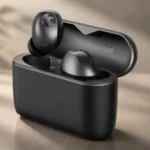
The redesigned case is one of the most consistently praised physical changes: slimmer, easier to pocket and generally more premium in feel. Reviewers also like details such as the finish, sturdy hinge and wireless charging.
-
Sound quality is the clearest strength: reviewers consistently describe the presentation as detailed, balanced, spacious and among the best in premium true wireless. A few tuning caveats remain, but the overall sonic verdict is exceptionally positive.
-
Overall sentiment is overwhelmingly positive, with the Momentum True Wireless 5 repeatedly described as a top premium contender or excellent all-rounder. The main caveats are ANC just below the leaders, uneven call performance and a few software/fit quirks.
-
Bass is generally praised for combining weight, punch and texture without overwhelming vocals or the rest of the mix. It is more controlled than bass-head focused, and the app can add extra low-end when wanted.
-
The midrange is a major strength, with vocals and instruments repeatedly described as clear, natural, textured and well placed. Even reviewers who found other parts of the tuning imperfect tended to praise the mids.
-
Long-session comfort is one of the redesign’s biggest wins, with many reviewers wearing the buds for hours without pressure or fatigue. Small ears remain the main exception, as the housings or nozzles can feel too large for some users.
-
The eight-band EQ is a major upgrade and gives useful control over bass, mids and treble. It can tame the most common treble complaints, although several enthusiasts still wish Sennheiser offered a full parametric EQ.
-
Smart Control Plus is consistently praised as a deep, well-organized companion app. It puts EQ, sound personalization, ANC, connection management and control customization in one place without feeling overly difficult to navigate.
-
The rounder redesign is widely seen as sleeker, more ergonomic and more premium than the older square Momentum shape. A few reviewers find the styling unusual or shiny, but the overall reaction is strongly positive.
-
The stereo presentation is widely described as open and spacious, with more width than many mainstream ANC earbuds. A few reviewers note that it is not the absolute widest stage, but it rarely feels cramped.
-
Transparency mode is one of the stronger ambient modes in the class, often described as clear and natural enough for quick conversations. A few reviewers still prefer AirPods for the most lifelike passthrough.
-
Despite the premium price, reviewers generally see strong value in the combination of sound quality, app features, comfort and especially replaceable batteries. Value falls most when comparing against discounted rivals or older Momentum models.
-
aptX Lossless and other high-resolution modes are frequently praised as useful premium options. Their real-world value depends on compatible source hardware, and several reviewers note that the audible difference can be subtle.
-
Dense arrangements stay organized, with instruments and effects retaining clear identities instead of smearing together. Separation is repeatedly praised as one of the reasons the earbuds suit detailed listening.
-
Background-noise suppression is generally effective, especially against wind and steady environmental noise. The tradeoff is that aggressive processing can occasionally clip or smear the speaker’s voice in difficult conditions.
-
ANC is a large improvement over earlier Momentum earbuds and handles commuting, aircraft rumble, offices and low-frequency noise very well. It is usually judged just short of the strongest Apple, Bose and Sony implementations.
-
A proper tip seal provides strong passive isolation before ANC even engages. Reviewers repeatedly stress that tip choice matters because a weak seal quickly reduces both isolation and bass.
-
The included XS-to-L tip range gives most users a good chance of finding a seal, and the revised tips are generally well received. A few reviewers wished for an extra-large option or preferred the older tip shape.
-
IP54 protection is viewed as useful for workouts, sweat, dust and light rain. It is not full waterproofing, but it gives the earbuds more environmental protection than several premium rivals.
-
The default tuning is usually praised as balanced, natural and close to a reference-style presentation rather than aggressively V-shaped. The main exception is uneven upper-treble energy that some listeners find sharp.
-
Soundstage depth is a standout, with reviewers describing layered mixes as convincingly three-dimensional and easier to follow. The earbuds can create immersion even without spatial processing.
-
Head tracking is generally convincing, keeping the sound anchored as the listener turns their head. Some reviewers see it as genuinely immersive, while others consider it optional rather than essential.
-
Fit is very good for many ears after choosing the right tip, with a secure seal that supports sound and ANC. Small ears and walking-related seal changes are the recurring exceptions.
-
Bluetooth 6.0 is broadly welcomed for modern connectivity, and many reviewers report stable everyday use. A smaller group encountered dropouts or pairing quirks, so reliability is not completely uniform.
-
Charging flexibility is strong, with USB-C, Qi wireless charging and a quick-charge feature that adds about an hour of listening in roughly eight to ten minutes. Some rivals recharge faster, but the overall setup is convenient.
-
Battery life is strong with ANC off and the case can stretch total playback to around 40 hours, but ANC-on runtime around six to seven hours is merely average for the class. Reviewers therefore split between praising total endurance and criticizing single-charge ANC use.
-
Clarity holds up very well at higher output levels. Reviewers who tested louder playback reported little to no meaningful distortion, even with bass-heavy material.
-
Multipoint is usually useful for two-device workflows and several reviewers found switching easy. Others encountered awkward handoffs or enough instability to disable it, making reliability somewhat device-dependent.
-
aptX support is a strong Android-oriented feature, including Adaptive and Lossless on compatible hardware. The practical benefit varies because many phones, including some major Android models, do not support the full aptX stack.
-
Build quality is solid and premium overall, especially the case hinge and physical finish. One reviewer notes the materials are not a dramatic step up, but there is little concern about day-to-day sturdiness.
-
Optional or promotional Sennheiser dongles are seen as useful for unlocking aptX on sources that lack native support. Their value is greatest for listeners who specifically want the higher-quality codec modes.
-
Dolby Atmos and head-tracked spatial audio range from impressive to unnecessary depending on the reviewer and content. It works best with material actually mixed for Atmos; standard stereo is often preferred for music.
-
Cross-platform support is a strength, with iOS compatibility alongside richer codec options on compatible Android devices. Reviewers see the Sennheiser as more platform-flexible than ecosystem-locked alternatives.
-
Android support is strong thanks to Fast Pair and access to aptX features on compatible phones. The experience varies by handset because not every Android brand licenses the same codecs.
-
Touch controls are generally responsive and highly customizable, but the smaller touch target causes missed taps for some reviewers. The ability to remap or disable touch input helps mitigate the frustration.
-
Codec support is broad, covering the common SBC/AAC options plus the aptX family. Reviewers generally see the selection as strong even while noting that codec benefits depend heavily on the source device.
-
Call quality is inconsistent across testers: several report clear, natural speech, while others find voices muffled or badly degraded in loud environments. Quiet-room calls fare much better than the hardest street and crowd tests.
-
High-resolution 24-bit/96kHz playback is presented as a premium strength, with reviewers describing compatible high-res playback as exceptionally good.
-
Stability is good for everyday use and light exercise, but the finless redesign is less locked-in than some sport-focused rivals. A few users also report seal-related crackling or movement noise while walking.
-
The default Neutral profile works well for many listeners, while Sound Personalization is more divisive. Some love the guided tuning, while others find it overprocessed or less consistent across different music.
-
Treble divides opinion more than any other part of the sound. Some hear crisp, controlled highs, while others find a 6–7kHz region sharp, etched or sibilant enough to benefit from EQ.
-
The rounded, low-profile fit works especially well around glasses and caps because less hardware protrudes outside the ear to be snagged.
-
The charging case’s metal hinge feels unusually sturdy and premium, with one reviewer calling it among the best they had tried.
-
The integrated microphone array itself is regarded as strong hardware, with one reviewer directly praising the microphones even though call processing varies by environment.
-
The slimmer charging case makes the earbuds much easier to pocket than earlier Momentum models, a practical improvement for everyday carry.
-
The USB-C port’s revised placement on the case is liked visually, and USB-C remains part of a flexible charging setup.
-
Volume output is plentiful, with one reviewer specifically noting that the earbuds get loud enough without needing to be pushed cautiously.
-
Sennheiser’s continued official support for the original 2018 Momentum True Wireless was cited as a reassuring sign for long-term ownership.
-
The circular nozzle gives owners useful flexibility to try third-party ear tips, although alternate tips do not necessarily solve every seal issue.
-
The earbuds are slightly heavier than the previous generation, but the added weight did not emerge as a meaningful comfort problem in extended use.
-
Sidetone is useful in principle and adjustable, but results are mixed. One reviewer liked being able to hear their own voice, while another found the automatic level too low and still felt the need to speak loudly.
-
The case finish handles fingerprints well, but resistance to visible wear is mixed: one tester saw no scuffs while another reported denim color transfer.
Cons
Sort
-
Automatic conversation awareness is a notable omission. Reviewers specifically miss a feature that can detect speech and automatically lower or pause audio while switching to transparency.
-
Auracast is a clear launch-time omission: the hardware is prepared for it, but the feature is unavailable until a promised firmware update. Reviewers consistently treat that as an unfinished part of the feature set.
-
The find-earbuds feature is basic rather than precision-based. It can show the last known location, but reviewers found it less accurate and capable than Apple’s more advanced finding tools.
-
Wear detection and auto-pause are among the rougher software details. Reviewers report unwanted mode changes, false sensor activation and playback resuming when the buds have already been removed.
-
The replacement process requires a tiny screwdriver that is not supplied, which one reviewer considered an avoidable accessory omission despite the included pry tool.
-
Voice-control integration is a weak spot because the earbuds lack the built-in voice controls found on some competing flagships, a missing feature one reviewer specifically wanted.
-
Basic setup is often easy, but early software produced several pairing quirks and stuck-pairing incidents. Reviewers who avoided those bugs found the app onboarding and day-to-day setup straightforward.