
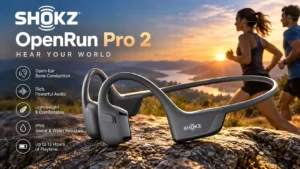
Shokz OpenFit Air 2
Where It Has the Edge
- Comfort during long use is 4.9 vs 4.6. Remarkably light earhooks can stay on for hours without rubbing, heat, or pressure. Several wearers barely noticed them...

Scorata scores summarize analyzed review evidence on a 1–5 scale; they are not laboratory measurements or a simple average of customer star ratings. Feature scores summarize the reviews covering that feature. The overall score averages feature scores within each review, then combines review averages. When both expert and customer evidence are available, those two groups receive equal weight. Products can have different review coverage, so small score gaps do not establish a winner.
Recommendations prioritize important features for the category, with a score of at least 3.5, a gap of at least 0.25 points and at least two supporting reviews per product. Features with widely varying scores or broad connectivity contexts are excluded from recommendations. These safeguards do not establish statistical significance.
Quick verdict
The review evidence points to a tradeoff: Comfort during long use versus Equalizer customization and Build quality. Choose according to which strengths matter more to you; the overall score alone does not settle that choice.
Choose Shokz OpenFit Air 2 for Comfort during long use.
Choose Shokz OpenRun Pro 2 for Equalizer customization and Build quality.
Scores are out of 5. Missing scores mean missing review evidence, not a missing feature.
Sound is clear, energetic, and surprisingly full for an unsealed fit, with particularly good voices. Higher-end Shokz models and sealed earbuds still deliver more depth and refinement.
Its hybrid bone- and air-conduction drivers offer much fuller, clearer music than older bone-conduction models. They still lack the depth and fidelity of strong in-ear headphones, and a few listeners find the presentation thin or flat.
The presentation is wide and spacious for open-ear earbuds, with good separation of musical layers. Incorrect positioning can make the stereo image uneven.
The presentation can feel pleasantly open, but it does not create the expansive, immersive stage of high-fidelity sealed headphones.
Bass has more body and punch than expected from lightweight open-ear earbuds, especially with EQ adjustments. Deep sub-bass and hard-hitting electronic music remain weaker points.
DualPitch adds welcome bass body and punch without the usual cheekbone buzz. Deep sub-bass still falls short of sealed earbuds, and the fit can change how much low end reaches your ears.
Leakage is better contained than on some open-ear designs, especially at moderate volume. Nearby people may still hear playback in a quiet office or train.
Leakage is usually restrained at sensible workout volumes but becomes noticeable in quiet offices, trains, or when the volume is raised.
The open design lets traffic, wind, and household noise compete with music. It is welcome outdoors but frustrating on trains and other loud routes.
The open design intentionally leaves surrounding sounds unblocked. This is useful for safety but makes listening difficult near traffic, fans, and other loud surroundings.
Wind and traffic suppression keep many outdoor calls intelligible, though very fast cycling can still overwhelm the processing.
The dual-mic processing can substantially reduce street or wind noise, but strong gusts still produce whooshing and can muffle speech.
There is no active noise cancellation, making noisy trains, gyms, and other distracting environments a poor match. The awareness-first design intentionally lets the outside world in.
There is no active noise cancellation to reduce loud background noise, which limits their suitability as everyday all-purpose headphones.
The box is sparse, with earbuds, case, and paperwork but no USB-C charging cable. Anyone without a spare cable must supply their own.
The supplied case and charging cable cover the basics and make transport and charging straightforward.
Clarity can be strong without turning volume all the way up, but the bass and balance may deteriorate at higher levels. The ideal setting varies with ambient noise.
Music can remain articulate at raised volume, although its open drivers still have limited headroom against outdoor noise.
The slimmer case is practical for pockets and looks tidy. Its charging storage and low weight make it easy to take on walks and rides.
The included case protects the headphones with firm construction and padding, yet it is bulky; one zipper also feels less polished.
There is enough loudness for most exercise and busy streets, but very noisy travel may overpower the unsealed design. Lower volumes can sound too thin.
Volume is usable indoors and improved over older versions, but strong traffic, wind, and gym noise can overpower it. Turning it up further does not fix the lack of isolation.
The Vocal preset can sound overly compressed for music, making other settings more appealing for most genres.
Ready-made vocal, bass, and treble profiles add convenience, but their results vary; the default Standard mode is sometimes more satisfying than the boosts.
The charging case is smaller than before and generally fits a jacket or shorts pocket. It still feels large beside compact in-ear or clip-on cases.
The flexible band is light enough to slip into a bag, but it does not fold into a pocket-size bundle. The case adds bulk.
Highs are often bright and detailed, especially in quiet environments. One listener found the upper register somewhat thin.
Highs are generally clearer and more detailed than on older Shokz sets. Some tracks still sound softened or less crisp than on conventional headphones.
Classical music, layered recordings, and acoustic material retain pleasing detail. Distinct instruments are easier to appreciate in quiet settings.
Instruments remain surprisingly distinct for an open-ear workout headset, helping busy tracks feel organized.
The earhooks usually stay secure through running, gym work, and cycling. A few users needed occasional readjustment during sweaty exercise.
The ear hooks and rear band hold securely through running, sprints, and many workouts. Some gym positions and cycling helmets can shift the band.
Lightweight comfort, secure exercise fit, and everyday awareness make this a compelling workout companion. The feature cuts and open-ear sound tradeoffs keep it from replacing isolating earbuds for everyone.
This is a favorite for workouts that demand awareness, secure fit, and better-than-usual bone-conduction sound. The specialized design makes it a less convincing one-pair solution for all listening.
Most ears get a steady fit, but a few users reported shifting or uneven driver positioning. Sunglasses, hats, or individual ear shape can matter.
Audio and comfort are most reliable when the cheekbone drivers sit in the right position. A fixed band and differing head shapes can make alignment less consistent for some people.
Traffic, approaching bikes, conversations, and household sounds remain audible alongside music. This is one of the strongest reasons to choose these for outdoor activity.
Open ear canals make approaching cars, bicycles, conversations, and outdoor hazards easier to hear while music plays. That awareness is its defining advantage for road and trail exercise.
Voices are clean and intelligible, making podcasts, calls, audiobooks, and acoustic tracks especially pleasant. Complex musical mids can sound less rich.
Spoken voices and many instruments sound present and easy to follow, particularly at moderate volumes. Some listeners find the midrange fuller than the treble and bass surrounding it.
IP55-rated earbuds shrug off sweat and rain during ordinary workouts, and the case receives useful moisture protection. Neither is intended for swimming.
IP55 coverage works well for sweat, splashes, and typical rain. It is less protective than certain older Shokz models and should not be mistaken for a swimming rating.
Caps, beanies, and ordinary glasses often fit comfortably over the slim hooks. Some combinations with sunglasses or sports headwear may disturb their positioning.
Many people wear them comfortably with glasses, caps, or bike helmets. Thicker frames and some helmets can compete for space or move the hooks.
The lack of automatic wear detection means playback does not pause when an earbud is removed. It is a missed convenience found on pricier alternatives.
There is no automatic wear detection or power-off convenience, so audio can continue when the headset is removed.
The case’s exposed USB-C port is a small outdoor-use worry. Damp-weather hikers may prefer extra protection for the charging connector.
The covered charging port adds protection against sweat and splashes, although one headset had a troublesome flap that would not stay closed.
Ten-minute top-ups can restore around three hours of listening, making the earbuds easy to prepare for a spontaneous workout. Charging is fast, but cable-only.
Fast charging is a convenience: a short top-up can restore enough playback for a workout. Routine charging is quicker and simpler than with older proprietary-port models.
Eight-hour earbud endurance and roughly 36 hours with the case hold up well in everyday use. Long walks, workouts, and workdays rarely demand an inconvenient recharge.
Battery endurance commonly stretches through long runs, rides, and multiple ordinary sessions. High-volume playback reduces the advertised twelve-hour figure, with some experiences falling substantially shorter.
SBC and AAC cover everyday Bluetooth listening, but there is no more ambitious high-resolution codec selection.
Its SBC-only codec support is limited compared with feature-rich earbuds, although the open-ear listening format places other priorities first.
The price buys excellent comfort, exercise practicality, and long battery life without reaching flagship costs. Some missing extras and stronger competitors are worth weighing.
The premium buys improved bass, secure fit, and USB-C, but less expensive Shokz models meet many of the same sporting needs. Value depends on how much the sound upgrade matters.
Switching between a laptop or watch and a phone is a useful everyday perk. Some wearers found transitions seamless without repeated manual reconnecting.
Pairing two sources is handy for moving between a phone, watch, or computer, and switching is often reported as smooth.
The app’s adjustable EQ can add needed bass and improve the default sound. Tailoring the sound helps make these adaptable to different listening preferences.
A five-band custom EQ offers useful control over the balance of bass, vocals, and treble. It improves versatility without overcoming the fundamental limits of open-ear playback.
The Shokz app offers useful control remapping, battery information, and listening options. Its flexibility adds practical value to otherwise straightforward earbuds.
The companion app provides convenient access to sound settings, battery information, and multipoint controls. An early test encountered recognition trouble before a software update.
Speech generally stays clear on walks, at work, and even near busy roads. Very strong wind while cycling can limit conversation.
Calls are intelligible in quiet conditions, with some strong reports from streets and runs. Results become much less consistent in wind, and some voices sound muffled.
Pressure-sensitive controls cut accidental taps and are a notable improvement over the old touch system. Finding the small buttons can still be fiddly, particularly with gloves.
Dedicated physical buttons are especially useful when running or sweating. Their spacing and position take practice, and the small volume keys can be hard to distinguish with gloves.
Fast device discovery and easy pairing are positives, though one cycling test encountered occasional brief connection dropouts.
Bluetooth connections generally pair quickly and stay stable through movement between nearby rooms and devices.
Google Fast Pair and Microsoft Swift Pair make the first connection straightforward on compatible hardware. Everyday setup is easy to learn.
Pairing is usually fast and uncomplicated, though getting some extra settings requires the app.
The small, sleek earbuds keep a relatively subtle profile around the ear. The Ice Blue option and refined finish draw particular praise.
The light wraparound silhouette looks sporty and unobtrusive to many, though cheek-mounted speakers can look unusual next to true wireless buds.
Remarkably light earhooks can stay on for hours without rubbing, heat, or pressure. Several wearers barely noticed them during a full workday or long workout.
The unobstructed ear canals, flexible hooks, and soft contact points make these unusually comfortable over multi-hour sessions. New wearers may need a little time to adapt to the cheekbone contact.
Soft-touch materials and a snug magnetic case make the set feel well assembled. The smooth, skin-friendly finish is comfortable during exercise.
The flexible titanium-based neckband and coated construction generally feel sturdy and ready for sports. The fixed shape may still demand care when packed.
The earhooks leave the ear canals unsealed and put little pressure on the ears. That helps avoid the soreness and stuffiness of traditional earbuds.
Gentler contact pressure keeps the pads from digging into cheeks over long sessions, while still maintaining a secure grip.
At only 7.2 grams apiece, these earhooks feel exceptionally light and are easy to forget while worn. Low weight is a standout improvement over bulkier models.
At roughly thirty grams, the wraparound design feels almost weightless during running and all-day wear.
Google Fast Pair makes connecting to supported Android phones quick and simple, with minimal setup fuss.
An audible earbud-finding feature helps locate one or both buds misplaced around the house. It is a handy everyday convenience.
The rear band occasionally catches long hair or gets nudged by hoodies and high collars, affecting an otherwise comfortable fit.
The rear band cannot be resized, making the right Standard or Mini choice important. It can shift when it is too loose or gets pushed by clothing.
There is no onboard music library for leaving your phone behind, unlike some swim-oriented alternatives.
The tidy box and carefully presented accessories make a favorable first impression.
The battery is not easily replaced, limiting repair options over the long term.
The matte charging case conceals fingerprints noticeably better than glossy alternatives.
The standard USB-C connector is a particularly welcome upgrade because it removes the need to carry a special Shokz charging cable.
Video suitability is mixed: one test reports no lip-sync lag, while another warns against timing-sensitive video editing.
A cycling test reported occasional brief audio interruptions, sometimes outdoors and sometimes indoors. Other usage was largely trouble-free.
A spatial audio option was noticed, but its effect made little audible difference to one listener.
At cycling speeds and on exposed running routes, wind can overpower music and especially spoken podcasts despite otherwise good audio.
The extra air-conduction driver sharply reduces the distracting cheekbone tickle of earlier designs. Pure bone-conduction Classic mode can bring some vibration back.
Standard and Mini lengths help accommodate different heads, but neither offers finer adjustment. Trying the size before buying is useful if you fall between fits.
The physical shortcut makes voice assistance easy to call up, including requests made during exercise.
Call noise reduction trims wind and background sounds without making voices obviously artificial.
Wireless charging is omitted from this lower-priced model. Fast USB-C charging softens the blow, but a charging pad will not work.

Choose the UU2 for unusually full open-ear sound, all-day comfort, strong battery life and excellent value. Skip it if you need sealed-bud isolation, consistently strong calls, or zero tolerance for...
Pros: Overall satisfaction, Sound quality
Cons: Spatial audio
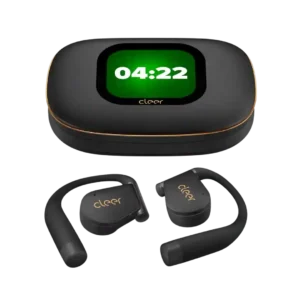
Best for all-day comfort, secure open-ear awareness, long battery life, and a genuinely useful touchscreen case. Skip it if deep bass, strong isolation, compact size, or consistently premium music quality...
Pros: Overall satisfaction, Carry case quality
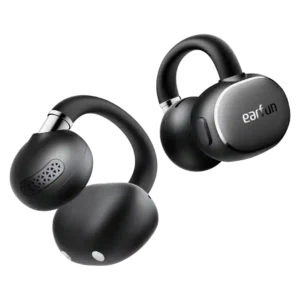
Best for lightweight all-day comfort, outstanding battery life, dependable physical controls, and premium features at a budget price. Skip it if you need deep bass, noise isolation, flawless high-volume sound,...
Pros: Overall satisfaction, Sound quality
Cons: Maximum volume clarity, Noise isolation (passive)
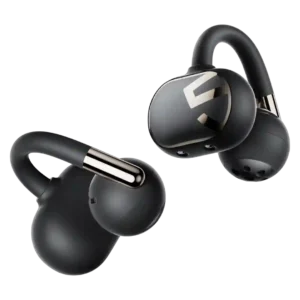
Best for featherlight all-day comfort, secure workout fit, strong open-ear sound, and unusually rich features for the price. Skip it if you need ANC, deep sub-bass, high volume in noisy...
Pros: Comfort during long use, Sound quality
Cons: Carry case quality, Touch control responsiveness