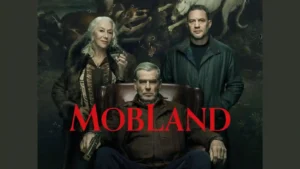

MobLand, Season 2
Where It Has the Edge
- plot twists is 5.0 vs 4.3. The season’s shocking developments and expanding complications are repeatedly framed as a strength that keeps the story lively.

Scorata scores summarize analyzed review evidence on a 1–5 scale; they are not laboratory measurements or a simple average of customer star ratings. Feature scores summarize the reviews covering that feature. The overall score averages feature scores within each review, then combines review averages. When both expert and customer evidence are available, those two groups receive equal weight. Products can have different review coverage, so small score gaps do not establish a winner.
Recommendations prioritize important features for the category, with a score of at least 3.5, a gap of at least 0.25 points and at least two supporting reviews per product. Features with widely varying scores or broad connectivity contexts are excluded from recommendations. These safeguards do not establish statistical significance.
Quick verdict
The review evidence points to a tradeoff: plot twists versus originality and visual style. Choose according to which strengths matter more to you; the overall score alone does not settle that choice.
Choose MobLand, Season 2 for plot twists.
Choose The Lowdown, Season 2 for originality and visual style.
Scores are out of 5. Missing scores mean missing review evidence, not a missing feature.
One review specifically misses the stylized camerawork normally associated with this kind of kinetic crime action, making the visual shooting style a relative weakness there.
Oklahoma is beautifully photographed, giving the shifting mix of comedy, mystery, and drama a strong sense of place.
One critic objects that the crime family never meaningfully reckons with the human consequences of its drug business, making the moral fallout feel underexamined.
Lee’s good intentions receive closer scrutiny as the season asks who pays for his pursuit of truth. His charisma no longer excuses every failure.
Originality is one of the most consistent reservations: reviewers repeatedly call the gangster framework familiar or clichéd. Strong execution, eccentric characters, and energy often compensate for that familiarity.
The mix of Tulsa grit, human eccentricity, and loose noir storytelling retains a distinctive personality that feels unusual on television.
Dialogue reactions are sharply divided: some critics call it devilishly funny or almost Elizabethan, while others find it crass, less punchy, or effortful.
Singing dialogue, sarcastic retorts, and recurring verbal jokes make conversations a major source of pleasure.
The season expands from street-level gang conflict into a more sophisticated political drama with international implications, a shift one review strongly praises.
Institutional corruption and racism remain central concerns, though one account finds the new season less urgently topical than the first.
Johnny Flynn’s arrival is widely viewed as inspired casting, though one harsh review argues Helen Mirren is badly miscast. Overall casting sentiment is positive but not unanimous.
Gilpin and Jones fit the eccentric world exceptionally well, while memorable character actors excel in unexpected roles.
Season 2’s opening episodes usually move quickly, with critics praising how fast the premiere reestablishes stakes and throws viewers back into the conflict.
The opening often feels energetic, but the extended Chili Franks detour divides opinion. Some find it unbearably tense; others feel it starts to drag.
Editing draws split reactions. One critic misses the rapid-fire cutting associated with Ritchie’s action style, while another praises dynamically rhythmic edits that make action scenes sing.
Transitional fades help connect the shifting encounters and country soundtrack into an evocative whole.
Some critics find the family power struggle more credible and appreciate Hardy’s grounding influence, while others call the Harrigans ludicrous or emphasize the show’s deliberately stylized unreality.
Small local details and natural performances make the characters’ lives feel observed rather than manufactured.
Many reviewers see richer motivations, stronger arcs, and more depth across the family, especially Harry. Critics on the other side argue some quieter episodes stall rather than develop the characters.
The season gives Lee’s flaws deeper roots and lets Ginger, Francis, and the supporting characters exist beyond their usefulness to his investigation.
Pacing is the most divided area. Some reviews call the season faster, relentless, or breakneck, while others say it is overbusy, slow to build, or outright stalled.
Most see a more confident season that gets moving quickly while retaining its wandering charm. The main dissent finds long detours and too little investigative momentum.
Dark humor is a major draw for many reviewers, especially when brutality and absurdity collide. Detractors find the jokes, banter, and profanity strained rather than funny.
Physical comedy, dry reactions, and absurd local encounters consistently land. Gilpin’s exasperation and Hawke’s clumsy confidence are especially fruitful.
The season’s shocking developments and expanding complications are repeatedly framed as a strength that keeps the story lively.
The mystery is frequently surprising, though one critic finds it less twisty than the first season.
The darker, more damaging direction is described as a natural evolution of what the first season had already been building toward rather than a shock-for-shock’s-sake pivot.
The new case picks up naturally from the first season and carries forward earlier threads without letting them dominate.
Clarity varies by reviewer. Some praise how quickly the season establishes players and stakes, while others find the many feuds and schemes hard to follow without close attention.
Most find the mystery controlled and gradually revealed. One strong dissent says the detours leave viewers lost and weaken the connective story.
Eddie and Gina’s relationship adds a softer note to the violence, with reviewers praising their chemistry and the small touch of sweetness their bond brings.
Lee and Ginger’s attraction works through friction, exasperation, and reluctant trust. Their banter keeps the tentative romance lively without smoothing away his flaws.
Reviews split on depth: some praise the stronger focus on marriage, family damage, motivation, and humanism, while others see fireworks and criminal posturing crowding out substance.
Truth-seeking, responsibility, institutional corruption, and inherited family failures give the season substance. One critic finds the looser plotting too shallow to fulfill that promise.
The darker, more serious mood is generally viewed as a coherent evolution, and the directing team is praised for keeping the style and tone consistent across episodes.
The prevailing view celebrates how naturally absurd comedy and painful drama coexist. A dissenting account finds sharper shifts that fail to gel.
For viewers who want a modern gangster thriller, the season is widely described as a strong or even top-tier genre entry, despite familiar genre DNA.
The mixture of loose hangout comedy and sun-drenched noir is a major draw. A weaker investigative throughline makes the blend less satisfying for one critic.
Most reviewers find the season tense, unpredictable, and hard to look away from, especially as characters become less safe. One critic thinks Frankie’s early danger is asserted more than earned.
Dangerous prison guards and volatile confrontations give the comedy a real edge. A pacing critique argues that long detours sometimes deflate that tension.
The premiere’s recap and reintroduction work well, and its personal stakes sharpen the setup. One critic pushes back that quieter episodes can feel like filler rather than purposeful progression.
The recurring cast and new investigation provide a satisfying serialized framework. Individual detours work best when they preserve the underlying mystery.
Harry and Jan’s marriage material lands as both heartbreaking and funny, giving the season emotional weight beneath the criminal chaos.
The season can be unexpectedly moving and sometimes devastating. Brief supporting stories and quieter father-son moments carry particular force.
Most reviewers find the action explosive, stylish, and high-impact, especially the dog-track opener. A notable dissenting review says the once-propulsive action stalls during the first four episodes.
A nighttime escape turns motion-triggered floodlights into an inventive comic obstacle, making the gunfire sequence memorable for more than its danger.
Guy Ritchie’s premiere direction is praised for combining menace, swagger, violence, and darkly funny understatement with confidence.
Harjo’s assured handling of character, tone, and place earns strong praise, especially when the story slows down for intimate family scenes.
Several reviews like the wider focus and say the larger cast avoids feeling forced, but others find the number of active players daunting. Harry’s reduced centrality is generally seen as manageable.
Most find that the actors complement one another without derailing the story. A dissenting view argues that too many returning and new characters stretch the season thin.
Frankie is the breakout threat for most reviewers—strange, menacing, funny, and unpredictable—while Kat adds strategic pressure. One major dissent calls Frankie a temporary stopgap whose early menace lacks consequences.
The new sheriffs, judges, and guards provide distinct, genuinely menacing obstacles beneath the comedy.
Maeve and Conrad’s combustible pairing earns strong praise, while the Harry-Maeve-Conrad triangle is also seen as an entertaining core dynamic.
Hawke and Gilpin find an immediate rhythm of attraction, exasperation, and slapstick. Jones’s quiet presence gives the family scenes an equally compelling counterweight.
The dominant view is that Season 2 is gripping, more ambitious, and improved over the first season. Dissenters see stalled momentum, thin substance, or squandered potential beneath the spectacle.
Most find an engaging conspiracy strengthened by richer character work. The chief objection is that the core mystery feels thinner and less tightly connected than before.
The writing is praised at its best as whip-smart and tightly constructed, though one review criticizes moments when supposedly savvy characters make implausibly poor decisions.
Most praise the three-dimensional characters, sharp comedy, and integration of personal and social stakes. The main criticism is an underdeveloped mystery padded with detours.
The premiere works best when the power struggle becomes personal, tightening the conflict around damaged family relationships rather than only gangland mechanics.
The family material gives the shaggy mystery substantial emotional weight, with the father-son story repeatedly singled out as a high point.
Enthusiasm for continuing is high, with multiple reviewers explicitly eager for more and relieved that a third season is already confirmed.
The expandable world and emotionally rich characters leave enthusiastic critics eager for more seasons.
One critic sees sex as part of an overreliance on sensational jolts, arguing that the spectacle can crowd out deeper exploration of the family.
The foot-fetish bargain draws criticism for its degrading effect, rather than simply for the presence of sexual material.
Maeve’s power-dressing wardrobe receives explicit praise as a standout visual detail this season.
Denim, sideburns, and throwback styling contribute to the affectionate atmosphere of an Oklahoma vintage shop.
The show is often called stylish, especially in the opener, but several reviewers find it less visually distinctive than The Gentlemen or more formulaic once the premiere settles down.
The throwback Oklahoma look and confident noir references create a recognizable style. Their polish does not fully compensate for weaker substance in the most critical account.
The broader criminal and political world is praised for feeling more developed, with added layers around both the Harrigans and the forces moving against them.
Tulsa feels full of lived-in spaces, local quirks, and strongly individual people. The setting rewards wandering beyond the main investigation.
The soundtrack gets enthusiastic praise for its defiant choices and the way music energizes major action sequences.
The country selections are often praised as evocative and among television’s best. One critic finds the near-constant music intrusive despite appreciating individual choices.
The leads remain a major asset, especially Tom Hardy’s calm, menacing presence. Even reviews focused on story problems often acknowledge the strength of the central performances.
Hawke remains a magnetic, physically committed lead, while Gilpin and Jones supply sharply different energies. Armstrong holds her own in the family scenes.
The supporting players are described by the principal cast as top-tier British actors who add substantial quality around the leads.
Guest actors make small roles vivid, funny, and sometimes devastating. Jones, Gilpin, Schneider, and Plimpton receive especially strong notices.
The ensemble is one of the clearest strengths, with repeated praise for the leads and newcomers even from reviews that dislike the plotting. Several critics call the cast fantastic, top-form, or the main reason the show works.
The ensemble is the clearest strength, with Hawke’s physical comedy, Gilpin’s emotional agility, and Jones’s restraint drawing especially enthusiastic praise.
Most reviews find the season highly watchable, fun, addictive, or outright excellent. A smaller but forceful group finds the chaos tedious, stalled, or a waste of the cast and audience’s time.
The prevailing response is exuberant: funny, strange, and highly watchable. Even the major dissenter finds enjoyment with tempered expectations.
Harry’s competence and insight make him unusually easy to root for, while the broader cast is praised as compelling even when the characters are morally awful.
Lee remains an engaging, brilliantly realized mess for most critics, and Ginger makes an immediate impression. His self-absorption becomes exhausting for the strongest dissenter.
Early critical reception is presented as exceptionally strong, with writers emphasizing the initial perfect aggregator score while also noting the small early sample.
The early reception is enthusiastically positive, with the opening described as a terrific start. That approval remains an early-season assessment.
Irish-accent work is a recurring weak spot. Multiple critics call the accents unconvincing or comical, even when they still enjoy the performances around them.
Sun-drenched Tulsa grit, oddball encounters, and a relaxed hangout feel give the season a distinctive identity. Even the principal detractor recognizes its beatnik energy.
The premiere quickly rekindled one reviewer’s desire to binge the entire season in one sitting.
Familiar personality traits sometimes edge toward repetition, and Gina’s rapid shift into criminality is called whiplash by one critic. The returning characters otherwise remain recognizably themselves.
Most praise the room given to the ensemble, including returning faces. Others find the expanded cast thinly justified or wish compelling performers had larger parts.
Frankie’s late reveal in the premiere is praised as an effective warning that the threat board is getting more crowded.
Tulsa feels textured by local personalities, history, and Native humor. Even the harshest critique acknowledges genuine insight into the region.
Hour-long chapters are explicitly praised as worth the investment because the tension and danger stay high.
The arrival of Lee’s estranged father turns the season into a layered study of neglect, resentment, and imperfect reconciliation. The father-son scenes frequently rival or surpass the central mystery.
Lee’s everyday unreliability sits alongside a more dependable instinct to help in a crisis. The wider community gives his crusade warmth and support.
Native storytelling and humor contribute warmth and specificity rather than feeling like an obligation. The local perspective is part of the show’s appeal.
Profanity is polarizing: one critic thinks the relentless cursing enhances the heightened style, while another argues the show depends on swearing so heavily that it becomes grating.
The expanded world gives viewers more meaningful insight into both major and secondary players, adding texture beyond the central Harrigan power struggle.
The story examines whether getting the facts right also means doing good. Journalism’s consequences become more personal without turning the conversations into lectures.
One assessment finds that the mystery builds to a payoff that keeps viewers guessing.
The weekly rollout is viewed positively as a way to sustain tension and make the season feel like an ongoing must-watch event.
One critic finds the original score overused, as though it is compensating for weaknesses in the plotting.
One preview questions whether eight episodes provide enough room for the intertwined mysteries and family story, while remaining hopeful about their resolution.
Action effects such as muzzle flashes and bloody impacts are praised for making the upgraded violence feel vivid and hard-hitting.
Old parental wounds remain legitimate even as Lee repeats some of the damage himself. The quieter scenes give that inherited pain weight without easy sentimentality.
Violence is intentionally extreme and very polarizing. Fans of the style praise the gore-flecked spectacle and upgraded impact, while detractors find the carnage excessive and unsupported by enough wit or charm.
The season wins over at least one self-described gangster-genre skeptic and earns a direct recommendation from another writer, suggesting broad appeal beyond committed mob-drama fans.
Guest performances add eccentricity and energy, with surprising character actors making even brief visits memorable.
One review says the punchy sound design associated with the show’s kinetic action style is largely missing this season.

Best for sharp adult humor, magnetic chemistry and a deeply satisfying farewell. Skip it if familiar will-they-won’t-they plotting or deliberately messy leads are dealbreakers.
Pros: humor, writing quality

Choose Widow’s Bay for its dark laughs, richly haunted island and memorable ensemble. Skip it if you need straightforward scares, rapid answers to every mystery or a completely resolved finale.
Pros: humor, genre satisfaction
Cons: ending satisfaction, season pacing

Choose Season 15 for warm, character-driven comedy, meaningful growth, and a finale that rewards longtime fans. Skip it if the short binge format, uneven replacement voices, or occasional clumsy commentary...
Pros: franchise connection, character development
Best for sharply acted, compassionate, high-pressure hospital drama. Skip it if graphic procedures unsettle you or you need a neatly resolved season finale.
Pros: character development, acting performance
Cons: character consistency, dialogue quality