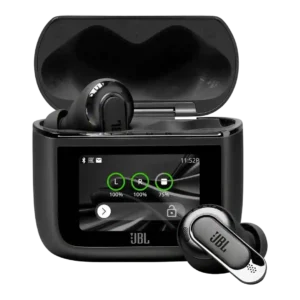

JBL Tour Pro 3 Earbuds
Where It Has the Edge
- Treble clarity is 4.5 vs 4.0. Treble was usually praised for clarity, crispness, and control, with only limited concern about brightness or EQ tweaking.

Scorata scores summarize analyzed review evidence on a 1–5 scale; they are not laboratory measurements or a simple average of customer star ratings. Feature scores summarize the reviews covering that feature. The overall score averages feature scores within each review, then combines review averages. When both expert and customer evidence are available, those two groups receive equal weight. Products can have different review coverage, so small score gaps do not establish a winner.
Recommendations prioritize important features for the category, with a score of at least 3.5, a gap of at least 0.25 points and at least two supporting reviews per product. Features with widely varying scores or broad connectivity contexts are excluded from recommendations. These safeguards do not establish statistical significance.
Quick verdict
The review evidence points to a tradeoff: Treble clarity versus Sound quality and Maximum volume clarity. Choose according to which strengths matter more to you; the overall score alone does not settle that choice.
Choose JBL Tour Pro 3 Earbuds for Treble clarity.
Choose Activo Scoop for Sound quality and Maximum volume clarity.
Scores are out of 5. Missing scores mean missing review evidence, not a missing feature.
Reviewers widely praised the overall sound as clear, exciting, and flagship-level, with only a few caveats about tuning preferences.
The Scoop sounds clean, detailed, and unusually refined for its price, with convincing hi-fi authority rather than a cheap or harsh presentation.
Frequency response was judged generally listenable but somewhat off the reviewer’s preferred target.
The core tuning is disciplined, balanced, and natural, favoring smoothness and accuracy over exaggerated warmth.
Soundstage width earned positive comments for left-right separation and a clear sense of space.
The presentation feels notably spacious for a $99 IEM, with a soundstage repeatedly described as genuinely impressive.
Passive isolation was praised, especially with the included tips and foam tips improving the seal.
A proper seal blocks outside noise well, especially with the foam tips, though those tips can be fiddly to fit.
Bass was consistently described as punchy, deep, textured, and fun, though a few reviewers noted a bass-forward balance.
Bass is fast, controlled, and capable of real weight, but the tuning is not universally bass-forward. Some listeners may want more warmth and low-end emphasis.
Setup and software stability were usually positive, with quick pairing and later app stability, though one review flagged app moodiness.
Changing connectors is manageable, but newcomers may miss a proper manual or quick-start guide.
Maximum-volume clarity was mixed: one reviewer heard flatness at loud volume, while another found distortion remained low.
Clarity and control hold up even at high or near-maximum volume.
Fit stability was split: some reviewers found a secure workout-ready seal, while others struggled with looseness or smaller-ear fit.
The cable’s over-ear routing keeps the buds secure during jogging and exercise.
Midrange comments were mostly positive for vocals and clarity, but a few reviewers heard recessed or underpowered mids in some tracks.
Vocals and instruments stay balanced and articulate, preserving fine vocal texture without crowding the mix.
Included accessories received limited but positive evidence because one reviewer appreciated the useful cable bundle.
The box is unusually generous, including multiple silicone and foam tips, three connector types, and a protective case.
Treble was usually praised for clarity, crispness, and control, with only limited concern about brightness or EQ tweaking.
Highs are crisp and expressive, though the brighter tuning can push percussion forward or feel in-your-face on some tracks.
Instrument separation and imaging were frequently praised, especially with comments about clear placement, cohesive mixes, and detailed separation.
Busy arrangements remain organized, giving guitars, percussion, bass, and smaller details their own space.
The smart charging case was the standout feature across reviews, praised for touchscreen controls, transmitter utility, and overall usefulness despite size complaints.
The sturdy, compact case has enough room for the buds, extra connectors, and tips while adding useful travel protection.
Volume output was considered strong, with reviewers noting headroom and loud playback even around moderate settings.
The low-impedance design plays loudly and confidently from portable sources, with clear harmonies and strong output.
Portability was mixed to negative because the smart case adds useful features but is often bulkier than average.
The included case is compact, but the thick cable, large connectors, and chunky shells make the full kit less pocket-friendly than smaller IEMs.
Multi-platform compatibility was praised because the transmitter case and feature blend expand use beyond standard phone pairing.
Three connector options make the Scoop unusually flexible across phones, computers, studio decks, portable players, and higher-end hi-fi equipment.
Value was highly context-dependent: many reviewers liked the feature set or sale pricing, while others criticized the premium price and cheaper JBL alternatives.
At around $99 or £99, the five-driver sound, premium cabling, broad connectivity, tips, and case form a notably strong value package.
Comfort was strong for many reviewers over long sessions, but fit problems for smaller ears and foam-tip discomfort created a clear caveat.
The pebble-shaped shells remain comfortable over long sessions once fitted, but their large size may trouble smaller ears.
Design opinions were mixed: some liked the premium smart-case look and unique design, while one reviewer felt the buds looked cheap.
The polished white pebble styling looks distinctive and premium to most reviewers, though the chunky over-ear appearance is less elegant than slimmer rivals.
Build quality was generally praised as solid, rugged, or well-made, with positive long-term durability evidence.
The Scoop feels sturdy and well finished, with high-quality shells and a robust detachable cable that belie its budget price.
Ear tip options were praised for the generous selection and included foam tips, with some reviewers finding them especially useful.
Small, medium, and large silicone and memory-foam tips provide plenty of choice for seal and comfort.
Eartips fit was highly user-dependent, ranging from easy fit and better seals to trouble staying put for smaller ears.
Silicone tips are easy to fit and comfortable, while foam tips improve isolation but can be fiddly.
Weight comfort was positive in the reviews that discussed it, with light-feeling buds and minimal suction.
The shells feel light despite their chunky footprint, helping reduce fatigue during longer listening.
Charging was praised for quick-charge usefulness, fast charging, USB-C, and wireless charging convenience.
Because the Scoop is wired, there is no battery or charging routine, an explicitly welcomed benefit for users tired of charging earbuds.
ANC was broadly rated good to excellent, though several reviewers said it still trails the very best Bose, Sony, or Apple options.
Latency evidence was mixed: one review found low latency for video, while others criticized gaming or LDAC/video-mode latency.
USB-C listening delivers strong hi-fi performance for listeners focused on lossless playback.
Microphone noise reduction was usually praised for suppressing train, traffic, wind, and office noise, though one reviewer found wind-city performance weaker.
Sound leakage had limited negative evidence tied to one reviewer’s poor seal and passive-isolation issue.
Soundstage depth evidence was positive but limited, with comments about full engagement and an immersive concert-like effect.
Spatial audio drew mixed-to-positive reactions, with several reviewers loving head tracking while others found it inconsistent or track-dependent.
Android compatibility was praised mainly through LDAC support and Android hi-res advantages.
Hi-res playback was praised through LDAC, LE Audio, and high-quality transmitter-mode listening; DAC-specific evidence was not separately evaluated.
The removable braided cable uses premium materials and impressed most reviewers, but its thickness and bulky connectors are recurring ergonomic drawbacks.
The modular cable lets owners change connectors, replace a failed cable, or use a preferred aftermarket option.
The case transmitter/dongle function was repeatedly praised as a major convenience for flights, gyms, wired sources, and low-latency playback.
Find My evidence was mixed-to-negative because the earbuds had useful locating features but the case could not be pinged in one review.
Integrated microphone hardware was viewed positively, with dependable microphones and strong mic clarity when using the case connection.
LDAC was repeatedly treated as a meaningful advantage for compatible Android or hi-res listening setups.
The Scoop earns enthusiastic overall approval as a competitive, quality-focused entry into affordable audiophile IEMs.
Preset EQ evidence was limited but positive, especially for the Studio preset’s bass adjustment.
Sensors were praised for reliable wear detection and auto-pause behavior.
Sidetone/Voice Aware adjustment had limited mixed evidence because one reviewer found it fiddly despite liking transparency overall.
Smudge resistance was mixed: one review liked the case’s fingerprint resistance, while another said a glossy case picked up fingerprints.
Touch responsiveness was mixed, ranging from reliable sensors and useful controls to laggy or temperamental case/touch behavior.
Transparency mode was generally usable to good, but reviewers varied from strong praise to merely acceptable or digitally recreated impressions.
The screw-on USB-C connector works alongside 3.5mm and balanced 4.4mm options, making modern phones, tablets, and computers easy to use.
Water and sweat resistance was evaluated favorably for workouts, rain, sweat, and daily use confidence.
The JBL app was usually praised for depth, EQ, settings, and control, though one review noted occasional bugs.
Bluetooth connectivity was described as stable and easy, with high marks in reviews that scored or tested pairing and connection behavior.
Control usability was a recurring compromise because reviewers had to choose among playback, volume, and ANC control groups.
Equalizer customization was one of the most consistently praised features, often described as powerful, robust, or highly configurable.
Call microphone quality was a major strength across reviews, with several reports of clear calls in offices, traffic, or windy settings.
Auracast support was treated as a major future-facing strength, though some reviewers noted limited current device compatibility.
Codec support was praised for LDAC and high-resolution wireless options, especially by Android-focused reviewers.
Multipoint was useful and often smooth, but one reviewer reported source-switching mistakes that hurt reliability.
Battery life was widely praised as competitive or impressive, with some long-term evidence of normal capacity decline.
Long-term case hinge durability had limited but positive evidence from a 12-month review.
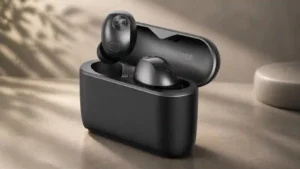
Choose these for excellent, balanced sound, a comfortable redesign, deep EQ tools and uniquely replaceable batteries. Skip them if you need class-leading ANC, consistently great calls or the smoothest treble...
Pros: User-replaceable batteries, Overall satisfaction
Cons: Auracast support, Sensors
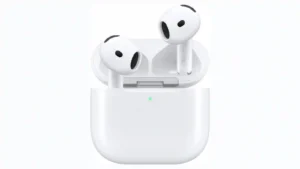
Choose the AirPods 5 for strong open-ear ANC, clearer sound, easy Apple-device switching, and excellent value. Skip them if you need all-day battery, a very secure workout fit, or full...
Pros: Overall satisfaction, Sound quality
Cons: Battery, Eartips fit
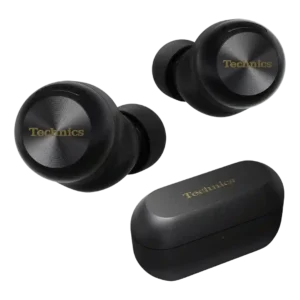
Choose the Technics EAH-AZ100 if sound quality, bass, ANC, battery life, and multipoint matter most. Skip them if you need flawless calls, Bose-level ANC, the most natural transparency, or a...
Pros: Sound quality, Active noise cancellation
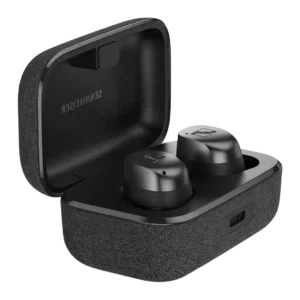
Choose these for excellent sound, deep app control, strong codec support, and a premium true-wireless package. Skip them if call quality, best-in-class ANC, iPhone integration, or a compact case matters...
Pros: Sound quality, Bass performance
Cons: Microphone quality for calls, Microphone noise reduction