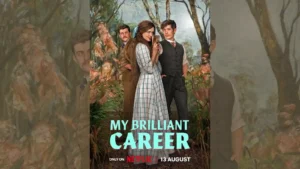

My Brilliant Career
Where It Has the Edge
- visual style is 4.7 vs 4.3. Australian landscapes, sun-drenched estates, and bold period styling make the series visually striking, even for critics who find...

Scorata scores summarize analyzed review evidence on a 1–5 scale; they are not laboratory measurements or a simple average of customer star ratings. Feature scores summarize the reviews covering that feature. The overall score averages feature scores within each review, then combines review averages. When both expert and customer evidence are available, those two groups receive equal weight. Products can have different review coverage, so small score gaps do not establish a winner.
Recommendations prioritize important features for the category, with a score of at least 3.5, a gap of at least 0.25 points and at least two supporting reviews per product. Features with widely varying scores or broad connectivity contexts are excluded from recommendations. These safeguards do not establish statistical significance.
Quick verdict
The review evidence points to a tradeoff: visual style versus cast chemistry and cultural representation. Choose according to which strengths matter more to you; the overall score alone does not settle that choice.
Choose My Brilliant Career for visual style.
Choose Youth (2026) for cast chemistry and cultural representation.
Scores are out of 5. Missing scores mean missing review evidence, not a missing feature.
The Australian setting and heroine give the series personality, but several critics think the love triangle and familiar modern-period-drama formulas blunt its originality.
The show’s fresh angle comes less from its basic dating premise than from how it reframes the empty nest and reinvention through a 50-year-old woman’s perspective.
The language is not universally family-friendly; suggestive phrasing and TV-14 content warnings prompted caution from family-focused outlets.
The foulmouthed dialogue fits the show’s candid comic voice and is treated as part of the fun rather than a drawback.
Opinions split on pace. Some find the progression brilliant and thematically intentional, while others complain of sluggish stretches or a finale that drags.
The season’s flow is addictive enough that one reviewer found it easy to move from episode to episode almost without noticing.
Reactions depend heavily on expectations: family-oriented sources dislike the suggestive and explicit material, while other critics think the show is comparatively restrained and usefully frank.
The show is sexually frank and raunchy, but reviewers generally approve of how the sex scenes stay awkward, funny, and grounded rather than glossy.
The slow-burn connections can be charming and convincing, but the expanded love triangle is also the adaptation’s most divisive choice and can overshadow Sybylla’s ambition.
Alex and Patrick’s relationship is a major draw, powered by warmth, bad timing, and strong chemistry that makes both characters’ hesitation understandable.
The premiere’s format feels organic and engaging overall, but its time jumps are a noticeable source of friction.
The two-episode opening gives the overlapping family, work, and dating pressures enough room to establish themselves before the weekly rollout.
The ensemble often gets meaningful side stories and distinct motivations, but some critics wanted more room for Nell, other marginalized characters, and secondary plots to develop.
The Alex-Ruari pairing is generally well balanced, with their parallel crises reinforcing each other, though some surrounding relationships feel less organically integrated.
At its best, the show balances intelligence, lightness, and messy youthful energy; the syrupier finale and heightened modern touches can make the tone feel less controlled for some viewers.
The series largely sustains a tricky blend of raunch, melancholy, cringe, and tenderness without losing its identity as a comedy.
The language often lands as sharp, witty, authentic, and restrained, but one episode review criticizes moments that over-explain characters instead of trusting the subtext.
Sharp lines, witty banter, and precise comic phrasing are repeatedly singled out as part of the show’s appeal.
Ambition, independence, gender expectations, money, race, and creative identity give the series substantial thematic material, though a few critics think the feminist message is either too blunt or overshadowed by romance.
The show’s strongest thematic idea is that growth does not end with youth: aging, desire, parenting, work, and self-definition are treated as ongoing and often contradictory.
For viewers who like period romance and coming-of-age drama, the series is frequently described as a standout, including by some critics who normally dislike the genre.
As a midlife comedy-drama it lands very well, though at least one reviewer places it just below Horgan’s best earlier work.
Several pairings click immediately, especially Sybylla’s key relationships and the Nell-Charlie dynamic, though one mixed review found some chemistry forced or underdeveloped.
Chemistry is one of the clearest strengths, especially in Alex’s romantic scenes with Patrick and the shifting warmth and strain of her friendship with Sam.
Editing draws mixed reactions: early time jumps can feel jarring, while the finale is praised for a nuanced, show-don’t-tell construction.
Onscreen phone displays and rapid digital interruptions effectively communicate how Alex’s obligations pile up and collide.
The show’s overt feminist framing will not suit every viewer; one values-based review found its celebration of rebellion too forceful and at odds with that outlet’s worldview.
The masculinity storyline is one of the shakier elements; its attempt to engage contemporary anxieties around young men is seen as less fully resolved than the midlife material.
Despite its hopeful tone, the story’s economic pressures and difficult tradeoffs are praised for giving Sybylla’s choices a practical grounding.
Reviewers repeatedly praise the specificity of everyday behavior, family friction, awkward sex, and midlife insecurity, although one excerpt finds the overall presentation slightly too glamorous.
Sybylla and many supporting characters gain meaningful nuance, although a few critics find the suitors comparatively shallow or wish the heroine’s internal insecurity were explored more deeply.
The mother-son relationship grows in satisfying ways, but Ruari’s personal arc is also criticized as rushed and at times too simply resolved.
The writing is often praised as sharp, witty, polished, and thematically smart, though occasional exposition and reduced subtlety draw criticism.
The scripts are praised for tight episodic construction, sharp comic beats, and a strong sense of narrative flow.
First Nations, Chinese-Australian, gay, and female perspectives expand the period setting in ways many critics found thoughtful and resonant, though a few wanted some side stories developed further.
The show’s London social world feels naturally diverse, and its focus on complex women over 50 is welcomed as a broader, less stereotyped form of representation.
Its irreverent comedy and Sybylla’s chaotic energy give the period setting a light, modern pulse that several viewers found refreshing.
Comedy is the broadest point of agreement: reviewers repeatedly call the show very funny, mordant, biting, and laugh-out-loud effective, especially in its publishing satire and awkward social situations.
The coming-of-age journey earns strong emotional investment, with the gradual relationships and Sybylla’s self-discovery repeatedly described as moving.
Cringe, tenderness, and midlife anxiety frequently sit beside the jokes, producing moments reviewers found wrenching, vulnerable, and emotionally recognizable.
The coming-of-age story is usually praised as witty, bold, and satisfying, though detractors argue the romance can dilute the sharper ambition-and-independence focus.
The central midlife and mother-son stories are compelling and self-aware, though some side plots feel superfluous and the overall emotional core can occasionally get crowded.
Pacing is often praised as brisk and engaging, though the premiere’s rhythm and some structural choices receive occasional criticism.
The pacing is loose and light rather than urgent, with several reviewers finding the breezy movement a good fit for the material.
The finale leaves a small accountability gap around Sybylla’s father: one critic wanted a clearer acknowledgment or thank-you after she helps resolve his debt.
The show’s handling of Ruari’s wrongdoing draws criticism for making his rehabilitation too easy, softening a harder accountability arc.
The six-episode run is easy to keep watching, helped by strong relationships, lively pacing in the most positive takes, and a compact format.
Short episodes, breezy momentum, and an addictive flow make the season unusually easy to consume in long stretches.
Casting is widely praised, from Philippa Northeast’s central performance to Anna Chancellor and a strong ensemble that fits the heightened period tone.
The ensemble is viewed as a clear strength, with the cast itself described as great and the guest lineup adding extra texture.
Six episodes is widely seen as the right size: compact, filler-free, and short enough not to overstay its welcome.
Eight half-hour episodes make for a compact season that several reviewers describe as unusually easy to binge.
The locations and interiors are repeatedly praised as gorgeous, vibrant, and richly differentiated, with the library and estates standing out as especially considered spaces.
Real London locations and polished interiors are used in ways that fit Alex’s publishing-world ambitions and professional setting.
Distinct homes, landscapes, class spaces, and color palettes give the series a vivid sense of place, especially across Possum Gully, Caddagat, and Five Bob Downs.
Guest characters and the publishing-world ensemble add depth and color to the show’s wider social universe.
Australian landscapes, sun-drenched estates, and bold period styling make the series visually striking, even for critics who find some modern flourishes excessive.
Phone screens and busy visual details reinforce Alex’s overloaded life, though one review finds the show’s polished glamour a little at odds with its claim to everyday realism.
The cast of characters is easy to become attached to, with Sybylla, Nell, and the broader women’s ensemble singled out as especially appealing.
Patrick’s appeal is carefully calibrated: he remains flawed, but reviewers find him likable and charming enough to make Alex’s attraction believable.
The show is positioned as highly accessible to modern period-drama fans, with strong recommendations and a contemporary tone that several critics expect younger viewers to embrace.
The comedy is especially relatable for viewers navigating midlife, but its clear character work and humor are also described as accessible beyond that core audience.
Critical reception is described as exceptionally strong, with one article explicitly calling the series a hit with critics.
Critical reception is strongly positive, with the series characterized as another major success for Horgan.
Most takes find the series lively, fun, and highly watchable, even when they criticize its romance-heavy or modernized choices.
The series is described as a highly enjoyable, superlative comedy with strong momentum and plenty of comic payoff.
The ensemble is consistently strong, with Anna Chancellor, Kate Mulvany, Christopher Chung, Jake Dunn, Sherry-Lee Watson, and others adding warmth, humor, and texture.
The supporting players are widely seen as a strength, bringing comic energy and added texture even when a few side characters verge on caricature.
Performances are a major strength, with the ensemble repeatedly described as excellent, luminous, or all-in; even otherwise negative takes praise the acting.
Performances are a major strength, with the ensemble making relationships feel lived-in and Aran Murphy’s work bringing tenderness to Ruari.
Philippa Northeast is the clearest consensus strength, repeatedly called magnetic, radiant, convincing, high-voltage, and perfectly suited to Sybylla.
The lead ensemble is consistently praised, with Horgan’s comic presence and Aran Murphy’s naturalistic work giving the show much of its emotional credibility.
Family-focused coverage cautions that the series’ sex, substances, language, and smoking make it a questionable choice for younger teens.
Inclusive casting is treated as part of the story rather than decoration, with race and social position meaningfully shaping characters’ lives.
Alex is praised as carefully balanced, but Sam and especially Ruari draw some criticism for inconsistent characterization or behavior that serves the plot.
One ending-focused critique finds a small timeline/continuity problem in how Sybylla’s completed writing and her decision about marriage are presented.
The direction supports the show’s brisk half-hour rhythm and helps its observational comedy land consistently.
The dramatic side is less consistent than the comedy, with one critic arguing that the many complications can crowd out the emotional core.
The ending is broadly seen as purposeful and satisfying, but not unanimously: some find it syrupy, bittersweet, or slowed by its structure.
The roughly 30-minute episodes are praised as snappy and particularly well suited to easy viewing.
The adaptation preserves the novel’s rebellious core for many critics while freely modernizing characters, romance, and tone; a minority argues those changes weaken the original feminist emphasis.
Family-oriented sources advise caution, mainly because of sexual material, suggestive language, substances, and the show’s adult themes.
The menopause material is unusually frank and specific, treating physical changes, sexuality, and self-image as both funny and meaningful rather than background detail.
Sets, costumes, landscapes, and much of the dialogue create a convincing Australian period world, while anachronistic music and deliberately modern sensibilities make the authenticity selective rather than strict.
The premiere makes a strong impression through Sybylla’s personality, plot reversals, and modern feminist direction, even with some structural roughness.
The premiere’s romantic revelations and family betrayal are praised for keeping the story moving and entertaining.
The two-episode premiere is viewed as a smart launch choice because it establishes the show’s competing pressures before shifting to weekly episodes.
The period wardrobe is a standout: lavish, beautiful, and carefully balanced between historical silhouettes and a slightly modern edge.
The series can spark curiosity about Australian literature and history; one viewer specifically said it pushed them to learn more about Australian writing.
A rewatch can deepen appreciation of the finale’s editing and nuance, and one critic said the ending made them want to start the series again immediately.
The anachronistic pop soundtrack is one of the clearest taste splits—often praised as energetic and cleverly reworked, but sometimes called jarring or damaging to period immersion.

Best for sharp adult humor, magnetic chemistry and a deeply satisfying farewell. Skip it if familiar will-they-won’t-they plotting or deliberately messy leads are dealbreakers.
Pros: humor, writing quality

Choose Widow’s Bay for its dark laughs, richly haunted island and memorable ensemble. Skip it if you need straightforward scares, rapid answers to every mystery or a completely resolved finale.
Pros: humor, genre satisfaction
Cons: ending satisfaction, season pacing
Choose Season 15 for warm, character-driven comedy, meaningful growth, and a finale that rewards longtime fans. Skip it if the short binge format, uneven replacement voices, or occasional clumsy commentary...
Pros: franchise connection, character development

Best for sharply acted, compassionate, high-pressure hospital drama. Skip it if graphic procedures unsettle you or you need a neatly resolved season finale.
Pros: character development, acting performance
Cons: character consistency, dialogue quality