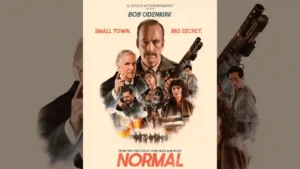
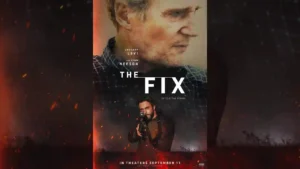
Scorata scores summarize analyzed review evidence on a 1–5 scale; they are not laboratory measurements or a simple average of customer star ratings. Feature scores summarize the reviews covering that feature. The overall score averages feature scores within each review, then combines review averages. When both expert and customer evidence are available, those two groups receive equal weight. Products can have different review coverage, so small score gaps do not establish a winner.
Recommendations prioritize important features for the category, with a score of at least 3.5, a gap of at least 0.25 points and at least two supporting reviews per product. Features with widely varying scores or broad connectivity contexts are excluded from recommendations. These safeguards do not establish statistical significance.
Quick verdict
What each product is best for
The available evidence supports the recommendation below, but does not establish an overall winner. Check the remaining features against your priorities.
Choose Normal for sound design and critic appeal.
There is not enough comparable review evidence to recommend The Fix over the other product.
Why these recommendations?
Normal
Where It Has the Edge
sound design is 5.0 vs 1.5. The aggressive gunfire and explosions are praised for adding impact and immersion, while dialogue remains clear amid the...
critic appeal is 4.0 vs 1.2. Critical reception skews positive overall, though the favorable consensus includes notable reservations about predictability, editing, and the film’s...
violence level is 4.0 vs 1.3. The violence is extremely graphic, but many reviewers approve of how the exaggerated gore feeds the movie’s black...
The Fix
Where It Has the Edge
No clear scored advantage over the other product.
Normal3.8 overall score
The Fix2.3 overall score
Compare features
Scores are out of 5. Missing scores mean missing review evidence, not a missing feature.
Scored on both products
Other features
Makeup quality
Normal
5.0
The Fix
1.0
Details and evidence for makeup quality
Normal
The practical makeup is praised for looking realistic and helping the bloody injuries land with convincing detail.
The black comedy works for many reviewers, especially when gruesome violence becomes the punchline. Reactions are not universal, with some calling the jokes hit-or-miss, corny, or outright cringe-inducing.
The intended seriousness sometimes tips into unintentional comedy, particularly in Liam Neeson’s dramatic material. The humor lands more as accidental camp than as a deliberate strength.
The violence is extremely graphic, but many reviewers approve of how the exaggerated gore feeds the movie’s black comedy. Even favorable reactions note that the bloodshed can be relentless or intentionally uncomfortable.
The violence is intense, graphic, and often deliberately brutal, but many critics think the film pushes it too far. Reactions include jarring, exploitative, fetishistic, or shock-for-shock’s-sake, even when the action itself is praised.
Visual effects are sharply split: one audience reaction calls them impressive, while critics describe other effects as cheap, ineffective, or too streaming-grade for the big screen. The digital work is less reliable than the physical action.
The roughly 90-minute length is usually treated as a virtue, keeping the movie lean and easy to consume. A minority feels it either runs out of steam early or could have used more time to develop its characters.
The 141–142 minute length is the clearest consensus complaint. Most critics say the film is badly overlong or could lose substantial time, although a few enthusiastic viewers say the action and twists make the two-plus hours pass quickly.
Suspense is a weak point for the few reviewers who address it directly, with complaints that the ticking clock and danger never create convincing stakes.
Suspense is a relative strength, especially for audience-positive viewers who praise the tension, uncertainty, and edge-of-the-seat third act. The main reservation is that long stretches between action beats can drain urgency.
The nonbinary storyline is praised for its matter-of-fact sensitivity, while the Yakuza material draws criticism for leaning on dated Asian stereotypes. The result is a noticeably mixed picture of representation.
The film’s treatment of Iran, Middle Eastern characters, and women is one of its most serious critical liabilities. Multiple critics call the portrayal xenophobic, exploitative, misogynistic, one-note, or lacking the nuance the subject deserves.
Details and evidence for chemistry between characters
Normal
Odenkirk’s interactions with Reena Jolly, Brendan Fletcher, and Jess McLeod are singled out as enjoyable, helping the unlikely alliance feel more engaging.
Chemistry is inconsistent: Tucker and Zara are criticized as awkward or lacking a spark, while the Tucker-Larry relationship gets more favorable notice for its solid rapport. The buddy-team relationships also fail to land for at least one critic.
For viewers who want a pulpy action-comedy, the film generally hits its target with gore, jokes, shootouts, and B-movie energy. Several reviewers explicitly recommend it to action fans despite its narrative limitations.
As a military-heist political thriller, the film works for viewers who enjoy bloody conspiracies, shifting loyalties, and action-heavy plotting. Critics who want a tighter, more disciplined action movie often find it derivative, bloated, or less satisfying than genre peers.
The film’s small-town economic anxiety and social satire resonate with several reviewers, who appreciate that the ideas stay beneath the action. Others find the messages diluted, obvious, or too slight to add much meaning.
The political and moral messaging is sharply divisive. Some praise the film for confronting sanctioned violence, veterans’ abandonment, and foreign-policy failures, while others call the same material gross, blunt, confused, trivializing, or ideologically off-putting.
Ben Wheatley is often credited with finding the right balance of deadpan comedy, brutal action, and small-town strangeness. A few harsher reviews call the execution sloppy, underwhelming, or less controlled than his stronger work.
Guy Moshe’s direction works best during combat, where several critics praise the intensity, control, and battlefield chaos. Outside the action, reactions turn much harsher, citing inert pacing, pedestrian filmmaking, and an overstuffed overall approach.
The snowy setting and close, energetic camerawork earn strong marks, with reviewers praising both the atmospheric winter imagery and the way motion is captured during fights.
The photography is divisive but has notable highs, especially the moonlit action, strong framing, and immersive battle imagery. One critic, however, found the daytime image blurry and nighttime scenes hard to see.
Normal shifts from low-key small-town mystery and wistful character drama into gleefully graphic action-comedy. The contrast can be entertaining, but the abrupt changes in mood sometimes make the film feel uneven.
Tone is a recurring problem, with critics saying the film cannot reconcile bleak war drama, macho action, heist playfulness, romance, and political seriousness. The result is often described as confused, monotonous, or full of whiplash.
The finale sharply divides opinion. Some enjoy its sweet, unexpected, or playful resolution, while others find the final turn rushed, clichéd, unearned, or less satisfying than the action that precedes it.
Most reactions to the ending are negative, describing it as overstuffed, sloppily neat, jumbled, preposterous, or unsatisfying. A few viewers do find the conclusion satisfying and enjoy the final twists.
Once the bank robbery erupts, many reviewers praise the movie’s speed and momentum. The first act is more divisive, with repeated complaints that the setup takes too long before the action kicks in.
Pacing is one of the most repeated complaints, with long setup, draggy stretches, and bloated construction cited again and again. A few positive viewers see steady momentum, a fast pace, or tension strong enough to make the long runtime pass quickly.
The screenplay is one of the weaker areas overall. Some reviewers admire clever setup-and-payoff mechanics, but more criticize thin characterization, predictable turns, underdeveloped subplots, and a story built mainly to reach the next action beat.
The screenplay is the film’s most consistent structural problem, criticized as incompetent, bland, convoluted, overcomplicated, exposition-heavy, and in need of major tightening. Even mixed-positive reactions tend to separate the action craft from the writing problems.
The dialogue is uneven: witty banter and a few strong monologues work, but corny lines, repeated exposition, and failed zingers are recurring complaints.
Dialogue is a near-consensus weakness, repeatedly called clichéd, cringe-inducing, on-the-nose, basic, stiff, or clunky. Even critics who find some natural team banter say the plot-driven exchanges quickly become awkward.
Details and evidence for practical effects quality
Normal
Practical pyrotechnics and makeup receive enthusiastic praise, giving the gruesome action a tactile quality that several reviewers find more impressive and believable.
The practical effects stand out positively whenever they appear, especially in contrast with the weaker CGI. More physical effects would likely have helped the action look more convincing.
The central setup is often viewed as familiar and several twists are described as easy to anticipate. Reviewers generally see the execution, not the basic plot, as the more distinctive part.
The twists produce a real split: several critics find them obvious, predictable, or punchless, while enthusiastic viewers praise the double-crosses and late reveals for keeping the movie unpredictable. The plot is more surprising to fans than to detractors.
Editing gets mixed notices. Some praise clean, kinetic cutting that keeps chaotic action readable, while one critic calls the editing saggy and another likes the lean pace despite wishing the film were longer.
Editing ranges from a real strength to a serious weakness. The Kabul opening and a crosscut heist-rescue sequence earn strong praise, while other reviews call the later cutting strange, jarring, or outright chaotic.
The hook is easy to enjoy, but the story itself draws substantial criticism for being thin, derivative, or overly convenient. Positive reviewers still find the conspiracy setup, reversals, and character-first moments fun enough to carry the movie.
The central story is widely criticized as bloated, confusing, derivative, or overloaded with twists, although a smaller group finds it layered, involving, or easy to follow. The premise attracts interest more consistently than the execution.
Familiarity is one of the most repeated drawbacks, with frequent comparisons to John Wick, Nobody, Fargo, and Hot Fuzz. Some reviewers still find fresh twists in the small-town setup or in the way the action and comedy are combined.
Most comments on originality are negative, pointing to familiar action-heist beats and derivative storytelling. The strongest counterpoint is the unusual Iran-set heist premise, which one reviewer finds genuinely fresh.
The grounded everyman lead and physical action help sell some of the absurdity, but the town’s conspiracy, survival odds, fake-looking snow, and escalating plot strain credibility for several reviewers.
Realism depends heavily on what is being judged: some viewers praise the action, locations, and military texture as convincing, while others balk at implausible decisions, naïve operators, and plot turns that demand too much suspension of disbelief.
Ulysses gets the clearest emotional arc, but many reviewers find the supporting townspeople thin, underused, or discarded once the shooting starts. A few praise Alex, the deputies, and the ensemble for adding enough personality to keep the setup lively.
Character work is a major weakness for many critics, who describe Tucker as thin, stereotypical, or short on growth and the supporting roles as underwritten. A few positives come from the team dynamic and the agency given to Zara.
Action is the movie’s most consistent strength, with frequent praise for creative kills, bruising fights, explosive shootouts, and visceral staging. A smaller group finds the gunfire repetitive, under-scaled, or numbing.
The action is one of the film’s strongest and most consistent selling points, with the Kabul opening and later set pieces often praised as intense, immersive, urgent, or thrilling. A smaller group finds the gunplay obvious, clipped, or creatively empty.
Odenkirk adds heart and weariness to Ulysses, but the movie’s emotional material does not land consistently. Several reviewers say the backstory and supporting relationships feel too abbreviated to carry much weight.
The emotional payoff is uneven: some reviewers respond to the family thread and final-act beats, while others say feelings become an afterthought, ring hollow, or feel manufactured. The movie reaches for weight more often than it consistently earns it.
The movie’s ideas about trauma, moral compromise, small-town decline, trust, and community earn thoughtful praise in some reviews. Others see those themes as shallow or incidental to the carnage.
The movie has real thematic ambition around war, loyalty, moral compromise, veterans, and sanctioned violence. Some reviewers find those ideas worthwhile and even thought-provoking, while others say the film leaves them muddled, thin, or hollow.
Sound draws negative reactions in the limited comments available: one critic calls the ADR awful, while another found the gunfire and explosions intense enough to cover their ears. The mix adds force, but not always pleasantly.
The snowbound setting, cool palette, neon bursts, and claustrophobic interiors give the film a distinctive look. Reviewers generally find the atmosphere effective even when darkness occasionally makes action harder to read.
The look of the film is another major split: some praise its lighting, framing, locations, and artistic compositions, while others call it blurry, stereotypically yellow, or visually unattractive. Its strongest images tend to come during action or location work.
The eclectic soundtrack earns strong praise for its song choices and ironic placement, with music often sharpening the contrast between cheery tunes and bloody action.
The music choices are criticized as distracting and are grouped with other odd stylistic decisions. The soundtrack does not emerge as a meaningful strength.
Bob Odenkirk is the clearest consensus strength, praised for deadpan charm, weary humanity, comic timing, and believable everyman toughness. Even negative reviews often treat him as more compelling than the material around him.
Zachary Levi is the film’s biggest performance divide: supporters call him phenomenal, believable, gritty, and surprisingly effective, while detractors find him miscast, inert, empty, or lacking charisma. Whether Tucker works may largely determine whether the movie works for you.
The cast is broadly viewed as a strength, with Bob Odenkirk, Lena Headey, and Henry Winkler specifically praised for giving the film a solid performance base.
The ensemble draws sharply divided reactions: some viewers call the cast great or engaging, while several critics find the performances flat, standard, or outright subpar. The split is especially visible around the two leads.
Details and evidence for supporting cast performance
Normal
The supporting ensemble is generally well liked, with several reviewers praising the comic energy and colorful performances around Odenkirk. The main frustration is that the script often gives those performers too little material.
The supporting cast generally fares better than the screenplay gives them room to show. Quincy Isaiah, Wes Chatham, Jake Choi, and Augusto Aguilera earn positive mentions, though other reviews find the ensemble thinly written or largely nondescript.
Critical reception skews positive overall, though the favorable consensus includes notable reservations about predictability, editing, and the film’s thin story.
Critical reception is exceptionally poor, with aggregation coverage placing the movie near the bottom of Liam Neeson’s career and describing the early response as overwhelmingly negative. Length, writing, and casting recur among the complaints.
Audience-facing reactions are much warmer than the critical response, with strong scores and enthusiastic comments about the action, twists, pacing, and fun factor. The movie appears to connect best with viewers already inclined toward military conspiracy thrillers.
Most reviewers see Normal as brisk, bloody entertainment that delivers laughs and action even when it is familiar or forgettable. The strongest dissent comes from critics who find the thin writing and repetitive carnage too empty to be fun.
Enjoyment is highly polarized. Some viewers are gripped, entertained, or strongly recommend it, while many critics describe the same film as boring, tedious, or nearly devoid of entertainment value.
CG explosions and digital effects are a recurring weak spot, often described as cheap, distracting, or unrealistic. Even more positive reactions tend to praise the action despite the CGI rather than because of it.
The dramatic material struggles to convince, especially when the film asks its lead to sell heavier emotional beats. Those scenes tend to feel strained rather than genuinely affecting.
The plot is usually described as convoluted, head-spinning, or unnecessarily confusing, especially as deals, betrayals, and late twists pile up. A minority view says the story connects its dots clearly and remains easy to follow.
The Tucker-Zara romance is almost uniformly disliked. Critics call it awkward, predictable, tacked-on, and out of place, with some arguing that it creates bad decisions instead of meaningful chemistry.
The sexualized framing of women is criticized rather than enjoyed. The two direct assessments see it as chauvinistic or exploitative and harmful to the film’s treatment of its female characters.
The conspiracy ties a major secret to a real historical figure without enough grounding in known history. That choice makes the premise feel especially shaky for historically minded viewers.
The marketing repeatedly creates the impression of a Liam Neeson action vehicle, while his actual role is small and largely supporting. Several reviewers specifically call the poster, billing, or advertising misleading.
The location work is a major visual asset in the two reviews that address it directly. Both praise the scouting and environments for convincingly evoking the region and giving the film a stronger sense of place.
One negative review finds the movie’s oddball town and larger criminal setup too lightly developed, arguing that the more unusual world-building ideas are introduced and then quickly abandoned.
The movie is described as poor value at theater prices and only barely worth a digital chance. The effects, twists, and emotional payoff do not feel substantial enough to justify the cost.