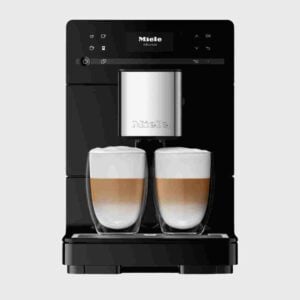
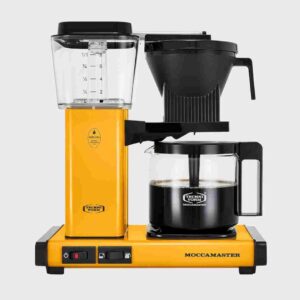
Miele CM5 Silence Automatic Coffee Machine
Where It Has the Edge
- Water system, maintenance and descaling is 4.1 vs 3.5. Maintenance is generally praised for guided rinses and strong cleaning systems, although some reviewers still call the ongoing...

Scorata scores summarize analyzed review evidence on a 1–5 scale; they are not laboratory measurements or a simple average of customer star ratings. Feature scores summarize the reviews covering that feature. The overall score averages feature scores within each review, then combines review averages. When both expert and customer evidence are available, those two groups receive equal weight. Products can have different review coverage, so small score gaps do not establish a winner.
Recommendations prioritize important features for the category, with a score of at least 3.5, a gap of at least 0.25 points and at least two supporting reviews per product. Features with widely varying scores or broad connectivity contexts are excluded from recommendations. These safeguards do not establish statistical significance.
Quick verdict
The review evidence points to a tradeoff: Water system, maintenance and descaling versus Capacity and Accessories. Choose according to which strengths matter more to you; the overall score alone does not settle that choice.
Choose Miele CM5 Silence Automatic Coffee Machine for Water system, maintenance and descaling.
Choose Technivorm Moccamaster KBGV Coffee Maker for Capacity and Accessories.
Scores are out of 5. Missing scores mean missing review evidence, not a missing feature.
Capacity is the most consistent practical weakness, with reviewers repeatedly criticizing the small water tank, bean hopper or need for frequent refills.
The half/full-pot flexibility and batch size worked well for couples, families, and groups, but reviewers noted limits for single cups, larger 50-ounce expectations, or big mugs.
Accessory feedback is negative-to-mixed because reviewers repeatedly mention separate milk containers or carafes, though one says essentials are included.
Starter filters, a scoop, and included essentials were treated as useful extras, with reviewers appreciating that the brewer includes enough to begin using it.
Popularity evidence is limited and mixed; one reviewer says the CM5 range deserves more recognition despite being less famous than major rival brands.
Popularity evidence was positive, with reviewers pointing to a fiercely loyal fanbase and broad owner enthusiasm.
Automation is praised for reducing user work, especially grinding, tamping, brewing and milk preparation with little technique required.
Reviewers liked the automatic drip-stop and controlled hotplate, but repeatedly noted the lack of timers, programmability, and broader automated drink options.
The coffee pot function is treated as useful for guests or brunch, though one reviewer sees the accessory angle as a mild tradeoff.
The half/full pot function was praised for better extraction, smaller-batch usefulness, hot holding, and avoiding brewed coffee waste.
Maintenance is generally praised for guided rinses and strong cleaning systems, although some reviewers still call the ongoing cleaning workload high-maintenance.
Maintenance evidence was mixed: descaling was often easy, but reviewers disliked the non-dishwasher parts, fixed reservoir, unclear cleaning instructions, or extra tank-filling effort.
Time-to-cup evidence is positive: one-touch operation and sub-four-minute drink delivery make the machine feel quick for everyday use.
The brewer was consistently described as fast, commonly around four to six minutes for a pot, with speed praised against slower pour-over routines.
Heating performance is described positively where reviewers comment on drink temperature, with hot settings and brewing temperature judged genuinely hot.
The heating system drew strong praise for copper-heated speed, hot coffee, and temperature consistency, though one test found batch-to-batch fluctuation.
Cup, tray and carafe handling is mixed: spout clearance and two-cup brewing help, but drip-tray leaks and tight cup spacing appear in some reviews.
Carafe handling was mixed: reviewers liked clean pours, durability, and easier cleaning in some cases, while others disliked no dishwasher safety, sloppy pouring, heat, or hotplate taste changes.
Overall experience is praised for being intuitive, foolproof and low-effort, with reviewers seeing it as a strong fit for both beginners and enthusiasts.
Overall experience was usually excellent thanks to simplicity, quietness, ease, and great coffee, but one lab review found the brewer less user-friendly than expected.
Used-puck disposal is praised as clean and convenient, with compact pucks and an easy-to-empty tray reducing mess.
Used grounds cleanup was praised because the paper filter and removable holder made disposal easy.
Espresso and drink quality receive some of the strongest praise, including rich crema, smooth aromatic coffee and balanced espresso shots.
Coffee quality was overwhelmingly praised as flavorful, balanced, hot, and pour-over-like, with the major exception of one lab review that found the cup unimpressive.
The grinder earns strong praise for quiet operation and consistent grinds, but a few reviewers flag limited grind settings, noise on older models or bean restrictions.
Dosing support was useful through manual guidance, a scoop, and ratio tables, though the evidence focused on dose guidance rather than an integrated grinder or hopper.
Setup evidence is mixed: guided displays and quick setup help, but the first unboxing/manual process can feel intimidating.
Setup and operation were repeatedly described as simple or straightforward, with only minor friction around sliding the basket or parts into place.
Warranty and support evidence is favorable where mentioned, with reviewers treating the warranty as reassuring and manufacturer support as dependable.
Warranty and support were strong positives, especially the five-year warranty, repair-for-life language, and replacement-part availability.
Value opinions are mixed: some call the price fair or worthwhile long-term, while others emphasize the high four-figure cost versus competitors.
Value opinions were split: fans justified the price through build, longevity, taste, and warranty, while skeptical reviewers felt it cost too much for the performance or feature set.
Design-flaw evidence focuses on practical issues such as leaking drip trays and other physical flaws that dampen the otherwise stylish design.
The repeated flaws were plasticky parts, uneven spray or water distribution, carafe lid issues, a fixed plastic tank, hot surfaces, and price-related compromises.
Design opinions split between sleek, compact or stylish construction and complaints that some CM5/CM5300-style units are large for limited counter space.
Reviewers widely liked the retro-modern look, color choices, counter appeal, and compactness, while one review treated the styling as the main reason to buy.
Build impressions are consistently positive, with reviewers praising sturdy materials, well-fitting parts and Miele’s overall construction quality.
Build quality was generally praised as handmade, durable, and long-lasting, but several reviewers disliked plastic or flimsy-feeling parts.
Reviewers largely confirm the Silence positioning, repeatedly saying the updated grinder is much quieter and unlikely to disturb others.
Most reviewers felt the machine largely met its premium claims through coffee quality, design, durability, and consistency, though one lab review strongly disputed the price-to-performance claim and one video found it good rather than life-changing.
Brewing performance is a strength, with reviewers praising consistent results, adjustable brewing parameters and café-style coffee from the automatic system.
Brewing performance was the strongest theme: most reviewers praised hot, consistent, flavorful coffee, while one testing review criticized uneven water distribution and unimpressive brew quality.
Smart-control feedback is mixed: reviewers note disappointment over missing app, WiFi, user profiles or touchscreen, while some value the simpler interface.
Bean-to-cup operation is viewed as a major upgrade over pod-style systems, with reviewers valuing loose beans, taste variety and reduced pod waste.
The only scored cold-drink evidence was negative: one reviewer missed iced coffee or cold brew capability.
Milk performance is well liked for easy automatic frothing and tasty cappuccinos, with caveats around the external pipe and limited froth-temperature control.
Certification and recognition evidence was positive, including SCA-related standards, ECBC approval, and reviewer-award recognition.
Filter feedback was mixed: standard cone filters and removable holders helped saturation and cleanup, but some reviewers disliked the plastic basket or proprietary filter requirement.
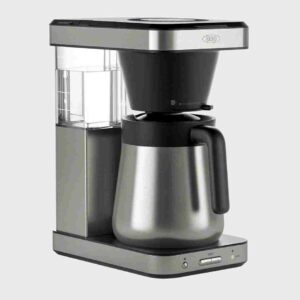
Choose the OXO Brew 8-Cup if you want fast, consistent drip coffee in small or full batches. Skip it if you need programming, app controls, a larger pot, or the...
Pros: Brewing performance and consistency, Overall user experience
Cons: Design flaws
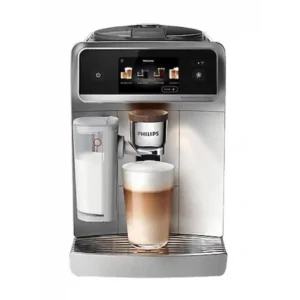
Best for effortless, highly personalized hot and cold coffee in a busy multi-drinker home. Skip it if counter space is tight, you demand silky adjustable microfoam, or the premium price...
Pros: Automation and sensors, Overall user experience
Cons: Design flaws, Mess-free used-puck disposal
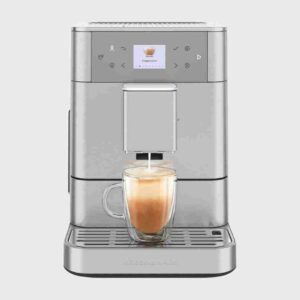
Choose the KitchenAid KF6 for rich espresso, quiet operation, easy cleaning, and strong value in a super-automatic. Skip it if dense cappuccino foam, plant-milk presets, touchscreen controls, or an included...
Pros: Water system, maintenance and descaling, Overall user experience
Cons: Accessories, Design flaws
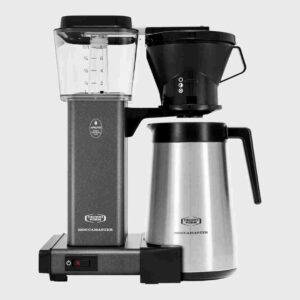
Choose the Moccamaster KBT for fast, excellent drip coffee, durable build, and a thermal carafe that keeps coffee hot. Skip it if you need programmability, a compact footprint, or a...
Pros: Brewing performance and consistency, Espresso and beverage quality
Cons: Automation and sensors, Design flaws