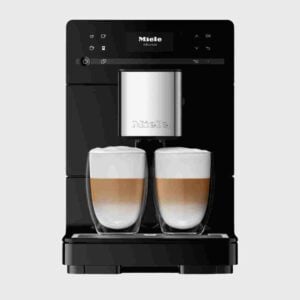
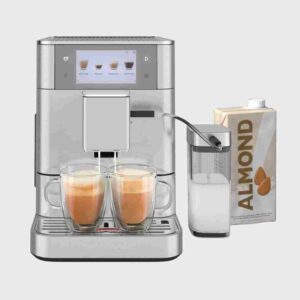
Miele CM5 Silence Automatic Coffee Machine
Where It Has the Edge
- Accuracy of marketing claims is 4.8 vs 3.1. Reviewers largely confirm the Silence positioning, repeatedly saying the updated grinder is much quieter and unlikely to disturb...

Scorata scores summarize analyzed review evidence on a 1–5 scale; they are not laboratory measurements or a simple average of customer star ratings. Feature scores summarize the reviews covering that feature. The overall score averages feature scores within each review, then combines review averages. When both expert and customer evidence are available, those two groups receive equal weight. Products can have different review coverage, so small score gaps do not establish a winner.
Recommendations prioritize important features for the category, with a score of at least 3.5, a gap of at least 0.25 points and at least two supporting reviews per product. Features with widely varying scores or broad connectivity contexts are excluded from recommendations. These safeguards do not establish statistical significance.
Quick verdict
The review evidence points to a tradeoff: Accuracy of marketing claims versus Assembly and Setup and Cup, tray and carafe handling. Choose according to which strengths matter more to you; the overall score alone does not settle that choice.
Choose Miele CM5 Silence Automatic Coffee Machine for Accuracy of marketing claims.
Choose KitchenAid KF8 Fully Automatic Espresso Machine for Assembly and Setup and Cup, tray and carafe handling.
Scores are out of 5. Missing scores mean missing review evidence, not a missing feature.
Reviewers largely confirm the Silence positioning, repeatedly saying the updated grinder is much quieter and unlikely to disturb others.
Marketing-related evidence centered on drink-count and 2x/double-shot expectations, with reviewers finding some claims qualified rather than fully straightforward.
Brewing performance is a strength, with reviewers praising consistent results, adjustable brewing parameters and café-style coffee from the automatic system.
Brewing performance was generally strong, with repeated praise for well-extracted, consistent espresso and crema after setup or tuning.
Bean-to-cup operation is viewed as a major upgrade over pod-style systems, with reviewers valuing loose beans, taste variety and reduced pod waste.
Consumables were a cost concern, especially replacement water filters and cleaning tablets after continued ownership.
Cup, tray and carafe handling is mixed: spout clearance and two-cup brewing help, but drip-tray leaks and tight cup spacing appear in some reviews.
Cup, tray and carafe handling was mostly positive thanks to adjustable spouts, removable containers and two-milk-drink capability, though one tray design annoyed a reviewer.
Capacity is the most consistent practical weakness, with reviewers repeatedly criticizing the small water tank, bean hopper or need for frequent refills.
Capacity evidence was mixed: large tanks, trays and puck bins helped, but reviewers also flagged small default milk drink sizes and fast water use.
Popularity evidence is limited and mixed; one reviewer says the CM5 range deserves more recognition despite being less famous than major rival brands.
Popularity evidence was limited but positive, with one reviewer noting plenty of glowing Amazon reviews around the newer product.
Used-puck disposal is praised as clean and convenient, with compact pucks and an easy-to-empty tray reducing mess.
Used-puck disposal was generally easy, with removable containers praised, though frequent emptying and mold prevention remained practical concerns.
Maintenance is generally praised for guided rinses and strong cleaning systems, although some reviewers still call the ongoing cleaning workload high-maintenance.
Maintenance and water-system handling were widely praised for guided cleaning, prompts, filters and simple rinse cycles, despite frequent tray and water tasks.
Accessory feedback is negative-to-mixed because reviewers repeatedly mention separate milk containers or carafes, though one says essentials are included.
Accessory evidence was mixed: reviewers liked included basics, but criticized the single milk container and plastic jug for the price.
Overall experience is praised for being intuitive, foolproof and low-effort, with reviewers seeing it as a strong fit for both beginners and enthusiasts.
Overall user experience was strongly positive, driven by ease, automation, responsive controls and daily convenience, despite one reviewer finding drink quality merely fine.
Milk performance is well liked for easy automatic frothing and tasty cappuccinos, with caveats around the external pipe and limited froth-temperature control.
Milk performance was the most mixed beverage area: several reviewers praised plant milk and latte texture, while others criticized cappuccino foam and barista-level texture.
Automation is praised for reducing user work, especially grinding, tamping, brewing and milk preparation with little technique required.
Automation and sensors were strong: reviewers praised hands-off grinding, dosing, extraction, milk frothing, prompts and alerts for beans or incorrectly fitted parts.
Time-to-cup evidence is positive: one-touch operation and sub-four-minute drink delivery make the machine feel quick for everyday use.
Speed was mostly strong, with quick heat-up and rapid drink production praised, although automatic cleaning can add time.
The grinder earns strong praise for quiet operation and consistent grinds, but a few reviewers flag limited grind settings, noise on older models or bean restrictions.
The grinder and removable hopper were major strengths, especially for switching beans, purging, cleaning and fresh decaf, but grind adjustment could be stiff.
Espresso and drink quality receive some of the strongest praise, including rich crema, smooth aromatic coffee and balanced espresso shots.
Espresso and beverage quality were a core strength, with reviewers repeatedly praising rich espresso, crema and café-style drinks, though one called the drinks merely fine.
Setup evidence is mixed: guided displays and quick setup help, but the first unboxing/manual process can feel intimidating.
Setup and basic operation were consistently praised, with reviewers saying the guided touchscreen, quick setup and easy programming reduced friction.
Warranty and support evidence is favorable where mentioned, with reviewers treating the warranty as reassuring and manufacturer support as dependable.
Warranty support was viewed positively, especially two-year coverage, a reported three-year guarantee and longer repair promise as confidence signals.
Value opinions are mixed: some call the price fair or worthwhile long-term, while others emphasize the high four-figure cost versus competitors.
Value was divisive: some reviewers found the premium features and café savings persuasive, while others felt the price was hard to justify against cheaper alternatives.
Design-flaw evidence focuses on practical issues such as leaking drip trays and other physical flaws that dampen the otherwise stylish design.
Design flaws were real but not fatal: reviewers noted scratching, scuffing, a stiff grind knob, Wi-Fi absence, low milk limits and a fragile-feeling jug.
Design opinions split between sleek, compact or stylish construction and complaints that some CM5/CM5300-style units are large for limited counter space.
Design, ergonomics and footprint were praised for looks, touchscreen, wheels and water-tank access, but the machine was also called large for small kitchens.
Build impressions are consistently positive, with reviewers praising sturdy materials, well-fitting parts and Miele’s overall construction quality.
Build quality was widely praised for stainless steel, solid feel, premium fit and durability signals, though some surface materials drew caveats elsewhere.
Smart-control feedback is mixed: reviewers note disappointment over missing app, WiFi, user profiles or touchscreen, while some value the simpler interface.
Connectivity was a weakness because one reviewer specifically criticized the lack of Wi-Fi firmware updating on such an expensive machine.
Filter evidence was split between useful water filtration for taste and maintenance and the recurring cost of replacement filters.
Heating performance is described positively where reviewers comment on drink temperature, with hot settings and brewing temperature judged genuinely hot.
The hot water dispenser was liked for tea and Americanos, especially because reviewers found it convenient and separated from milk or coffee paths.
Iced use had limited but positive support from one long-term reviewer who enjoyed espresso-over-ice drinks as a morning pick-me-up.
The coffee pot function is treated as useful for guests or brunch, though one reviewer sees the accessory angle as a mild tradeoff.
Recognition and certification evidence was strong around Quiet Mark and reviewers' own praise for unusually quiet grinding and operation.
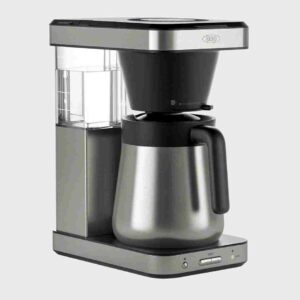
Choose the OXO Brew 8-Cup if you want fast, consistent drip coffee in small or full batches. Skip it if you need programming, app controls, a larger pot, or the...
Pros: Brewing performance and consistency, Overall user experience
Cons: Design flaws
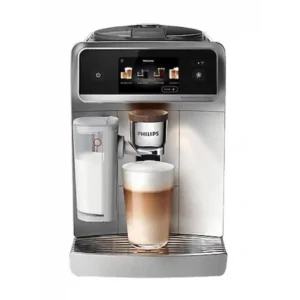
Best for effortless, highly personalized hot and cold coffee in a busy multi-drinker home. Skip it if counter space is tight, you demand silky adjustable microfoam, or the premium price...
Pros: Automation and sensors, Overall user experience
Cons: Design flaws, Mess-free used-puck disposal
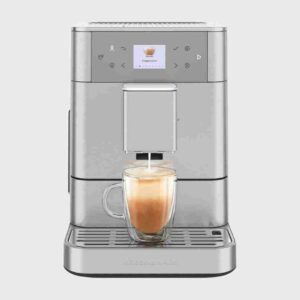
Choose the KitchenAid KF6 for rich espresso, quiet operation, easy cleaning, and strong value in a super-automatic. Skip it if dense cappuccino foam, plant-milk presets, touchscreen controls, or an included...
Pros: Water system, maintenance and descaling, Overall user experience
Cons: Accessories, Design flaws
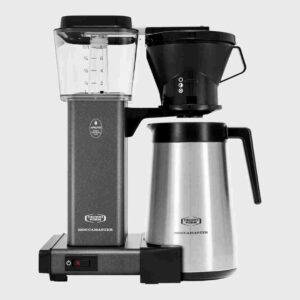
Choose the Moccamaster KBT for fast, excellent drip coffee, durable build, and a thermal carafe that keeps coffee hot. Skip it if you need programmability, a compact footprint, or a...
Pros: Brewing performance and consistency, Espresso and beverage quality
Cons: Automation and sensors, Design flaws