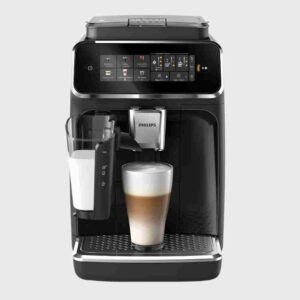
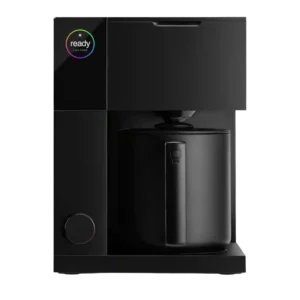
Philips 3300 LatteGo Fully Automatic Espresso Machine
Where It Has the Edge
- Value and Price is 4.4 vs 3.4. Value depends on price: reviewers are enthusiastic when discounted, but at full retail several prefer competitors with stronger...

Scorata scores summarize analyzed review evidence on a 1–5 scale; they are not laboratory measurements or a simple average of customer star ratings. Feature scores summarize the reviews covering that feature. The overall score averages feature scores within each review, then combines review averages. When both expert and customer evidence are available, those two groups receive equal weight. Products can have different review coverage, so small score gaps do not establish a winner.
Recommendations prioritize important features for the category, with a score of at least 3.5, a gap of at least 0.25 points and at least two supporting reviews per product. Features with widely varying scores or broad connectivity contexts are excluded from recommendations. These safeguards do not establish statistical significance.
Quick verdict
The review evidence points to a tradeoff: Value and Price versus Brewing performance and consistency and Filter. Choose according to which strengths matter more to you; the overall score alone does not settle that choice.
Choose Philips 3300 LatteGo Fully Automatic Espresso Machine for Value and Price.
Choose Fellow Aiden Precision Coffee Maker for Brewing performance and consistency and Filter.
Scores are out of 5. Missing scores mean missing review evidence, not a missing feature.
Marketing accuracy is mixed to poor: quietness claims are largely supported, but app, touchscreen, and cold-drink claims are criticized as misleading.
Accuracy-of-claims evidence was strong, with reviewers saying the engineering and temperature accuracy backed up the precision claims.
Brewing is seen as reliable once dialed in, though reviewers note lighter body, split taste reactions, and a break-in period before best results.
Reviewers consistently praised the Aiden's coffee quality, describing clean, flavorful, balanced, pour-over-like, and technically consistent results across single-cup and batch use.
AquaClean is praised for reducing descaling and improving maintenance convenience, though longevity depends on water conditions.
Filter and basket evidence was positive, with optimized basket options, edge-to-edge water distribution, and easy sourcing of generic filters.
Maintenance is one of the strongest points: reviewers repeatedly praise easy LatteGo cleaning, removable parts, and AquaClean reducing descaling hassle.
Water handling and maintenance were mixed: some reviewers found cleaning and descaling easy, while others criticized filling mess, low-water alerts, condensation, mildew risk, and poor water-level visibility.
The iced function is the most divided beverage feature: some reviewers enjoy stronger iced coffee, while others say it is not true cold brew and can taste dull.
Cold-brew performance was praised as nice, tasty, smooth, faster than overnight steeping, and in one case less bitter than a traditional fridge method.
Limited pump-pressure evidence is mildly positive: reviewers connected the 15-bar pump with crema and said the lower spec should not be noticeable in taste.
One review praised the pump-based system for keeping flow rate consistent across pulse cycles.
Heating performance is positive in the available review evidence, with drinks described as warm enough and the machine heating efficiently.
Heating performance was strongly praised for accurate temperature delivery, rapid heating, and temperature changes between pulses.
Quiet Mark/SilentBrew recognition supports the quieter-operation claims and is treated positively by reviewers.
Recognition evidence came from Good Housekeeping noting the Aiden's Kitchen Gear Awards placement.
Capacity is mostly viewed as practical, especially water and bean storage, though one review warns refilling and emptying may still be frequent.
Capacity evidence was generally favorable across single-cup and larger-batch use, though reviewers warned that larger pots expose heat-retention and carafe-mixing limitations.
The hot-water function is positively noted for tea and for producing hot water at useful temperatures.
Hot-water evidence was limited but positive, with one reviewer using it as a faster-than-kettle hot-water feature.
The grinder and hopper score well for quiet operation, ceramic durability, useful adjustment, and freshness, with only some concern about limited espresso resistance.
The dose guidance was repeatedly praised for telling users how much coffee to add or grind; no reviewer evaluated an integrated grinder because the Aiden does not include one.
Automation is a major advantage, with one-touch drinks and simple controls reducing guesswork for everyday users.
Automation and sensors were a core strength, with praise for roast-based profiles, even water distribution, guided prompts, scheduling, dose calculation, and error prevention.
Used pucks and drip-tray cleanup are described as easy, quick, and front-accessible.
Grounds cleanup was generally praised through straightforward disposal, basket auto-stop, and no-drip basket design.
Front-access tray and tank handling are convenient, while one reviewer found the LatteGo attachment less intuitive.
Cup and carafe handling was split: reviewers liked easy pouring, auto-stop, and heat retention, but criticized carafe concentration gradients, splashing, and uneven big-batch serving.
Popularity evidence is positive but limited, based on fan-favorite language and personal recommendations.
Popularity evidence was limited but positive, with Food & Wine noting repeated sellouts shortly after launch.
Portability evidence is limited but positive for moving around a countertop because the machine is fairly light.
Portability evidence was limited to one reviewer who considered the Aiden small and lightweight enough for travel.
Overall usability is strongly positive: reviewers call the machine intuitive, simple, quiet, and convenient, though not made for espresso purists.
Overall user experience was polarized: many reviewers loved the ease and results, while others found the interface and workflow frustrating.
Speed feedback is positive, with reviewers praising quick heat-up, efficient drink preparation, and the convenience of fast one-touch routines.
Speed evidence was mostly positive, citing quick hot brews, saved steps, scheduling convenience, and faster cold brew, though one reviewer noted the best profiles can be slow.
Value depends on price: reviewers are enthusiastic when discounted, but at full retail several prefer competitors with stronger espresso.
Value was mixed: some reviewers felt the premium price was justified by smart brewing and taste, while others questioned it because of plastic materials and software issues.
Initial setup is simple, but the machine may require several early brew cycles before coffee quality settles in.
Setup and early use were generally described as quick, easy, or guided, but some reviewers still noted a customization learning curve.
Common flaws include misleading claims, no standalone hot milk, no user profiles, hard volume adjustment, and missing Americano convenience.
Design-flaw evidence centered on carafe mixing, awkward menu/dial behavior, condensation or venting, splashing, and water-level visibility.
Reviewers like the compact footprint and clearer interface, but aesthetics are functional rather than premium and opinions on the display are mixed.
Reviewers often liked the sleek Fellow aesthetic and compact cube design, but some complained about cabinet clearance, bland plastic styling, and reservoir ergonomics.
Build quality is acceptable to good for the class, with sturdy-feeling parts but recurring caveats about plastic construction.
Build quality drew the sharpest split: some reviews found it robust or durable, while many criticized the plastic body, lightweight feel, panel gaps, or premium-price mismatch.
Smart/app evidence is mixed: one review finds phone tutorials useful, while another says the advertised app functionality is not real machine control.
App and connectivity evidence was mixed-to-negative overall: some liked Fellow Drops or phone-based profile editing, but many criticized incomplete, useless, or troublesome app behavior.
The clearest accessory praise was Good Housekeeping listing the included cone and flat baskets as a pro.
The machine is positioned as a strong quality upgrade for people moving away from pod-style systems.
Beverage quality is generally liked for everyday use, especially milk drinks, but multiple reviewers describe espresso as lighter, thinner, or only decent rather than class-leading.
Milk performance is a clear strength for casual cappuccinos and latte macchiatos, though some reviewers find the foam too thick or less refined than barista microfoam.
Pot function was mixed, with praise for a functional thermal carafe and heat retention in some tests but repeated concern over heat loss and batch mixing.
Warranty evidence is positive, especially the mention of two-year machine coverage and longer brew-unit coverage.
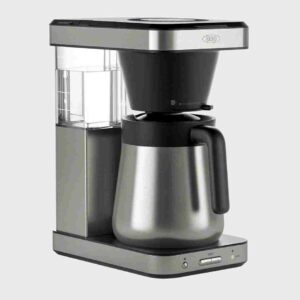
Choose the OXO Brew 8-Cup if you want fast, consistent drip coffee in small or full batches. Skip it if you need programming, app controls, a larger pot, or the...
Pros: Brewing performance and consistency, Overall user experience
Cons: Design flaws
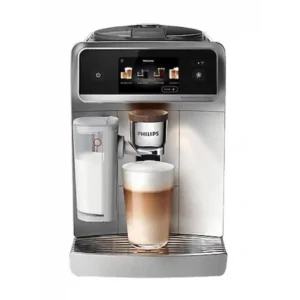
Best for effortless, highly personalized hot and cold coffee in a busy multi-drinker home. Skip it if counter space is tight, you demand silky adjustable microfoam, or the premium price...
Pros: Automation and sensors, Overall user experience
Cons: Design flaws, Mess-free used-puck disposal
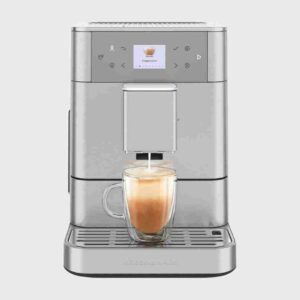
Choose the KitchenAid KF6 for rich espresso, quiet operation, easy cleaning, and strong value in a super-automatic. Skip it if dense cappuccino foam, plant-milk presets, touchscreen controls, or an included...
Pros: Water system, maintenance and descaling, Overall user experience
Cons: Accessories, Design flaws
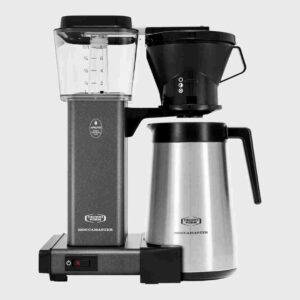
Choose the Moccamaster KBT for fast, excellent drip coffee, durable build, and a thermal carafe that keeps coffee hot. Skip it if you need programmability, a compact footprint, or a...
Pros: Brewing performance and consistency, Espresso and beverage quality
Cons: Automation and sensors, Design flaws