Scorata scores summarize analyzed review evidence on a 1–5 scale; they are not laboratory measurements or a simple average of customer star ratings. Feature scores summarize the reviews covering that feature. The overall score averages feature scores within each review, then combines review averages. When both expert and customer evidence are available, those two groups receive equal weight. Products can have different review coverage, so small score gaps do not establish a winner.
Recommendations prioritize important features for the category, with a score of at least 3.5, a gap of at least 0.25 points and at least two supporting reviews per product. Features with widely varying scores or broad connectivity contexts are excluded from recommendations. These safeguards do not establish statistical significance.
Quick verdict
What each product is best for
The review evidence points to a tradeoff: tone consistency and special effects quality versus acting quality and main cast performance. Choose according to which strengths matter more to you; the overall score alone does not settle that choice.
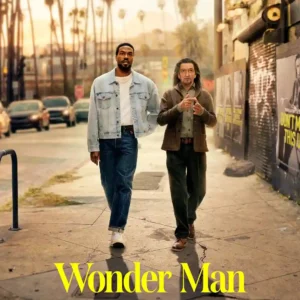
Choose Wonder Man, Season 1 for tone consistency and special effects quality.
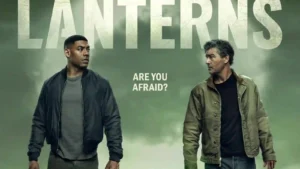
Choose Lanterns for acting quality and main cast performance.
Why these recommendations?
Wonder Man, Season 1
Where It Has the Edge
tone consistency is 4.4 vs 3.4. Most praise the balance of comedy and melancholy, but harsher critics find the series unable to settle on...
special effects quality is 4.3 vs 3.5. The show largely sidesteps effects-heavy spectacle; that restraint is welcomed by many but disappoints viewers expecting a superhero...
cultural representation is 4.6 vs 3.9. The show's Black lead and allegories for concealed identity broaden its perspective, while cancellation coverage raises concerns about...
Lanterns
Where It Has the Edge
acting quality is 4.7 vs 4.3. The ensemble is a major strength, with repeated praise for the performances even from people who dislike the...
main cast performance is 4.7 vs 4.4. Kyle Chandler and Aaron Pierre are the clearest consensus strength, repeatedly praised as magnetic, nuanced, and capable of...
Wonder Man, Season 14.1 overall score
Lanterns3.6 overall score
Compare features
Scores are out of 5. Missing scores mean missing review evidence, not a missing feature.
Scored on both products
Other features
Power scaling
Wonder Man, Season 1
4.5
Lanterns
1.0
Details and evidence for power scaling
Wonder Man, Season 1
Simon is framed as exceptionally powerful, but the restraint with which his abilities are shown keeps scale secondary to character.
The most pointed power critique says the ring’s capabilities change whenever the plot needs a different outcome, undermining confidence in the action stakes.
Character logic becomes a serious sticking point in later episodes, especially when Hal and John make choices that some feel contradict the people established earlier.
The series is at its best when Hal and John share the screen, and separating them for long stretches weakens the balance between its strongest characters.
The series' treatment of enhanced people as a targeted minority gives its Hollywood story a contemporary political edge, while later cancellation coverage raises representation concerns.
The writing is highly divisive: some episodes are praised as clever, outstanding, and carefully constructed, while others are condemned for exposition, forced character logic, and heavy-handed themes.
Details and evidence for faithfulness to source material
Wonder Man, Season 1
The reinvention preserves Simon's actor-and-superpowers core while departing substantially from his comics history, a fresh entry point that may frustrate purists.
The show uses plenty of Green Lantern lore and comic ideas, but its restrained cosmic scale divides fans who want more rings, aliens, constructs, and space mythology on screen.
The central mystery and character conflict inspire both strong praise and severe criticism. The biggest divide is whether the grounded plot feels compelling or artificially constructed.
The serious, grounded tone can feel fresh and confident, but the mix of prestige crime drama, humor, and cosmic superhero material does not always blend cleanly.
Fear, legacy, race, power, and heroism give the series real thematic ambition. The main disagreement is whether those ideas are dramatized naturally or explained too bluntly.
The show's Black lead and allegories for concealed identity broaden its perspective, while cancellation coverage raises concerns about Marvel's support for representation.
The treatment of John Stewart’s Black identity and upbringing is often praised as meaningful and heartfelt, though some find the racial commentary over-explained or awkwardly placed.
The Hal-John character study and John’s upbringing often add real depth, but several relationships and motivations are criticized as underdeveloped or rushed.
The friendship and career struggles produce unexpectedly moving moments, with tenderness and melancholy landing more strongly than the superpowered plot.
The strongest episodes can be deeply moving, especially around Hal and John’s broken ambitions, though at least one key emotional payoff is said to fall flat.
The action peaks in the explosive fifth episode, where some find the set pieces emotionally charged and exciting. Others say inconsistent powers and character choices weaken the stakes.
Yahya Abdul-Mateen II and Ben Kingsley form the season's strongest asset: a funny, tender odd-couple partnership with convincing warmth and melancholy.
Hal and John’s prickly mentor-trainee chemistry is one of the most consistently praised parts of the series. A minority find the relationship forced or underdeveloped.
Pacing is uneven. Some installments move the mystery forward effectively, but the slower episodes are repeatedly criticized for dragging or taking too long to ignite.
The mystery can be clear and clue-driven at its best, but some later conflicts and motivations are described as confusing, baffling, or too dependent on exposition.
The series subverts familiar superhero structure and often feels fresh, even as some critics think its True Detective influences are too obvious to fully transcend.
The Rushville mystery is frequently described as compelling, unpredictable, and well paced in its reveals, making suspense one of the show’s stronger elements.
The opening episode wins praise for quickly establishing Simon's struggle and the show's polished, character-first identity, though not every critic was immediately engaged.
The premiere is one of the best-received installments, establishing the central relationship, grounded mystery, and major time-jump hook with confidence.
The story stands comfortably on its own with light MCU context, a choice praised by newcomers and fatigue-stricken fans but less suited to continuity hunters.
The self-contained episode design feels like real television to many viewers, though the Doorman detour splits opinion over whether it enriches or interrupts the main story.
The series gets strong marks for time jumps, flashbacks, and midseason structural pivots that reframe earlier information without simply following a standard superhero arc.
The muted palette and grounded look can be striking, especially against green ring effects, but some viewers find parts of the production visually cheap or too subdued.
Critical reception is broadly enthusiastic, with roundups highlighting strong performances, grounded storytelling, and an engaging mystery despite pacing complaints.
The supporting ensemble is usually praised, especially Poorna Jagannathan and John’s parents, though Kelly Macdonald receives a notable dissenting critique.
Kyle Chandler and Aaron Pierre are the clearest consensus strength, repeatedly praised as magnetic, nuanced, and capable of carrying the series through weaker material.
Aaron Pierre’s casting is divisive on representation grounds: one critique argues a darker-skinned actor would have made the material resonate more, while others call Pierre an exceptional fit.
The finale avoids a generic CGI showdown and delivers an emotional payoff, but its rushed, somewhat anticlimactic close leaves some wanting more resolution.
Season one's final chapter earns points for emotional and character-led choices, but several critics say it rushes through needed growth and resolution.