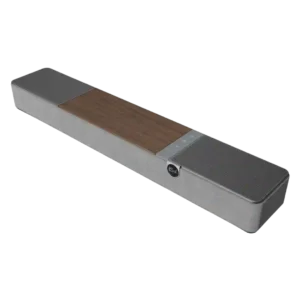
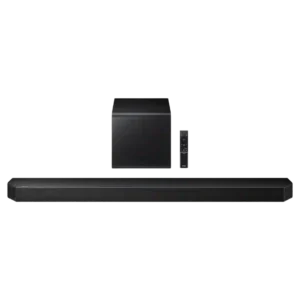
Klipsch Flexus Core 100
Where It Has the Edge
- Distortion at high volume is 5.0 vs 4.3. High-volume playback is a strength: demanding bass tracks stayed clean without obvious rattling or distortion, and dialogue remained...

Scorata scores summarize analyzed review evidence on a 1–5 scale; they are not laboratory measurements or a simple average of customer star ratings. Feature scores summarize the reviews covering that feature. The overall score averages feature scores within each review, then combines review averages. When both expert and customer evidence are available, those two groups receive equal weight. Products can have different review coverage, so small score gaps do not establish a winner.
Recommendations prioritize important features for the category, with a score of at least 3.5, a gap of at least 0.25 points and at least two supporting reviews per product. Features with widely varying scores or broad connectivity contexts are excluded from recommendations. These safeguards do not establish statistical significance.
Quick verdict
The review evidence points to a tradeoff: Distortion at high volume versus Spotify Connect reliability and AirPlay compatibility. Choose according to which strengths matter more to you; the overall score alone does not settle that choice.
Choose Klipsch Flexus Core 100 for Distortion at high volume.
Choose Samsung Q800F for Spotify Connect reliability and AirPlay compatibility.
Scores are out of 5. Missing scores mean missing review evidence, not a missing feature.
Long-term reliability is the most serious concern in customer feedback. Some reviewers describe set-it-and-forget-it operation, but others report remote failures, Bluetooth breakdowns, frozen controls, and units failing within a year.
Reliability feedback is concerning despite one owner reporting perfect operation. Other customers describe eARC failure, wireless TV or subwoofer dropouts, and even a unit that failed after one day.
Spotify Connect is unavailable, which frustrated reviewers who prefer direct high-quality streaming instead of routing music over Bluetooth.
Spotify Connect earns positive marks for simple streaming and seamless handoff between listening locations.
The Core 100 is not a good fit for setups that depend on HDMI video passthrough through an AV receiver; one owner had to rewire the system entirely.
The HDMI input is useful for simplifying source cabling, but video passthrough is capped at 4K/60Hz. That makes it adequate for many setups but a poor fit for gamers who want 4K/120Hz through the bar.
Wall mounting is supported with included hardware and works neatly when all parts are present. One buyer was frustrated by a missing mounting template.
Wall mounting is well supported with an included kit that forms part of a notably complete in-box package.
Setup is usually fast and straightforward, with many users getting sound within minutes over HDMI. The main exceptions involve TV handshakes, missing documentation, or firmware/control issues that can turn setup into a troubleshooting exercise.
Setup is consistently excellent. Reviewers and owners repeatedly describe plug-and-play installation, automatic subwoofer pairing, and easy HDMI eARC connection.
Value is a major strength, especially for buyers prioritizing bass, clarity, and a compact single-bar setup under premium-brand pricing. A handful of reliability failures turn that equation upside down for affected owners.
Value is strongest at discounted prices, where several reviewers call the package excellent or strong value. A few owners felt it was not worth MSRP, especially when bass disappointed or reliability failed.
Customer support draws mostly negative feedback when hardware or firmware problems arise. Owners describe hard-to-find contact information, repetitive troubleshooting, failed update files, and poor resolution after replacement problems.
One owner had a poor support experience: a lengthy Samsung support session produced only a temporary fix before the connection problem returned.
AirPlay is not available, and reviewers who rely on ecosystem or multi-room streaming consistently treated that omission as a drawback.
AirPlay use is easy and well integrated; one owner specifically liked being able to add the system alongside HomeKit.
Google Cast/Chromecast streaming is absent, limiting whole-home and app-based wireless playback for users invested in that ecosystem.
Chromecast is part of a wireless streaming setup that reviewers describe as straightforward and well equipped.
There is no room-calibration system, and reviewers accustomed to automatic room tuning clearly missed it.
SpaceFit room calibration is consistently praised for adapting output to room acoustics and reducing the need for manual tuning.
Remote experiences are sharply mixed. The included remote feels comfortable and premium to some reviewers, but pairing failures, replacement shortages, third-party remote incompatibility, and outright remote failures are recurring customer complaints.
Remote operation is a standout for ease of use: the included remote is repeatedly described as straightforward, elegant, and convenient, with TV-remote control further simplifying daily use.
Lip-sync performance is inconsistent across setups: one gaming test found minimal lag, while a customer using an optical multi-room feed measured a very noticeable delay.
Lip sync is excellent over HDMI eARC, with very low latency and no distracting dialogue synchronization problems reported in testing.
The modular rear-speaker system is flexible, letting buyers add surrounds later instead of committing to a full package up front.
Optional rear speakers expand the system effectively, but each rear needs its own power outlet, which can complicate placement.
Fine detail is one of the more variable parts of the sound. Some material comes through crisp and well resolved, while other reviews cite dull percussion, missing high-frequency texture, or generally limited nuance.
Fine detail retrieval is excellent, with subtle percussion, background artifacts, and small musical textures remaining clear and well placed.
The Core 100 decodes Atmos but lacks dedicated up-firing height drivers, so convincing vertical effects are not its norm. One retailer demo heard impressive overhead cues, but most expert testing found height modest or absent.
Atmos height effects are usually impressive, with strong overhead cues and convincing vertical scale in favorable rooms. Results are room-dependent, and one owner found Atmos effects almost imperceptible.
Optical can work cleanly and even support TV-remote control in some setups, but one owner had a deeply frustrating optical-control and firmware experience. HDMI eARC is the safer path when available.
The optical input contributes to a connection set judged sufficient for most users, though it was not singled out for deeper performance testing.
Tonal balance ranges from clean and well separated to thin or treble-shy depending on source and mode. The best results deliver tight bass and clear highs, while the harshest customer complaints cite missing highs and mids.
Tonal balance is widely praised as clean, controlled, and accurate, with strong mids and vocals. A mild sharpness in the treble at higher volumes is the main caveat.
Klipsch’s expansion link can be very stable, but compatibility is not universal. Some owners needed extra modules or wiring, and early peripheral glitches were reported.
The subwoofer normally pairs automatically and works seamlessly right out of the box. One owner later experienced a complete subwoofer connection failure, creating a notable reliability caveat.
The large front display is a standout, with clear source, mode, and volume readouts. Some owners still wanted more status information, such as the incoming audio format, and one disliked the unlit controls.
The front display is easy to read and useful for quick feedback, though its information is fairly basic.
TV connection reliability is one of the biggest customer pain points. Many setups connect automatically, but several owners report ARC handshakes, pairing failures, unexpected fallback to TV speakers, or eventual loss of connection.
TV connection stability is mixed. Several owners report seamless Samsung-TV pairing and perfect operation, while others experienced an eARC quirk or complete wireless connection failures after months of use.
High-volume playback is a strength: demanding bass tracks stayed clean without obvious rattling or distortion, and dialogue remained composed even when the bar was pushed hard.
High-volume clarity is generally strong, with very little loss of definition at maximum output. One source did note that treble can become slightly sharp when pushed.
The bar offers useful wired flexibility, especially optical and subwoofer connections, but buyers needing analog or phono input should look elsewhere.
The wired connection set is capable, but the single HDMI input can be limiting for systems with several source devices.
The Core 100 gets surprisingly loud for its compact size, with several owners filling bedrooms, living rooms, and even larger spaces comfortably. A few users still wanted more output, especially when comparing it with bigger traditional systems.
Output is a clear strength: reviewers describe room-filling, even room-shaking volume, with enough headroom for medium and large living rooms.
Privacy-conscious users may appreciate that the app does not require a sign-up or personal information. One reviewer also viewed the lack of Wi-Fi as a benefit for avoiding streaming-service restrictions.
One owner valued that the system can be set up and managed offline, avoiding a Samsung account, network connection, and the tracking concerns that came with them.
Expansion is a major advantage: owners can start with the bar and add a wired or wireless subwoofer and rear speakers later. That modular path is widely praised, though a few compatibility and latency issues can complicate mixed-brand systems.
Samsung TV integration is a major strength. Q-Symphony is repeatedly described as easy to use and capable of making the presentation larger, richer, and more theater-like.
Dynamic punch is excellent for the bar’s size, with strong impact on music and movies. An external sub can extend that sense of scale further.
Dynamic headroom is excellent, combining strong impact and room-shaking output with little compression or clarity loss.
The built-in woofers are strong enough for many users to skip a separate sub, and the wired/wireless expansion options are unusually flexible. Add-on sub integration is usually praised, though one expert found the optional sub difficult to dial down.
The compact subwoofer is praised by experts and several owners for strong, smooth output and easy placement. Customer feedback is sharply divided, though, with complaints ranging from weak bass to overwhelming bass.
HDMI ARC/eARC is generally easy and convenient once established, often enabling single-remote control. A few owners experienced handshake failures or dropouts after initially successful setup.
HDMI eARC is usually a simple, convenient one-cable path that works well with TV controls. One owner reported a serious eARC failure after months of use, pulling the overall picture down.
The Core 100 is especially well suited to bedrooms, studios, smaller living rooms, and compact TV setups. Its short width saves space while still delivering much more output than its size suggests.
The Q800F works especially well where space is limited thanks to its low-profile bar, compact subwoofer, and space-conscious design. Moderate Bass mode adds another option when the sub cannot be accommodated.
Most reviewers consider the Core 100 an excellent compact TV upgrade with unusually strong sound for the price. The main caveat is that a smaller group of owners report severe reliability and control failures that undermine the otherwise strong package.
The overall product is widely recommended for its sound, compact design, features, and easy integration. Negative outliers center on disappointing bass, returns, and a few serious reliability failures.
The package includes the needed connection cables, which one owner specifically praised as part of a well-thought-out unboxing.
An HDMI cable is included, adding convenience for buyers planning a wired TV connection.
Wi-Fi streaming is the clearest feature omission. AirPlay, Google Cast, Spotify Connect, and multi-room streaming are repeatedly missed, although one reviewer considered the omission acceptable at this price.
Wi-Fi streaming is described as straightforward and well stocked with streaming options, with no usability complaints in the scored accounts.
The smart-control experience is capable but incomplete. Mode switching can be smooth, yet the bar lacks automatic music-mode switching and broader smart-home integration found on some rivals.
The smart-feature suite is unusually rich, including adaptive processing, streaming integrations, and Samsung ecosystem features. Owners also responded positively to Adaptive mode and AirPlay/HomeKit integration.
Sound tuning is unusually flexible for the price, with bass, mids, treble, presets, and custom profiles available through the app or controls. Most reviewers found these adjustments easy and useful, though one unhappy listener could not tune away poor sound.
Sound adjustment options are extensive, but outcomes vary. The controls and EQ are flexible, yet two owners could not tune the system to fix the sound balance they disliked.
Music performance divides reviewers more than movie playback. Some hear rich, engaging sound with strong bass and clear vocals, while others find the stage narrow, detail limited, or dedicated speakers noticeably better.
Music performance is consistently excellent, with strong results on both Atmos mixes and ordinary stereo tracks. Reviewers praise natural vocals, punchy bass, separation, and enjoyable Adaptive-mode playback.
Voice enhancement is generally effective, with strong praise for the multi-level dialogue tools and clear speech in many scenes. Dense, bass-heavy material can still make voices harder to follow.
Voices come through cleanly and distinctly, from regular TV speech to music vocals. Owners repeatedly describe speech as easy to hear without excessive volume.
Klipsch Connect Plus is usually a highlight: it is described as responsive, easy to navigate, polished, and useful for tuning. A small number of owners report severe connectivity failures that can make app control unreliable or unusable.
SmartThings is generally praised as responsive, logically laid out, and easy to navigate. One owner still found Samsung’s broader software experience annoyingly overcomplicated.
Basic Bluetooth streaming is easy and convenient for many users, and several reviewers paired phones without trouble. It remains a fallback rather than a full replacement for the missing Wi-Fi streaming ecosystem.
Bluetooth is part of a wireless connection set reviewers consider comprehensive and sufficient for most users, though these comments focus on availability and convenience rather than long-range stress testing.
Review contexts may differ, so use caution when interpreting the score gap.
The physical buttons are simple and easy to use for quick volume and playback adjustments when the remote or app is not at hand.
Physical controls on the bar are simple, accessible, and useful for quick adjustments without reaching for the remote.
Dolby Atmos support is useful, but the lack of DTS support is a meaningful limitation for buyers with Blu-ray libraries that use the format.
Format support is broad and includes major immersive options such as Dolby Atmos and DTS:X, contributing to the Q800F’s strong home-theater feature set.
Vertical soundstage height is limited. Reviewers repeatedly heard only a minimal sense of overhead movement from the virtualized Atmos presentation.
The up-firing drivers create a strong sense of height in several tests, though one test source considered the effect merely passable compared with real overhead speakers.
Optional rear speakers can make surround more realistic, but their behavior is not perfect for every use; one expert disliked the all-speaker stereo approach for music.
One owner found the optional Samsung rear-speaker kit transformed the system into a much more powerful, convincing full home-theater setup.
Bass is the Core 100’s defining strength, with unusually deep, punchy output from the built-in woofers and enough low end for many users to skip a sub. A few listeners still want more punch, deeper extension, or an added sub for maximum movie impact.
Bass is the most polarizing trait. Experts often praise it as deep, agile, controlled, and room-shaking, but several owners call it weak while another found the subwoofer overpowering and difficult to tame.
Quiet listening is effective in a small room, with dialogue and whispers remaining understandable without cranking the TV volume.
Low-volume performance is mostly good, with owners reporting clear, room-filling sound without needing extreme volume. One listener, however, found the system only became immersive after it was already too loud.
Gaming performance impressed in a PS5 test, with precise positional cues and minimal lag helping off-screen effects feel easier to locate.
Gaming performance itself is good, with low latency and a useful Game Mode Pro. The experience is held back mainly by the separate 4K/120Hz passthrough limitation.
Dialogue is one of the Core 100’s most consistent strengths, staying clear across movies, TV, and quieter speech. Heavy action mixes can occasionally overwhelm the center image, but most users report a major intelligibility upgrade over TV speakers.
Dialogue is one of the Q800F’s most consistent strengths, described as crisp, pristine, accurately reproduced, and easy to follow even in busy scenes.
Virtual surround is highly room- and source-dependent. Some listeners heard convincing width and envelopment, while others found little to no surround sensation from the 2.1-channel bar.
Virtual surround can create a convincing sense of space, but it remains front-led without dedicated rears. Some listeners find it acceptable or immersive, while one owner found the surround effect nearly invisible and another said rear speakers were necessary.
Stereo width can be impressive for such a narrow bar, but imaging precision is inconsistent. Multiple reviewers heard effects as overly localized, choppy, or difficult to place accurately, while a few praised the wider-than-expected stage.
Stereo imaging is mixed. The bar can sound wider than its chassis, but channel separation trails dedicated stereo speakers and some listeners found left/right placement or Adaptive-mode panning less defined.
Overall sound quality is overwhelmingly praised for a compact single bar, especially its bass, clarity, and ability to outperform TV speakers. The minority of negative reviews focus on thin treble, localized sound, muffling, or disappointing near-field performance.
Overall sound quality is very strong across most sources, with frequent praise for clarity, scale, bass, dialogue, and musicality. A small number of owners found the presentation less rich than expected or little better than TV speakers.
Materials and construction are widely praised, especially the wood-based cabinet, fabric, and metal details. A rare quality-control complaint involved a scratched wooden panel straight from the box.
Build quality is consistently strong, with sturdy metal-heavy construction, a solid feel, and multiple comments that the system looks built to last rather than cheap or plasticky.
Most reviewers like the compact, understated look, and the walnut finish draws particular praise for its vintage character. The oversized Klipsch logo and more ordinary black finish are the main aesthetic complaints.
The compact subwoofer and clean metal styling are well liked, while the main black bar is more understated than striking. Overall, the system looks polished but not especially distinctive.
One owner found day-to-day operation a little complicated.
Older wired subwoofers can integrate successfully, including models that are many years old, giving the Core 100 useful backwards compatibility for existing audio gear.
The wooden MDF enclosure is notably solid and finely built, giving the compact bar a more substantial cabinet than typical plastic designs.
Movie presentation can stay cohesive and cinematic despite the narrow cabinet, with smooth front-stage transitions and strong impact when the mix suits the bar.
Gaming passthrough is the major weak spot: the HDMI input tops out at 4K/60Hz, and multiple sources wanted 120Hz support.
Google integration is usable but not seamless, with Google Home setup called somewhat clunky.
HDMI gaming support falls short for high-refresh-rate players because 4K/120Hz passthrough is missing.
The top controls do not illuminate during use, which one owner found disappointing for visibility.
Packaging is generally thoughtful and protective, with praise for cardboard materials and complete cable inclusion. A few units arrived missing key accessories such as a remote, manual, or mounting template.
Packaging choices earn praise for using cardboard instead of crumbly polystyrene, reducing unnecessary plastic while still protecting the product well.
The bar is compact but heavier than its footprint suggests because of its substantial construction. Some owners view that heft as reassuring, while others flag it as a mounting consideration.
Bluetooth works for basic streaming, but one owner specifically wished the wireless audio implementation delivered higher-fidelity performance.
Bluetooth stability is polarized: several tests found reliable, effortless pairing, while multiple owners report repeated failures that require resets or eventually stop working altogether.
Bluetooth range performed reliably to about 30 feet in testing, giving the bar useful room-scale wireless reach.
The top touch controls were praised for working well while blending neatly into the design.
Wireless expansion reliability is mixed. Klipsch’s dedicated transport link was praised as stable in one system, while another review reported a rear speaker repeatedly disconnecting.
Voice-assistant integration works, but setup is not entirely polished; Google Home configuration was specifically described as a little clunky.
One owner experienced the bar shutting itself off after only a few minutes and handing audio back to the TV, a serious power-behavior problem.
Fit is generally excellent: the bar is low enough to sit under most screens and the cube-shaped sub is easy to place. The bar’s width can still be awkward between the feet of some 65-inch TVs.
Perceived elevation varies dramatically: most expert testing found weak or minimal overhead effects, while one demo reported convincing sounds from above.

Choose it if you want unusually hi-fi music, deep standalone bass, clear dialogue, and convincing Atmos from one premium bar. Skip it if you need multiple HDMI inputs, a mature...
Pros: Multi-speaker pairing reliability, Wi-Fi streaming reliability
Cons: Gaming HDMI passthrough, HDMI 2.1 gaming
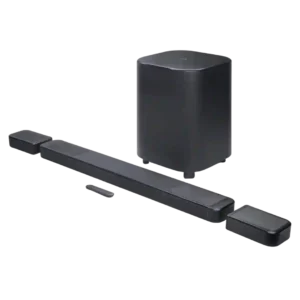
Best for room-filling Atmos, hard-hitting bass and genuinely useful detachable rears. Skip it if 4K/120 passthrough, a compact footprint or consistently polished app control matters more.
Pros: Stereo imaging accuracy, Voice clarity
Cons: HDMI 2.1 gaming, Gaming HDMI passthrough
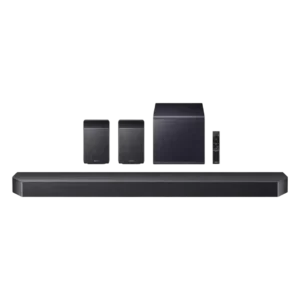
Choose the Samsung HW-Q990F if you want a premium, easy Atmos system with huge surround, strong bass, and Samsung TV perks. Skip it if price, a four-piece setup, music purity,...
Pros: Multi-speaker pairing reliability, Gaming HDMI passthrough
Cons: Google, Cabinet construction / bracing
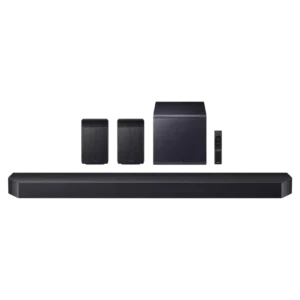
Best for class-leading Atmos immersion, clear dialogue, compact but forceful bass, and a complete rear-speaker package. Skip it if you own the Q990F, need a compact one-bar setup, or cannot...
Pros: Loudness / maximum volume, Stereo imaging accuracy
Cons: Smart assistant integration (Alexa, Status indicators