Scorata scores summarize analyzed review evidence on a 1–5 scale; they are not laboratory measurements or a simple average of customer star ratings. Feature scores summarize the reviews covering that feature. The overall score averages feature scores within each review, then combines review averages. When both expert and customer evidence are available, those two groups receive equal weight. Products can have different review coverage, so small score gaps do not establish a winner.
Recommendations prioritize important features for the category, with a score of at least 3.5, a gap of at least 0.25 points and at least two supporting reviews per product. Features with widely varying scores or broad connectivity contexts are excluded from recommendations. These safeguards do not establish statistical significance.
Quick verdict
What each product is best for
The review evidence points to a tradeoff: realism and emotional impact versus season length and season finale quality. Choose according to which strengths matter more to you; the overall score alone does not settle that choice.
Choose How to Get to Heaven from Belfast, Season 1 for realism and emotional impact.
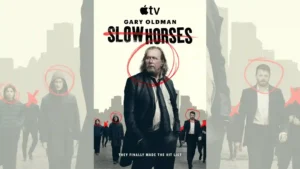
Choose Slow Horses, Season 6 for season length and season finale quality.
Why these recommendations?
How to Get to Heaven from Belfast, Season 1
Where It Has the Edge
realism is 4.8 vs 2.5. The crime plot is often proudly absurd, yet reviewers found the friendship, arguments, and emotional reactions surprisingly authentic....
emotional impact is 5.0 vs 4.6. Beneath the jokes, reviewers found a meaningful emotional current about grief, regret, friendship, and the lives the women...
Slow Horses, Season 6
Where It Has the Edge
season length is 5.0 vs 2.4. Six episodes continue to feel like a sweet spot for this series. Critics praised the format for avoiding...
season finale quality is 5.0 vs 2.8. The closing stretch drew some of the strongest praise of the season, with multiple critics calling the penultimate...
season pacing is 4.7 vs 3.9. Most full-season reviews found Season 6 exceptionally propulsive, particularly from the second episode onward. The biggest tradeoff is...
How to Get to Heaven from Belfast, Season 14.4 overall score
Slow Horses, Season 64.6 overall score
Compare features
Scores are out of 5. Missing scores mean missing review evidence, not a missing feature.
Scored on both products
Other features
Accent authenticity
How to Get to Heaven from Belfast, Season 1
5.0
Slow Horses, Season 6
1.0
Details and evidence for accent authenticity
How to Get to Heaven from Belfast, Season 1
The Belfast and Donegal speech is part of the fun, with slang, wisecracks, and Derry-accented digs adding a strong sense of place. One reviewer even recommends subtitles so none of the craic slips by.
Hugo Weaving’s American accent drew one of the sharpest individual complaints, with one reviewer calling it the worst they had heard from an Australian actor.
Details and evidence for cliffhanger effectiveness
How to Get to Heaven from Belfast, Season 1
The closing hook creates interest in another season, but it also frustrated one reviewer because renewal was uncertain. The tease works as a continuation device more than as a fully comforting stopping point.
Most critics found the twists and cliffhangers extremely effective at keeping momentum high and setting up Season 7. A minority disliked the final cliffhanger as a send-off even while acknowledging its impact.
Eight episodes is the most repeated structural complaint. Multiple reviewers independently suggest the story could lose one or two installments—or simply be six episodes—without sacrificing its core mystery or character work.
Six episodes continue to feel like a sweet spot for this series. Critics praised the format for avoiding filler, preserving urgency, and still leaving room for plot and character beats.
The 40- to 50-minute format gives the mystery room to expand, but one reviewer found that length less inviting for casual comedy rewatches. Shorter episodes would have made it easier to throw on again.
The roughly 45-minute episodes were praised for feeling lean and fast without seeming starved of story. The runtime helps the season keep pressure on the plot while avoiding obvious filler.
Having all eight episodes available at once suits the bingeable story, but one reviewer worried that the drop-everything release could also make the series easy to miss. The concern is discoverability, not the viewing flow itself.
Reviewers repeatedly celebrated the show’s unusually reliable yearly cadence. The fast turnaround is seen as a major advantage because the story and characters stay fresh in viewers’ minds.
The crime plot is often proudly absurd, yet reviewers found the friendship, arguments, and emotional reactions surprisingly authentic. Even improbable situations can feel grounded when the women start talking like people who have known one another for decades.
The season often earns praise for making violence feel painful, messy, and grounded, but one critic objected to assassins becoming implausibly ineffective when the plot needed the heroes to survive.
The finale earns credit for a clever turn and for resolving major questions, but the reaction is far from unanimous. Other reviewers found it perplexing, tonally split, or less satisfying than the stronger start.
The closing stretch drew some of the strongest praise of the season, with multiple critics calling the penultimate episode and finale gripping, brutal, and among the show’s best set pieces.
The central mystery reaches a real resolution, and several reviewers found the ending effective or satisfying enough. Others thought it was tepid, anticlimactic, overly perplexing, or too eager to leave certain characters available for more.
The final cliffhanger is divisive: some reviewers found it breathless and brilliantly effective, while another called it a cheap send-off. Its ability to create urgency for Season 7 is not in doubt.
The dramatic material can be intimate and emotionally sharp, especially when grief, memory, and friendship take precedence over spectacle. The main criticism is that the serious mystery sometimes sits awkwardly beside the show's zany default mode.
The season’s drama was widely praised for feeling tense, consequential, and emotionally charged. River’s grief and the threat against Slough House give the espionage plot a more personal edge.
The tonal juggling is the season's biggest fault line. Some reviewers admired how comedy, dread, grief, and absurdity flow together; others felt the series became stressful, inconsistent, or like two different shows by the finale.
Most critics thought the show still balances brutality, grief, sarcasm, and absurd comedy remarkably well under the new showrunner. A few dissenters felt the humor had dulled, but the broader tonal identity remains intact.
The friendship does more than trade insults: the women are pushed to own their choices and repair damaged trust. Reviewers found that reckoning genuine, especially when the story connects present behavior to older wounds.
The season’s recurring focus on who accepts blame, who ducks it, and how institutions pass responsibility upward remains a satisfying part of the show’s cynical workplace machinery.
The larger action set pieces add momentum without having to carry the series. One reviewer specifically liked that the comedy and character clashes remain the main attraction even when the show gets bigger.
The chase scenes, fights, and later set pieces were repeatedly described as inventive, breathless, and unusually cinematic. Several reviewers felt Season 6 pushed the action to a new high without losing the show’s grubby identity.
For many reviewers, the comedy-mystery-thriller blend is exactly the appeal: strange, dark, funny, and unpredictable. The dissenters found the same mixture overstuffed, uncertain of its identity, or weaker when the crime mechanics took over.
The season continues to stand out as a distinctive spy thriller by mixing bureaucratic drudgery, messy fieldwork, dark comedy, and grounded danger. Reviewers repeatedly framed that blend as something rival shows do not quite match.
The show often moves at a breathless clip, which many reviewers found electric and addictive. Others reported a sluggish middle, overstimulation, or moments that needed more room to land.
Most reviewers thought individual episodes moved briskly and efficiently, especially once the season gets going. One premiere review found the opening chapter slower and more cumbersome than usual.
The leads' messy flaws are part of the design, and many reviewers found their chaos endearing or outright lovable. Others found the bickering trio difficult to believe as best friends or not likable enough to sustain another season.
The Slow Horses remain a collection of abrasive, damaged misfits that viewers have nevertheless grown deeply attached to. That affection makes the season’s danger and deaths hit harder.
The early run is commonly described as propulsive and addictive, while the later stretch divides opinion. Some liked the escalating road-trip energy; others felt the mystery stretched, repeated itself, or lost momentum near the end.
Most full-season reviews found Season 6 exceptionally propulsive, particularly from the second episode onward. The biggest tradeoff is that the speed can crowd out quieter emotional scenes or make the middle harder to follow.
Derry Girls echoes, cameos, mural nods, and Easter eggs delighted many fans without preventing this series from developing its own identity. A few critics thought the callbacks lingered too long or made the follow-up feel derivative.
Season 6 pays off long-running threads, revives earlier characters, and pushes the larger series story forward. That stronger reliance on prior seasons rewards established viewers more than newcomers.
Opinion splits sharply here. One critic saw familiar shows being reworked and rehashed, while another argued that McGee turns the genre mash-up into an exception through meta storytelling and a distinctive comic voice.
Opinions split sharply on freshness. Many critics loved the unpredictability and personal stakes, while dissenters thought the show was recycling familiar faces, chase mechanics, and a formula that has become predictable.
The adult friends are given meaningful midlife frustrations, old wounds, and evolving self-understanding, with Saoirse especially well developed. Some reviewers wanted more depth for Dara, Greta, and a few supporting figures.
Returning characters are pushed into new emotional and professional territory, with River’s grief and old relationships receiving particular attention. Reviewers generally welcomed the way the season develops familiar people without rewriting who they are.
The mystery is engaging but often asks a lot of the viewer. Some found the knots involving, while others needed notes or complained about identities, side plots, false leads, and late-season complications becoming confusing.
The central hunt is easy enough to follow, but combining two novels creates moments where several storylines compete for attention. Some reviewers found the middle stretch harder to track even though the season ultimately pulls the strands together.
Flashbacks, road-trip detours, and overlapping clues often keep the mystery lively and reveal character along the way. Repeated scenes and a recurring trouble-clue-escape pattern made the structure feel formulaic to some binge viewers.
The premiere earns praise for efficiently setting up several threats and emotional threads at once. Reviewers also noted that the show can juggle disparate material with surprising smoothness.
A sizeable group finished wanting more time with the trio and explicitly hoped for another season. That enthusiasm is tempered by a few reviewers who either disliked the characters or worried that the final tease could become frustrating if the story stopped there.
Beneath the jokes, reviewers found a meaningful emotional current about grief, regret, friendship, and the lives the women did not end up living. Small lines and exchanges often linger after their immediate punch line.
Grief, loss, and old relationships give Season 6 more emotional weight than a typical chase-driven thriller. Several reviewers found the deaths and River’s vulnerability genuinely affecting, though one felt the relentless pace left too little room for intimacy.
The humor is frequently described as laugh-out-loud, quick-witted, dark, and unmistakably Irish, with the trio's insults doing much of the work. A smaller group felt the laughs thinned out as the series became busier and darker.
The caustic workplace comedy and Lamb’s insults still land for most critics, even against a much bleaker story. A few reviewers felt the one-liners were less sharp than in earlier seasons, so the comedy is not universally seen as peak form.
The central friendship and buried-secret mystery give the season a strong narrative engine, and most reviewers stayed invested. The recurring caveat is sprawl: side plots, identities, and escalating conspiracy can become more complicated than the emotional core needs.
The broad consensus is that Season 6 tells a strong, often excellent story with personal stakes and relentless danger. More skeptical critics found the core chase repetitive or the underlying mystery merely solid rather than exceptional.
Friendship, memory, guilt, identity, trauma, midlife disappointment, Catholic inheritance, and the stories people tell about themselves all give the caper extra weight. Reviewers often found the emotional and cultural ideas richer than the literal whodunit mechanics.
The season uses grief, disposability, loyalty, and institutional neglect to deepen its spy-story mechanics. River’s mourning and the fate of discarded agents give the thriller more emotional and thematic weight.
Booker stands out as an enjoyably vivid threat within the oddball ensemble. Her menace, visual presence, and blunt attitude make the antagonist side of the caper memorable without losing the show's comic flavor.
Kyle Soller and MyAnna Buring’s assassins were widely praised as cold, menacing threats, and Hugo Weaving’s Frank remains formidable. One negative review argued that the killers are underwritten and occasionally made implausibly incompetent.
The show scatters enough danger, clues, eerie imagery, and withheld information to keep most reviewers curious. Suspense is strongest when tied to the women's past; the more labyrinthine conspiracy material can blur that focus.
The assassins, constant pursuit, and uncertainty over who will survive create sustained tension across the season. Reviewers frequently described the run as gripping, anxiety-inducing, and hard to look away from.
The best twists repeatedly overturn expectations without feeling arbitrary, and several reviewers praised how earlier assumptions are reframed. Their sheer frequency can create whiplash, but unpredictability is a major part of the fun.
Twists, returns, deaths, and reversals are among the season’s most consistently praised pleasures. Several critics described the run as unusually unpredictable and packed with major turns.
Lisa McGee's writing is praised across the set for wit, specificity, fast dialogue, character insight, and the ability to find humor in darkness. The main knock is overreach: the plot sometimes grows so elaborate that the machinery starts to show.
Despite the showrunner transition, the writing was broadly praised as sharp, polished, witty, and structurally confident. The strongest reviews felt the two-book adaptation was seamless, while a few critics missed some of the old comic bite.
Rather than recreating the Troubles directly, the series brings their cultural aftereffects into the present through memory, language, borders, Catholicism, and inherited caution. Reviewers praised that contemporary framing for being both specific and understated.
Defense spending, institutional compromise, media influence, and financial irregularities give the spy plot a recognizable contemporary edge. Critics who highlighted this material found it persuasive rather than decorative.
Ireland is photographed with real atmosphere, from lovely scenery and striking locations to vibrant or ominous visual shifts. Even mixed reviews often acknowledged how good the series looks.
The season’s imagery drew strong praise, from its rain-soaked London atmosphere to more cinematic framing and a cold blue-green palette. Reviewers saw the visuals as a meaningful part of the darker mood.
Performance quality is one of the safest bets here. Reviewers repeatedly call the ensemble excellent or brilliant, with the actors selling both the manic comedy and the heavier emotional turns.
Most critics thought the ensemble was operating at a very high level, with several calling the cast’s work among the strongest the series has delivered. Even more mixed season reviews still tended to praise the performances.
The central trio's chemistry is the clearest point of agreement. Their bickering, affection, old grudges, and effortless rhythm make the decades-long friendship feel lived in and often carry the show when the mystery wobbles.
Returning pairings—especially Jack Lowden with Olivia Cooke—were a major highlight, while new character combinations also brought fresh energy. The ensemble’s ability to bounce between bickering, affection, and danger remains a core strength.
McGee's rapid-fire dialogue is a major strength: sharp, profane, layered, and often devastatingly funny in the same breath. Its speed can demand concentration, but reviewers repeatedly say the banter crackles.
The quick, acerbic dialogue remains a standout, with razor-sharp exchanges and dry wit surviving the season’s darker turn. Reviewers especially praised how the banter keeps tension from becoming monotonous.
This is widely described as a hard show to stop watching, and several reviewers tore through all eight episodes quickly. The main drag on the binge is repetition and a season some felt could have been shorter.
At least one reviewer watched all six episodes in a single sitting, matching the broader sense that the compact, propulsive season is easy to tear through quickly.
The leads stay recognizably themselves even while making disastrous choices. Reviewers appreciated that later scenes tend to explain apparent contradictions through history, personality, and the long habits of friendship.
The established personalities still feel sharply defined, from River’s impulsiveness to Lamb’s abrasive competence and Roddy’s ego. Reviewers praised how well the cast understands those ingrained flaws and rhythms.
At least one small continuity choice earned explicit praise: damage to the women's car remains visible instead of magically disappearing after the mishap. That kind of follow-through helped the chaotic road trip feel coherent.
Season 6 leans heavily on the show’s history, bringing back old characters and unresolved consequences while preserving the established tone through a leadership change. Reviewers often saw that continuity as a strength.
Direction drew direct praise for keeping the chaos visually lively and emotionally legible. Michael Lennox is singled out as captivating, while another review applauds the fish-eye choices and comic quick-cut technique.
Adam Randall’s direction was repeatedly credited with making the season feel more cinematic, darker, and more intense. His handling of action and visual atmosphere drew especially strong praise.
The script draws emphatic praise for its wit, character conflict, and ability to make chaos feel natural. Even when the plot is criticized, the actual scene writing and comic construction are often treated as first-rate.
The scripts retain the series’ signature sarcasm, wit, and efficient plotting even after the lead-writer change. Reviewers who focused on the writing found the handover impressively smooth.
One reviewer specifically praised the thriller for avoiding gratuitous spectacle, with emotional consequences carrying more weight than violence. The darker material stays secondary to character rather than becoming an endurance test.
Season 6 is repeatedly described as the show’s bloodiest and most brutal run, yet positive reviewers felt the violence serves suspense and consequence rather than empty shock value.
Rewatch appeal is mixed. One reviewer thought a second viewing could reward the dense plotting, while another would not revisit it because the long comedy-thriller episodes are less casual than a short sitcom.
The dense plotting and brisk pace encouraged repeat viewing for some critics, including one who immediately watched the whole season again. Another called it the easiest season to rewatch so far.
The dominant response is that the show is enormously entertaining, with reviewers calling it a belter, a rush of joy, great craic, and one of the year's best. Even several mixed reviews concede that the trio makes it very watchable.
Even reviews focused only on the premiere generally found it a strong, enjoyable return. Full-season critics repeatedly described the run as compelling, riveting, and easy to stay engaged with.
The visual package is bold, atmospheric, and often beautiful, shifting from Irish landscapes to neon and ominous imagery. That stylization is also divisive: some found it cartoonish or a case of style overwhelming substance.
Rain, muted gray-blue tones, wide surveillance-like compositions, and everyday locations give the season a colder, more cinematic look. Reviewers generally felt the visual shift suited the darker story.
The pubs, roads, villages, police stations, cultural references, and eccentric locals create a vivid Irish world. Some reviewers wished the increasingly large conspiracy and supporting cast had been explored as deeply as the setting itself.
The season continues to expand the grimy MI5 ecosystem while keeping its institutional rules, rivalries, and history central to the plot. One review specifically praised the sharp world-building behind the character arcs.
The show gets strong marks for polished, detail-rich environments, especially the early-2000s material and the money visibly put on screen. Period touches and Irish locations make the world feel textured rather than generic.
The shabby, ordinary environments remain part of the show’s charm, and the premiere’s shipping-container setting received specific praise for its sad, lived-in detail.
Most reviewers found the series highly enjoyable and easy to recommend, with several calling it a must-watch or hoping it finds a larger audience. A minority saw its sensory overload and tonal excess as likely to make it a love-it-or-hate-it watch.
Longtime devotees are still well served by the familiar rhythms, callbacks, and returning faces, though one critic warned that viewers less invested in the formula may crave something fresher.
One roundup highlighted a wave of four- and five-star notices and a very high critic aggregate, matching the generally enthusiastic tenor across much of the coverage. Critical dissent centers more on plotting and tone than on the cast.
Early critical reaction was overwhelmingly positive, with roundup coverage describing Season 6 as one of the series’ strongest outings and highlighting its pace, writing, and performances.
Details and evidence for supporting cast performance
How to Get to Heaven from Belfast, Season 1
The bench is unusually strong, with several tiny roles earning specific cheers and guest performers making vivid impressions quickly. A few mystery figures are underwritten, but the performers themselves are rarely the problem.
New and returning supporting players were widely praised, with several reviewers saying the additions strengthen the ensemble. Harry Lloyd, Lenny Rush, Kyle Soller, MyAnna Buring, and others drew especially positive notices.
Roisin Gallagher, Sinéad Keenan, and Caoilfhionn Dunne are repeatedly identified as the engine of the series. Their timing, emotional range, and ability to play off one another keep the story afloat through its messier stretches.
Gary Oldman and Jack Lowden remain major anchors, with reviewers praising Oldman’s lived-in comic menace and Lowden’s more vulnerable, physically demanding work. Both are repeatedly described as delivering some of their strongest material.
Several critics liked how Season 6 spreads plot and development around the ensemble, but others felt the large cast and returning favorites sometimes squeeze regular characters out of focus.
The series is repeatedly praised for feeling unmistakably Northern Irish and Irish, from Catholicism and language to pop culture, geography, humor, and the lingering aftereffects of the Troubles. Several reviewers saw that specificity as one of its richest qualities.
Quick cuts are used deliberately for comic effect and were praised as part of the show's energetic technique. The editing helps reinforce the frantic rhythm rather than simply documenting it.
Although Season 6 combines and alters material from two Mick Herron novels, critics generally felt it preserves what makes the books and series distinctive. The adaptation changes were usually seen as thoughtful rather than damaging.
The foul-mouthed slang and dense local wisecracks are treated as part of the show's comic identity rather than a drawback. One reviewer recommends subtitles simply to catch every fast-moving line.
The pressure created by a hostile media figure and Taverner’s public exposure fits naturally into the season’s political machinery. One reviewer specifically praised that political-media dimension for feeling tangible.
The opening is an immediate hook: reviewers call it a doozy, sharply funny, and fascinating. It establishes danger, friendship, and mystery quickly enough to make several viewers want to keep going almost at once.
Costuming gets its biggest boost from Saoirse-Monica Jackson's escalating comic looks. Her wardrobe is singled out as part of what makes the character's appearances so memorably funny.
The music is a standout for many reviewers, with early-2000s pop and Irish-flavored selections called exquisite, perfectly timed, or tremendous. One critic did tire of repeated needle drops, so the enthusiasm is strong rather than unanimous.