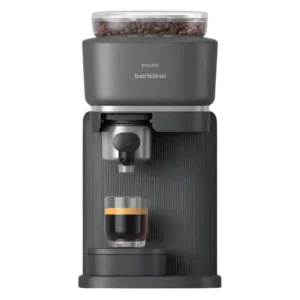
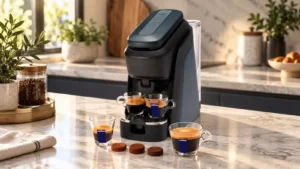
Philips Baristina
Where It Has the Edge
- Design, ergonomics and footprint is 4.9 vs 4.4. Its slim footprint and clean, modern styling win near-universal praise, especially in small kitchens. The main aesthetic drawback...

Scorata scores summarize analyzed review evidence on a 1–5 scale; they are not laboratory measurements or a simple average of customer star ratings. Feature scores summarize the reviews covering that feature. The overall score averages feature scores within each review, then combines review averages. When both expert and customer evidence are available, those two groups receive equal weight. Products can have different review coverage, so small score gaps do not establish a winner.
Recommendations prioritize important features for the category, with a score of at least 3.5, a gap of at least 0.25 points and at least two supporting reviews per product. Features with widely varying scores or broad connectivity contexts are excluded from recommendations. These safeguards do not establish statistical significance.
Quick verdict
The available evidence supports the recommendation below, but does not establish an overall winner. Check the remaining features against your priorities.
Choose Philips Baristina for Design, ergonomics and footprint.
There is not enough comparable review evidence to recommend Lavazza Tabli Espresso Machine over the other product.
No clear scored advantage over the other product.
Scores are out of 5. Missing scores mean missing review evidence, not a missing feature.
Plastic is one of the most criticized material choices. Reviewers often call the machine or portafilter cheap-feeling, and some specifically dislike plastic contacting hot coffee.
The individual coffee tabs avoid plastic or aluminum casings, which is a major appeal for shoppers concerned about pod waste and microplastics. The machine body and outer packaging still contain plastic, so the overall system is not completely plastic-free.
Durability is the biggest risk: many customers report leaks, broken grinders, stuck mechanisms, or total failure within months. A smaller group reports reliable use for a year or longer.
Build impressions are split. One first-use test called the machine solidly built, while another criticized the body for feeling overly plastic.
Leaks, spilled grounds, stuck portafilters, and faults in the sliding mechanism dominate design complaints. These problems are often tied to failures after a few months.
One long-term test found several interaction choices frustrating, including a very short auto-off interval that forces users to reactivate the machine between drinks.
Its slim footprint and clean, modern styling win near-universal praise, especially in small kitchens. The main aesthetic drawback is the lightweight, plastic-heavy feel.
The Tablì is widely praised for a sleek, compact look that fits small kitchens and crowded counters. One tester found it heavier and bulkier than expected, so the footprint is not universally admired.
One reviewer considered the compact machine small enough to take camping, suggesting unusual travel potential for an espresso maker with an integrated grinder.
The machine is not especially travel-friendly: one tester specifically found it heavy and bulky.
Delivery condition is uneven: some machines arrive clean and well packed, while several buyers report opened, damaged, dirty, or apparently previously used units.
The machine was reported to arrive well protected in its packaging and in good condition.
The removable tray helps with some taller cups, but reviewers flag limited mug clearance and a drip tray that can miss drips or feel undersized.
Cup handling is flexible thanks to a removable drip tray and base that can make room for larger cups and different cup sizes.
The optional milk frother broadens the setup, but several reviewers dislike paying extra for it or finding key add-ons unavailable; others appreciate the matching accessory options.
Bundles can add a milk frother and handling tweezers that make the system more versatile and easier to serve from. The frother is handy and easy to rinse, though some configurations charge extra for it.
Reviewers strongly like using fresh beans instead of capsules, citing less pod waste, lower ongoing coffee cost, and pod-like convenience without single-use capsules.
The compressed tabs are convenient and distinctive, but the ecosystem is proprietary and the flavor selection is still limited. Open multi-tab packs also raise freshness concerns because the remaining coffee is exposed to air.
Speed is a standout strength across sources, with many reviewers describing espresso in roughly 30–60 seconds or under a minute with very little preparation.
Single drinks can be very fast, and several testers praised the push-button speed. A heavy-use office test found back-to-back brewing slow because the puck-ejection cycle adds waiting time.
Short-term ownership is often delightful: fast, simple, compact, and low-fuss. The experience turns sharply negative for owners whose units leak, jam, or stop brewing after a few months.
Most hands-on experiences are very positive, emphasizing easy controls, low effort and strong first-cup satisfaction. One extended test rejected the machine because of upkeep, controls, price and coffee-quality frustrations.
There is no built-in steam wand. The optional frother can make enjoyable, thick foam, but it costs extra and offers less milk-texture control than a steam wand.
Milk-drink results vary by style. Some testers made good cappuccinos and found the espresso strong enough for lattes, while another found flat whites and lattes overly foamy rather than silky.
The automatic grind-tamp-brew swipe workflow is one of the clearest strengths, taking most technique out of the process. Sliding-mechanism and sensor failures are the main automation caveat.
Automatic puck ejection is a convenient strength, letting used coffee drop away with little handling. The drawback is unreliable waste-bin status logic in some testing, which can block brewing even when the drawer is not actually full.
One expert praised the sturdy, fully recyclable packaging as compact, protective, and thoughtfully presented.
Reducing single-use pod waste is the product’s standout strength, and many sources praise the all-coffee tabs. The main caveat is that plastic film remains in the packaging, which one critical test felt undercut the sustainability promise.
The puck-release button and exposed portafilter make daily grounds disposal exceptionally easy for most reviewers, though one technical tester found the button ineffective.
Automatic puck ejection is usually convenient because used coffee drops into a bin without finger contact. The downside is that damp spent tabs can develop mold if the drawer is left uncleared.
The compact tank and hopper are adequate for light daily use, and some owners go days between refills. Heavier users are more likely to notice the limited hopper or reservoir size.
The water reservoir is a strength, with testers saying it holds plenty and rarely needs refilling. The eight-tab waste drawer is fine for home use but can feel small in a busy office.
Daily cleaning is generally simple, but long-term maintenance is clouded by leaks, clogs, hard-to-access grinder areas, and cases where cleaning or descaling does not resolve failures.
The large tank can reduce refill frequency, but maintenance is a real tradeoff. Some testers found upkeep quick, while one long-term test reported frequent bin attention, descaling needs and difficult cleaning around the brew area.
Most reviewers enjoy smooth, flavorful espresso with crema when the machine is working well. Technical critics and failed-unit owners describe lighter, watery, or under-extracted shots, especially with the fixed grind.
Most hands-on testers like the bold, full-bodied coffee, thick crema and strong flavor, with especially positive reactions to fresh-tasting shots. A minority found the flavor one-dimensional, overly acidic or too foamy compared with traditional espresso.
Cord and plug placement gets minor but consistent criticism, with the rear cord or protruding plug making placement less tidy on crowded counters.
The power cord drew a specific complaint for being only about 80 cm long, which can limit placement flexibility.
Most reviewers find the grinder quieter than expected or perfectly acceptable for mornings, with only a few calling the machine noisy.
Noise was a disappointment in one detailed hands-on test, which found the machine louder than expected during extraction.
Healthy units often deliver repeatable crema and balanced shots, but a sizeable group reports watery or inconsistent extraction when pressure, dosing, or the mechanism begins to fail.
Extraction is usually praised for producing bold, crema-rich shots with a substantial texture. A more critical test found the process slow and the default ristretto volume poorly calibrated.
The pressurized basket helps create crema and forgive grind variation, but its integrated, non-removable design and plastic-heavy construction draw criticism.
Cleaning around the brew-area filter can be awkward, and one tester expected the small holes to clog over time without careful cleaning.
The simplicity promise largely rings true, but claims around “real espresso” and dependable performance draw sharp pushback from technical testers and owners whose machines failed.
Roast and intensity labels do not always match the cup: some coffees tasted darker or more uniformly bold than expected. One critical test also felt the remaining plastic weakened the system’s sustainability message.
Physical setup is usually straightforward, yet the missing paper manual or starter guide repeatedly sends buyers online. Several reviewers still found the controls intuitive enough to start quickly.
Setup is consistently simple: fill the tank, insert a tab and start brewing. Multiple hands-on tests describe the machine as ready to use with almost no learning curve.
Value is polarized. Fans see savings versus cafés or pods and strong simplicity for the price; early failures make the same purchase feel wasteful, especially when support stalls.
Value depends heavily on market and usage. Some testers saw the machine or discounted bundles as approachable and even money-saving versus takeaway coffee, while others criticized higher per-cup costs and an expensive machine price.
Espresso or lungo volume and the intensity boost cover basic needs, but grind size and temperature are fixed and drink variety is narrow. That simplicity suits beginners more than tinkerers.
The machine covers espresso, double espresso and lungo, and a frother can expand that into milk drinks. The tradeoff is limited coffee variety, espresso-focused output and default volumes that may need reprogramming.
Smart features are polarizing. Some coverage likes app-based personalization, while one hands-on tester preferred simple buttons without an app and another found Wi‑Fi, Alexa and app functions unnecessarily complicated.
Fresh automatic grinding is convenient and can work well, but the fixed grind size is a major enthusiast limitation. Customer reports of clogging, weak dosing, or grinder failure are frequent.
Automatic tamping is a major convenience on healthy units, yet several owners report wet pucks, failed compaction, or tamping and mechanism faults over time.
The machine draws relatively high power, but that translates into a quick warm-up of roughly 35 seconds.
The machine body can stay cool, but a few reviewers describe drinks or leaking water as uncomfortably hot and raise burn concerns.
There is no dedicated hot-water outlet, so Americano drinkers must work around the machine rather than dispense clean hot water directly.
Cold drinks are a strong use case: iced lattes, shakerato-style drinks and other chilled preparations were praised for flavor and frothy texture.
Pressure is strong and crema-rich on healthy units, but many failed machines lose pressure and produce watery shots or leaks.
One buyer had a poor shipping experience because the coffee arrived about a week before the machine, leaving the system unusable in the meantime.
A few owners praise quick replacements and helpful phone support, but many report long waits, no response, unresolved claims, or difficult refund and warranty experiences.
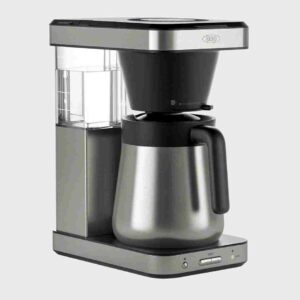
Choose the OXO Brew 8-Cup if you want fast, consistent drip coffee in small or full batches. Skip it if you need programming, app controls, a larger pot, or the...
Pros: Brewing performance and consistency, Overall user experience
Cons: Design flaws
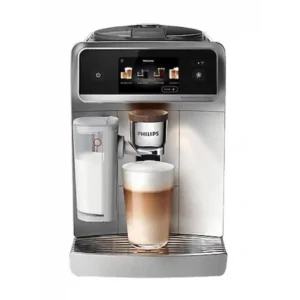
Best for effortless, highly personalized hot and cold coffee in a busy multi-drinker home. Skip it if counter space is tight, you demand silky adjustable microfoam, or the premium price...
Pros: Automation and sensors, Overall user experience
Cons: Design flaws, Mess-free used-puck disposal
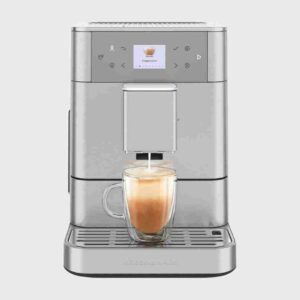
Choose the KitchenAid KF6 for rich espresso, quiet operation, easy cleaning, and strong value in a super-automatic. Skip it if dense cappuccino foam, plant-milk presets, touchscreen controls, or an included...
Pros: Water system, maintenance and descaling, Overall user experience
Cons: Accessories, Design flaws
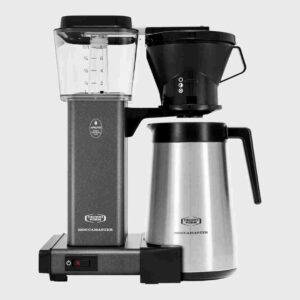
Choose the Moccamaster KBT for fast, excellent drip coffee, durable build, and a thermal carafe that keeps coffee hot. Skip it if you need programmability, a compact footprint, or a...
Pros: Brewing performance and consistency, Espresso and beverage quality
Cons: Automation and sensors, Design flaws