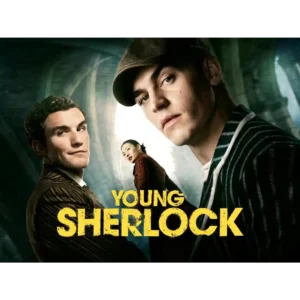
Scorata scores summarize analyzed review evidence on a 1–5 scale; they are not laboratory measurements or a simple average of customer star ratings. Feature scores summarize the reviews covering that feature. The overall score averages feature scores within each review, then combines review averages. When both expert and customer evidence are available, those two groups receive equal weight. Products can have different review coverage, so small score gaps do not establish a winner.
Recommendations prioritize important features for the category, with a score of at least 3.5, a gap of at least 0.25 points and at least two supporting reviews per product. Features with widely varying scores or broad connectivity contexts are excluded from recommendations. These safeguards do not establish statistical significance.
Quick verdict
What each product is best for
The review evidence points to a tradeoff: cliffhanger effectiveness and plot twists versus realism. Choose according to which strengths matter more to you; the overall score alone does not settle that choice.
Choose Young Sherlock, Season 1 for cliffhanger effectiveness and plot twists.
Choose Lanterns for realism.
Why these recommendations?
Young Sherlock, Season 1
Where It Has the Edge
cliffhanger effectiveness is 5.0 vs 4.3. The season’s cliffhangers land strongly, with reviewers describing them as effective hooks that immediately create appetite for another...
plot twists is 4.8 vs 4.1. Twists are a major attraction, frequently described as bold, surprising, riveting, and effective enough to propel the binge.
lore depth is 4.8 vs 4.1. Reviewers enjoy the family history, early mind palace, Moriarty friendship, and other origin-story additions that expand Holmes lore...
Lanterns
Where It Has the Edge
realism is 4.3 vs 3.0. The human-scale, grounded approach is a major draw for viewers who prefer detective drama over constant cosmic spectacle.
Young Sherlock, Season 14.0 overall score
Lanterns3.6 overall score
Compare features
Scores are out of 5. Missing scores mean missing review evidence, not a missing feature.
Scored on both products
Comfort and build
Costume design
Young Sherlock, Season 1
4.9
Lanterns
1.5
Details and evidence for costume design
Young Sherlock, Season 1
Costumes are a standout craft element, praised for rich detail, character storytelling, texture, and visual appeal even when historical accuracy is imperfect.
The muted palette and grounded look can be striking, especially against green ring effects, but some viewers find parts of the production visually cheap or too subdued.
Oxford, the Holmes family estate, Paris, Constantinople, and the wider Victorian setting create a rich, expansive adventure world that reviewers find immersive.
Episodes usually move quickly and keep viewers engaged, but the middle stretch and finale draw complaints for either dragging or cramming too much into too little time.
Pacing is uneven. Some installments move the mystery forward effectively, but the slower episodes are repeatedly criticized for dragging or taking too long to ignite.
Princess Shou’an’s wardrobe is praised for avoiding lazy Orientalism, but other reviews criticize the series for thin cultural context and broad stereotypes.
The treatment of John Stewart’s Black identity and upbringing is often praised as meaningful and heartfelt, though some find the racial commentary over-explained or awkwardly placed.
The deliberately heightened adventure asks viewers to suspend disbelief; some enjoy the scrappy fight authenticity, while others find deductions and conspiracy turns implausible.
The harshest critics see weak subplots, fuzzy characterization, and poor writing as core problems, even though other aspects of the production remain entertaining.
The writing is highly divisive: some episodes are praised as clever, outstanding, and carefully constructed, while others are condemned for exposition, forced character logic, and heavy-handed themes.
Moriarty’s reinvention is widely praised as fresh and compelling, but his late movement toward villainy can feel rushed and inconsistent to some reviewers.
The strongest episodes can be deeply moving, especially around Hal and John’s broken ambitions, though at least one key emotional payoff is said to fall flat.
The central mystery and family conspiracy are compelling enough to sustain the adventure, though some critics find the story overcomplicated, disjointed, or weaker than its presentation.
The central mystery and character conflict inspire both strong praise and severe criticism. The biggest divide is whether the grounded plot feels compelling or artificially constructed.
The series borrows recognizable Holmes lore and Ritchie-style DNA without belonging to his Robert Downey Jr. film continuity, a separation reviewers view with both relief and disappointment.
Details and evidence for cliffhanger effectiveness
Young Sherlock, Season 1
The season’s cliffhangers land strongly, with reviewers describing them as effective hooks that immediately create appetite for another episode or season.
The show sustains a brash, playful adventure tone surprisingly well, though some reviewers think its lighter energy undercuts tension or its late escalation pushes too far.
The serious, grounded tone can feel fresh and confident, but the mix of prestige crime drama, humor, and cosmic superhero material does not always blend cleanly.
Reviewers enjoy the family history, early mind palace, Moriarty friendship, and other origin-story additions that expand Holmes lore beyond familiar Baker Street territory.
The best thematic material comes from grief, family, loyalty, class differences, morality, and the diverging values that will eventually separate Holmes and Moriarty.
Fear, legacy, race, power, and heroism give the series real thematic ambition. The main disagreement is whether those ideas are dramatized naturally or explained too bluntly.
The premiere is one of the best-received installments, establishing the central relationship, grounded mystery, and major time-jump hook with confidence.
The fights and chases are energetic and frequent, but reactions split: some call them inventive and top-notch, while others find them forgettable, overused, or unable to generate excitement.
The action peaks in the explosive fifth episode, where some find the set pieces emotionally charged and exciting. Others say inconsistent powers and character choices weaken the stakes.
Sherlock and Moriarty’s chemistry is one of the clearest strengths, with their banter, camaraderie, and doomed-friendship dynamic repeatedly singled out as the show’s best element.
Hal and John’s prickly mentor-trainee chemistry is one of the most consistently praised parts of the series. A minority find the relationship forced or underdeveloped.
Several reviewers like how individual episodes build their own hooks while feeding the larger mystery, though others dislike the season-long case swallowing episodic detective storytelling.
The series gets strong marks for time jumps, flashbacks, and midseason structural pivots that reframe earlier information without simply following a standard superhero arc.
The family history and Moriarty friendship give several characters meaningful arcs, but some critics feel the breakneck conspiracy leaves too little room for reflection or earned growth.
The Hal-John character study and John’s upbringing often add real depth, but several relationships and motivations are criticized as underdeveloped or rushed.
Details and evidence for faithfulness to source material
Young Sherlock, Season 1
The show takes major liberties with Conan Doyle and Andrew Lane, which some viewers embrace as a fresh remix and purists or critics see as barely recognizable Holmes.
The show uses plenty of Green Lantern lore and comic ideas, but its restrained cosmic scale divides fans who want more rings, aliens, constructs, and space mythology on screen.
Character logic becomes a serious sticking point in later episodes, especially when Hal and John make choices that some feel contradict the people established earlier.
Performance quality is a major strength overall, with the ensemble repeatedly called superb, phenomenal, fantastic, or assured despite a few sharply negative takes on the leads.
Turning Moriarty into Sherlock’s friend and reshaping his family history gives the familiar character a fresh angle, even if some reviewers see the broader prequel formula as derivative.
The series subverts familiar superhero structure and often feels fresh, even as some critics think its True Detective influences are too obvious to fully transcend.
The Rushville mystery is frequently described as compelling, unpredictable, and well paced in its reveals, making suspense one of the show’s stronger elements.
The widening conspiracy often becomes difficult to follow, with critics citing logical leaps, too many subplots, and revelations that can overwhelm rather than clarify.
The mystery can be clear and clue-driven at its best, but some later conflicts and motivations are described as confusing, baffling, or too dependent on exposition.
The season’s overall rhythm is its biggest structural weakness: a fast opening and ending can surround a dull middle, while nonstop revelations leave little breathing room.
Multiple reviewers explicitly want another season, citing the open ending, strong character dynamics, and curiosity about where Sherlock and Moriarty go next.
Critical reception is broadly enthusiastic, with roundups highlighting strong performances, grounded storytelling, and an engaging mystery despite pacing complaints.
Most reviewers see an easy-to-recommend adventure with wide appeal, though a few question whether its youthful remix will satisfy either traditional Holmes fans or Gen Z viewers.
The core cast is generally strong, especially Dónal Finn, though Hero Fiennes Tiffin receives more divided reactions and Max Irons draws some notable criticism.
Kyle Chandler and Aaron Pierre are the clearest consensus strength, repeatedly praised as magnetic, nuanced, and capable of carrying the series through weaker material.
Details and evidence for supporting cast performance
Young Sherlock, Season 1
The supporting ensemble is a major asset, with Dónal Finn, Colin Firth, Natascha McElhone, Zine Tseng, and Holly Cattle receiving repeated individual praise.
The supporting ensemble is usually praised, especially Poorna Jagannathan and John’s parents, though Kelly Macdonald receives a notable dissenting critique.
The propulsive mystery makes the season easy to binge for some viewers, while others found the all-at-once experience exhausting or padded enough to benefit from breaks.
Aaron Pierre’s casting is divisive on representation grounds: one critique argues a darker-skinned actor would have made the material resonate more, while others call Pierre an exceptional fit.
The series is at its best when Hal and John share the screen, and separating them for long stretches weakens the balance between its strongest characters.
Guy Ritchie’s kinetic approach is widely praised for giving the show energy and visual identity, even as a minority finds the imitation of his style overbearing or stale.
The most pointed power critique says the ring’s capabilities change whenever the plot needs a different outcome, undermining confidence in the action stakes.
Writing reactions are divided: some praise the tightly threaded mystery and character work, while harsher critics call the subplots weak and the dialogue/material poorly written.
The last episode offers big revelations and spectacle but is polarizing because some reviewers find the payoff earned while others call it rushed and overloaded.
The modern, high-energy soundtrack helps sell the youthful Ritchie style for many viewers, but others find the choices dated, anachronistic, or potentially quick to age.