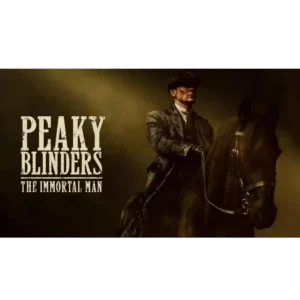
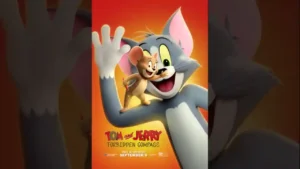
Scorata scores summarize analyzed review evidence on a 1–5 scale; they are not laboratory measurements or a simple average of customer star ratings. Feature scores summarize the reviews covering that feature. The overall score averages feature scores within each review, then combines review averages. When both expert and customer evidence are available, those two groups receive equal weight. Products can have different review coverage, so small score gaps do not establish a winner.
Recommendations prioritize important features for the category, with a score of at least 3.5, a gap of at least 0.25 points and at least two supporting reviews per product. Features with widely varying scores or broad connectivity contexts are excluded from recommendations. These safeguards do not establish statistical significance.
Quick verdict
What each product is best for
The available evidence supports the recommendation below, but does not establish an overall winner. Check the remaining features against your priorities.
Choose Peaky Blinders: The Immortal Man for directing quality and acting performance.
There is not enough comparable review evidence to recommend Tom and Jerry: Forbidden Compass over the other product.
Why these recommendations?
Peaky Blinders: The Immortal Man
Where It Has the Edge
directing quality is 4.5 vs 1.2. Tom Harper is frequently praised for confident staging, visual control, suspense, and explosive set pieces. A few reviews...
acting performance is 4.7 vs 2.0. The cast is one of the film’s safest bets: even many negative reviews praise the performances, with the...
critic appeal is 3.5 vs 1.1. Aggregated critical reaction is broadly favorable but not uniform, with enthusiasm for craft and performances tempered by repeated...
Tom and Jerry: Forbidden Compass
Where It Has the Edge
No clear scored advantage over the other product.
Peaky Blinders: The Immortal Man3.7 overall score
Tom and Jerry: Forbidden Compass1.7 overall score
Compare features
Scores are out of 5. Missing scores mean missing review evidence, not a missing feature.
Scored on both products
Other features
Cultural representation
Peaky Blinders: The Immortal Man
5.0
Tom and Jerry: Forbidden Compass
1.3
Details and evidence for cultural representation
Peaky Blinders: The Immortal Man
Tommy’s spiritual and gypsy side is praised as one of the most worthwhile expansions of his character in the film.
The Chinese setting and mythology are central to the movie, but some reactions find the cultural framing heavy-handed, stereotyped, or awkwardly grafted onto American IP. Those concerns make the localization feel less natural than intended.
Some viewer accounts found the movie frightening for young children. In a film aimed at families, that darker edge is treated as a drawback rather than an enjoyable scare factor.
Tom Harper is frequently praised for confident staging, visual control, suspense, and explosive set pieces. A few reviews fault specific tonal or narrative choices even while admiring the filmmaking.
Direction is criticized for failing to organize the story, pace the spectacle, or frame the action clearly. Even visually promising material often feels weakened by a lack of control.
The film’s grief-heavy, introspective drama gives Tommy’s final chapter weight for many viewers, though its persistent misery and brooding occasionally overwhelm the entertainment.
The dramatic material struggles to create emotional engagement. Character stakes and relationships are present, but they rarely generate meaningful feeling.
The magical effects and deity powers are among the better-looking parts of the action. They add visual energy even when the surrounding story fails to make the spectacle matter.
Some newcomers report following the story surprisingly easily without heavy recaps, but other reviews point to shaky logic or exposition that does too much work.
The story is repeatedly described as incoherent, convoluted, overloaded, or difficult to follow. Rapid introductions, shifting goals, and unclear rules around the compass make the confusion worse.
As a gangster-period-drama send-off, the movie retains much of the show’s identity and pulp energy. Several critics still feel it plays more like an extended television episode than a fully realized feature.
As an animated franchise feature, the movie generally disappoints and is often described as a low point for Tom and Jerry. A couple of reactions land closer to average or mildly positive, but they are clear outliers.
The ending is intensely divisive: many call it fitting, powerful, or even perfect closure for Tommy, while others believe it needlessly overturns the stronger symbolism of Season 6.
The ending is widely weakened by repeated false climaxes, an overextended final battle, and a finale that further sidelines Tom and Jerry. The spectacle grows while satisfaction drops.
Several set pieces generate strong tension and claustrophobia, especially the pub and tunnel material. Negative reviews say predictability weakens the climax and removes the sharper twists associated with the series.
For supporters, the film delivers grief, regret, family conflict, and a powerful farewell with real force. Detractors found key deaths rushed, contrived, or too hollow to land.
The film has difficulty creating attachment to its new characters, leaving major events emotionally flat. The friendship material between Tom and Jerry offers a small exception, but it is not enough to carry the movie.
Legacy, grief, trauma, memory, family inheritance, and self-definition give the film substantial thematic weight. Critics who resist the movie argue these ideas are compressed, overplayed, or left insufficiently explored.
Themes of enlightenment, honesty, and authenticity are visible, but they do not develop enough emotional weight to resonate. The ideas are clearer than their dramatic impact.
Period immersion is weakened for some by modern-looking styling, oversized stakes, and questionable wartime plausibility. The film’s stylized mythmaking of Tommy also draws skepticism.
Some locations achieve a surprisingly realistic look despite the stylized fantasy setting. That environmental detail stands out within an otherwise highly cartoony presentation.
Details and evidence for faithfulness to source material
Peaky Blinders: The Immortal Man
The film restores the show’s swagger, music, visual language, and callbacks, satisfying many longtime fans. Others see missing characters and major legacy decisions as betrayals of the series’ established arcs.
The dominant complaint is that this barely feels like a Tom and Jerry movie once the opening ends. Classic slapstick and chemistry appear in bursts, but the mythology plot and new characters repeatedly push the title duo to the sidelines.
Tommy’s reckoning with grief and Duke’s struggle with his father’s legacy work for many reviewers, but the compressed format leaves several supporting characters—and, for some, Duke himself—feeling thin or underdeveloped.
The new mythology characters are repeatedly described as thin, flat, confusing, or underdeveloped, and Tom and Jerry often lose agency as the story shifts away from them. This makes emotional investment difficult.
The core legacy-and-war story is compelling and emotionally satisfying for many reviewers, but others call the movie unnecessary, thin, half-baked, or unable to justify rewriting the series’ prior ending.
Storytelling is the movie’s biggest weakness: the mythology-heavy plot is frequently called muddled, directionless, thin, or barely functional. A small minority sees a decent or clever framework, but most reactions find the narrative unable to support the spectacle.
The sombre, gothic, highly stylized mood works for some as a fitting final chapter, but others find the film tonally off, overly miserable, campy, or caught awkwardly between old and new Peaky Blinders.
The movie’s tone is repeatedly called confused, overloaded, or inconsistent, with abrupt character shifts and clashing styles. Its constant energy rarely settles into a coherent rhythm.
The film’s cold-blooded, stylized violence generally fits the franchise’s appeal and is often balanced with swagger or dark humor, though it can edge into grim excess for some viewers.
The softened cartoon violence disappoints at least one longtime fan because it reduces the impact of the physical comedy. The safer approach makes the slapstick feel less like classic Tom and Jerry.
Dark comedy—especially the Garrison grenade sequence and father-son mud fight—provides welcome relief from the gloom. A few detractors find some of the comic touches cheesy rather than sharp.
The opening and isolated Tom-and-Jerry gags can still be funny, especially when they resemble classic slapstick. Once the mythology plot takes over, the comedy is often described as poorly timed, repetitive, or dull.
Editing is frequently blamed for the movie’s breathless, disorienting flow. Cuts and structural trimming can make scenes feel rushed, butchered, or hard to process, though one mixed reaction mainly wanted the edit slowed down.
The strongest readings focus on legacy, self-definition, family, and the cost of valuing power over people. One severe critic felt the film squandered the larger sense of purpose built around Tommy.
The movie does contain ideas about friendship, honesty, authenticity, and enlightenment. The Tom-and-Jerry friendship theme earns some praise, but the broader messages are often judged too weakly dramatized to land.
The script earns credit for themes, twists, and some strong dialogue, but criticism is substantial: exposition, clichés, rushed character work, and compressed plotting repeatedly surface.
The screenplay is mostly criticized as weak, badly structured, unclear, or lacking compelling story logic. One mixed reaction does find some clever writing in the slapstick and narrative callbacks.
The action lands best once Tommy returns to Birmingham, with the pub confrontation, shootouts, explosions, and finale frequently singled out. Critics who wanted more momentum found the action too delayed or the climax predictable.
Action is one of the most divided areas: some reactions enjoy the colorful scale and nonstop energy, while others find the set pieces stiff, overlong, or exhausting. The busiest climaxes often amplify the movie’s pacing problems.
The cinematography is the clearest consensus strength, praised for striking light, shadow, mud, rubble, wintry landscapes, and a genuinely cinematic sense of scale.
The action photography gets more ambitious when characters start flying and the spectacle expands. The energized camerawork is one of the stronger parts of the larger set pieces.
At roughly feature length, the movie often feels too compressed for the number of character turns and plot developments it attempts. Several reviewers explicitly wish the story had been a season or miniseries instead.
The movie often feels much longer than it is because of relentless pacing and repeated climaxes. Several reactions call the runtime excessive for the target age group or simply exhausting.
Many reviewers see the movie as a familiar one-last-job epilogue or a reworking of old Peaky Blinders beats. A smaller group praises its bolder choices and fresh generational angle.
The international mythology premise sounds distinctive on paper, but the execution is often called generic, derivative, or compromised. The reinvention rarely feels fresh enough to justify how far it moves from the franchise’s core.
Pacing is the most consistent weakness: the first half is repeatedly described as slow or drawn out, while the later material can feel rushed as too much story is compressed into feature length.
Pacing is one of the most consistent problems: the movie races forward with little breathing room, yet can still feel long and tiring. One positive reaction loves the nonstop momentum, but most find it chaotic or exhausting.
The central comeback structure, Nazi scheme, and legacy conflict are often described as familiar or clichéd, with several critics saying the film rarely finds a genuinely new plot shape.
The plot is criticized as predictable and built from familiar clichés despite the unusual setting. The mythology backdrop adds novelty, but the underlying story beats feel conventional.
Dialogue receives mixed marks: some reviewers praise sharp lines and economical exposition, while others call it simplistic, clunky, corny, or overly explanatory.
The English-language dialogue suffers from weak translation and exposition that can sound mechanical or overly literal. The result adds to the feeling that the dub lacks natural comic rhythm.
The musical score receives some of the warmer audio feedback, especially when it echoes classic Tom and Jerry music or keeps an energetic rhythm. Those nostalgic touches help the movie feel closer to the franchise.
Details and evidence for chemistry between characters
Peaky Blinders: The Immortal Man
Murphy and Keoghan’s father-son dynamic is often described as raw, magnetic, and powerful. A smaller group felt the pair never generated the expected sparks or emotional bond.
Tom and Jerry’s familiar back-and-forth still has flashes of the old charm. Their best moments come when the film simply lets the duo bicker, chase, and play off each other.
The fully CG presentation is usually criticized as plasticky, dated, or visually mismatched. Even when the craft is serviceable, the digital look rarely captures the weight and elasticity associated with classic Tom and Jerry.
Tom’s romantic subplot with Jade is barely developed, and Jade is criticized for existing mainly as a love interest. The romance adds little depth to either character.
Modern-rock needle drops remain a signature strength and are widely praised for driving emotion and atmosphere. A few reviewers find the choices dated, overly loud, or less appealing outside the iconic theme reprise.
The music can become overbearing, with the score described as relentless or constantly pounding. Rather than supporting the action, it sometimes intensifies the sensory overload.
The cast is one of the film’s safest bets: even many negative reviews praise the performances, with the central actors repeatedly credited for elevating uneven material.
The English dub is a recurring weak spot, with voices described as rough, overacted, forgettable, or noticeably off. One more positive reaction found the dubbing only mildly distracting rather than disastrous.
Cillian Murphy’s return as Tommy is overwhelmingly praised for its weary stillness, menace, grief, and emotional control; even harsh critics routinely identify him as a major strength.
The central vocal work gets a mixed reaction: Tom’s voice is considered fine, while Jerry’s sound is distracting enough to invite comparison to Donald Duck.
Details and evidence for supporting cast performance
Peaky Blinders: The Immortal Man
The supporting ensemble is generally considered strong, particularly Keoghan, Roth, Rundle, Graham, and Ferguson. The bigger complaint is often that the movie underuses them or gives their characters too little depth.
The English supporting voices are generally weak, with performances described as disconnected, overacted, and lacking charm. The dub rarely gives the new characters enough personality to overcome the writing.
Theatrical value is poor for most reactions, with explicit complaints about wasted money and recommendations to wait for a cheap rental or skip it. The limited Tom-and-Jerry focus makes the ticket feel especially hard to justify.
Reactions range from gripping, highly enjoyable fan service to dull, hollow, or unnecessary viewing. A common middle ground is that the movie becomes much more entertaining after its slow first half.
Most reactions find the movie exhausting, boring, irritating, or simply bad despite scattered fun. A small minority enjoys the relentless action and colorful chaos, but the overall experience trends strongly negative.
Rewatch interest is sharply polarized: one enthusiastic reviewer immediately wanted another viewing, while several detractors say they would not revisit it and even feel it harms the series’ rewatchability.
Rewatch interest is very low. Multiple reactions explicitly reject sitting through the movie again, while even a more positive viewer says a revisit is unlikely in the near future.
Aggregated critical reaction is broadly favorable but not uniform, with enthusiasm for craft and performances tempered by repeated complaints about pacing, script compression, and sequel necessity.
Critical reception is exceptionally poor, repeatedly characterized as scathing, nearly unanimous condemnation, and a franchise low. The 0% Rotten Tomatoes figure is a recurring sign of just how badly it landed with critics.
Longtime Peaky Blinders fans are the clearest audience, especially for the callbacks and emotional closure. Reviewers disagree on newcomers: some found the film easy to follow, while others strongly recommend watching the series first.
Broader audience response is weak, with low audience scores and multiple reactions expecting both kids and adults to disengage. A minority view sees strong kid appeal in the fast action and colorful presentation.
The soundscape can feel forceful and theatrical, with one review highlighting Dolby Atmos impact and another calling the sound design incredible. A major dissent criticizes an aggressive music-to-dialogue mix.
Sound is often too busy, with music, effects, and constant vocal noise competing for attention and sometimes burying dialogue. Nostalgic Tom and Jerry sound effects provide a welcome counterpoint in the more faithful moments.
The visual presentation is consistently celebrated: smoky interiors, chiaroscuro lighting, slow-motion swagger, period grime, and large-scale wartime imagery make the movie look distinctly cinematic.
The visuals split opinion more than the story does. Bright colors, elaborate locations, and occasional striking sequences earn praise, but many find the art direction inconsistent, plasticky, dated, or excessively busy.
For supporters, Birmingham and the Peaky underworld feel convincingly restored and expanded into wartime. Critics miss the old ensemble and argue the newer, thinner supporting world makes the film feel smaller than the series.
The ancient-China-inspired world has appealing ideas and enough detail to feel promising. The problem is that the movie rarely slows down or structures the story well enough to let that setting become immersive.
Blitz-era Birmingham, grime, rubble, docks, pubs, and warehouses are generally rendered with impressive tactile detail and scale. One negative review thought parts of the production looked like a soundstage.
Gold City and several fantasy locations show real visual craft, with strong scale, detail, color, and occasionally convincing realism. The environments are among the movie’s most consistently appealing elements.
Several reactions question the fit for young children because the movie can be bewildering, frightening, or overstimulating. One notably positive take strongly recommends it for kids and views the nonstop action as a feature.
Animation is the clearest visual bright spot, but opinions vary sharply. Some praise vibrant colors, attractive environments, and solid CG craft, while others call the movement stiff, plasticky, dated, or poorly suited to Tom and Jerry’s physical comedy.
Family appeal is highly uneven. Many reactions warn that children may be bored, confused, frightened, or overwhelmed, while one enthusiastic take considers the action-packed movie a very good choice for kids.
The return of Tommy’s tailored Peaky Blinders look remains a major visual pleasure, with covetable coats and sharp suiting earning praise. One review found Duke’s modern-looking styling immersion-breaking.
Reviewers appreciate the use of World War II events and the counterfeit-currency plot as historical grounding. Others question specific period details, plausibility, or the sentimental elevation of Tommy within wartime history.
Several reactions feel the presentation sells a more conventional Tom and Jerry movie than the one delivered. Complaints include the duo being sidelined, a darker-than-expected tone, and trailers or promotion that obscure how mythology-heavy the film becomes.