Scorata scores summarize analyzed review evidence on a 1–5 scale; they are not laboratory measurements or a simple average of customer star ratings. Feature scores summarize the reviews covering that feature. The overall score averages feature scores within each review, then combines review averages. When both expert and customer evidence are available, those two groups receive equal weight. Products can have different review coverage, so small score gaps do not establish a winner.
Recommendations prioritize important features for the category, with a score of at least 3.5, a gap of at least 0.25 points and at least two supporting reviews per product. Features with widely varying scores or broad connectivity contexts are excluded from recommendations. These safeguards do not establish statistical significance.
Quick verdict
What each product is best for
The review evidence points to a tradeoff: Home theater integration and Value for money versus EQ customization. Choose according to which strengths matter more to you; the overall score alone does not settle that choice.
Choose KEF Coda W for Home theater integration and Value for money.
Choose KEF XIO for EQ customization.
Why these recommendations?
KEF Coda W
Where It Has the Edge
Home theater integration is 4.3 vs 2.8. As a TV system, the Coda W offers a convincing two-channel alternative to a soundbar, with better stereo...
Value for money is 4.7 vs 3.4. Value is a recurring strength: many reviewers felt the Coda W delivers unusually mature sound, strong build, and...
Dialogue clarity (for TV/soundbar use) is 5.0 vs 4.6. For TV use, dialogue is a strong point: commentators and movie voices remain intelligible without needing a dedicated...
KEF XIO
Where It Has the Edge
EQ customization is 4.5 vs 3.3. The sound modes and EQ options are useful and often make an audible improvement, with bass/treble or expert...
KEF Coda W4.4 overall score
KEF XIO4.4 overall score
Compare features
Scores are out of 5. Missing scores mean missing review evidence, not a missing feature.
Scored on both products
Controls and connectivity
Control button responsiveness
KEF Coda W
5.0
KEF XIO
2.5
Details and evidence for Control button responsiveness
KEF Coda W
The capacitive top controls respond quickly and feel polished in use. One reviewer specifically called their responsiveness impressive.
The biggest feature compromise is the absence of built-in Wi-Fi, Spotify Connect, multi-room streaming, and other network smarts. Reviewers often accepted that trade for stronger sound at the price, especially because an inexpensive external streamer can restore those functions.
The app’s EQ can make useful bass and treble adjustments and help with placement, but it is basic compared with KEF’s more advanced systems. Reviewers repeatedly wished for deeper room correction or a personalized equalizer.
The sound modes and EQ options are useful and often make an audible improvement, with bass/treble or expert controls available in some paths. A few reviewers wanted deeper manual EQ access or clearer feedback on what each profile changes.
Review contexts may differ — read the details before interpreting the score gap.
Details and evidence for Bluetooth connectivity
KEF Coda W
Bluetooth itself is straightforward and sounds very good for casual wireless listening, especially with the stronger aptX codecs. The tradeoff is that it is the only built-in wireless music path.
The KEF Connect app is generally easy to use and can make input switching convenient, but it is intentionally basic. One test found a repeatable subwoofer-setting bug, while others called the app clean and reliable.
KEF Connect is generally clean, fast, stable, and easy to navigate, with useful setup and EQ controls. There are notable exceptions, including slow service browsing, early setup trouble, and TV-mode connectivity problems.
On-device controls are convenient and responsive, especially for power, volume, and source changes without opening the app. The main annoyance is that source selection on the speaker often cycles in only one direction.
On-bar controls range from intuitive and nicely backlit to frustratingly hidden in horizontal placement. Physical usability depends heavily on orientation.
Music playback is lively, engaging, and easy to enjoy across many genres, with strong rhythm, scale, and natural tone. Reviewers repeatedly described the Coda W as a system that encourages long listening sessions and makes familiar music feel fresh.
Music is a major reason to consider the XIO, with unusually natural vocals, strong separation, wide staging, and hi-fi-like refinement for a soundbar. Dedicated stereo speakers can still win on imaging and subtlety, and one reviewer found music merely average.
Voices come through naturally, clearly, and with strong placement in the stereo image. Reviewers especially liked the lack of strain, crisp articulation, and realistic vocal texture.
Low-volume listening is a recurring weakness in the more critical tests: resolution, energy, and engagement can fall away when the system is turned down. One source claimed smooth behavior across listening levels, but the stronger hands-on consensus is that the Coda W prefers moderate volume.
Low-volume listening is a strength: dialogue and detail remain engaging, while Night and Dialogue modes make late viewing easier without simply turning everything dull.
Format support is strong for a Bluetooth-led system, with CD-quality aptX Lossless and high-resolution wired playback. The wireless path still does not match the highest-resolution network-streaming formats.
Format support is a major strength, covering the leading immersive formats and high-resolution playback without leaving meaningful gaps for typical movie or music use.
Turntable noise control is effective when grounding is set up correctly. Reviewers noted that the grounding post or ground-lift feature can substantially reduce hum.
Details and evidence for Dialogue clarity (for TV/soundbar use)
KEF Coda W
For TV use, dialogue is a strong point: commentators and movie voices remain intelligible without needing a dedicated voice mode. The stereo presentation also gives speech more natural placement than many soundbars.
Dialogue is usually exceptionally clear, centered, and easy to understand even during busy scenes or at modest volume. A small minority heard muffled, chesty, or partially buried voices with certain material.
Stereo imaging is one of the Coda W’s standout strengths, with a wide, stable stage, precise placement, and a generous listening area beyond a narrow sweet spot. Reviewers repeatedly described the presentation as spacious, believable, and room-filling.
Stereo imaging is unusually wide and precise for a soundbar, often placing vocals and instruments beyond the cabinet with convincing separation. Dedicated stereo speakers and a few rival bars can still produce a wider or more magical stage.
Bass is one of the Coda W’s biggest strengths, reaching surprisingly deep with real punch, scale, and authority for the cabinet size. Room placement matters because the rear port can become boomy, and the deepest electronic or movie bass still benefits from a subwoofer.
Bass is one of the XIO’s defining strengths: deep, punchy, controlled, and unusually substantial for a single bar, often enough without a subwoofer. A few listeners wanted tighter or deeper sub-bass, and one negative test heard compression and resonance when pushed.
Overall sound quality is the product’s central strength: the Coda W is repeatedly described as natural, spacious, balanced, dynamic, and highly enjoyable. The main sonic caveats are weaker low-volume energy, room-sensitive bass, and a phono input that trails the digital paths.
Overall sound quality is the XIO’s strongest case: powerful, detailed, balanced, spacious, and remarkably refined for a single soundbar. Most tests place it near the top of the category, though one reviewer found it underwhelming and resonant.
The Coda W’s wired connectivity is unusually versatile for an all-in-one pair, covering computers, TVs, disc players, streamers, and turntables. Several reviewers also found wired playback a little better or more capable than basic Bluetooth.
As a TV system, the Coda W offers a convincing two-channel alternative to a soundbar, with better stereo separation and natural vocal placement. It does not replace Atmos or a true multichannel setup for buyers prioritizing cinematic surround effects.
The XIO is formidable as a one-box home-theater solution, but current expansion is limited by the absence of dedicated wireless surrounds. That makes it less flexible than ecosystems built around add-on rear speakers.
Optical playback is a strong wired option, preserving detail and clarity and opening up the sound with high-resolution sources. It also makes adding a small external streamer straightforward.
Details and evidence for Inter-speaker connectivity
KEF Coda W
The wired inter-speaker link is stable and avoids dropouts or latency, but the cable itself is a tradeoff for buyers wanting a fully wireless pair. A longer optional cable helps with wider room layouts.
Wireless subwoofer integration can be stable and delay-free, but broader speaker expansion remains uneven: some options require an extra adapter and promised rear connectivity still lacks a firm timeline.
The broad mix of analog and digital inputs makes the Coda W unusually friendly to both older audio gear and current devices, which one reviewer highlighted as a key no-fuss advantage.
The lack of cloud-dependent control is viewed positively by reviewers concerned about long-term software dependence. Bluetooth app control and a physical remote let the system remain useful without a cloud account.
Privacy is mixed: the hardware microphone-disable switch is a thoughtful safeguard, but mandatory online account creation for deeper app setup drew criticism.
The included remote is functional but not a highlight: it can feel basic, inexpensive, or slower than the app for jumping between sources. It remains useful for buyers who want to avoid app dependence.
The remote is generally easy to understand and sometimes praised for its layout or backlighting, but several tests found it sluggish, limited, or not premium enough for the price.
Status feedback is one of the weaker usability details. Some testers disliked the audible source-change tone, and another noted the lack of a visible volume indicator can lead to unexpectedly loud playback.
Status feedback is a consistent usability weakness: LEDs can be hard to read, disappear from view in horizontal placement, and there is no full front display.
HDMI ARC makes the speakers easy to use with a TV and is repeatedly framed as a practical strength. Reviewers liked the simple direct connection and the ability to build a compact TV-audio system around it.
The Coda W works well in living rooms, offices, and some near-field setups, but its cabinets are larger than typical desktop speakers. Buyers with small desks may prefer a more compact model, while sideboards and stands suit the speakers especially well.
The XIO can create convincing scale and envelopment even in smaller rooms, so it does not need a huge space acoustically. Its physical width still needs to fit the furniture and TV.
Detail retrieval is consistently strong, exposing fine textures, instrumental layers, and subtle recording cues without becoming clinical. The Coda W is not as resolving as KEF’s pricier models, but it is notably revealing for its price.
Fine detail is a standout strength, from subtle debris and ambience in movies to instrument texture and low-level information in music. Complex scenes stay unusually easy to follow.
Details and evidence for Loudness / maximum volume
KEF Coda W
The Coda W has enough output to fill normal living rooms and offices, with reviewers praising its scale for the cabinet size. It can play loudly, though the very highest levels expose more limits than KEF’s pricier models.
The XIO can play extremely loud and usually stays composed while doing it, easily filling medium and larger rooms. One critical test found the sound shouty and resonant at higher levels.
Details and evidence for Cabinet construction / bracing
KEF Coda W
Cabinet build is consistently praised as solid, sturdy, precise, and premium for the price. Reviewers repeatedly noted careful finishing and a reassuringly substantial feel.
Dynamic headroom is a clear strength, with convincing swings from delicate passages to forceful peaks and good scale for the cabinet size. A few comparisons found finer microdynamic agility better on smaller or more expensive KEF models.
Across the full set, the Coda W is viewed as a compelling, well-rounded active system that makes serious stereo sound unusually easy to live with. Reviewers especially liked how it balances hi-fi performance, practical inputs, and simple operation.
Overall product quality is exceptionally well regarded for its sound, construction, and one-box convenience. The main reservations are price, scarce HDMI connectivity, ecosystem limitations, and a sharply negative report of persistent CEC bugs.
Details and evidence for Distortion at high volume
KEF Coda W
High-volume composure is generally excellent: most reviewers heard little distortion, muddiness, or loss of control as levels rise. One test did report the midrange and highs starting to smear near the top of the volume range.
Most tests found the XIO remarkably clean at high output, with very low audible distortion or compression. One notably negative sample showed cabinet vibration, resonance, and compression when driven hard.
A subwoofer is optional rather than mandatory for most music, but adding one can extend the deepest bass and improve cinematic scale. Integration is useful, though one reviewer found the Coda W’s bass-management controls limited.
The built-in bass is strong enough that many users may skip a subwoofer, but adding one can deepen impact, improve scale, and offload the lowest frequencies. Integration is generally easy, though cost can rise quickly.
The presentation is repeatedly described as coherent and natural, with the Uni-Q driver and DSP helping the sound hang together as a unified whole rather than feeling processed.
Despite the large number of drivers, the XIO usually sounds unified and well organized. Music and movie mixes keep separation without losing the sense of one coherent presentation.
Details and evidence for Frequency response balance
KEF Coda W
The tonal balance is consistently described as neutral, natural, and well controlled, without obvious frequency bands dominating the mix. Some rooms can excite the bass, but the core midrange and treble balance remains composed.
Tonal balance is usually natural, neutral-to-warm, and impressively even across the range. A few music tests exposed isolated lower-mid or bass tonal weak spots.
Value is a recurring strength: many reviewers felt the Coda W delivers unusually mature sound, strong build, and broad connectivity for the money. The main reservation is that buyers paying around $1,000 must be comfortable giving up built-in Wi-Fi streaming.
Value is the biggest tradeoff: the XIO sounds expensive in the best sense, but it also costs enough to compete with complete surround packages. Some reviewers say the performance justifies it; others consider the premium hard to rationalize.
Setup is a major strength, with repeated praise for quick pairing, simple source connection, and the lack of separate amplification. The Coda W delivers a convincing hi-fi experience without the usual stack of components.
Setup is overwhelmingly straightforward, often taking only minutes from HDMI connection to calibrated playback. Early firmware/app problems and occasional HDMI handshakes are the main exceptions.
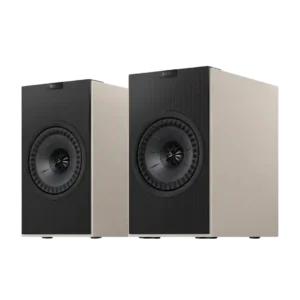
The overall design is widely praised as clean, modern, and premium without looking trendy or overstyled. Its more traditional rectangular form feels easy to place in living spaces while still carrying distinctive KEF touches.
The understated fabric-and-metal design is widely praised as premium, elegant, and easy to blend into a living room. Its considerable width is the main visual caveat.
Reliability reports conflict sharply. One test had persistent CEC issues across two samples, while another experienced responsive, issue-free operation.
HDMI passthrough is the most repeated specification complaint. A soundbar this expensive having no extra HDMI input forces all source switching through the TV and feels under-equipped beside premium rivals.
Wall mounting is exceptionally well supported, with sturdy included hardware and orientation-aware driver routing. Several reviewers specifically preferred how cleanly the XIO sits under a mounted TV.
Details and evidence for Aesthetic design / Finish options
KEF Coda W
KEF’s five finish choices receive broad praise for being tasteful, sophisticated, and easy to match with real rooms. Reviewers liked that the palette feels more distinctive than the usual black, white, or wood options without becoming flashy.
The low profile helps the XIO sit beneath a TV, but its roughly 47–48-inch width and substantial depth demand a wide stand and generally look best with a 55-inch-or-larger screen. Wall mounting reduces the visual bulk.
Room tuning is usually quick and noticeably improves balance, spatial scale, and placement. A few tests found it confusing, limited compared with full room correction, or troublesome before firmware updates.
Details and evidence for Amplifier power requirements
KEF Coda W
Because amplification is built in and matched to the drivers, the Coda W removes the need to choose a separate amp. Reviewers liked the simplicity while still getting strong headroom and dynamics.
The single powered primary speaker simplifies mains wiring, but a heavily connected setup can leave its rear panel crowded. Reviewers recommended planning cable routing carefully if several sources are attached.
Atmos height is often convincing and sometimes described as class-leading for a standalone bar, with effects clearly lifting above the screen. Results remain room-dependent, and a few tests found the height illusion less dramatic than rival bars or discrete speakers.
The included inter-speaker cable and remote cover the essentials, and the cable is long enough for many normal layouts. Very wide setups may need KEF’s optional longer cable.
The included HDMI cable works, but its straight connector is less convenient for hiding cables in a wall-mounted installation than the angled power connector.
Most reviewers considered the asking price reasonable or attractive for the performance and integrated hardware. One reviewer felt $1,000 was about the maximum they would pay and would have preferred a $600–$700 price.
Wireless rear-speaker expansion remains a weakness because the promised bespoke satellites have not yet arrived and no confirmed timeline was available.
TV connection stability is the clearest technical concern in the set. Several tests reported eARC/CEC synchronization or handshake problems, including one severe case reproduced across two TVs and two samples.
aptX Adaptive and aptX Lossless are welcomed as strong Bluetooth options, with several reviewers finding wireless quality close to wired convenience for normal listening. Device support remains a practical limitation, and Bluetooth still falls short of true high-resolution network streaming.
The listening sweet spot is wider than expected for a soundbar, with several tests reporting consistent clarity off-center. Rear envelopment can fade when moving substantially away from the middle seat.
The built-in moving-magnet phono stage is convenient and good enough for casual or entry-level vinyl setups, but several reviewers found it less dynamic and less clear than the other inputs. A few more promotional tests were more enthusiastic, so vinyl performance is the clearest area of disagreement.
For a single bar, surround simulation is frequently impressive, enveloping, and spatially convincing, with strong left-right movement and some rear illusion. Physical rear speakers still win for true behind-the-listener placement, and one critical test found the effect merely average.
Treble is generally crisp, detailed, and smooth without the harsh metallic edge some listeners fear from an aluminum tweeter. Even reviewers who measured extra upper-treble energy did not find it fatiguing.
The powered USB-C output is a handy way to run a small external streamer directly from the speaker. Reviewers liked that this can add network streaming without requiring another power adapter.