Scorata scores summarize analyzed review evidence on a 1–5 scale; they are not laboratory measurements or a simple average of customer star ratings. Feature scores summarize the reviews covering that feature. The overall score averages feature scores within each review, then combines review averages. When both expert and customer evidence are available, those two groups receive equal weight. Products can have different review coverage, so small score gaps do not establish a winner.
Recommendations prioritize important features for the category, with a score of at least 3.5, a gap of at least 0.25 points and at least two supporting reviews per product. Features with widely varying scores or broad connectivity contexts are excluded from recommendations. These safeguards do not establish statistical significance.
Quick verdict
What each product is best for
The available evidence supports the recommendation below, but does not establish an overall winner. Check the remaining features against your priorities.
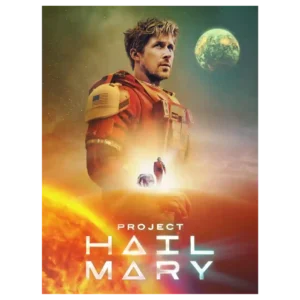
Choose Project Hail Mary for sound design and CGI quality.
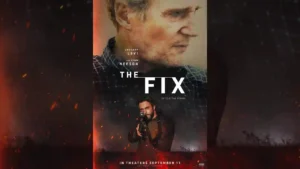
There is not enough comparable review evidence to recommend The Fix over the other product.
Why these recommendations?
Project Hail Mary
Where It Has the Edge
sound design is 5.0 vs 1.5. Atmos and sound design receive unanimous praise in the scored sources, from precise spatial cues to Rocky’s sonic...
CGI quality is 4.7 vs 1.3. CGI is usually praised for disappearing into the practical sets and Rocky puppetry, adding polish without making the...
sexual content level is 3.8 vs 1.0. Sexual material is limited to light verbal references and a few suggestive jokes; family-focused reviewers describe it as...
The Fix
Where It Has the Edge
No clear scored advantage over the other product.
Project Hail Mary4.3 overall score
The Fix2.3 overall score
Compare features
Scores are out of 5. Missing scores mean missing review evidence, not a missing feature.
Scored on both products
Controls and connectivity
Critic appeal
Project Hail Mary
5.0
The Fix
1.2
Details and evidence for critic appeal
Project Hail Mary
The broader critical response cited in the reviews is described as about as positive as a major studio release gets.
Critical reception is exceptionally poor, with aggregation coverage placing the movie near the bottom of Liam Neeson’s career and describing the early response as overwhelmingly negative. Length, writing, and casting recur among the complaints.
The film is repeatedly described as a crowd-pleaser, with reports of applause and strong theatergoing enthusiasm. A dissenting review sees that accessibility as calculated and artificial.
Audience-facing reactions are much warmer than the critical response, with strong scores and enthusiastic comments about the action, twists, pacing, and fun factor. The movie appears to connect best with viewers already inclined toward military conspiracy thrillers.
Sound draws negative reactions in the limited comments available: one critic calls the ADR awful, while another found the gunfire and explosions intense enough to cover their ears. The mix adds force, but not always pleasantly.
The film’s look is one of its strongest consensus wins: colorful space vistas, tactile sets, aspect-ratio shifts and adventurous camera choices make it feel built for a large screen.
The look of the film is another major split: some praise its lighting, framing, locations, and artistic compositions, while others call it blurry, stereotypically yellow, or visually unattractive. Its strongest images tend to come during action or location work.
The Hail Mary ship and practical environments draw exceptional praise for functional hard-sci-fi detail, tactile construction and large-screen immersion.
The location work is a major visual asset in the two reviews that address it directly. Both praise the scouting and environments for convincingly evoking the region and giving the film a stronger sense of place.
CG explosions and digital effects are a recurring weak spot, often described as cheap, distracting, or unrealistic. Even more positive reactions tend to praise the action despite the CGI rather than because of it.
The film’s treatment of Iran, Middle Eastern characters, and women is one of its most serious critical liabilities. Multiple critics call the portrayal xenophobic, exploitative, misogynistic, one-note, or lacking the nuance the subject deserves.
Comedy is a genuine strength for many, particularly Gosling’s physical timing and Grace-Rocky misunderstandings. But the jokes are also polarizing, with some reviewers calling them repetitive, cheesy or tonally disruptive.
The intended seriousness sometimes tips into unintentional comedy, particularly in Liam Neeson’s dramatic material. The humor lands more as accidental camp than as a deliberate strength.
The script is mostly praised for making dense science approachable and organizing the nonlinear mystery cleanly, though negative reviews call parts shallow, contrived or over-explanatory.
The screenplay is the film’s most consistent structural problem, criticized as incompetent, bland, convoluted, overcomplicated, exposition-heavy, and in need of major tightening. Even mixed-positive reactions tend to separate the action craft from the writing problems.
The sexualized framing of women is criticized rather than enjoyed. The two direct assessments see it as chauvinistic or exploitative and harmful to the film’s treatment of its female characters.
The violence is intense, graphic, and often deliberately brutal, but many critics think the film pushes it too far. Reactions include jarring, exploitative, fetishistic, or shock-for-shock’s-sake, even when the action itself is praised.
Details and evidence for chemistry between characters
Project Hail Mary
Grace and Rocky are the movie’s emotional engine; most reviewers call their odd-couple friendship warm, funny and genuinely moving. A few find later interactions repetitive or overly sweet.
Chemistry is inconsistent: Tucker and Zara are criticized as awkward or lacking a spark, while the Tucker-Larry relationship gets more favorable notice for its solid rapport. The buddy-team relationships also fail to land for at least one critic.
Visual effects are sharply split: one audience reaction calls them impressive, while critics describe other effects as cheap, ineffective, or too streaming-grade for the big screen. The digital work is less reliable than the physical action.
Most reviewers see a smart, heartfelt survival-and-friendship story with strong problem-solving momentum. Negative outliers criticize formula, shallow characterization and convenient plotting.
The central story is widely criticized as bloated, confusing, derivative, or overloaded with twists, although a smaller group finds it layered, involving, or easy to follow. The premise attracts interest more consistently than the execution.
The film’s optimism, pro-science cooperation, friendship and sacrifice resonate strongly with most reviewers. A dissenting critic finds that hope too frictionless and another objects to how the film handles Stratt’s coercion.
The political and moral messaging is sharply divisive. Some praise the film for confronting sanctioned violence, veterans’ abandonment, and foreign-policy failures, while others call the same material gross, blunt, confused, trivializing, or ideologically off-putting.
Dialogue reactions are mixed: some praise crisp delivery and clear exchanges, while a harsh dissent calls the jokes and feel-good dialogue dated and shallow.
Dialogue is a near-consensus weakness, repeatedly called clichéd, cringe-inducing, on-the-nose, basic, stiff, or clunky. Even critics who find some natural team banter say the plot-driven exchanges quickly become awkward.
The film usually earns its high stakes through character and problem-solving, but several critics think the bright tone softens danger and emotional weight.
The dramatic material struggles to convince, especially when the film asks its lead to sell heavier emotional beats. Those scenes tend to feel strained rather than genuinely affecting.
Dense science is generally presented clearly, with multiple reviewers praising how digestible the technical problem solving remains. A few say some concepts are difficult, overly explained or too convenient.
The plot is usually described as convoluted, head-spinning, or unnecessarily confusing, especially as deals, betrayals, and late twists pile up. A minority view says the story connects its dots clearly and remains easy to follow.
Lord and Miller are mostly praised for turning dense science into lively blockbuster filmmaking, though critics who resist the goofy tone find the direction over-insistent or too silly.
Guy Moshe’s direction works best during combat, where several critics praise the intensity, control, and battlefield chaos. Outside the action, reactions turn much harsher, citing inert pacing, pedestrian filmmaking, and an overstuffed overall approach.
Tone is the most divisive creative choice: many like the balance of humor, tension and sincerity, while detractors say the comedy undercuts danger and the optimism can feel overly insistent.
Tone is a recurring problem, with critics saying the film cannot reconcile bleak war drama, macho action, heist playfulness, romance, and political seriousness. The result is often described as confused, monotonous, or full of whiplash.
Reviewers appreciate a standalone non-franchise sci-fi blockbuster and often call it fresh, while detractors hear echoes of better space classics and find parts derivative.
Most comments on originality are negative, pointing to familiar action-heist beats and derivative storytelling. The strongest counterpoint is the unusual Iran-set heist premise, which one reviewer finds genuinely fresh.
Science-fiction fans are the clearest target: reviewers praise the hard-science problem solving, big-screen wonder and optimistic space-adventure tone, with one major dissent calling it flat and derivative.
As a military-heist political thriller, the film works for viewers who enjoy bloody conspiracies, shifting loyalties, and action-heavy plotting. Critics who want a tighter, more disciplined action movie often find it derivative, bloated, or less satisfying than genre peers.
Grace’s growth and Rocky’s characterization work for many reviewers, but this is notably mixed: critics of the adaptation say Grace’s arc is thinner, underexplored, or too unchanged from start to finish.
Character work is a major weakness for many critics, who describe Tucker as thin, stereotypical, or short on growth and the supporting roles as underwritten. A few positives come from the team dynamic and the agency given to Zara.
Many reviewers report tearing up or crying, especially around Grace and Rocky’s bond and the closing stretch. Even some mixed reviews admit the film lands a few powerful emotional moments.
The emotional payoff is uneven: some reviewers respond to the family thread and final-act beats, while others say feelings become an afterthought, ring hollow, or feel manufactured. The movie reaches for weight more often than it consistently earns it.
Timeline shifts and aspect-ratio transitions are often praised for clarity and momentum; one negative review finds the flashback cutting disorienting and over-explanatory.
Editing ranges from a real strength to a serious weakness. The Kabul opening and a crosscut heist-rescue sequence earn strong praise, while other reviews call the later cutting strange, jarring, or outright chaotic.
One reviewer notes that Grace’s lack of romantic or family attachments reduces the sense of personal sacrifice compared with more emotionally anchored space dramas.
The Tucker-Zara romance is almost uniformly disliked. Critics call it awkward, predictable, tacked-on, and out of place, with some arguing that it creates bad decisions instead of meaningful chemistry.
Pacing is mixed: some say the long runtime flies by or benefits from deliberate science detail, while others flag a slow opening, second-act drag, flashback friction and late-act sputter.
Pacing is one of the most repeated complaints, with long setup, draggy stretches, and bloated construction cited again and again. A few positive viewers see steady momentum, a fast pace, or tension strong enough to make the long runtime pass quickly.
The photography is divisive but has notable highs, especially the moonlit action, strong framing, and immersive battle imagery. One critic, however, found the daytime image blurry and nighttime scenes hard to see.
Friendship, sacrifice, optimism, science and cooperation give the film more thematic weight than a simple adventure for many reviewers. Critics of the adaptation argue those ideas are softened or over-sentimentalized.
The movie has real thematic ambition around war, loyalty, moral compromise, veterans, and sanctioned violence. Some reviewers find those ideas worthwhile and even thought-provoking, while others say the film leaves them muddled, thin, or hollow.
At roughly two and a half hours, length is the most repeated complaint; many reviewers feel the second half or ending runs long. A few counter that the problem-solving keeps the runtime lively.
The 141–142 minute length is the clearest consensus complaint. Most critics say the film is badly overlong or could lose substantial time, although a few enthusiastic viewers say the action and twists make the two-plus hours pass quickly.
Details and evidence for practical effects quality
Project Hail Mary
Rocky’s puppetry and the physical sets are among the highest-consensus technical strengths, repeatedly praised for giving the alien and spacecraft convincing weight and presence.
The practical effects stand out positively whenever they appear, especially in contrast with the weaker CGI. More physical effects would likely have helped the action look more convincing.
The grounded science, practical engineering and tangible sets make much of the film feel believable. Dissenters question character reactions and a handful of convenient scientific or mechanical solutions.
Realism depends heavily on what is being judged: some viewers praise the action, locations, and military texture as convincing, while others balk at implausible decisions, naïve operators, and plot turns that demand too much suspension of disbelief.
Action is used selectively but lands hard when it arrives, especially the late space set pieces; reviewers call them grounded, tense and visually impressive rather than nonstop spectacle.
The action is one of the film’s strongest and most consistent selling points, with the Kabul opening and later set pieces often praised as intense, immersive, urgent, or thrilling. A smaller group finds the gunplay obvious, clipped, or creatively empty.
The ending is the clearest recurring weakness: multiple reviewers say the final act keeps finding new conclusions, feels rushed or structurally overextended after an earlier emotional peak.
Most reactions to the ending are negative, describing it as overstuffed, sloppily neat, jumbled, preposterous, or unsatisfying. A few viewers do find the conclusion satisfying and enjoy the final twists.
Problem-solving and late space hazards generate strong tension for most reviewers, but a few feel the optimistic tone telegraphs success and drains danger.
Suspense is a relative strength, especially for audience-positive viewers who praise the tension, uncertainty, and edge-of-the-seat third act. The main reservation is that long stretches between action beats can drain urgency.
The twists produce a real split: several critics find them obvious, predictable, or punchless, while enthusiastic viewers praise the double-crosses and late reveals for keeping the movie unpredictable. The plot is more surprising to fans than to detractors.
The movie is described as poor value at theater prices and only barely worth a digital chance. The effects, twists, and emotional payoff do not feel substantial enough to justify the cost.
Most reviewers find the film extremely watchable and crowd-friendly despite its length, mixing science puzzles, humor and spectacle into an easy theatrical ride.
Enjoyment is highly polarized. Some viewers are gripped, entertained, or strongly recommend it, while many critics describe the same film as boring, tedious, or nearly devoid of entertainment value.
The music choices are criticized as distracting and are grouped with other odd stylistic decisions. The soundtrack does not emerge as a meaningful strength.
Gosling is one of the strongest consensus positives, repeatedly praised for carrying solo stretches with charm, physical comedy and vulnerability. A small minority find the familiar goofy persona strained or tiring.
Zachary Levi is the film’s biggest performance divide: supporters call him phenomenal, believable, gritty, and surprisingly effective, while detractors find him miscast, inert, empty, or lacking charisma. Whether Tucker works may largely determine whether the movie works for you.
The ensemble is widely praised, with Gosling carrying long solo stretches and supporting players giving the Earth scenes personality. One strongly negative take finds the lead’s familiar comic mannerisms tiring.
The ensemble draws sharply divided reactions: some viewers call the cast great or engaging, while several critics find the performances flat, standard, or outright subpar. The split is especially visible around the two leads.
Details and evidence for supporting cast performance
Project Hail Mary
Sandra Hüller is the standout supporting performer, with Lionel Boyce also drawing consistent praise for dry humor and grounded rapport. The Earth scenes benefit from their contrast with Gosling.
The supporting cast generally fares better than the screenplay gives them room to show. Quincy Isaiah, Wes Chatham, Jake Choi, and Augusto Aguilera earn positive mentions, though other reviews find the ensemble thinly written or largely nondescript.
The Tau Ceti material and alien design give the adventure convincing scale, with space sequences praised as stunning and the science-world detail easy to buy into.
Details and evidence for faithfulness to source material
Project Hail Mary
Book readers largely see this as a strong, faithful adaptation that preserves the novel’s heart and major beats. The strongest dissent argues that departures from the book flatten its moral and philosophical complexity.
Language is considered restrained for a PG-13 blockbuster: reviewers note little or no conventional profanity, though substitute swears and uses of God’s name remain.
The movie includes some existentially frightening moments, but one family-oriented review still considers them manageable within an overwhelmingly hopeful adventure.
Daniel Pemberton’s score is a major strength, frequently described as sweeping, unusual, emotional and integral to the film. One dissent finds the constant grandeur overbearing and tension-flattening.
The conspiracy ties a major secret to a real historical figure without enough grounding in known history. That choice makes the premise feel especially shaky for historically minded viewers.
The marketing repeatedly creates the impression of a Liam Neeson action vehicle, while his actual role is small and largely supporting. Several reviewers specifically call the poster, billing, or advertising misleading.
Several reviewers expect repeat viewings to hold up well, whether for small production details, emotional impact or the sheer pleasure of revisiting Grace and Rocky.