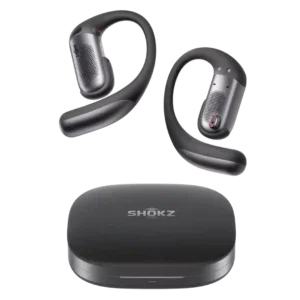
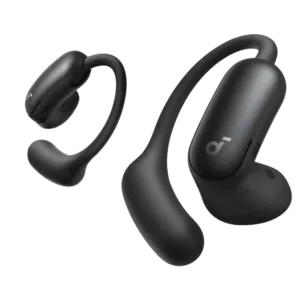
Shokz OpenFit Pro
Where It Has the Edge
No clear scored advantage over the other product.

Scorata scores summarize analyzed review evidence on a 1–5 scale; they are not laboratory measurements or a simple average of customer star ratings. Feature scores summarize the reviews covering that feature. The overall score averages feature scores within each review, then combines review averages. When both expert and customer evidence are available, those two groups receive equal weight. Products can have different review coverage, so small score gaps do not establish a winner.
Recommendations prioritize important features for the category, with a score of at least 3.5, a gap of at least 0.25 points and at least two supporting reviews per product. Features with widely varying scores or broad connectivity contexts are excluded from recommendations. These safeguards do not establish statistical significance.
Quick verdict
The available evidence supports the recommendation below, but does not establish an overall winner. Check the remaining features against your priorities.
There is not enough comparable review evidence to recommend Shokz OpenFit Pro over the other product.
Choose Anker Soundcore AeroFit 2 Pro for Charging and Soundstage width.
No clear scored advantage over the other product.
Scores are out of 5. Missing scores mean missing review evidence, not a missing feature.
Sound is unusually full, clear, and detailed for an open-ear design, with many calling it the best Shokz has produced. It still cannot match sealed flagship earbuds for depth in every environment.
Sound is generally clear, detailed, and better than expected for an open-ear design, especially after tuning. A few reviewers found it merely average or poor, and several noted that fit, mode, and EQ can change the presentation substantially.
Video playback showed no obvious lip-sync delay, and a low-latency mode helps with games and multimedia.
Latency is mixed rather than universally low. Normal video use can be fine, but several gaming tests still detected lag and found the low-latency mode less effective than dedicated 2.4GHz gaming earbuds.
Open-ear noise reduction works surprisingly well on steady office, café, gym, fan, and HVAC noise. It is far weaker than sealed ANC on planes, trains, traffic rumble, and sharp sounds, and some people feel uncomfortable pressure.
ANC is the most divisive feature. It can noticeably reduce steady hums when fit is right, but many expert and customer reviews found it weak, fit-dependent, hissy, or far behind dedicated sealed earbuds.
The overall balance was described as lively and fairly even, though the open fit still limits deep bass extension.
One reviewer specifically praised the overall tonal balance after tuning, describing the sound as well balanced. Other comments on bass, mids, and treble show that the default response can vary noticeably by fit and preset.
Background suppression often keeps chatter, appliances, and street noise away from the caller’s voice. Wind handling is inconsistent, with some excellent results and some complete breakdowns.
Background-noise handling often keeps speech understandable in traffic, crowds, and wind. Results are not uniformly clean, though, with some reviewers hearing digital artifacts or finding the dedicated wind-reduction feature ineffective.
Leakage is modest at lower volumes but becomes obvious when volume rises to fight outside noise. Private EQ helps only a little and may sacrifice bass or vocal clarity.
Leakage reports conflict sharply. Several users and reviewers found surprisingly little sound bleed, while one expert called leakage significant in open mode and warned that nearby gym users would hear the audio.
Dolby Atmos adds convincing width, height, and immersion, especially for movies and supported music. Head tracking works smoothly for many but feels distracting or gimmicky to others.
Spatial audio is a pleasant extra rather than a core reason to buy. Movie mode and added width can be enjoyable, but several reviewers found the effect synthetic, less detailed, or preferable with virtualization turned off for music.
The open fit creates a naturally wide, speaker-like soundstage with convincing stereo placement. Spatial processing can stretch it further without collapsing dynamics.
The AeroFit 2 Pro creates an impressively broad, open presentation, with reviewers repeatedly calling out spaciousness and scale. Spatial processing can widen it further, though the natural presentation is often preferred.
Most connections behave normally, but scattered reports mention static, glitches, stutters, false pauses, and repeated Apple Music disconnects.
Reliability is a recurring weakness in the more critical reviews. Reported issues include stuttering, delayed or one-sided mode changes, random power-on behavior, ghost button presses, unstable EQ changes, and an earbud failure.
Bass is the standout upgrade: punchier and fuller than most open-ear rivals, especially with Bass Boost. Deep sub-bass remains limited, and a few listeners noticed fuzziness or vibration on bass-heavy tracks.
Bass is unusually capable for open-ear buds and becomes fuller and punchier when the drivers sit closer to the ear. Some listeners still wanted more low-end weight, while others found the closed-position bass boomy or muffled.
Two customers received packaging with strong fragrance or visible residue, creating a poor first impression despite the earbuds themselves appearing intact.
The only packaging-specific customer comment was strongly positive, praising the presentation and condition on arrival. No packaging complaints were reported.
One customer found that clarity deteriorated as volume increased, with the sound thinning out rather than staying composed.
One detailed ranking found high-volume sound still strong, scoring performance above 60% volume at 8.5/10. That praise is limited to a single source, so broader high-volume consistency is less certain.
The matte case hides marks reasonably well, though it can still pick up scuffs and surface wear.
One reviewer found the earbud surface to be a dirt magnet that quickly collected fluff and particles and was difficult to clean. No other source provided a counterpoint.
The case usually feels premium, sturdy, and slim for an earhook design, with metal reinforcement and wireless charging. Its larger footprint, occasional scuffs, and isolated condition complaints keep it from being universally praised.
The case has useful touches such as wireless charging, LEDs, and room for the buds at any adjustment angle, but its size dominates the discussion. Many reviewers call it huge or bulky despite appreciating the functional design.
Wear detection and auto-pause are useful additions and generally respond accurately. One customer experienced false removal detection when changing head position.
Automatic form detection is clever when it works, but sensor behavior is a recurring source of frustration. Reports include unwanted EQ changes, slow mode switching, missing wear detection, and inconsistent automatic ANC activation.
Bass Boost is the most consistently praised preset, adding fuller low-end without burying vocals. Private mode can reduce leakage at quiet levels, but its benefit is limited and may dull clarity.
The preset library is useful, but the default Soundcore Signature tuning divides opinion. Several reviewers preferred Balanced or genre presets, while others found certain presets muddy, overly V-shaped, or otherwise poorly matched.
The hook-shaped case is wider than typical earbud cases but remains slim and reasonably pocketable. It is easier to carry than over-ear headphones, though not truly compact.
Portability is hurt by the oversized case. Even reviewers who call it pocketable often say it is noticeably bulky, while several customers considered the case large enough to be a deal breaker.
Overall enthusiasm is high, especially among runners and people who dislike in-ear tips. Price, long-wear comfort, microphone inconsistency, and limited true isolation are the recurring reasons some buyers returned them.
The overall response is positive but polarized: many reviewers love the novel versatility and would recommend the buds, while others returned them over fit, ANC, case size, battery, or reliability. Satisfaction is strongest when the user values open-ear comfort and frequent mode switching.
Layered tracks are easy to pick apart, making individual parts and textures more distinct than expected from open earbuds.
Separation is a consistent audio highlight: guitars, vocals, and individual instruments remain easy to pick apart even in the open form. Reviewers often describe the stereo image as clearer than expected for fitness-oriented buds.
Volume is strong enough for most workouts and busy streets, though very loud settings can still overpower the open design. A few buyers wanted more output or had to push volume uncomfortably high.
Most reviewers found plenty of output, and some called the buds outright loud, especially with booster settings or a closer fit. A smaller group found maximum volume too restrained, particularly when automatic ANC interfered.
Treble carries plenty of detail and crispness, but tuning opinions vary. Brighter recordings can sound harsh or uneven, while Treble Boost may become fatiguing.
Treble often comes across detailed and controlled, but tuning opinions vary more than for the mids. Depending on mode or preset, reviewers heard anything from clean highs to overly prominent, grainy, or rolled-off treble.
IP55 protection and secure silicone-covered hooks make the earbuds dependable for sweat, rain, running, and gym sessions, though they are not swim-ready.
The workout-oriented protection performs well in real use, including sweaty sessions and runs in rain. Reviewers consistently regarded the IP55-level protection as appropriate for active use, though not for swimming.
Vocals and spoken content generally come through clean and intelligible, with the Vocal preset helping weaker default mids. Some measurements and listening notes found the lower midrange slightly recessed.
Vocals and midrange detail are usually a strength, with several reviewers praising clear speech and instrument definition. The weaker takes describe mids as boxy, recessed, or too light to give music enough body.
The earhooks stay planted through running, HIIT, cycling, and head movement for most users. Ear shape matters, and a minority experienced looseness, falls, or poor fit even with stabilizers.
Fit security is highly ear-dependent. Many reviewers ran and worked out without the buds moving, but others reported wobbling, shifting, poor seating, or an inability to keep the ANC position stable.
Most people can wear the hooks with glasses, caps, helmets, or beanies without trouble. Some glasses wearers feel pressure where the hook and frame overlap.
Most reviewers found the thin, flexible hooks workable with glasses, sunglasses, hats, or beanies. A few experienced interference, so accessory compatibility still depends on ear shape and frame design.
The open design excels at keeping traffic, voices, announcements, and workout surroundings audible while music plays. Noise reduction softens distractions without fully disconnecting the listener.
Open-ear awareness is one of the clearest strengths, letting users hear traffic, conversations, and announcements without relying on electronic transparency. Reviewers repeatedly praised it for running, walking, commuting, and work.
Android and Pixel use is broadly smooth, with easy connection and full app compatibility reported.
Android users get the biggest audio advantage because LDAC can deliver noticeably more detail than standard codecs. Reviewers who tested it on Android considered that support a meaningful benefit.
The earbuds work well across iPhone, Android, Windows PCs, and other Bluetooth devices, making them practical for mixed-device routines.
One reviewer praised the ability to use two Bluetooth devices across ecosystems, making phone-and-PC switching practical. Broader platform-specific testing is limited.
Codec support is limited to basic SBC and AAC, which feels underpowered for a premium audio product.
Reviewers who discussed codec support liked the inclusion of LDAC and the broader high-resolution options. The feature set is especially attractive for Android users who can take advantage of the higher-bitrate mode.
One long-term owner praised Shokz’s support team for consistently taking good care of past issues.
Customer-service experiences are mixed: one buyer praised fast, active troubleshooting, while another complained that a refund still had not arrived. There is too little data for a consistent support picture.
The premium sound, comfort, battery, and noise reduction can justify the price for committed open-ear users. Many still see the cheaper OpenFit 2/2+ or sealed ANC earbuds as better value.
Value depends heavily on price and how much the dual-form feature matters to you. Launch discounts around $150 drew strong praise, while the $180 list price was often described as premium for ANC and battery performance that remain compromised.
Two-device pairing works well for most people and switching is usually smooth. One customer found that playback would not automatically hand off until the first device was stopped.
Multipoint is widely praised for moving smoothly between two devices, including phone-and-computer setups. One customer reported that simultaneous multi-device use did not work as expected, so real-world behavior is not perfectly consistent.
Pairing and everyday setup are generally fast and intuitive, with most controls easy to find in the app. A few users needed time to learn the button combinations.
The product can demand more setup than ordinary earbuds: finding the right hook position, tuning separate EQs, and waiting for mode changes all add friction. Some reviewers acclimated quickly, while others never found the process intuitive.
Pairing is usually quick and connections are generally stable across phones, computers, and watches. A minority of users reported short range, stutters, static, or repeated disconnects.
Bluetooth performance is usually quick and dependable, with easy pairing and strong connectivity earning repeated praise. A few reports of stuttering, drops, or shorter-than-expected range keep it from being completely trouble-free.
The Shokz app is clean, feature-rich, and easy to navigate, putting noise reduction, EQ, controls, battery, multipoint, and finding tools in one place. A pre-release build showed minor stability issues.
The Soundcore app is one of the strongest parts of the package, combining a clean interface with extensive sound, control, battery, and connection settings. Reviewers repeatedly describe it as easy to use and unusually feature-rich.
Call quality ranges from crystal clear in busy places to muffled or unreliable in wind and heavy noise. Indoor and moderate-noise calls are usually the safest bet.
Call quality is generally usable to very good, with several reviewers praising clear voices outdoors and in everyday noise. There are exceptions, including softer or more digital recordings and one customer who said callers could not hear them.
The 10-band EQ offers meaningful control and can noticeably improve the sound for different music and spoken content.
EQ flexibility is exceptional, with many presets plus separate custom tuning for open and ANC positions. Reviewers frequently relied on it to improve the stock sound, making customization an important part of getting the best results.
Physical buttons are more dependable than touch controls with sweat, gloves, or movement and are easy to find once learned. The small size and multi-click combinations can feel fiddly.
Physical buttons are generally preferred to touch controls because they are deliberate, responsive, and easy to customize. Downsides include extra pressure in ANC position and a few customer reports of missed or ghost presses.
A ten-minute top-up can provide about four hours, and wireless charging adds convenience. One customer warned that the case became very hot when left on a wireless pad.
Charging is a clear strength, with repeated praise for wireless case charging and fast top-ups that provide hours of playback after a short charge. Reviewers consistently see these conveniences as useful additions.
Battery life is excellent in open mode, commonly lasting a full day and up to 50 hours with the case. Noise reduction roughly halves endurance, and several customers found the six-hour range disappointing.
Battery life is acceptable but inconsistent in perception: roughly seven-hour open-ear use is often considered fine, while five-hour ANC use feels short for the price. Customer reports also include early drain and large left/right battery imbalances.
Materials and construction feel premium and robust, with aluminum accents and a secure titanium core. A small number of customers reported static, overheating, or a failed earbud.
Build impressions are mostly strong, with solid housings, quality materials, and a durable adjustment mechanism. The main exception is criticism of the thin loop material in one expert review, which felt too flexible to hold the buds firmly.
The weight is well distributed and often feels light in use, but the Pro is heavier than earlier OpenFit models. Some long-session users found that extra mass tiring.
Despite weighing more than many rivals, the buds often feel light and well distributed on the ear. Some reviewers still noticed the extra mass during long sessions, especially compared with lighter open-ear competitors.
Comfort is one of the strongest qualities, with many people forgetting the earbuds are on during long workdays and workouts. Fit pressure, cartilage contact, ANC pressure, and fatigue still affect a notable minority.
Most reviewers find the soft hooks and open fit comfortable for hours, with many able to wear them through workdays or workouts. Fit is highly personal, though, and a meaningful minority reported pressure, fatigue, or outright pain.
The metal-and-silicone design looks polished, premium, and sporty. It is more visible than discreet clip-style earbuds, and the larger form can feel bulky on smaller ears.
The earbuds generally look modern, polished, and more premium than typical sport models, with the color options earning praise. Their chunky shape and complicated mechanical design can look or feel awkward to some users.
The lack of aptX was specifically called disappointing at this price, especially for buyers seeking higher-quality wireless playback.
The adjustable open-ear/ANC concept is the product’s standout strength: most reviewers found it genuinely useful and surprisingly easy once learned. A minority found the twisting, mode detection, or recalibration fiddly and slow.
The in-app finder is handy for locating a misplaced bud nearby. Its Bluetooth-only range and very quiet alert limit usefulness outdoors.
Optional stability bands are a useful backup for smaller ears or anyone wanting an extra contact point during exercise.
One reviewer specifically praised the four-mic calling system as strong for an open design. Broader call-quality results are covered separately and are mostly positive with a few exceptions.
LDAC usually adds audible detail and is a notable advantage for compatible Android devices. One reviewer felt it was wasted on this airy design, and several notes point to a meaningful battery penalty when it is enabled.
Auracast is missing, which feels like a missed opportunity for earbuds built around shared spaces and environmental awareness.
Long hair or hats can brush against the earbud and create a noticeable scratching sound during movement.
Passive isolation is weak because the semi-in-ear design lacks a full silicone-tip seal. Reviewers repeatedly linked that open fit to outside sound leaking in and to the ANC having less to work with.
There are no swappable silicone tips, and that fixed semi-in-ear contact point creates fit problems for some ears. Reviewers directly connect the lack of tip sizing to weaker seals, comfort issues, and less effective ANC.
The adjustable mechanism inspires confidence: reviewers describe it as sturdy, tight, and resistant to loosening after repeated movement and heavy running use. Durability impressions are consistently positive where tested.
One reviewer liked that either earbud can be used independently rather than forcing a single designated side. That flexibility matches modern true-wireless expectations, though it was not widely discussed.
Alexa worked cleanly for one buyer, with strong clarity and reliable activation.
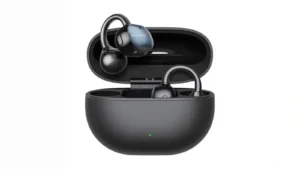
Choose the UU2 for unusually full open-ear sound, all-day comfort, strong battery life and excellent value. Skip it if you need sealed-bud isolation, consistently strong calls, or zero tolerance for...
Pros: Overall satisfaction, Sound quality
Cons: Spatial audio
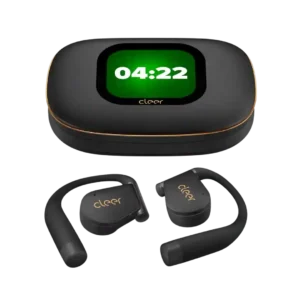
Best for all-day comfort, secure open-ear awareness, long battery life, and a genuinely useful touchscreen case. Skip it if deep bass, strong isolation, compact size, or consistently premium music quality...
Pros: Overall satisfaction, Carry case quality
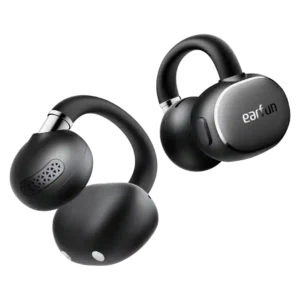
Best for lightweight all-day comfort, outstanding battery life, dependable physical controls, and premium features at a budget price. Skip it if you need deep bass, noise isolation, flawless high-volume sound,...
Pros: Overall satisfaction, Sound quality
Cons: Maximum volume clarity, Noise isolation (passive)
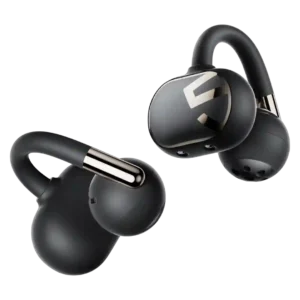
Best for featherlight all-day comfort, secure workout fit, strong open-ear sound, and unusually rich features for the price. Skip it if you need ANC, deep sub-bass, high volume in noisy...
Pros: Comfort during long use, Sound quality
Cons: Carry case quality, Touch control responsiveness