

Half Man, Season 1
Where It Has the Edge
No clear scored advantage over the other product.

Scorata scores summarize analyzed review evidence on a 1–5 scale; they are not laboratory measurements or a simple average of customer star ratings. Feature scores summarize the reviews covering that feature. The overall score averages feature scores within each review, then combines review averages. When both expert and customer evidence are available, those two groups receive equal weight. Products can have different review coverage, so small score gaps do not establish a winner.
Recommendations prioritize important features for the category, with a score of at least 3.5, a gap of at least 0.25 points and at least two supporting reviews per product. Features with widely varying scores or broad connectivity contexts are excluded from recommendations. These safeguards do not establish statistical significance.
Quick verdict
The available evidence supports the recommendation below, but does not establish an overall winner. Check the remaining features against your priorities.
There is not enough comparable review evidence to recommend Half Man, Season 1 over the other product.
Choose DAHMER – Monster: The Jeffrey Dahmer Story for supporting cast performance and production design.
No clear scored advantage over the other product.
Scores are out of 5. Missing scores mean missing review evidence, not a missing feature.
Distorted breathing and an animalistic growl amplify adult Ruben’s menace, but one critic finds the treatment exaggerated and distracting rather than complementary.
Sound is a standout tool, from the altered audio in “Silenced” to visceral effects that make the violence feel uncomfortably real. The design strengthens immersion and dread without relying only on visible gore.
Glasgow’s chipped paint, dowdy interiors, and cramped domestic spaces create a strong sense of place. The premiere also uses household details to externalize sexual tension and confusion.
The apartment recreation and prop detail receive strong praise for creating a grim, immersive setting. Reviewers notice the dirt, clutter, and precise physical details as major contributors to the unease.
The muted Glasgow setting supports the bleak mood, but later slow motion, distorted breathing, and drab gray imagery strike some critics as exaggerated, distracting, or monotonous.
The visual style receives mostly negative criticism in the scored coverage, with complaints about darkness, shallow images, muddy sepia tones, and a fuzzy exploitation-horror look.
The early lives and emotional damage often feel painfully recognizable, but the adult plot’s coincidences, caricatures, and extreme turns cause some critics to stop believing what they are seeing.
Production choices often create a disturbingly immersive sense of reality, especially through sets, sound, and grounded presentation. That realism is weakened for some critics by disputed or invented factual details.
Some episodes run beyond an hour, yet one enthusiastic reviewer remained absorbed throughout. For less receptive critics, the cumulative six-hour weight is still a serious barrier.
One reviewer questions why this familiar story needs ten episodes running close to fifty minutes each, making the individual episode length part of the broader overextension.
One critic calls the season a brilliant, discomfiting six-hour horror film, praising how its psychological dread and violence sustain that experience.
True-crime fans who value performances, tension, and systemic context often respond well, while critics of exploitative crime dramatization react strongly against it. The series is therefore a polarizing example of the genre.
One negative review singles out the oppressive score as part of a self-serious presentation that tells viewers how heavily to feel every moment.
The creeping score is credited with sustaining suspense, and the broader audio treatment is described as a standout. Music works mainly by deepening dread rather than drawing attention to itself.
The screenplay’s densest material is praised for layering social ills, psychology, dialogue, and silence into a coherent whole that overcomes occasional pacing flaws.
One critic directly attacks the scripts for hammering obvious themes with blunt force, making the screenplay feel heavy-handed rather than nuanced.
Niall’s layered self-loathing and moral compromise are widely admired, but large time jumps and repetitive adult behavior make some later changes feel abrupt or insufficiently developed.
Favorable takes praise the layered look at Dahmer’s upbringing and behavior, saying the series builds a fuller portrait without automatically excusing him. That depth is one reason some viewers stayed engaged with the long format.
Six episodes cover three decades and still pack serious force, but the near-six-hour runtime also contributes to the feeling of an endurance test.
Several critics think ten episodes are too much for this material and call the runtime unwarranted or exhausting. One favorable reviewer says it never wears out its welcome, but overlength remains a common complaint.
The mystery and performances kept several reviewers absorbed through all six hours, but the emotional weight makes it a punishing binge rather than an easy one.
Watchability splits sharply: some viewers binged quickly or said they could not stop, while others found the material so heavy and disturbing that continuing was difficult.
Adult Ruben’s shift to Gadd’s normal voice struck one critic as jarring beside the younger portrayal, weakening the sense that both versions are the same man.
Peters’ regional cadence impressed one critic for its precise Midwestern detail, while another found the accent inconsistent. The vocal work lands as convincing for some but not uniformly authentic.
The series depicts attraction, coercion, assault, and shame with unsettling ambiguity. Some critics praise the clarity around consent, while others fault the lack of follow-through and the bleak queer stereotypes.
One critic objects to the camera lingering on Tracy’s shirtless body, finding the framing uncomfortable rather than meaningful. That sexualized presentation is treated as a negative part of the experience.
The timeline shifts can feel seamless and purposeful, especially early on, but other critics find the shuffled chronology confusing and responsible for missing connective detail.
A restrained visual reveal in the pilot is singled out as masterful because it lets attentive viewers notice horror without forcing a close-up. The subtle edit makes the scene scarier without becoming gratuitous.
One reviewer found the narrative coherent even when watched out of order, but others say the shuffled chronology, late money mechanics, and wedding revelations muddle cause and effect.
One favorable review praises the clarity of the series’ gaze, while another says the frequent switching makes details easy to miss. The narrative can be purposeful without always being easy to follow.
One critic flags the unusually frequent use of the C-word as a likely irritation for American viewers, adding to an already demanding content profile.
One content-focused reviewer calls the foul language a major issue. For viewers sensitive to strong language, the level is a clear drawback rather than a neutral content note.
The ending is one of the biggest fault lines. Admirers call its final scenes emotionally shattering, while detractors find the detonation unconvincing, confusing, rushed, or lacking resolution.
The ending receives little enthusiasm in the scored coverage. Critics say the final episodes abandon earlier goals or end without a satisfying sense of conclusion.
Masculinity, shame, sexuality, trauma, and culpability give the series real ambition. Admirers find the treatment profound and layered; detractors see familiar ideas stated too bluntly and repeated too often.
The social and psychological ambitions are substantial, covering policing, race, homophobia, family, celebrity, and victim memory. Some reviewers call the result insightful or profound; others think the ideas are bluntly stated or insufficiently explored.
A carefully composed aftermath shot is singled out for showing how one encounter will shape the brothers’ relationship, turning the frame itself into narrative meaning.
Several sources praise the composed, tension-building camerawork and controlled filmmaking technique. One major dissent finds the dark imagery flat, waxen, and soporific.
The early ambiguity feels unpredictable and transgressive, yet many critics see familiar Cain-and-Abel archetypes, trauma patterns, and reversals underneath the surface.
Some reviewers find genuinely fresh value in the victim-centered episodes and unusual structural choices. Others see another familiar Dahmer retelling that adds too little to stories already told many times.
The show earns praise for refusing easy heroes and villains and for tying the tragedy to blame avoidance, shame, and failures to communicate. Its strongest moments make responsibility feel painfully shared.
Many sources praise the series for refusing to excuse Dahmer and for showing how police and institutional failures enabled him. Others think the psychological framing sometimes drifts too close to sympathy or softens responsibility.
Wedding-day bookends and flashbacks create dread, misdirection, and momentum. They also leave important relationships offscreen, create gaps, and sometimes promise revelations the finale cannot fully support.
The series earns praise for opening near Dahmer’s arrest, using non-linear chronology, and building “Silenced” around Tony Hughes. Critics still find parts of the timeline haphazard, so the structure is inventive but uneven.
The closeted queer experience is portrayed with unusual darkness and honesty, yet some critics argue Niall’s sex life leans into harmful stereotypes and rarely shows a healthy relationship with a man.
The series gets credit for foregrounding racism, homophobia, marginalized victims, and communities ignored by authorities. Critics counter that these perspectives can feel underdeveloped, overly stated, or secondary to Dahmer himself.
The direction is praised for quiet intensity, visceral confrontations, and seamless time shifts. Its controlled severity suits the material, though the wider visual approach can become oppressively glum.
Direction is consistently praised where it is discussed, from the pilot’s controlled tension to “Silenced” and its more empathetic handling of Tony Hughes. The strongest episodes are often credited to deliberate, restrained choices.
The story uses changing social pressures around masculinity and sexuality to frame the brothers’ damage, and some reviewers see its concern with resurgent traditionalism as especially timely.
The social framing around systemic racism and homophobia is treated as a meaningful reason the story can have public interest beyond the crimes themselves. It gives the series contemporary political relevance for some viewers.
The central brotherhood is powerful enough to inspire masterpiece claims, but the same story is also dismissed as repetitive, contrived, or half-baked once it moves beyond the teenage years.
Overall story reactions range from brilliant and compelling to haphazard and exploitative. Favorable viewers respond to the performances, systemic context, and later victim focus, while critics object to repetition and the heavy concentration on Dahmer.
The premiere’s mixture of bullying, intimacy, coercion, and wedding-day menace is widely seen as charged and bravura, establishing the relationship with immediate danger and ambiguity.
The pilot is one of the strongest points of consensus, repeatedly called tense, brilliantly executed, intense, or the best episode. Its controlled buildup and arrest-first structure hook viewers quickly.
Repetition is the dominant complaint. The cycle of reconciliation, threat, and violence grows predictable, while later time jumps require too much catch-up and exposition.
The season’s pacing is one of its most repeated weaknesses, especially across the first five episodes and the middle stretch. Repetition, timeline loops, and long periods on familiar Dahmer material can make the series feel like a slog.
Dark comedy appears in well-judged flashes and Bell supplies welcome release, but most reviewers agree the humor is minimal and cannot offset the show’s sustained gloom.
Humor is almost absent, but one awkward Peters delivery is noted as nearly funny. It functions as a brief tonal flicker rather than a sustained comedic strength.
The wedding framing and Ruben’s hair-trigger danger create sustained dread. Even skeptical critics admit the brothers’ destructive pull can be riveting and hard to look away from.
Tension is one of the most consistent strengths, especially in the pilot and scenes built around uncertainty rather than gore. Even mixed reviewers acknowledge that the series can be intensely unnerving and hard to look away from.
Few reviewers were unmoved: the series is described as shattering, devastating, and hard to shake. The disagreement is whether that force feels profound or eventually deadening.
The series is repeatedly described as haunting, harrowing, heartbreaking, or deeply unsettling. That force works powerfully for some viewers, but families and critics also describe it as retraumatizing or unnecessarily punishing.
Performance is the clearest strength. The adult and teenage leads are repeatedly called outstanding, career-best, magnetic, and emotionally exact, even by critics who dislike the series.
Acting is the clearest strength across the coverage, with the ensemble repeatedly described as excellent, convincing, or exceptional. Even strongly negative critics often separate the performances from their problems with the series.
The violence is often judged purposeful, artful, and central to the story’s argument. Just as often, critics call it overwhelming, gratuitous, ugly, or emotionally numbing.
Responses to the violence are sharply divided. Some praise the decision to imply rather than show the worst acts, while others find the imagery lurid, gratuitous, traumatic, or simply too hard to watch.
Gadd’s writing inspires both raves and harsh criticism. Its best scenes are layered, lyrical, and psychologically exact; its weakest are called transparent, clunky, repetitive, and overexplanatory.
Writing opinions are highly polarized: some call it brilliant or finely crafted, especially in stronger episodes, while others see blunt exposition, repetition, weak finesse, and an unfocused structure.
The early episodes often move with excellent tension, but several critics note dips, telegraphed beats, and scenes in the later stretch that fail to land with their intended force.
The deliberate slow-burn approach works very well for some viewers, especially in the pilot, but others call individual stretches glacial or sluggish. Familiarity with the case seems to shape whether the quiet pacing feels terrifying or dull.
Several side characters feel appealing and human, but the recurring criticism is that women are underwritten, thinly motivated, or used to carry major plot turns without comparable depth.
The supporting cast receives near-unanimous praise, particularly Niecy Nash, Richard Jenkins, Rodney Burford, Karen Malina White, and other performers around the victims and families. These roles often provide the series’ emotional anchor.
The four central actors carry the series with fierce commitment. Bell is often called the anchor, Gadd transforms into a threatening adult Ruben, and the younger pair repeatedly emerge as breakout talents.
The lead work is consistently strong, with Evan Peters repeatedly described as masterful, technically precise, haunting, or extremely convincing. His performance is the most dependable point of praise in the entire set.
Several reviewers believe the series can provoke serious discussion about male violence, repression, responsibility, and change, with one arguing it should be shown wherever men gather.
Some viewers call the series eye-opening about racism, homophobia, policing, and institutional failure. Others warn that dramatization and factual liberties make it a poor source for learning the case accurately.
Even enthusiastic reviewers repeatedly say they are glad they watched but never want to experience it again. The brutality and emotional exhaustion sharply limit repeat appeal.
The grim content and ethical discomfort leave at least one reviewer with no desire to watch the series again. Its intensity may make it memorable without making it replayable.
Some critics found it exceptional, riveting television; others called the six-hour experience a slog, a misfire, or simply pointless. Enjoyment depends heavily on tolerance for relentless despair.
Audience-style reviewers often find the series gripping and highly recommend it, while several critics call it boring, queasy, or almost unwatchable. Its power to hold attention does not translate into universal enjoyment.
This is sharply divisive viewing: some call it must-see television, while others expect the trigger-heavy brutality and despair to drive viewers away almost immediately.
The series is considered compelling for viewers who already enjoy crime dramas, though the broader coverage shows that its grim subject and ethical baggage sharply limit universal appeal.
The mature subject matter is explicitly flagged as unsuitable for family viewing. Graphic violence, nudity, sexual violence, language, and substance use make this firmly adult-oriented material.
The series received maximum or near-maximum scores from enthusiastic critics, but that acclaim sits beside several severe pans, making its critical profile notably polarized.
Both pairings generate charged chemistry. Bell and Gadd mirror and provoke each other, while Campbell and Robertson bring the younger bond a volatile mix of fear, attraction, tenderness, and danger.
Casting Evan Peters works for many viewers because of his performance, but one critic thinks using a familiar Ryan Murphy regular in another dark role dulls the impact.
The later focus on Tony Hughes, Glenda Cleveland, victims, and families earns strong praise, especially around “Silenced.” A frequent criticism is that the first half still spends too much time on Dahmer and leaves many victims underdeveloped.
Ruben’s adult characterization is the weak point for some critics, who find him flatter, more symbolic, and less human than the charismatic teenager introduced earlier.
The multi-year leaps can make each episode feel like it introduces new versions of the characters. Critics who struggled with the back half found the emotional and narrative transitions insufficiently connected.
The best exchanges are gut-punching, theatrical confrontations between the brothers. The same heightened style becomes a liability when monologues sound overwritten or conversations turn into blunt exposition.
“Silenced” is widely praised for centering Tony Hughes and using silence to bring viewers closer to his experience. One critic, however, questions whether inventing a victim’s viewpoint crosses an ethical line.
At its best, Half Man is brave, intelligent, harrowing drama. At its worst, critics call it bombastic, one-note, and overwrought, with trauma replacing dramatic discovery.
This is the largest fault line in the coverage. Some praise restraint, victim focus, and attempts at respect, while many others criticize the production as exploitative, lacking family consent, or capable of retraumatizing people tied to the victims.
Accuracy is a recurring weakness: multiple sources cite invented or altered details and substantial dramatic liberties. One fact-checking review still calls the series largely true to life overall, making the consensus mixed but skeptical.
The material is explicitly described as something not to watch with the family. Violence, nudity, sexual violence, substance use, and disturbing true-crime content make it a poor fit for family viewing.
The show’s attempt to criticize the media circus around Dahmer frustrates one reviewer, who finds the meta-commentary hypocritical given the series’ own role in renewing that attention.
The wedding structure delivers misdirection and devastating turns for admirers, while skeptics see the twists as generic extensions of familiar trauma tropes.
The Tony-and-Dahmer relationship creates emotional investment, but one detailed critique objects to the invented suggestion that the romance was rehabilitating Dahmer, making the arc ethically and dramatically uneasy.
The final episode contains a scene several critics regard as among the year’s most emotionally shattering television, even though the broader ending divides opinion.
The final ending is criticized as non-conclusive, leaving the series without a satisfying sense of resolution after its long exploration.
One reviewer praises the methodical, subdued tone as unusually consistent for this creative team. Another thinks the series takes itself so seriously that it loses self-awareness, leaving the tonal verdict mixed.
The victim-centered framing and LGBTQ labeling draw criticism for not matching how some viewers experienced the series. Several sources argue the presentation still centers Dahmer more than the stated framing suggests.
The compact Glasgow world has a strong sense of place, and its small social orbit can effectively mirror how trapped the protagonists remain in their formative damage.

Choose The Pitt Season 2 for a gripping, realistic medical drama with superb acting and emotional depth. Skip it if graphic procedures, unresolved arcs, or slower character-driven pacing bother you.
Pros: episode structure, main cast performance
Cons: age appropriateness, plot clarity

Best for powerhouse performances, thorny character work, and a tense revenge mystery that grows richer as it goes. Skip it if abuse, trafficking, graphic violence, or deliberately messy moral questions...
Pros: episode structure, supporting cast performance
Cons: cinematography, sexual content level

Best for sharp jokes, standout performances, and a warm, emotionally satisfying goodbye. Skip it if you most valued the pricklier Deborah-Ava conflict and biting Hollywood satire; the final season is...
Pros: plot originality, episode structure
Cons: season length, realism
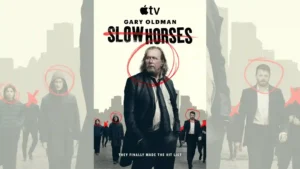
Best for fast, darkly funny spy thrills, standout performances, and a tightly wound six-episode run. Skip it if the familiar formula, dense callbacks, or a major cliffhanger ending are likely...
Pros: season finale quality, character development
Cons: accent authenticity, product placement