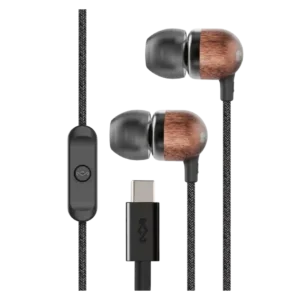

House of Marley Smile Jamaica
Where It Has the Edge
No clear scored advantage over the other product.

Scorata scores summarize analyzed review evidence on a 1–5 scale; they are not laboratory measurements or a simple average of customer star ratings. Feature scores summarize the reviews covering that feature. The overall score averages feature scores within each review, then combines review averages. When both expert and customer evidence are available, those two groups receive equal weight. Products can have different review coverage, so small score gaps do not establish a winner.
Recommendations prioritize important features for the category, with a score of at least 3.5, a gap of at least 0.25 points and at least two supporting reviews per product. Features with widely varying scores or broad connectivity contexts are excluded from recommendations. These safeguards do not establish statistical significance.
Quick verdict
The available evidence supports the recommendation below, but does not establish an overall winner. Check the remaining features against your priorities.
There is not enough comparable review evidence to recommend House of Marley Smile Jamaica over the other product.
Choose Activo Scoop for Soundstage width and Instrument separation.
No clear scored advantage over the other product.
Scores are out of 5. Missing scores mean missing review evidence, not a missing feature.
Most listeners find the sound clear, lively, and unusually enjoyable for the price across many genres. A smaller group reports thin, noisy, defective, or less-refined playback, so consistency is not perfect.
The Scoop sounds clean, detailed, and unusually refined for its price, with convincing hi-fi authority rather than a cheap or harsh presentation.
The tuning is generally clean and consumer-friendly rather than studio-neutral. Depending on the version and listener, elevated bass can make the balance feel less accurate.
The core tuning is disciplined, balanced, and natural, favoring smoothness and accuracy over exaggerated warmth.
The earbuds can create a pleasing sense of space with percussion and simpler arrangements. Larger or more symphonic recordings may feel somewhat constrained.
The presentation feels notably spacious for a $99 IEM, with a soundstage repeatedly described as genuinely impressive.
Bass is the most divisive part of the tuning: some hear deep, punchy lows, while others find it bloated, blended, or too weak. The older 3.5mm versions are more often described as bass-heavy than the newer USB-C model.
Bass is fast, controlled, and capable of real weight, but the tuning is not universally bass-forward. Some listeners may want more warmth and low-end emphasis.
The in-ear seal does a good job reducing office chatter, gym noise, and higher-frequency distractions. Deep rumbles still pass through, but isolation is strong for an inexpensive wired earbud.
A proper seal blocks outside noise well, especially with the foam tips, though those tips can be fiddly to fit.
The USB-C package reviewed here includes no carry case, leaving the earbuds to travel loose in a pocket or small bag.
The sturdy, compact case has enough room for the buds, extra connectors, and tips while adding useful travel protection.
Fit stability depends heavily on ear shape and tip choice. Some users report a secure gym-ready seal, while others say the earbuds repeatedly fall out.
The cable’s over-ear routing keeps the buds secure during jogging and exercise.
The small wired design is easy to carry in a pocket or bag and works well for travel. The cable also prevents either earbud from being easily lost.
The included case is compact, but the thick cable, large connectors, and chunky shells make the full kit less pocket-friendly than smaller IEMs.
Most buyers and experts consider these attractive, comfortable, good-sounding earbuds that deliver excellent value. Satisfaction becomes sharply negative when fit, cable noise, connector reliability, or early failure problems appear.
The Scoop earns enthusiastic overall approval as a competitive, quality-focused entry into affordable audiophile IEMs.
Individual instruments remain reasonably distinct for budget earbuds, and guitar lines can stay clean instead of blending together. Fine separation and intricate detail still trail more expensive models.
Busy arrangements remain organized, giving guitars, percussion, bass, and smaller details their own space.
Vocals and instruments are usually clean and easy to follow, especially for inexpensive earbuds. Heavy bass can push lower vocals backward or reduce definition in some tracks.
Vocals and instruments stay balanced and articulate, preserving fine vocal texture without crowding the mix.
USB-C versions are convenient, adapter-free, and immediately usable with many modern phones and devices. A few buyers report connector failure or audio dropping back to the phone, raising consistency concerns.
The screw-on USB-C connector works alongside 3.5mm and balanced 4.4mm options, making modern phones, tablets, and computers easy to use.
The braided cable is widely praised for resisting tangles, looking good, and sometimes surviving rough use. Complaints center on cable-borne noise, thin or fragile wires, tangling on some units, and failures near the connector.
The removable braided cable uses premium materials and impressed most reviewers, but its thickness and bulky connectors are recurring ergonomic drawbacks.
Highs are often crisp and free from harshness, with good clarity for the price. Some listeners notice mild sibilance, limited sparkle, or a thin, tinny edge.
Highs are crisp and expressive, though the brighter tuning can push percussion forward or feel in-your-face on some tracks.
Several tests found the earbuds remain controlled at high volume, with little distortion and no obvious harshness or tinniness. That is an impressive strength for this price class.
Clarity and control hold up even at high or near-maximum volume.
The USB-C version connects easily to smartphones and many modern devices. Its broad plug-and-play compatibility is a practical advantage.
Three connector options make the Scoop unusually flexible across phones, computers, studio decks, portable players, and higher-end hi-fi equipment.
The wired connection is genuinely plug-and-play, with no pairing, app setup, or charging routine. It is a straightforward backup for users tired of wireless maintenance.
Changing connectors is manageable, but newcomers may miss a proper manual or quick-start guide.
Experts often praise the solid wood-and-aluminum construction, reinforced plugs, and premium feel. Customer durability is much more mixed, with reports of separated wires, dead channels, defective units, and early connector failure.
The Scoop feels sturdy and well finished, with high-quality shells and a robust detachable cable that belie its budget price.
Tip selection varies by package, ranging from one spare pair to three sizes. Several reviewers say the limited sets may not suit unusually large or small ears without aftermarket tips.
Small, medium, and large silicone and memory-foam tips provide plenty of choice for seal and comfort.
Many users get a snug, secure seal, including people with small ears, and some wear them confidently at the gym. Others need deeper insertion or report that the earbuds fall out easily.
Silicone tips are easy to fit and comfortable, while foam tips improve isolation but can be fiddly.
Most reviewers find the small, rounded, lightweight earbuds comfortable, including during hours of listening. Users who dislike deep in-ear tips may experience pressure or pain after extended wear.
The pebble-shaped shells remain comfortable over long sessions once fitted, but their large size may trouble smaller ears.
The compact, lightweight housings sit comfortably without adding noticeable weight. Their low mass is especially helpful for longer listening sessions.
The shells feel light despite their chunky footprint, helping reduce fatigue during longer listening.
Wood, aluminum, braided fabric, and colorful finishes give these earbuds a distinctive look that feels more premium than the price suggests. Appearance is one of the most consistently praised qualities.
The polished white pebble styling looks distinctive and premium to most reviewers, though the chunky over-ear appearance is less elegant than slimmer rivals.
Sound, comfort, style, and materials frequently exceed expectations at the low asking price. The value drops sharply when a unit suffers early cable or connector failure.
At around $99 or £99, the five-driver sound, premium cabling, broad connectivity, tips, and case form a notably strong value package.
One older remote is reported to work with both iOS and Android, but the USB-C instructions restrict some commands to iPhone. Android users should expect basic audio support but potentially limited controls.
The modular cable lets owners change connectors, replace a failed cable, or use a preferred aftermarket option.
One customer reported the earbuds sent shocks into their ears on first use, making that unit unusable. This is an isolated but serious safety complaint.
The box is unusually generous, including multiple silicone and foam tips, three connector types, and a protective case.
The low-impedance design plays loudly and confidently from portable sources, with clear harmonies and strong output.
The basic play, pause, track, and call functions are usable, but the missing volume buttons are a repeated frustration. Some versions also limit commands by phone platform.
External EQ can add bass punch, midrange energy, brightness, and detail. Pushing it too far also increases boominess, sibilance, and upper-mid harshness.
Call quality is usually clear and easy to understand, and several buyers describe the microphone as excellent for the price. A few units produce feedback or perform poorly for calls.
Because the Scoop is wired, there is no battery or charging routine, an explicitly welcomed benefit for users tired of charging earbuds.
USB-C listening delivers strong hi-fi performance for listeners focused on lossless playback.
Leakage is generally well controlled for normal listening and busy environments. In very quiet places, sound may still escape at levels some people find noticeable.
Certified wood, recycled PET, recyclable aluminum, and low-plastic design make these stand out among cheap earbuds. Reviewers consistently value the eco-conscious materials and brand mission.
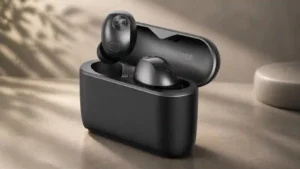
Choose these for excellent, balanced sound, a comfortable redesign, deep EQ tools and uniquely replaceable batteries. Skip them if you need class-leading ANC, consistently great calls or the smoothest treble...
Pros: User-replaceable batteries, Overall satisfaction
Cons: Auracast support, Sensors
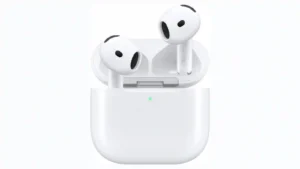
Choose the AirPods 5 for strong open-ear ANC, clearer sound, easy Apple-device switching, and excellent value. Skip them if you need all-day battery, a very secure workout fit, or full...
Pros: Overall satisfaction, Sound quality
Cons: Battery, Eartips fit
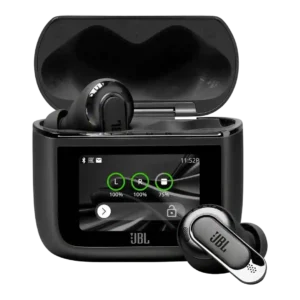
Choose the JBL Tour Pro 3 if you want feature-packed earbuds with strong sound, ANC, LDAC and a genuinely useful smart case. Skip them if you have smaller ears, want...
Pros: Sound quality, Carry case quality
Cons: Portability/foldability, Button control usability
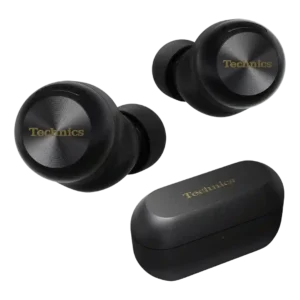
Choose the Technics EAH-AZ100 if sound quality, bass, ANC, battery life, and multipoint matter most. Skip them if you need flawless calls, Bose-level ANC, the most natural transparency, or a...
Pros: Sound quality, Active noise cancellation