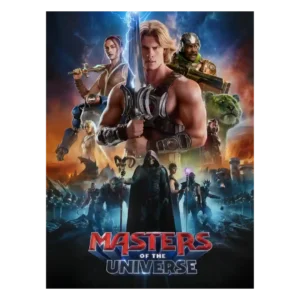

Masters of the Universe
Where It Has the Edge
- ending satisfaction is 4.4 vs 2.2. The climax and multiple post-credit teases generally leave enthusiastic viewers wanting a sequel, though the franchise setup will...

Quick verdict
Choose Masters of the Universe for ending satisfaction.
Choose Project Hail Mary for critic appeal and screenplay quality.
Critical enthusiasm is sharply divided, with some embracing the campy throwback and others rejecting it as creatively unsuccessful nostalgia packaging.
The broader critical response cited in the reviews is described as about as positive as a major studio release gets.
The script contains a promising empathy-centered idea, but many critics felt overused jokes, contradictory themes, and underdeveloped story logic kept it from cohering.
The script is mostly praised for making dense science approachable and organizing the nonlinear mystery cleanly, though negative reviews call parts shallow, contrived or over-explanatory.
The simple good-versus-evil framework works as uncomplicated adventure for some viewers, but others found the plot sloppy, derivative, or emotionally empty.
Most reviewers see a smart, heartfelt survival-and-friendship story with strong problem-solving momentum. Negative outliers criticize formula, shallow characterization and convenient plotting.
The basic quest is easy enough for fans, but compressed lore, unexplained gaps, and dropped threads can make the story confusing for newcomers.
Dense science is generally presented clearly, with multiple reviewers praising how digestible the technical problem solving remains. A few say some concepts are difficult, overly explained or too convenient.
The movie has sincere ideas about empathy and failure, yet some emotional beats land flat because jokes or familiar clichés interrupt them.
Many reviewers report tearing up or crying, especially around Grace and Rocky’s bond and the closing stretch. Even some mixed reviews admit the film lands a few powerful emotional moments.
The digital work is uneven. Skeletor and many fantasy elements impress, but several reviewers noticed rough compositing, weightless environments, and poorly integrated creatures.
CGI is usually praised for disappearing into the practical sets and Rocky puppetry, adding polish without making the world feel synthetic.
The editing keeps many action scenes moving, but transitions and later battle sequences can feel repetitive, spotty, or visually muddled.
Timeline shifts and aspect-ratio transitions are often praised for clarity and momentum; one negative review finds the flashback cutting disorienting and over-explanatory.
The climax and multiple post-credit teases generally leave enthusiastic viewers wanting a sequel, though the franchise setup will matter less to skeptical viewers.
The ending is the clearest recurring weakness: multiple reviewers say the final act keeps finding new conclusions, feels rushed or structurally overextended after an earlier emotional peak.
The adventure can work for older children and teens, but reviewers repeatedly warn that some deaths, grotesque imagery, and violence may be too intense for younger kids.
Several reviewers see this as unusually accessible sci-fi for families and older kids, with most-ages appeal and mild content by PG-13 standards.
The movie openly borrows from familiar fantasy, superhero, and nostalgia-blockbuster formulas, leaving several critics feeling it offers little that is genuinely new.
Reviewers appreciate a standalone non-franchise sci-fi blockbuster and often call it fresh, while detractors hear echoes of better space classics and find parts derivative.
The film attempts a thoughtful contrast between brute strength and empathy, but critics disagree on whether it develops that idea or merely gestures toward it.
Friendship, sacrifice, optimism, science and cooperation give the film more thematic weight than a simple adventure for many reviewers. Critics of the adaptation argue those ideas are softened or over-sentimentalized.
The largely bloodless action is still heavier and more frequent than several reviewers expected from a family-oriented toy franchise.
A family-focused review describes the movie as comparatively tame, with a couple of corpses but less harsh content than the earlier Weir adaptation.
The action stays busy, but a predictable path and obvious outcomes limit tension, especially through the middle of the movie.
Problem-solving and late space hazards generate strong tension for most reviewers, but a few feel the optimistic tone telegraphs success and drains danger.
The opening and Earth material often take too long to reach the main adventure, and the lengthy final stretch can feel repetitive even when the action remains lively.
Pacing is mixed: some say the long runtime flies by or benefits from deliberate science detail, while others flag a slow opening, second-act drag, flashback friction and late-act sputter.
Longtime He-Man fans and nostalgic adults are the clearest audience, though several newcomers also found it accessible and fun. Some critics doubt the property has enough relevance for a broad modern audience.
The film is repeatedly described as a crowd-pleaser, with reports of applause and strong theatergoing enthusiasm. A dissenting review sees that accessibility as calculated and artificial.
The movie constantly balances sincere heroism with parody and self-aware camp. Some found that blend charming, while many thought the jokes repeatedly undercut stakes and emotion.
Tone is the most divisive creative choice: many like the balance of humor, tension and sincerity, while detractors say the comedy undercuts danger and the optimism can feel overly insistent.
The film’s emphasis on empathy, kindness, and a healthier model of masculinity is often praised. Critics argue that the message becomes muddled when every conflict is ultimately solved through violence.
The film’s optimism, pro-science cooperation, friendship and sacrifice resonate strongly with most reviewers. A dissenting critic finds that hope too frictionless and another objects to how the film handles Stratt’s coercion.
The hero’s journey is familiar and frequently compared with other major fantasy franchises. Its self-aware treatment of He-Man gives the formula some personality but not much novelty.
The core concept is often praised as fresh, but predictability and familiar genre DNA keep this from being a universal win.
The dialogue earns laughs when it embraces the absurdity, but some reviewers wanted sharper lines and fewer repetitive innuendos.
Dialogue reactions are mixed: some praise crisp delivery and clear exchanges, while a harsh dissent calls the jokes and feel-good dialogue dated and shallow.
The knowingly campy humor is the movie’s biggest dividing line. Supporters found it much funnier than expected, while detractors felt relentless quips and self-mockery weakened the adventure.
Comedy is a genuine strength for many, particularly Gosling’s physical timing and Grace-Rocky misunderstandings. But the jokes are also polarizing, with some reviewers calling them repetitive, cheesy or tonally disruptive.
Fans and viewers who enjoy campy fantasy may revisit it for the characters, music, and Easter eggs, while others see limited novelty after the first viewing.
Several reviewers expect repeat viewings to hold up well, whether for small production details, emotional impact or the sheer pleasure of revisiting Grace and Rocky.
Most creature and costume work supports the colorful fantasy, but one reviewer noticed an unconvincing wig that broke the illusion.
The long-hair-and-beard look sells Grace’s extended sleep, though one reviewer jokingly calls out his suspiciously maintained highlights.
The 140-minute-plus length is the most consistent complaint. Even positive reviewers felt the origin story, repeated jokes, and stacked battles needed substantial trimming.
At roughly two and a half hours, length is the most repeated complaint; many reviewers feel the second half or ending runs long. A few counter that the problem-solving keeps the runtime lively.
Many reviewers found it colorful, energetic, and unexpectedly fun, especially as a popcorn movie. Others found the same approach exhausting, shallow, or too dependent on nostalgia.
Most reviewers find the film extremely watchable and crowd-friendly despite its length, mixing science puzzles, humor and spectacle into an easy theatrical ride.
Bold colors, retro fantasy design, and comic-book energy give the film a distinctive surface. Heavy digital environments sometimes make that world feel glossy and weightless.
The film’s look is one of its strongest consensus wins: colorful space vistas, tactile sets, aspect-ratio shifts and adventurous camera choices make it feel built for a large screen.
Families with older children can have a lively time, but the PG-13 violence, scary deaths, and adult jokes make it a poor fit for the youngest viewers.
The movie is repeatedly described as clean, wholesome and family-friendly, with restrained profanity and only limited sexual or frightening material.
The bright pulp-fantasy sets and analog sci-fi details bring Eternia to life and closely resemble an elaborate live-action toy world.
The Hail Mary ship and practical environments draw exceptional praise for functional hard-sci-fi detail, tactile construction and large-screen immersion.
The ensemble is widely considered better than expected for a toy-based blockbuster, with several performers bringing charm, comic timing, and emotional weight.
The ensemble is widely praised, with Gosling carrying long solo stretches and supporting players giving the Earth scenes personality. One strongly negative take finds the lead’s familiar comic mannerisms tiring.
Real sets, physical costumes, and practical creature work give many scenes a welcome sense of texture and help ground the more fantastical imagery.
Rocky’s puppetry and the physical sets are among the highest-consensus technical strengths, repeatedly praised for giving the alien and spacecraft convincing weight and presence.
The synths, rock songs, Queen references, and guitar-heavy soundtrack give the movie a lively retro personality that complements its colorful camp.
The song selections are praised for warmth, nostalgia and tonal contrast, complementing the orchestral score without overwhelming scenes.
The fights are usually energetic, clearly staged, and colorful, with several standout set pieces. A minority found later battles repetitive or too dependent on weightless digital spectacle.
Action is used selectively but lands hard when it arrives, especially the late space set pieces; reviewers call them grounded, tense and visually impressive rather than nonstop spectacle.
The lead pairing has appealing chemistry, and the Teela-Duncan family dynamic adds warmth and friction to the adventure.
Grace and Rocky are the movie’s emotional engine; most reviewers call their odd-couple friendship warm, funny and genuinely moving. A few find later interactions repetitive or overly sweet.
The glam-rock score is one of the most consistently praised elements, giving the action scale, momentum, and an unmistakable 1980s identity.
Daniel Pemberton’s score is a major strength, frequently described as sweeping, unusual, emotional and integral to the film. One dissent finds the constant grandeur overbearing and tension-flattening.
Duncan’s redemption and Adam’s gentler approach to heroism give the story some satisfying growth. Other supporting characters and relationships receive less development than reviewers wanted.
Grace’s growth and Rocky’s characterization work for many reviewers, but this is notably mixed: critics of the adaptation say Grace’s arc is thinner, underexplored, or too unchanged from start to finish.
The strongest consensus is that the movie understands and recreates the cartoon’s costumes, characters, silliness, and toy-box spirit with obvious affection.
Book readers largely see this as a strong, faithful adaptation that preserves the novel’s heart and major beats. The strongest dissent argues that departures from the book flatten its moral and philosophical complexity.
Space imagery, IMAX scale, framing and texture earn near-universal praise, with Greig Fraser’s work repeatedly called stunning, sublime or top-tier.
Grace’s nerdy T-shirt choices are praised as character-driven wardrobe that feels natural for his personality rather than planted references.
The cross-species friendship is praised for taking language, biology and cultural assumptions seriously enough to make cooperation feel meaningful.
Lord and Miller are mostly praised for turning dense science into lively blockbuster filmmaking, though critics who resist the goofy tone find the direction over-insistent or too silly.
The film usually earns its high stakes through character and problem-solving, but several critics think the bright tone softens danger and emotional weight.
Science-fiction fans are the clearest target: reviewers praise the hard-science problem solving, big-screen wonder and optimistic space-adventure tone, with one major dissent calling it flat and derivative.
Language is considered restrained for a PG-13 blockbuster: reviewers note little or no conventional profanity, though substitute swears and uses of God’s name remain.
Gosling is one of the strongest consensus positives, repeatedly praised for carrying solo stretches with charm, physical comedy and vulnerability. A small minority find the familiar goofy persona strained or tiring.
The grounded science, practical engineering and tangible sets make much of the film feel believable. Dissenters question character reactions and a handful of convenient scientific or mechanical solutions.
One reviewer notes that Grace’s lack of romantic or family attachments reduces the sense of personal sacrifice compared with more emotionally anchored space dramas.
The movie includes some existentially frightening moments, but one family-oriented review still considers them manageable within an overwhelmingly hopeful adventure.
Sexual material is limited to light verbal references and a few suggestive jokes; family-focused reviewers describe it as comparatively tame.
Atmos and sound design receive unanimous praise in the scored sources, from precise spatial cues to Rocky’s sonic language and high-impact action.
Visual effects work is consistently praised, especially where digital enhancement blends with practical sets and puppetry rather than replacing them.
Sandra Hüller is the standout supporting performer, with Lionel Boyce also drawing consistent praise for dry humor and grounded rapport. The Earth scenes benefit from their contrast with Gosling.
The 4K review finds the collector’s SteelBook worth seeking out for buyers who want a more complete edition.
The Tau Ceti material and alien design give the adventure convincing scale, with space sequences praised as stunning and the science-world detail easy to buy into.