
What It Feels Like For A Girl, Season 1
Where It Has the Edge
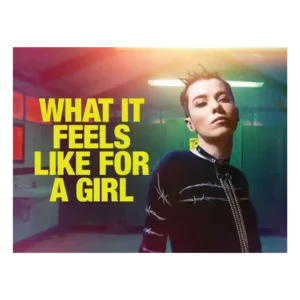
- visual style is 4.5 vs 2.0. The visual style is bold and memorable, from shifting color palettes to dreamlike flourishes. Even short viewer reactions...

Scorata scores summarize analyzed review evidence on a 1–5 scale; they are not laboratory measurements or a simple average of customer star ratings. Feature scores summarize the reviews covering that feature. The overall score averages feature scores within each review, then combines review averages. When both expert and customer evidence are available, those two groups receive equal weight. Products can have different review coverage, so small score gaps do not establish a winner.
Recommendations prioritize important features for the category, with a score of at least 3.5, a gap of at least 0.25 points and at least two supporting reviews per product. Features with widely varying scores or broad connectivity contexts are excluded from recommendations. These safeguards do not establish statistical significance.
Quick verdict
The review evidence points to a tradeoff: visual style versus directing quality and character development. Choose according to which strengths matter more to you; the overall score alone does not settle that choice.
Choose What It Feels Like For A Girl, Season 1 for visual style.
Choose DAHMER – Monster: The Jeffrey Dahmer Story for directing quality and character development.
Scores are out of 5. Missing scores mean missing review evidence, not a missing feature.
The show is praised for pushing past headlines and statistics to humanize trans experience. It turns media-scrutinized identity debates back into a story about real people.
The show’s attempt to criticize the media circus around Dahmer frustrates one reviewer, who finds the meta-commentary hypocritical given the series’ own role in renewing that attention.
The adaptation feels closely tied to lived experience, with specific performances that one critic described as documentary-adjacent. That gives the show a truth-based texture rather than a generic issue-drama feel.
Accuracy is a recurring weakness: multiple sources cite invented or altered details and substantial dramatic liberties. One fact-checking review still calls the series largely true to life overall, making the consensus mixed but skeptical.
For queer-TV fans, the response can be extremely strong. One viewer called it one of the best queer shows they had seen in a while.
True-crime fans who value performances, tension, and systemic context often respond well, while critics of exploitative crime dramatization react strongly against it. The series is therefore a polarizing example of the genre.
The editing style can be brash, with fast cuts grouped alongside music and narration that may make some viewers cringe. It adds energy but is not the show’s smoothest element.
A restrained visual reveal in the pilot is singled out as masterful because it lets attentive viewers notice horror without forcing a close-up. The subtle edit makes the scene scarier without becoming gratuitous.
Screenplay praise is narrower but positive, with the forum response calling the script amazing. It reinforces the broader sense that the show’s voice is one of its strengths.
One critic directly attacks the scripts for hammering obvious themes with blunt force, making the screenplay feel heavy-handed rather than nuanced.
Bingeability is strong for viewers who connect with the tone. The show is called addictive, snappy, and tempting to continue straight through on iPlayer.
Watchability splits sharply: some viewers binged quickly or said they could not stop, while others found the material so heavy and disturbing that continuing was difficult.
Humor is a major part of the show’s appeal, even when the material is grim. Camp moments, bawdy jokes, and cutting one-liners keep the series from becoming purely bleak.
Humor is almost absent, but one awkward Peters delivery is noted as nearly funny. It functions as a brief tonal flicker rather than a sustained comedic strength.
The writing is praised for warmth, empathy, humor, and thematic reach. It balances class, sex work, trauma, and trans identity without sanding off the characters’ rough edges.
Writing opinions are highly polarized: some call it brilliant or finely crafted, especially in stronger episodes, while others see blunt exposition, repetition, weak finesse, and an unfocused structure.
The ending is one of the more mixed pieces of the season. Some saw the redemptive final note as conventional or trite after a much harsher, less sentimental story.
The ending receives little enthusiasm in the scored coverage. Critics say the final episodes abandon earlier goals or end without a satisfying sense of conclusion.
The show’s themes run deeper than identity alone, tying trans experience to class, morality, trauma, forgiveness, and survival. It is strongest when it refuses easy answers.
The social and psychological ambitions are substantial, covering policing, race, homophobia, family, celebrity, and victim memory. Some reviewers call the result insightful or profound; others think the ideas are bluntly stated or insufficiently explored.
Episode structure is more uneven in the middle of the season, where some scenes were seen as repetitive or under-motivated. The show’s strongest parts appear to be its opening and closing runs.
The series earns praise for opening near Dahmer’s arrest, using non-linear chronology, and building “Silenced” around Tony Hughes. Critics still find parts of the timeline haphazard, so the structure is inventive but uneven.
Clarity is one of the weaker areas: one critic found the passage of time hard to track, and one viewer rejected the premise entirely. The show asks viewers to live with ambiguity rather than explaining every step.
One favorable review praises the clarity of the series’ gaze, while another says the frequent switching makes details easy to miss. The narrative can be purposeful without always being easy to follow.
Sexual content is frequent, explicit, and divisive. Some see it as essential to the story’s rawness, while others felt a few scenes were excessive or repetitive.
One critic objects to the camera lingering on Tracy’s shirtless body, finding the framing uncomfortable rather than meaningful. That sexualized presentation is treated as a negative part of the experience.
When the pacing works, the show feels propulsive and hard to look away from. Dream sequences and a fast-moving club-life rhythm help keep the episodes lively.
The deliberate slow-burn approach works very well for some viewers, especially in the pilot, but others call individual stretches glacial or sluggish. Familiarity with the case seems to shape whether the quiet pacing feels terrifying or dull.
The series earns praise for avoiding a familiar coming-of-age template and pushing into riskier, rougher territory. Its trans girlhood story is framed as anything but generic.
Some reviewers find genuinely fresh value in the victim-centered episodes and unusual structural choices. Others see another familiar Dahmer retelling that adds too little to stories already told many times.
Direction is more divisive than the performances: raw scenes and formal play are praised, while heavy visual motifs had mixed success. The show works best when style serves Byron’s inner life.
Direction is consistently praised where it is discussed, from the pilot’s controlled tension to “Silenced” and its more empathetic handling of Tony Hughes. The strongest episodes are often credited to deliberate, restrained choices.
Episode length becomes a problem for at least one critic, who felt eight 50-minute installments dragged in places. The individual episodes may feel heavier in the middle stretch.
One reviewer questions why this familiar story needs ten episodes running close to fifty minutes each, making the individual episode length part of the broader overextension.
This is not family-friendly viewing. The material is explicitly adult, and one critic says directly that it is definitely not for family viewing.
The material is explicitly described as something not to watch with the family. Violence, nudity, sexual violence, substance use, and disturbing true-crime content make it a poor fit for family viewing.
The middle stretch drew the clearest pacing complaint, with some feeling that not enough happened in several episodes. The beginning and ending landed better for those viewers.
The season’s pacing is one of its most repeated weaknesses, especially across the first five episodes and the middle stretch. Repetition, timeline loops, and long periods on familiar Dahmer material can make the series feel like a slog.
The violence level is part of what makes the show uncomfortable and visceral. Predatory encounters and physical danger are presented as harrowing rather than sanitized.
Responses to the violence are sharply divided. Some praise the decision to imply rather than show the worst acts, while others find the imagery lurid, gratuitous, traumatic, or simply too hard to watch.
Cultural representation is one of the show’s defining strengths, especially in its working-class trans and queer perspective. The praise is broad, though a small number of viewers reject its framing.
The series gets credit for foregrounding racism, homophobia, marginalized victims, and communities ignored by authorities. Critics counter that these perspectives can feel underdeveloped, overly stated, or secondary to Dahmer himself.
The setting and social world feel grounded, especially the working-class Nottinghamshire and early-2000s details. Reviewers also valued how the story stays rooted in truth and context.
Production choices often create a disturbingly immersive sense of reality, especially through sets, sound, and grounded presentation. That realism is weakened for some critics by disputed or invented factual details.
The emotional range is broad: moving, heartbreaking, disturbing, tragic, funny, and sometimes heartwarming. Several reactions point to tears, lingering impact, and a strong sense of survival against the odds.
The series is repeatedly described as haunting, harrowing, heartbreaking, or deeply unsettling. That force works powerfully for some viewers, but families and critics also describe it as retraumatizing or unnecessarily punishing.
Character growth is messy and often painful, especially for Byron and Sasha. The strongest praise goes to the way the show lets people grow without making them instantly likable or cleanly redeemed.
Favorable takes praise the layered look at Dahmer’s upbringing and behavior, saying the series builds a fuller portrait without automatically excusing him. That depth is one reason some viewers stayed engaged with the long format.
The first episode made a strong impression, with early viewers calling it great and fantastic. It sets up the tone quickly: dark, witty, sad, and engaging.
The pilot is one of the strongest points of consensus, repeatedly called tense, brilliantly executed, intense, or the best episode. Its controlled buildup and arrest-first structure hook viewers quickly.
The political framing is timely and unavoidable, especially around trans rights in Britain. Most reactions see that urgency as a strength, though one customer dismisses the show as ideological.
The social framing around systemic racism and homophobia is treated as a meaningful reason the story can have public interest beyond the crimes themselves. It gives the series contemporary political relevance for some viewers.
The story is usually described as raw, beautiful, gripping, and chaotic, with one sharply negative take calling the plot pathetic. Its strongest appeal is as a bruising coming-of-age tale rather than a tidy uplift arc.
Overall story reactions range from brilliant and compelling to haphazard and exploitative. Favorable viewers respond to the performances, systemic context, and later victim focus, while critics object to repetition and the heavy concentration on Dahmer.
The score gets a smaller but positive mention for using opera to sharpen a dramatic scene. Music choices generally deepen the show’s heightened emotional atmosphere.
The creeping score is credited with sustaining suspense, and the broader audio treatment is described as a standout. Music works mainly by deepening dread rather than drawing attention to itself.
The cinematography uses color expressively, especially in relation to Byron’s moods. This gives the drama a polished, mood-driven visual language.
Several sources praise the composed, tension-building camerawork and controlled filmmaking technique. One major dissent finds the dark imagery flat, waxen, and soporific.
Season length is mixed: fans wanted more story, but some felt the same material might have been tighter as six episodes. The eight-part run gives depth at the cost of occasional drag.
Several critics think ten episodes are too much for this material and call the runtime unwarranted or exhausting. One favorable reviewer says it never wears out its welcome, but overlength remains a common complaint.
The show’s suspense registers for viewers who describe it as gripping. Its tension comes less from mystery and more from watching volatile choices and risky situations escalate.
Tension is one of the most consistent strengths, especially in the pilot and scenes built around uncertainty rather than gore. Even mixed reviewers acknowledge that the series can be intensely unnerving and hard to look away from.
Acting quality is consistently strong across the ensemble. Howard gets the loudest praise, but the wider cast is also described as top-notch, specific, and full of energy.
Acting is the clearest strength across the coverage, with the ensemble repeatedly described as excellent, convincing, or exceptional. Even strongly negative critics often separate the performances from their problems with the series.
The show handles accountability by making Byron flawed, not saintly. It presents a self-critical story where survival, harm, and responsibility can coexist.
Many sources praise the series for refusing to excuse Dahmer and for showing how police and institutional failures enabled him. Others think the psychological framing sometimes drifts too close to sympathy or softens responsibility.
The visual style is bold and memorable, from shifting color palettes to dreamlike flourishes. Even short viewer reactions singled out the visuals as a selling point.
The visual style receives mostly negative criticism in the scored coverage, with complaints about darkness, shallow images, muddy sepia tones, and a fuzzy exploitation-horror look.
Production design strongly sells the Y2K Nottingham world. The clubs, flats, period details, and nostalgic backdrop are often described as vivid, accurate, and polished.
The apartment recreation and prop detail receive strong praise for creating a grim, immersive setting. Reviewers notice the dirt, clutter, and precise physical details as major contributors to the unease.
Audience appeal is passionate but not universal. Enthusiastic viewers call it a favorite, while others warn that its hard-to-watch material and topic fatigue make it unsuitable for everyone.
The series is considered compelling for viewers who already enjoy crime dramas, though the broader coverage shows that its grim subject and ethical baggage sharply limit universal appeal.
Age appropriateness skews firmly mature because of sex work, violence, drugs, and disturbing scenes. Multiple reactions warn that it is not for squeamish or younger audiences.
The mature subject matter is explicitly flagged as unsuitable for family viewing. Graphic violence, nudity, sexual violence, language, and substance use make this firmly adult-oriented material.
Entertainment value is high for most positive viewers, who call it brilliant, addictive, gripping, and worth watching. The appeal depends on being open to a messy, explicit, emotionally intense ride.
Audience-style reviewers often find the series gripping and highly recommend it, while several critics call it boring, queasy, or almost unwatchable. Its power to hold attention does not translate into universal enjoyment.
The supporting cast is a major strength, from Michael Socha’s terrifying father to Hannah Walters, Jake Dunn, and the Fallen Divas. Several responses describe the ensemble as excellent with no weak link.
The supporting cast receives near-unanimous praise, particularly Niecy Nash, Richard Jenkins, Rodney Burford, Karen Malina White, and other performers around the victims and families. These roles often provide the series’ emotional anchor.
Ellis Howard is the clearest consensus standout. The performance is repeatedly called brilliant, magnetic, fearless, stunning, and worth watching on its own.
The lead work is consistently strong, with Evan Peters repeatedly described as masterful, technically precise, haunting, or extremely convincing. His performance is the most dependable point of praise in the entire set.
Peters’ regional cadence impressed one critic for its precise Midwestern detail, while another found the accent inconsistent. The vocal work lands as convincing for some but not uniformly authentic.
The chemistry is especially strong around Byron’s relationships and the Fallen Divas. Viewers singled out Calam Lynch’s pairing with Howard and the group dynamic as electric.
Casting Evan Peters works for many viewers because of his performance, but one critic thinks using a familiar Ryan Murphy regular in another dark role dulls the impact.
The later focus on Tony Hughes, Glenda Cleveland, victims, and families earns strong praise, especially around “Silenced.” A frequent criticism is that the first half still spends too much time on Dahmer and leaves many victims underdeveloped.
Byron is intentionally difficult: clever, vicious, selfish, funny, and morally questionable. That complexity is admired by many, though some viewers found the main character hard to like.
Continuity is a minor weakness, with one critic finding the timeline hard to follow. The jumps between hours, days, and weeks can blur in the season’s longer stretch.
The dialogue is sharp, sarcastic, and often caustically funny, with savage put-downs adding bite. The main drawback is audibility, as at least one viewer had to rewind to decipher lines.
“Silenced” is widely praised for centering Tony Hughes and using silence to bring viewers closer to his experience. One critic, however, questions whether inventing a victim’s viewpoint crosses an ethical line.
The drama hits hardest in family rejection, exploitation, and self-destruction. It is praised for staying joyful and funny while still letting the darker streak return.
This is the largest fault line in the coverage. Some praise restraint, victim focus, and attempts at respect, while many others criticize the production as exploitative, lacking family consent, or capable of retraumatizing people tied to the victims.
The source material is treated as a major asset. Paris Lees’ memoir is described as brilliant, beautifully written, and strong enough to support a fearless adaptation.
One content-focused reviewer calls the foul language a major issue. For viewers sensitive to strong language, the level is a clear drawback rather than a neutral content note.
Renewal interest is clear among fans who wanted to keep watching. Some wished it was not over and one customer was disappointed there was no second season.
The Tony-and-Dahmer relationship creates emotional investment, but one detailed critique objects to the invented suggestion that the romance was rehabilitating Dahmer, making the arc ethically and dramatically uneasy.
The season finale’s happy-ending impulse did not work for everyone. One critic felt the final episode healed damaged people too neatly because the script demanded it.
The final ending is criticized as non-conclusive, leaving the series without a satisfying sense of resolution after its long exploration.
One reviewer praises the methodical, subdued tone as unusually consistent for this creative team. Another thinks the series takes itself so seriously that it loses self-awareness, leaving the tonal verdict mixed.
Costuming adds fun and personality, especially around the Fallen Divas and noughties culture. One critic, however, felt the Y2K styling looked a little too polished and rose-tinted.
Sound is a standout tool, from the altered audio in “Silenced” to visceral effects that make the violence feel uncomfortably real. The design strengthens immersion and dread without relying only on visible gore.
Critic appeal is strong, with the series called urgent, necessary, compelling, and exactly the kind of TV needed now. Its best reviews respond to both the craft and cultural timing.
Some viewers call the series eye-opening about racism, homophobia, policing, and institutional failure. Others warn that dramatization and factual liberties make it a poor source for learning the case accurately.
The grim content and ethical discomfort leave at least one reviewer with no desire to watch the series again. Its intensity may make it memorable without making it replayable.
The victim-centered framing and LGBTQ labeling draw criticism for not matching how some viewers experienced the series. Several sources argue the presentation still centers Dahmer more than the stated framing suggests.
The soundtrack is a standout nostalgia engine, with references to UK garage, 2000s dance music, and Blackberry-era pop texture. It helps make the club scenes feel infectious and specific.

Choose The Pitt Season 2 for a gripping, realistic medical drama with superb acting and emotional depth. Skip it if graphic procedures, unresolved arcs, or slower character-driven pacing bother you.
Pros: episode structure, main cast performance
Cons: age appropriateness, plot clarity

Best for powerhouse performances, thorny character work, and a tense revenge mystery that grows richer as it goes. Skip it if abuse, trafficking, graphic violence, or deliberately messy moral questions...
Pros: episode structure, supporting cast performance
Cons: cinematography, sexual content level

Best for sharp jokes, standout performances, and a warm, emotionally satisfying goodbye. Skip it if you most valued the pricklier Deborah-Ava conflict and biting Hollywood satire; the final season is...
Pros: plot originality, episode structure
Cons: season length, realism

Best for fast, darkly funny spy thrills, standout performances, and a tightly wound six-episode run. Skip it if the familiar formula, dense callbacks, or a major cliffhanger ending are likely...
Pros: season finale quality, character development
Cons: accent authenticity, product placement