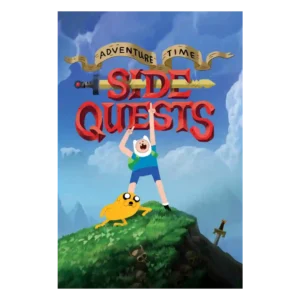
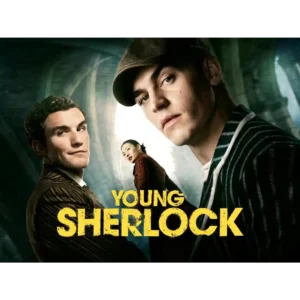
Adventure Time: Side Quests, Season 1
Where It Has the Edge
- character consistency is 3.8 vs 2.0. Returning characters mostly feel recognizable, especially Ice King in his old comic-villain mode. Finn’s younger portrayal is a...

Scorata scores summarize analyzed review evidence on a 1–5 scale; they are not laboratory measurements or a simple average of customer star ratings. Feature scores summarize the reviews covering that feature. The overall score averages feature scores within each review, then combines review averages. When both expert and customer evidence are available, those two groups receive equal weight. Products can have different review coverage, so small score gaps do not establish a winner.
Recommendations prioritize important features for the category, with a score of at least 3.5, a gap of at least 0.25 points and at least two supporting reviews per product. Features with widely varying scores or broad connectivity contexts are excluded from recommendations. These safeguards do not establish statistical significance.
Quick verdict
The review evidence points to a tradeoff: character consistency versus lore depth and renewal interest. Choose according to which strengths matter more to you; the overall score alone does not settle that choice.
Choose Adventure Time: Side Quests, Season 1 for character consistency.
Choose Young Sherlock, Season 1 for lore depth and renewal interest.
Scores are out of 5. Missing scores mean missing review evidence, not a missing feature.
Early reactions to the opening pair were not universally warm. One season reviewer said the first two episodes worried them before the show improved starting with the third episode.
The opening episode is repeatedly praised as a strong, stylish, fast-moving introduction that balances character setup with an engaging case.
The short minisode season is seen as easy to finish, especially for viewers who want a simple return to Ooo. It feels compact rather than overextended.
Several critics think eight episodes overextend the material and argue a six-episode season or even a film could have preserved momentum better.
Continuity reactions are mixed. One reviewer appreciated that timeline issues did not surface, while others noticed canon-heavy callbacks or a possible King of Ooo inconsistency.
One critic flags information gaps where characters appear to know things the established continuity has not shown them learning.
The score receives the sharpest craft complaint from one reviewer, who felt it over-explains some jokes and lacks the low-fi feel of the original.
The theme music receives unusually enthusiastic praise for amplifying the show’s energy.
The 11-minute format is framed as a good fit for younger viewers and quick standalone stories. It supports the show’s light, snackable feel.
One critic argues the overall running time feels bloated, suggesting the story could have worked better in a much shorter format.
The scaled-back lore makes the season easy to follow, especially for viewers who have not kept up with later Adventure Time continuity. That simplicity is treated as a strength for accessibility.
The widening conspiracy often becomes difficult to follow, with critics citing logical leaps, too many subplots, and revelations that can overwhelm rather than clarify.
Returning characters mostly feel recognizable, especially Ice King in his old comic-villain mode. Finn’s younger portrayal is a mild sticking point for one reviewer, who felt he came across more kiddish than expected.
Sherlock’s characterization can wobble, and one review specifically found his behavior inconsistent across the season.
Most reviewers feel Side Quests respects the original’s energy, character dynamics, and chaotic spirit. It is not a direct clone, but the changes are usually seen as affectionate rather than careless.
The show takes major liberties with Conan Doyle and Andrew Lane, which some viewers embrace as a fresh remix and purists or critics see as barely recognizable Holmes.
Lore is deliberately dialed back, which helps newcomers but may disappoint viewers who prefer Adventure Time’s cosmic and serialized side. Reviewers describe it as lighter, simpler, and less interested in expanding canon.
Reviewers enjoy the family history, early mind palace, Moriarty friendship, and other origin-story additions that expand Holmes lore beyond familiar Baker Street territory.
Interest in more episodes exists, especially if another season broadens the character mix. Reviewers also express curiosity about what the franchise could do next.
Multiple reviewers explicitly want another season, citing the open ending, strong character dynamics, and curiosity about where Sherlock and Moriarty go next.
Reviewers describe the season as an easy, lightweight binge. Its short total runtime makes it approachable for fans who want a quick dose of Finn and Jake.
The propulsive mystery makes the season easy to binge for some viewers, while others found the all-at-once experience exhausting or padded enough to benefit from breaks.
Violence is cartoonish but present, including crossbow danger, eye-stabbing, injuries, and slapstick peril. The content reads more mischievous than grim.
Violence is frequent but generally restrained rather than graphic, which one family-focused critic considers appropriate for the TV-14 range.
The writing is praised for balancing simple adventures with danger and jokes, but not every critic found the new comic rhythm fully compatible with Adventure Time. The result is strong overall with a few tonal bumps.
Writing reactions are divided: some praise the tightly threaded mystery and character work, while harsher critics call the subplots weak and the dialogue/material poorly written.
The season is not trying to deliver the heavier emotional drama of later Adventure Time. That lighter dramatic load is treated as an intentional tradeoff rather than a fatal flaw.
Family revelations, rivalry, and intrigue give the adventure real dramatic pull, especially as the season moves into its more personal material.
The dialogue lands best when it fuels fast, bizarre cartoon comedy. Reviewers point to the show’s goofy one-liners and committed absurdity as part of its charm.
The rapid banter and one-liners are often called sharp, witty, and fun, though detractors find the quipping forced, anachronistic, or exhausting.
The season is tightly connected to Adventure Time through familiar characters, early-era tone, and repeated callbacks. That connection is mostly welcome, though one critic felt the callback-heavy approach can crowd out expansion.
The series borrows recognizable Holmes lore and Ritchie-style DNA without belonging to his Robert Downey Jr. film continuity, a separation reviewers view with both relief and disappointment.
Most coverage frames the season as brisk and easygoing, but one reviewer thought the faster rhythm leaves fewer quiet moments than classic Adventure Time sometimes allowed.
The season’s overall rhythm is its biggest structural weakness: a fast opening and ending can surround a dull middle, while nonstop revelations leave little breathing room.
The new run earns some credit for giving the classic setup a fresh visual and episodic spin. One critic felt it leans too heavily on callbacks instead of pushing Ooo into genuinely new territory.
Turning Moriarty into Sherlock’s friend and reshaping his family history gives the familiar character a fresh angle, even if some reviewers see the broader prequel formula as derivative.
Editing only comes up around a credits song that was moved because the episode itself was too tight. The workaround appears to have paid off, but the note suggests some cramped episode construction.
Fast, rhythmic editing gives the series momentum and style, but the same hyperactive cutting can make scenes feel trailer-like or rushed.
The emotional pull is gentler and more nostalgic than devastating. Fans looking for comfort, warmth, and an old-friend feeling are more likely to connect with it.
The Holmes family tragedy and the doomed Sherlock-Moriarty friendship provide unusually strong emotional stakes for such a pulpy adventure.
Language is mild, with softened fantasy curses and only light real-world wording noted. It stays within the show’s kid-oriented tone.
One family-focused review found only a modest amount of language, keeping the show comfortably within a TV-14 range.
The creative direction is presented as varied and flexible, with different tones and story types encouraged across the season. That variety helps the revival feel playful rather than locked to one formula.
Guy Ritchie’s kinetic approach is widely praised for giving the show energy and visual identity, even as a minority finds the imitation of his style overbearing or stale.
Several episodes are described as energetic and quick-moving, with jokes and adventure beats arriving steadily. The main pacing complaint is that at least one episode takes too long to reach predictable turns.
Episodes usually move quickly and keep viewers engaged, but the middle stretch and finale draw complaints for either dragging or cramming too much into too little time.
The show is broadly family-friendly and youth-oriented, though not totally sanitized. Content notes mention gross-out jokes, mild language, and cartoon violence, while other reviewers still call it wholesome.
Reviewers describe the series as comparatively clean and suitable for a broad family audience, with restrained violence and mild suggestive material.
Sexual content appears very light. The clearest note is innocent shirtlessness, while broader reviews frame the series as wholesome and family-friendly.
The suggestive material is described as mild, contributing to the show’s relatively restrained TV-14 profile.
The show is mainly light and gag-driven, but one reviewer appreciated that the stakes still rise enough to create real tension at moments.
The conspiracy, recurring mysteries, and steady curveballs keep tension high, although the lighter tone occasionally softens the urgency.
Reviewers liked that the stories return to small, self-contained Finn and Jake adventures. The main reservation is that the lighter setup can feel less expansive than the franchise at its most ambitious.
The central mystery and family conspiracy are compelling enough to sustain the adventure, though some critics find the story overcomplicated, disjointed, or weaker than its presentation.
The show keeps its themes smaller, touching on shame, insecurity, personal growth, and emotional honesty inside comic setups. Reviewers liked that these moments exist without overwhelming the lighter tone.
The best thematic material comes from grief, family, loyalty, class differences, morality, and the diverging values that will eventually separate Holmes and Moriarty.
Humor is one of the strongest points across the set. Reviewers repeatedly call the season funny, silly, quotable, and full of bizarre comic ideas, with Ice King often singled out as a highlight.
The banter, quips, campiness, and comic performances land very well for most reviewers, though a few find the jokes effortful or overly constant.
The standalone format is one of the clearest selling points: reviewers repeatedly describe concise, self-contained adventures that can be watched without homework. A few note that the episodic reset also limits bigger arcs.
Several reviewers like how individual episodes build their own hooks while feeding the larger mystery, though others dislike the season-long case swallowing episodic detective storytelling.
Finn and Jake’s bond remains central and warmly received. Reviewers describe their relationship as the heart of the show and praise the way the revival spotlights their brotherly rhythm.
Sherlock and Moriarty’s chemistry is one of the clearest strengths, with their banter, camaraderie, and doomed-friendship dynamic repeatedly singled out as the show’s best element.
The show still finds room for lessons about shame, insecurity, and growing from childish mistakes. Critics also note that deeper long-term character growth is intentionally reduced because the season returns everyone to earlier status quos.
The family history and Moriarty friendship give several characters meaningful arcs, but some critics feel the breakneck conspiracy leaves too little room for reflection or earned growth.
The voice cast is generally treated as a strong carryover from the original series. Reviewers especially appreciate that most familiar characters keep their established voices, even while Finn is recast.
Performance quality is a major strength overall, with the ensemble repeatedly called superb, phenomenal, fantastic, or assured despite a few sharply negative takes on the leads.
Sasha Knight and John DiMaggio receive mostly positive marks, with Knight praised for fitting young Finn and DiMaggio still carrying Jake’s relaxed charm. One reviewer liked Knight but still missed Jeremy Shada.
The core cast is generally strong, especially Dónal Finn, though Hero Fiennes Tiffin receives more divided reactions and Max Irons draws some notable criticism.
Music is generally viewed as helpful to the Adventure Time identity, with specific praise for songs and credits moments. One reviewer found the intro/outro cover merely fine, so the response is positive but not unanimous.
The modern, high-energy soundtrack helps sell the youthful Ritchie style for many viewers, but others find the choices dated, anachronistic, or potentially quick to age.
Returning voices and familiar characters are a major comfort point, from Ice King to Princess Bubblegum and Marceline. Some reviewers wished a few favorites received more attention, but the reunion energy is broadly positive.
The supporting ensemble is a major asset, with Dónal Finn, Colin Firth, Natascha McElhone, Zine Tseng, and Holly Cattle receiving repeated individual praise.
Critic response is broadly favorable, with one review saying the season gives fans exactly what they are looking for. The most critical voices still found pieces to recommend.
One reviewer thought the show’s Metacritic score understated its quality, placing it closer to a solidly positive reception.
The season is repeatedly described as aimed at kids, tweens, and younger or new Adventure Time viewers. Adults with nostalgia may still enjoy it, but the target skews younger than later franchise entries.
The series is generally viewed as accessible to teens and adults, with a comparatively clean TV-14 level and broad family appeal.
The strongest audience fit is kids, nostalgic fans, and newcomers who want a low-barrier entry point. Adults without a tie to the franchise may find it skippable or too youth-skewing.
Most reviewers see an easy-to-recommend adventure with wide appeal, though a few question whether its youthful remix will satisfy either traditional Holmes fans or Gen Z viewers.
Ooo still feels open-ended and imaginative, with reviewers seeing room for countless smaller adventures. The season’s world-building is more about playful possibility than dense new mythology.
Oxford, the Holmes family estate, Paris, Constantinople, and the wider Victorian setting create a rich, expansive adventure world that reviewers find immersive.
The backdrops and handcrafted world details help Ooo feel familiar but newly textured. Reviewers liked that the environments keep the original identity while adding a distinct finish.
Period Oxford, elaborate sets, props, and international locations are consistently praised as detailed, high-budget, and immersive.
The redesigned look is the most discussed craft element and is mostly praised as fresh, playful, colorful, and still recognizable. A few fans were skeptical at first, but several reviewers defend the lineless, painterly approach strongly.
The production is repeatedly described as stylish, polished, cinematic, and visually impressive, even by reviewers who dislike the story.
Entertainment value is consistently high, with the season described as fun, silly, sweet, and worth watching. The appeal comes from simple adventures, lively jokes, and a comforting return to Ooo.
The dominant verdict is that the series is lively, fun, and highly watchable even when its logic, fidelity, or depth falls short.
One critic found the exaggerated Victorian accents part of the show’s broad, stereotyped period caricature rather than convincing texture.
The fights and chases are energetic and frequent, but reactions split: some call them inventive and top-notch, while others find them forgettable, overused, or unable to generate excitement.
Animation quality draws strong praise for expressive movement, bright colors, reaction shots, and action that pops. Even reviewers with reservations about the revival generally found the animation lively and well-suited to the comedy.
The visual photography is consistently praised as polished, immersive, carefully curated, and cinematic.
The season’s cliffhangers land strongly, with reviewers describing them as effective hooks that immediately create appetite for another episode or season.
Princess Shou’an’s wardrobe is praised for avoiding lazy Orientalism, but other reviews criticize the series for thin cultural context and broad stereotypes.
The finale delivers major payoffs, revelations, and appetite for more, but reactions are mixed because some twists feel rushed or overstuffed.
One reviewer especially enjoyed the playful mind-palace device, where remembered characters seem to interact with Sherlock inside his reconstruction.
As a mystery-adventure caper, the show is widely enjoyed for its blend of crime, action, humor, suspense, and globe-trotting escapades.
Colin Firth’s transformation earns specific praise for its delightful makeup-and-hair disguise.
One critic objects that the series recreates imperial-era Oxford without offering enough perspective on its colonial context.
Twists are a major attraction, frequently described as bold, surprising, riveting, and effective enough to propel the binge.
The deliberately heightened adventure asks viewers to suspend disbelief; some enjoy the scrappy fight authenticity, while others find deductions and conspiracy turns implausible.
The full-season drop is criticized by reviewers who think the dense plotting and constant reveals would have played better with a weekly release.
The last episode offers big revelations and spectacle but is polarizing because some reviewers find the payoff earned while others call it rushed and overloaded.
As a spin-off, the season is widely considered a worthwhile return that knows its lane. Reviewers who wanted heavier lore may find it modest, but most say the revival works as a companion piece.
The show sustains a brash, playful adventure tone surprisingly well, though some reviewers think its lighter energy undercuts tension or its late escalation pushes too far.
Moriarty’s reinvention is widely praised as fresh and compelling, but his late movement toward villainy can feel rushed and inconsistent to some reviewers.
This younger Sherlock is often described as boyish, accessible, and easy to like, while Moriarty’s charm also wins over many reviewers.
Costumes are a standout craft element, praised for rich detail, character storytelling, texture, and visual appeal even when historical accuracy is imperfect.
One devoted Holmes reviewer was already rewatching early episodes and expected to restart the season immediately after finishing.

Best for sharp adult humor, magnetic chemistry and a deeply satisfying farewell. Skip it if familiar will-they-won’t-they plotting or deliberately messy leads are dealbreakers.
Pros: humor, writing quality

Choose Widow’s Bay for its dark laughs, richly haunted island and memorable ensemble. Skip it if you need straightforward scares, rapid answers to every mystery or a completely resolved finale.
Pros: humor, genre satisfaction
Cons: ending satisfaction, season pacing

Choose Season 15 for warm, character-driven comedy, meaningful growth, and a finale that rewards longtime fans. Skip it if the short binge format, uneven replacement voices, or occasional clumsy commentary...
Pros: franchise connection, character development

Choose The Pitt Season 2 for a gripping, realistic medical drama with superb acting and emotional depth. Skip it if graphic procedures, unresolved arcs, or slower character-driven pacing bother you.
Pros: realism, emotional impact