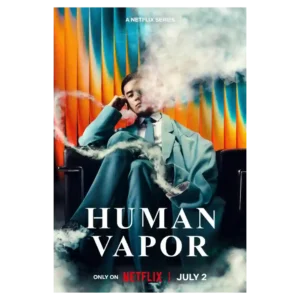
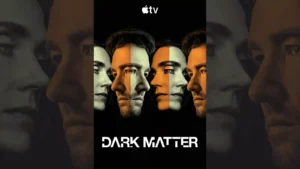
Human Vapor, Season 1
Where It Has the Edge
- ending satisfaction is 4.1 vs 2.3. The ending is treated as tragic and bittersweet rather than purely triumphant. Reviewers responded to the humanity and...

Scorata scores summarize analyzed review evidence on a 1–5 scale; they are not laboratory measurements or a simple average of customer star ratings. Feature scores summarize the reviews covering that feature. The overall score averages feature scores within each review, then combines review averages. When both expert and customer evidence are available, those two groups receive equal weight. Products can have different review coverage, so small score gaps do not establish a winner.
Recommendations prioritize important features for the category, with a score of at least 3.5, a gap of at least 0.25 points and at least two supporting reviews per product. Features with widely varying scores or broad connectivity contexts are excluded from recommendations. These safeguards do not establish statistical significance.
Quick verdict
The review evidence points to a tradeoff: ending satisfaction versus drama quality and episode pacing. Choose according to which strengths matter more to you; the overall score alone does not settle that choice.
Choose Human Vapor, Season 1 for ending satisfaction.
Choose Dark Matter, Season 2 for drama quality and episode pacing.
Scores are out of 5. Missing scores mean missing review evidence, not a missing feature.
Editing is a common fix-it note. Reviewers point to a draggy middle and scenes that could use more restraint, even when they still like the full season.
Editing is singled out as a major improvement, especially for finding expressive beats in body language, faces, and silent interactions.
The ending is treated as tragic and bittersweet rather than purely triumphant. Reviewers responded to the humanity and sadness of the finale, even as the story leaves a lingering emotional ache.
The finale is a common weakness: even reviewers who like the season often see the unresolved ending or final image as underwhelming.
Eight episodes feels slightly stretched to multiple reviewers. Some call it a quick binge, but others say there may not be enough thriller plot or enough Human Vapor to fill the whole run.
The ten-episode season can feel overextended to critics who think too much time is spent on emotional material at the expense of thrills.
The drama is uneven but often effective. Some reviewers praised the haunted, tender, or melodramatic weight, while others felt the show lulls, gets cheesy, or shifts tones awkwardly.
The quieter family and marriage scenes are frequently described as the season’s best material, even by reviewers less interested in the multiverse mechanics.
The pilot moves better for some reviewers than the full season does. One found the setup energetic despite exposition, while another felt individual episodes lull when the big genre moments pause.
Individual episodes can be gripping and well-paced, especially around major chases and reveals, though some reviewers find the slower stretches overextended.
Dialogue gets limited but mixed attention. One reviewer mocked the villain’s enigmatic speeches, while another found UTA’s soft, slow delivery eerie and effective.
One negative review found some dialogue interchangeable, especially when the scientist characters gather to explain ideas.
The finale earns praise for exposing the conspiracy while keeping the focus on loss, sacrifice, and consequences. It closes the season with a tragic mood instead of simple monster-show payoff.
The final episode improves its pace and delivers gripping scenes, but some reviewers still see the overall ending as too little, too late.
The mystery is generally seen as layered but followable, with factions and clues expanding the case without always overwhelming it. A negative review felt the show depends too heavily on its conspiracy to stay interesting.
Variant-heavy plotting is the most repeated concern. Multiple Jasons, Ryans, Amandas, Leightons, and worlds can make identity and location difficult to track.
The pilot script is described as lively enough to carry a lot of setup. Exposition is noticeable, but at least one reviewer felt the writing keeps the first episode moving.
Individual storylines can be sharply written, with Amanda and Ryan’s material specifically praised as excellent.
Character work is a real strength in the positive reviews, especially once stock-seeming roles gain history and emotional weight. The sharpest negative review saw the detective and reporter as familiar archetypes.
The season’s strongest praise centers on deeper character work, grief, marriage strain, regret, and the way alternate lives reshape familiar people.
Genre fans get a busy mix of sci-fi, crime, horror, mystery, melodrama, and conspiracy. Most reviewers found the blend satisfying, though it may be too eccentric for viewers wanting a cleaner thriller.
The shift from pure reality-hopping toward espionage and character drama works very well for some critics and less well for viewers wanting a tighter sci-fi thriller.
The mythology expands beyond a simple gas-man gimmick into experiments, White Center, wishes, and past abuses. Reviewers found those origins important to the show’s emotional and sci-fi identity.
Season 2 substantially expands the Box mythology, including its internal mechanics, navigation rules, and ability to reconnect realities, which many reviewers find fascinating.
The twists are a meaningful part of the appeal. Reviewers point to surprising reveals around Miura and a mystery structure that keeps adding turns as the pieces fit together.
Major reveals around Daniela’s violence, the Box reappearing, and new navigation rules are repeatedly treated as effective surprises.
The show has a campy streak, but reviewers split on whether that helps. One found bits of humor and weirdness off-putting, while another still saw some fun in the serious tone.
A few episodes find welcome comedy and farcical energy, but at least one critic strongly dislikes the show’s generally glum lack of levity.
Season pacing is the main recurring caveat. Several reviewers mention a slow middle or meandering first half, even when they felt the show ultimately recovers or remains watchable.
The season’s deliberate pace divides reviewers. Some appreciate its meditative character focus, while others call it slow, inconsistent, or overloaded with setup.
The Human Vapor is often framed as a misguided or tragic figure, not just a one-note monster. Reviewers liked that the show keeps his victimhood and menace in tension.
Reviewers generally found the characters’ motivations consistent with prior choices, while also noticing deliberate parallels between different versions of Jason.
Direction gets positive early marks for energy and momentum. The first episode’s setup is described as lively enough to carry exposition and keep the unusual premise moving.
Episode-level direction earns praise for energetic cross-cutting and strong immersion in the low-tech alternate world.
The emotional material lands surprisingly hard for several reviewers. The tragedy behind Ren, Kyoko, and the exploited victims gives the show a tenderness that goes beyond its creature-feature premise.
Many reviewers found the grief, paranoia, lost-family scenarios, and relationship material deeply affecting, although some thought the show occasionally strains too hard for tears.
The central cop-reporter dynamic and the streamer siblings both draw positive notes. Reviewers liked the personal history, sibling banter, and character pairings enough to make the investigation feel more alive.
The expanded ensemble benefits from effective pairings, with Ryan and Amanda specifically praised for solid chemistry.
Theme depth is one of the season’s clearest strengths. Reviews repeatedly point to exploitation, corruption, anti-authority anger, and vulnerable people being discarded by powerful institutions.
This is the strongest area of consensus: reviewers repeatedly value the season’s focus on identity, regret, technological responsibility, grief, belonging, and the consequences of choice.
CGI gets a more qualified response than the overall effects work. Some reviewers praise vivid or motivating visuals, while another says the smoke and airborne professor can look artificial.
Visual-effects work is considered competent, though one reviewer notes the season uses expansive VFX more sparingly than before.
Realism is a tradeoff rather than a core strength. One reviewer appreciated moments that echo real-world fear, while another noted the remake gives up some groundedness for bigger action.
The scientific premise borrows from real quantum theory, but experts cited in the source also make clear that a human-scale Box remains far beyond real-world feasibility.
Suspense works best when the Vapor is unseen, omnipresent, or tied to smoke in ordinary spaces. Reviewers liked the sense of threat around the villain and the unfolding White Center mystery.
Chase scenes, unsettling variant encounters, and darker thriller beats still provide strong tension even in a more character-driven season.
The season’s flashbacks and shifting perspectives add more depth than expected. That structure helps the characters’ histories matter alongside the central mystery.
Standalone or capsule-style episodes are among the most praised parts of the season, while multi-thread episodes can feel crowded and scattered.
Special effects are a major draw, especially the gas transformations and body-horror set pieces. A few effects look artificial to one reviewer, but the broader response is impressed.
The show continues to deliver striking alternate-world imagery and storm sequences, with multiple reviewers praising its visual spectacle.
The remake earns credit for not replaying the 1960 plot beat for beat. Critics liked that it turns the premise into a new serialized conspiracy, though one reviewer still found some familiar crime-drama parts.
The multiverse and Box concept continue to feel distinctive, with one reviewer calling the core idea extremely unique even while wanting more exploration.
As an adaptation, the show is praised for being spiritually faithful while telling a new story. Reviewers liked that it keeps the anti-authority core and expands the premise instead of merely copying the film.
Although Season 2 moves beyond the novel, one reviewer praised the new material for expanding the story in an authentic way.
Cliffhangers work by keeping the mystery emotionally open. Reviews mention both the first episode’s final tease and the finale’s suggestion that Kyoko or Ren may not be fully gone.
The cliffhanger is memorable and often described as unsettling or jaw-dropping, though some reviewers dislike how heavily it depends on another season.
Reviewers describe a stronger story than the title might suggest, built around a revenge mystery, institutional corruption, and a tragic human center. One dissenting take found the conspiracy doing too much of the heavy lifting.
Overall story reactions range from outstanding and more satisfying than Season 1 to messy and unnecessary, reflecting a genuine split over the off-book continuation.
Renewal interest is present but qualified. Reviewers see room for a larger franchise or another season, though one says a follow-up should put the Human Vapor himself more front and center.
Renewal sentiment is split: some critics strongly want a third season, while others feel the story should have stopped earlier.
Critical response is split but leans positive. The praise clusters around effects, performances, themes, and ambition, while the pushback centers on pacing, tone, and occasional cliché.
The season launched to very strong reported critical reception, with sources describing near-universal early praise.
The show seems best suited to genre viewers who enjoy strange sci-fi thrillers. Reviewers expect fans of creature features, serial-killer mysteries, or Japanese genre work to respond better than casual viewers.
Early audience response remained highly enthusiastic despite the two-year break between seasons.
Supporting players get meaningful attention, especially the streamer siblings. Reviewers were curious about their role or praised their banter and personal growth once the show folded them into the mystery.
The broader ensemble is a major asset, with reviewers praising the cast as award-worthy and crediting supporting players with sustaining interest.
The main cast is widely praised, with Shun Oguri, Yu Aoi, and UTA singled out across reviews. UTA’s eerie, restrained presence becomes one of the season’s most memorable hooks.
The central cast earns some of the season’s strongest praise, including awards-level enthusiasm for key lead performances.
Acting is one of the safer bets here. Reviewers call the show solidly acted and repeatedly highlight UTA, Oguri, and Aoi for grounding the odd premise.
Performances are one of the clearest strengths, with multiple critics saying the cast keeps the dense multiverse story emotionally grounded even when the plotting becomes hard to follow.
The soundtrack earns a positive note for blending retro roots with modern energy. Music also matters to the story through the recurring song tied to memory and the finale.
Music choices are repeatedly praised, with reviewers highlighting strong needle drops and an upgraded soundtrack.
Entertainment value is sharply mixed. Several reviewers recommend or enjoy the show despite flaws, while one dismisses it as silly and another expected to like it more.
Overall enjoyment varies sharply: enthusiastic reviewers call the season captivating and improved, while harsher critics find it overcomplicated and short on fun.
The production comes across polished and film-like. Reviews praise the professional assembly, feature-film feel, and production design that support the large conspiracy-thriller scale.
The production design is praised for supporting the show’s varied worlds, especially the restrained low-tech Chicago setting.
The series has a strong visual identity, from the gloomy palette to the wider Japanese settings. Several reviewers call the production gorgeous or cinematic even when they dislike the pacing.
The alternate realities are praised most when small environmental differences create unease rather than relying only on spectacle.
The world expands through police, media, yakuza, streamers, and corrupt institutions without losing the central investigation. Positive reviews say those factions make the mystery feel bigger rather than distracting.
Reviewers generally like the season’s expanded multiverse rules and low-tech world details, although some wish the alternate worlds were stranger and more visually distinct.
Action is used selectively but can land very well, especially in tense chase sequences; one finale set piece, however, was criticized as poorly staged and narratively empty.
The season is considered easy enough to binge when the mystery is working. One reviewer specifically says the eight episodes move at a nice clip despite a slowdown after the opener.
The season is often praised for taking Season 1 consequences seriously, especially the duplicate Jasons and the expanded roles of supporting characters.
The show’s social setting is part of its appeal. Reviewers connect the story to contemporary Japanese power dynamics, vulnerable workers, and institutional neglect rather than treating it as generic sci-fi.
A nearly sign-language-centered episode and an older deaf character were welcomed, though one critic disliked shots that obscured the signing.
Several reviewers liked that Jason no longer dominates every storyline, giving Amanda, Ryan, Leighton, Blair, Daniela, and others more meaningful space.
Longer runtimes sometimes make already busy storylines feel unwieldy rather than more substantial.
The series strengthens Toho’s broader genre potential. Reviewers frame it as a confident use of the studio’s legacy and a possible springboard for more non-kaiju projects.
The opening episode lands as a solid hook, especially through the live-TV body-horror attack and the first reveal of the killer. Reviewers call it intriguing rather than flawless, with enough momentum to continue.
Practical effects are mentioned mainly as part of the modern effects blend. The show is praised for combining practical work with CGI rather than relying only on old-school tokusatsu methods.
A long two-year break is criticized as especially harmful for a dense story that asks viewers to remember complicated rules and identities.
The marriage between Jason and Daniela becomes a central dramatic engine, and several reviewers consider that domestic tension more compelling than the technology itself.
The score is mostly praised, especially in one review that calls it among the year’s most memorable. Another finds the background cues a bit on the nose, so the reaction is positive with a caveat.
The mix of family melodrama, sci-fi, and action does not always cohere; one critic says the tone frequently dissolves.
The violence is memorable and often graphic, from live-TV body horror to brutal action. Reviews suggest gore-friendly viewers may enjoy the intensity, while others may find it part of the show’s heavy texture.
Character reactions vary by storyline; one reviewer specifically finds Blair somewhat annoying even while remaining interested in her arc.
The season’s scientific explanations are credited with helping general viewers understand some of the quantum ideas behind the Box.

Best for sharp adult humor, magnetic chemistry and a deeply satisfying farewell. Skip it if familiar will-they-won’t-they plotting or deliberately messy leads are dealbreakers.
Pros: humor, writing quality

Choose Widow’s Bay for its dark laughs, richly haunted island and memorable ensemble. Skip it if you need straightforward scares, rapid answers to every mystery or a completely resolved finale.
Pros: humor, genre satisfaction
Cons: ending satisfaction, season pacing

Choose Season 15 for warm, character-driven comedy, meaningful growth, and a finale that rewards longtime fans. Skip it if the short binge format, uneven replacement voices, or occasional clumsy commentary...
Pros: franchise connection, character development

Choose The Pitt Season 2 for a gripping, realistic medical drama with superb acting and emotional depth. Skip it if graphic procedures, unresolved arcs, or slower character-driven pacing bother you.
Pros: realism, emotional impact