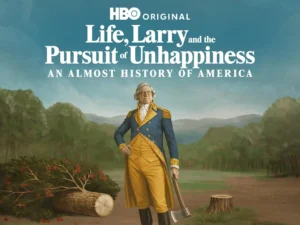
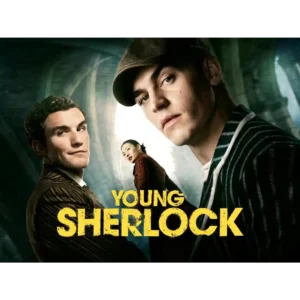
Life, Larry, and the Pursuit of Unhappiness, Season 1
Where It Has the Edge
No clear scored advantage over the other product.

Scorata scores summarize analyzed review evidence on a 1–5 scale; they are not laboratory measurements or a simple average of customer star ratings. Feature scores summarize the reviews covering that feature. The overall score averages feature scores within each review, then combines review averages. When both expert and customer evidence are available, those two groups receive equal weight. Products can have different review coverage, so small score gaps do not establish a winner.
Recommendations prioritize important features for the category, with a score of at least 3.5, a gap of at least 0.25 points and at least two supporting reviews per product. Features with widely varying scores or broad connectivity contexts are excluded from recommendations. These safeguards do not establish statistical significance.
Quick verdict
The available evidence supports the recommendation below, but does not establish an overall winner. Check the remaining features against your priorities.
There is not enough comparable review evidence to recommend Life, Larry, and the Pursuit of Unhappiness, Season 1 over the other product.
Choose Young Sherlock, Season 1 for lore depth and directing quality.
No clear scored advantage over the other product.
Scores are out of 5. Missing scores mean missing review evidence, not a missing feature.
The first episode receives a weak response from the dedicated episode review, which says it struggles to manage David’s comedy and stretches several sketches too far.
The opening episode is repeatedly praised as a strong, stylish, fast-moving introduction that balances character setup with an engaging case.
Renewal interest is weak. One reviewer jokes they might be ready for another season only in another 250 years.
Multiple reviewers explicitly want another season, citing the open ending, strong character dynamics, and curiosity about where Sherlock and Moriarty go next.
Editing is one of the clearest complaints in the first-episode review. Several jokes are described as overstretched, with a tighter cut seen as a major missed opportunity.
Fast, rhythmic editing gives the series momentum and style, but the same hyperactive cutting can make scenes feel trailer-like or rushed.
The historical layer is often treated as a setup rather than deep substance. Some topical references land, but other reviewers say the show barely connects with actual history.
Reviewers enjoy the family history, early mind palace, Moriarty friendship, and other origin-story additions that expand Holmes lore beyond familiar Baker Street territory.
Direction gets modest credit when the show finds usable comic bits, but the short-form sketch format is also blamed for scenes that cannot glide past weak details.
Guy Ritchie’s kinetic approach is widely praised for giving the show energy and visual identity, even as a minority finds the imitation of his style overbearing or stale.
Pacing is one of the most repeated complaints. Even positive reviews note long or repetitive sketches, and negative reviews call the show slow, tedious, and stretched past its punchlines.
Episodes usually move quickly and keep viewers engaged, but the middle stretch and finale draw complaints for either dragging or cramming too much into too little time.
As sketch comedy, the season is repeatedly described as hit-or-miss. Even sympathetic critics acknowledge unevenness, while harsher ones say the misses dominate.
As a mystery-adventure caper, the show is widely enjoyed for its blend of crime, action, humor, suspense, and globe-trotting escapades.
Originality is a major weak point. The historical premise is sometimes called clever, but many critics say the jokes and structure feel familiar, formulaic, or directly recycled.
Turning Moriarty into Sherlock’s friend and reshaping his family history gives the familiar character a fresh angle, even if some reviewers see the broader prequel formula as derivative.
The language is treated as adult-oriented, with one critic specifically saying there is too much profanity for minors.
One family-focused review found only a modest amount of language, keeping the show comfortably within a TV-14 range.
The show’s best craft notes involve its period recreation, with one reviewer praising authentic-looking slices of American life.
The deliberately heightened adventure asks viewers to suspend disbelief; some enjoy the scrappy fight authenticity, while others find deductions and conspiracy turns implausible.
Humor is the central divide: admirers call it reliably fun or very funny, while detractors say it is cringey, stale, or short on actual punchlines.
The banter, quips, campiness, and comic performances land very well for most reviewers, though a few find the jokes effortful or overly constant.
Reviewers like the idea of packing multiple sketches into each half hour, but many say the format exposes the sameness of the core joke.
Several reviewers like how individual episodes build their own hooks while feeding the larger mystery, though others dislike the season-long case swallowing episodic detective storytelling.
Thematic ambition is mixed. Some critics appreciate the topical bite and irreverent view of American history, while others say the political commentary is safe, strained, or too clumsy.
The best thematic material comes from grief, family, loyalty, class differences, morality, and the diverging values that will eventually separate Holmes and Moriarty.
The story concept has obvious appeal: Larry David interrupting American history can be clever and funny. The recurring complaint is that the concept often does more work than the sketches themselves.
The central mystery and family conspiracy are compelling enough to sustain the adventure, though some critics find the story overcomplicated, disjointed, or weaker than its presentation.
Writing is the most persistent weakness. Reviews repeatedly cite recycled Curb bits, stale sketches, thin material, and jokes that do not build far enough.
Writing reactions are divided: some praise the tightly threaded mystery and character work, while harsher critics call the subplots weak and the dialogue/material poorly written.
The dialogue has the loose, improvised rhythm associated with Curb. That can create sparks with longtime partners, though it also contributes to a shaggy feel.
The rapid banter and one-liners are often called sharp, witty, and fun, though detractors find the quipping forced, anachronistic, or exhausting.
The seven-episode run is viewed as too much for the concept by some critics. One suggests a special could have distilled the best ideas, while another says the first episode suggests only enough steam for about three.
Several critics think eight episodes overextend the material and argue a six-episode season or even a film could have preserved momentum better.
Larry remains almost aggressively consistent from sketch to sketch. Some reviewers find that comforting, but many say the same persona quickly turns predictable.
Sherlock’s characterization can wobble, and one review specifically found his behavior inconsistent across the season.
Reviewers caution against bingeing it. The sketch formula is said to work better as a weekly treat because repetition becomes more obvious in stacked viewing.
The propulsive mystery makes the season easy to binge for some viewers, while others found the all-at-once experience exhausting or padded enough to benefit from breaks.
Chemistry is one of the brighter spots, especially when David is paired with familiar collaborators like Jerry Seinfeld, J.B. Smoove, or Susie Essman.
Sherlock and Moriarty’s chemistry is one of the clearest strengths, with their banter, camaraderie, and doomed-friendship dynamic repeatedly singled out as the show’s best element.
Makeup is praised alongside costumes and set design as part of the show’s polished period recreation.
Colin Firth’s transformation earns specific praise for its delightful makeup-and-hair disguise.
Season pacing suffers from repetition across episodes. Critics say fatigue is almost guaranteed as the same sketch engine repeats.
The season’s overall rhythm is its biggest structural weakness: a fast opening and ending can surround a dull middle, while nonstop revelations leave little breathing room.
Individual sketches are often judged too long for their premises. The Rosa Parks bit, for example, is described as funny in concept but better at three or four minutes than near ten.
One critic argues the overall running time feels bloated, suggesting the story could have worked better in a much shorter format.
The show’s handling of race and history is mixed. Some appreciate that it avoids making slavery itself the joke, while others find certain sketches too timid or uncomfortable.
Princess Shou’an’s wardrobe is praised for avoiding lazy Orientalism, but other reviews criticize the series for thin cultural context and broad stereotypes.
The Curb connection is unmistakable, from callbacks to returning collaborators. Fans may enjoy the historical dress-up version, but others see it as recycled rather than refreshed.
The series borrows recognizable Holmes lore and Ritchie-style DNA without belonging to his Robert Downey Jr. film continuity, a separation reviewers view with both relief and disappointment.
Entertainment value depends heavily on tolerance for Larry David’s familiar shtick. One reviewer enjoyed every second, while others found the show skippable or nostalgic rather than satisfying.
The dominant verdict is that the series is lively, fun, and highly watchable even when its logic, fidelity, or depth falls short.
One critic says the show is aimed at adults rather than younger viewers, mainly because the profanity makes it unsuitable for minors.
The series is generally viewed as accessible to teens and adults, with a comparatively clean TV-14 level and broad family appeal.
Critical response is sharply divided but leans skeptical. A few reviewers admire the high points, while the harshest call it a shambles or a formulaic letdown.
One reviewer thought the show’s Metacritic score understated its quality, placing it closer to a solidly positive reception.
The strongest appeal is for longtime Curb or Larry David fans, with several reviewers saying that audience will enjoy the familiar persona. Others warn that viewers tired of his style may find the show grating.
Most reviewers see an easy-to-recommend adventure with wide appeal, though a few question whether its youthful remix will satisfy either traditional Holmes fans or Gen Z viewers.
The show expands Larry David’s world to all of American history, which gives it a broad comic canvas even when the character stays the same.
Oxford, the Holmes family estate, Paris, Constantinople, and the wider Victorian setting create a rich, expansive adventure world that reviewers find immersive.
Production design earns some of the steadiest praise. Reviewers point to high production values, period settings, trenches, the Alamo, costumes, and makeup as stronger than the writing.
Period Oxford, elaborate sets, props, and international locations are consistently praised as detailed, high-budget, and immersive.
The visual style benefits from period recreations and occasional less-stagey direction. Reviewers generally like the look more than the sketch writing.
The production is repeatedly described as stylish, polished, cinematic, and visually impressive, even by reviewers who dislike the story.
The period costuming and makeup are praised as part of the show’s surprisingly polished craft, helping each historical sketch look more complete.
Costumes are a standout craft element, praised for rich detail, character storytelling, texture, and visual appeal even when historical accuracy is imperfect.
Performances draw a split response: David is seen as serviceable when he actually acts, while Jurnee Smollett earns clearer praise in the first episode.
Performance quality is a major strength overall, with the ensemble repeatedly called superb, phenomenal, fantastic, or assured despite a few sharply negative takes on the leads.
The supporting cast is consistently called impressive, loaded with comedy names and often smartly deployed. Several reviewers still feel the cast is better than the material.
The supporting ensemble is a major asset, with Dónal Finn, Colin Firth, Natascha McElhone, Zine Tseng, and Holly Cattle receiving repeated individual praise.
Main performances are uneven but not without standouts. Obama’s comic timing receives strong praise, while David’s familiar screen persona is both the engine and the limitation.
The core cast is generally strong, especially Dónal Finn, though Hero Fiennes Tiffin receives more divided reactions and Max Irons draws some notable criticism.
One critic found the exaggerated Victorian accents part of the show’s broad, stereotyped period caricature rather than convincing texture.
The fights and chases are energetic and frequent, but reactions split: some call them inventive and top-notch, while others find them forgettable, overused, or unable to generate excitement.
The family history and Moriarty friendship give several characters meaningful arcs, but some critics feel the breakneck conspiracy leaves too little room for reflection or earned growth.
The visual photography is consistently praised as polished, immersive, carefully curated, and cinematic.
The season’s cliffhangers land strongly, with reviewers describing them as effective hooks that immediately create appetite for another episode or season.
One critic flags information gaps where characters appear to know things the established continuity has not shown them learning.
Family revelations, rivalry, and intrigue give the adventure real dramatic pull, especially as the season moves into its more personal material.
The Holmes family tragedy and the doomed Sherlock-Moriarty friendship provide unusually strong emotional stakes for such a pulpy adventure.
The finale delivers major payoffs, revelations, and appetite for more, but reactions are mixed because some twists feel rushed or overstuffed.
The show takes major liberties with Conan Doyle and Andrew Lane, which some viewers embrace as a fresh remix and purists or critics see as barely recognizable Holmes.
Reviewers describe the series as comparatively clean and suitable for a broad family audience, with restrained violence and mild suggestive material.
One reviewer especially enjoyed the playful mind-palace device, where remembered characters seem to interact with Sherlock inside his reconstruction.
One critic objects that the series recreates imperial-era Oxford without offering enough perspective on its colonial context.
The widening conspiracy often becomes difficult to follow, with critics citing logical leaps, too many subplots, and revelations that can overwhelm rather than clarify.
Twists are a major attraction, frequently described as bold, surprising, riveting, and effective enough to propel the binge.
The full-season drop is criticized by reviewers who think the dense plotting and constant reveals would have played better with a weekly release.
The theme music receives unusually enthusiastic praise for amplifying the show’s energy.
The last episode offers big revelations and spectacle but is polarizing because some reviewers find the payoff earned while others call it rushed and overloaded.
The suggestive material is described as mild, contributing to the show’s relatively restrained TV-14 profile.
The available effects note is positive, with VFX grouped alongside production design and costuming as part of the show’s authentic period look.
The conspiracy, recurring mysteries, and steady curveballs keep tension high, although the lighter tone occasionally softens the urgency.
The show sustains a brash, playful adventure tone surprisingly well, though some reviewers think its lighter energy undercuts tension or its late escalation pushes too far.
Moriarty’s reinvention is widely praised as fresh and compelling, but his late movement toward villainy can feel rushed and inconsistent to some reviewers.
Violence is frequent but generally restrained rather than graphic, which one family-focused critic considers appropriate for the TV-14 range.
This younger Sherlock is often described as boyish, accessible, and easy to like, while Moriarty’s charm also wins over many reviewers.
One devoted Holmes reviewer was already rewatching early episodes and expected to restart the season immediately after finishing.
The modern, high-energy soundtrack helps sell the youthful Ritchie style for many viewers, but others find the choices dated, anachronistic, or potentially quick to age.

Best for sharp adult humor, magnetic chemistry and a deeply satisfying farewell. Skip it if familiar will-they-won’t-they plotting or deliberately messy leads are dealbreakers.
Pros: humor, writing quality

Choose Season 15 for warm, character-driven comedy, meaningful growth, and a finale that rewards longtime fans. Skip it if the short binge format, uneven replacement voices, or occasional clumsy commentary...
Pros: franchise connection, character development

Choose The Pitt Season 2 for a gripping, realistic medical drama with superb acting and emotional depth. Skip it if graphic procedures, unresolved arcs, or slower character-driven pacing bother you.
Pros: realism, emotional impact

Best for powerhouse performances, thorny character work, and a tense revenge mystery that grows richer as it goes. Skip it if abuse, trafficking, graphic violence, or deliberately messy moral questions...
Pros: main cast performance, character development
Cons: pilot episode quality