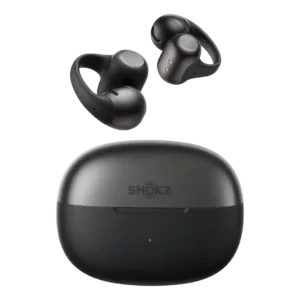
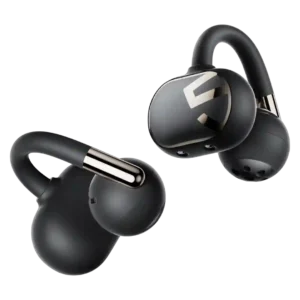
Shokz OpenDots 2
Where It Has the Edge
No clear scored advantage over the other product.

Scorata scores summarize analyzed review evidence on a 1–5 scale; they are not laboratory measurements or a simple average of customer star ratings. Feature scores summarize the reviews covering that feature. The overall score averages feature scores within each review, then combines review averages. When both expert and customer evidence are available, those two groups receive equal weight. Products can have different review coverage, so small score gaps do not establish a winner.
Recommendations prioritize important features for the category, with a score of at least 3.5, a gap of at least 0.25 points and at least two supporting reviews per product. Features with widely varying scores or broad connectivity contexts are excluded from recommendations. These safeguards do not establish statistical significance.
Quick verdict
The available evidence supports the recommendation below, but does not establish an overall winner. Check the remaining features against your priorities.
There is not enough comparable review evidence to recommend Shokz OpenDots 2 over the other product.
Choose SoundPEATS Clip1 for Sound quality and Value for money.
No clear scored advantage over the other product.
Scores are out of 5. Missing scores mean missing review evidence, not a missing feature.
Sound is the standout surprise for an open-ear design: many found it full, clear, and strong enough for music, podcasts, calls, and daily listening. A smaller group found the tuning underwhelming or uneven, especially for buyers expecting sealed-earbud performance.
Reviewers overwhelmingly say the Clip1 sounds unusually good for an open-ear clip-on, with clear, lively tuning and detail that often rivals pricier models. The open design still imposes limits in noisy places and at the deepest bass frequencies.
Sound leakage is better controlled than many open-ear skeptics might expect. Private mode and directional audio earned praise, though open-ear physics means leakage is not completely eliminated.
Leakage depends heavily on volume. One reviewer found colleagues could not hear a podcast at about 75%, while others heard noticeable leakage and said maximum volume was audible to people nearby.
Video sync is sharply divided. One YouTube test found no lip-sync delay, while one customer reported obvious, variable Bluetooth latency that made editing, games, movies, and music videos frustrating.
Most reviewers found video and gaming sync good, especially with Game Mode, but Android video playback was problematic in one review and another still detected residual gaming lag.
Isolation is intentionally limited, which is great for awareness but poor for blocking trains, planes, gyms, or traffic. Buyers wanting a sealed, quiet listening bubble will likely prefer ANC or in-ear earbuds.
Passive isolation is intentionally weak because nothing seals the ear canal. That is excellent for awareness, but external noise readily competes with music in loud environments.
The added noise-reduction mic system helps voice pickup in many accounts, especially for outdoor calls. Some testers did not hear much improvement over older models, so it is helpful rather than class-leading.
AeroVoice and environmental noise reduction usually keep speech intelligible around traffic, wind, and steady background noise. Strong wind is the main exception reported by some reviewers.
These are not ANC earbuds, and several reviewers frame that as a reason to skip them for flights, loud gyms, or silence-seeking use. The open design can still be a strength for people who want awareness instead of cancellation.
There is no listening ANC, and reviewers who need isolation consider that a meaningful limitation. The Clip1 is better suited to situations where hearing the environment is desirable.
Dolby/spatial processing is polarizing. Some listeners loved the wider, room-filling presentation, while others felt it sounded artificial, metallic, or not worth using.
Dolby Audio can add width, depth, and immersion, especially for movies and games. Music results are more subjective, with some reviewers loving the added space and others hearing little benefit or preferring it off.
Bass is repeatedly described as unusually punchy for open-ear earbuds, with several reviewers calling it a major upgrade. The tradeoff is that bass can overpower mids and treble for some listeners, and it still cannot match sealed in-ear bass.
Bass is better than many reviewers expected from an open-ear design, especially with Dynamic EQ, with punchy mid-bass and useful warmth. Deep sub-bass remains the main limitation, and several reviewers say sealed earbuds still hit much harder.
Dolby and the open design can create a wider, more spacious presentation. That extra width is not universally loved, with one reviewer finding shifts in placement can change the soundstage noticeably.
The Clip1 usually sounds open and spacious, with Dolby Audio adding extra width for movies and games. Some reviewers found the stage more tall than wide or relatively two-dimensional compared with pricier open-ear models.
The built-in EQ presets give quick ways to change the sound and reduce leakage. The available feedback is positive but thin compared with the heavier discussion of custom EQ.
The default preset was criticized for underselling the hardware; one reviewer found the Clip1 noticeably better after changing the EQ.
The small case makes the earbuds easy to carry in a pocket, bag, or running belt. Portability was not heavily discussed, but the one detailed account was very positive.
The earbuds themselves are tiny, but the charging case is a recurring portability complaint. Several reviewers call it bulky, chunky, or larger than rival earbud cases.
Treble drew the most split reactions in the sound profile. A few heard crisp highs, but several complaints mention grain, sparkle, brightness, or shrillness at higher volumes.
Treble is generally crisp, airy, and detailed without becoming harsh or fatiguing. A few reviewers found the top end slightly restrained or bright at higher volumes, but the consensus is favorable.
Most high-volume comments are positive, especially around improved bass clarity and reduced distortion. The main caveat is that one reviewer and one customer heard clarity fall apart or highs become shrill at upper volumes.
One reviewer found very little distortion even above 75% volume, suggesting the drivers stay clean when pushed hard.
The case is usually praised as compact, pocketable, sturdy, and convenient, with strong magnets in one test. A few caveats appear around seating the buds correctly and the case lacking its own finder sound.
The case draws some of the most consistent criticism: several reviewers call it cheap, plasticky, slippery, flimsy, or awkward to open. Others like its finish, charging behavior, and easy bud placement, so opinions are mixed.
Midrange performance lands mixed. Some listeners heard clean mids and natural voices, while others felt the prominent bass left mids veiled or too bright depending on EQ.
Vocals and mids are a major strength, repeatedly described as clear, natural, forward, and well defined. A few reviews note slight recession or occasional muffling when positioning is off.
Overall sentiment leans strongly positive, driven by comfort, awareness, battery life, and open-ear sound that exceeded expectations. Negative reactions cluster around price, fit mismatch, latency, and sound tuning preferences.
Overall sentiment is exceptionally positive, with many reviewers adopting the Clip1 for daily use or calling it one of the best open-ear values they have tried. Complaints center on the case, controls, isolation, and fit quirks rather than the core experience.
Volume is generally strong for the category, with several reviewers saying the buds get loud enough for home, work, and outdoor use. In very loud traffic or for one dissatisfied customer, the top volume still did not leave enough headroom.
Volume is one of the more divided areas: some reviewers found it plenty loud, while others said it cannot overcome traffic or crowded environments. Buyers who listen loudly outdoors are the most likely to be dissatisfied.
Awareness is one of the clearest strengths: runners, commuters, drivers, parents, and office users liked hearing the world while audio played. A few users felt the driver placement blocked more sound than true bone-conduction designs.
The open-ear fit acts like a natural transparency mode, letting outside sound through without electronic processing. Reviewers who prioritize awareness strongly value this behavior.
Fit stability is strong for running, walking, workouts, and daily wear when the buds are left alone. The main limitation is that clip-ons can be knocked loose or may slip for smaller ears.
The secure fit is another major strength: reviewers ran, jumped, exercised, and shook their heads without the buds falling off. Positioning can be fussier for some ear shapes, but once set they usually stay put.
Touch responsiveness is mixed. Some users found taps and pinches worked perfectly after customization, while others still preferred real buttons or noticed occasional touchiness.
Touch controls are mixed. Some reviewers found them fast and reliable, while others reported oversensitivity, slow or ambiguous taps, accidental commands, or difficulty with triple-tap timing.
The clip-on shape worked especially well for glasses and prescription eyewear, avoiding the space conflict of earhooks. One smaller-ear customer still had slipping, so fit may depend on ear size.
The clip design works especially well with glasses, masks, helmets, and even hearing aids in the reported use cases. Reviewers consistently found it avoids the pressure conflicts common with over-ear hooks.
Sensors add real convenience through wear detection, auto orientation, and drop alerts. The small smart touches were repeatedly described as useful rather than gimmicky.
Wear detection and related sensors are usually reliable and convenient, automatically pausing and resuming playback. A few reviewers found detection hit-or-miss or encountered accidental behavior.
Android pairing came across as easy in the hands-on test, with Google Fast Pair connecting quickly. Android-specific feedback is limited but positive.
Settings carried cleanly from an iPhone to a OnePlus phone in one review, showing smooth Android use and preserved customization.
Cross-platform use worked well in the test that paired an Android phone and iPhone together. Feedback is limited, but the multipoint experience looked smooth across platforms.
One reviewer reported stable, consistent operation for Apple users while other reviews used Android, laptops, and tablets successfully, supporting broad everyday compatibility.
Durability for sweat, rain, and outdoor use is viewed positively, especially for runners and workouts. The water resistance is reassuring for normal exercise, though not treated as swimming-ready.
IPX5 protection is considered well suited to workouts, sweat, light rain, and outdoor use. Reviewers consistently treat it as practical protection, while noting the earbuds should not be submerged.
Find My is helpful for the buds themselves when it can play a loud ping. The notable gap is that one customer wanted an audio finder for the compact case too.
The in-app find function is useful when it works as expected, but reviewers disagree on its execution. One wanted the feature entirely, while others praised sound or map-based locating and one found the stop behavior awkward.
Value is the biggest buying hesitation. Many like the polish and premium feature set, but cheaper Shokz, Soundcore, and other clip-on options make the $199 price harder to justify for budget-focused buyers.
Value is one of the strongest points of agreement. Reviewers repeatedly say the Clip1 competes with much more expensive open-ear earbuds while delivering premium features around the $50-$70 range.
Multipoint is a strong everyday feature, with smooth switching between phone and laptop or dual-phone tests. Reviewers who used it generally found it reliable and easy to manage in the app.
Multipoint usually switches smoothly between two devices and is useful for phone-and-computer workflows. A small number of reviewers saw awkward source switching, and LDAC cannot be used at the same time.
Controls improved over the first generation and can be customized heavily, but they remain one of the more divisive parts of the product. Pinch controls tend to fare better than taps, especially while moving.
The tap-based control scheme works for basic playback, but volume adjustment is a recurring usability complaint. Reviewers often wanted simpler volume gestures or the tactile certainty of physical buttons.
EQ customization is useful and often important because tuning preferences vary widely. Custom sliders helped several listeners improve the sound, while personalized EQ disappointed others.
EQ flexibility is a major strength, with presets, manual multi-band adjustment, Adaptive EQ, and Dynamic EQ giving users meaningful control. Dynamic EQ in particular often improves bass and overall balance.
The Shokz app is generally liked for keeping advanced controls accessible without making the earbuds feel complicated. Users valued battery views, Dolby, EQ, multipoint, gesture customization, and firmware options.
The PeatsAudio app is powerful but inconsistent across reviewers. Some praise its clean layout and reliable customization, while others call it basic, unpolished, registration-heavy, or buggy.
Bluetooth impressions are mostly positive for pairing and connection stability, including easy phone pairing and no disconnects. The major exception is one customer’s severe PC latency complaint, which drags down confidence for video work.
Pairing is typically fast and stable, with good everyday range and quick reconnection. A few stutters appear in congested wireless areas or through floors and body obstruction.
Setup is simple, with users reporting quick onboarding and an app that is easy to navigate. The software support helps unlock customization without much friction.
Initial Bluetooth setup was described as easy, and the companion app recognized the earbuds without much friction after pairing.
Call quality is mostly serviceable to strong, with several reviewers reporting clear calls even in moderate noise. It is not a unanimous win: some experts still found voices tinny, only fine, or worse than Shokz earhook models.
Call quality is generally above average for an open-ear design, with many reviewers reporting clear voices indoors and usable outdoor calls. Performance can dip in strong wind or noisy situations, and one reviewer found the mic weak.
Build impressions are mostly positive in expert testing, with durability upgrades and premium materials called out. One customer’s damaged arrival is the main negative durability note.
The earbuds generally feel sturdy and durable despite their low weight, with the flexible N-Flex arch inspiring confidence. The charging case often feels less premium than the buds themselves.
The clip pressure is usually praised as soft, secure, and not too tight. That balance is central to the all-day comfort, though individual ear anatomy can still make the fit feel wrong.
The clip is generally gentle and secure without painful pinching. A few reviewers noticed tighter pressure than on softer competitors, so ear shape can affect long-session comfort.
Comfort is the product’s biggest consensus strength, with many people forgetting they were wearing the buds for hours. A minority with specific ear shapes found them painful or uncomfortable, so comfort is high but not universal.
Comfort is the Clip1's clearest strength: reviewers repeatedly forgot they were wearing the 5g clips and used them for hours without ear-canal pressure. A minority with smaller ears or tighter fit experienced fatigue after longer sessions.
The low weight helps the OpenDots 2 feel barely there. Reviewers repeatedly tie the light build to long-wear comfort and easy all-day use.
At about 5g per bud, the Clip1 feels exceptionally light. Reviewers frequently describe it as barely noticeable or effectively disappearing during long use.
Design reactions skew positive, especially for the pearl white finish, jewelry-like look, and premium clip-on styling. One customer found the look subdued, so the style is polished rather than flashy for everyone.
The earbuds are widely praised as refined, modern, low-profile, and more jewelry-like than many budget clip-ons. The case styling is less universally admired.
The interchangeable left/right design is one of the most-loved convenience features. Reviewers liked grabbing either bud, using either ear, and letting the earbuds set stereo orientation automatically.
AutoSense is a standout convenience feature: either bud can go in either ear and the channels usually correct themselves automatically. Most reviewers love the friction it removes, though one review found occasional channel/control mix-ups.
Charging is another strong point thanks to wireless charging, quick-charge support, and a compact case. One reviewer did warn that the buds can fail to charge if they are not seated correctly.
Fast charging is universally well received: about ten minutes in the case yields roughly two hours of playback. Full charging times are also considered reasonable.
Battery life is a consistent strength, with 10-hour buds and 40-hour case totals repeatedly matching real-world use. Even mixed reviews often still praised endurance.
Battery life is broadly strong, usually around eight hours on standard codecs with roughly 40 hours including the case. LDAC can cut single-charge endurance sharply, and a few reviewers measured closer to five or six hours in mixed use.
The Clip1 does not support aptX, and one reviewer specifically called that omission a disappointment despite the presence of LDAC.
One reviewer specifically praised the onboard DAC and found the resulting sound natural, clear, and dynamically capable for the price.
Fit is excellent for many ears, but a few reviewers found positioning sensitive or the loop a little large for smaller ears. Getting the speaker angle right can materially affect bass and clarity.
The package is basic and typical for clip-ons, with little beyond the case, cable, documentation, and occasional stickers. One reviewer judged the contents about average rather than generous.
Separation is consistently excellent for the form factor, with reviewers easily following guitars, vocals, and individual instruments. LDAC often improves the sense of space and separation further.
The built-in microphone performed very well on phone calls in one hands-on test, supporting the broader positive call-quality consensus.
LDAC is widely praised for adding detail, clarity, and separation at an unusually low price. Its tradeoffs are substantial: shorter battery life and incompatibility with features such as multipoint or Dynamic EQ on some settings.
Situational awareness is a defining success: reviewers can hear traffic, coworkers, family, and outdoor surroundings while listening. That makes the Clip1 excellent for running and office use, but less suitable when isolation is the goal.
One reviewer tried scratching the glossy case with a fingernail and found it stayed shiny without visible marks, suggesting a surprisingly resilient finish.
USB-C charging is straightforward and quick, with one reviewer specifically praising how rapidly the earbuds and case charge.
Auracast is a clear miss for one expert reviewer. It was not widely discussed, but its absence stood out as an unfixed limitation for future-proof wireless sharing.
The case has no lanyard attachment point, which one reviewer found inconvenient for carrying and keeping track of the slippery case.
The codec selection is unusually broad for the price, giving buyers more high-quality wireless options than expected from budget clip-ons.
Ear-size accommodation is a weakness for a few buyers. Customers asked for bigger-ear or small-ear solutions, suggesting the one-size clip design does not fit every ear equally well.
Software stability is the weakest technical area in a handful of reviews, with wireless hiccups, an early mono/channel issue, Dolby crashes, and occasional dropouts. Other reviewers had stable connections, suggesting firmware version and environment matter.
One detailed review found the tuning notably balanced, with no frequency range dominating the mix and a natural overall presentation.
Siri support is a notable omission for Apple users who rely on hands-free message reading or voice commands. Reviewers otherwise viewed the limitation as understandable at the price.
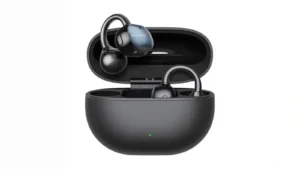
Choose the UU2 for unusually full open-ear sound, all-day comfort, strong battery life and excellent value. Skip it if you need sealed-bud isolation, consistently strong calls, or zero tolerance for...
Pros: Overall satisfaction, Sound quality
Cons: Spatial audio
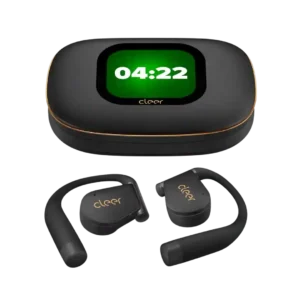
Best for all-day comfort, secure open-ear awareness, long battery life, and a genuinely useful touchscreen case. Skip it if deep bass, strong isolation, compact size, or consistently premium music quality...
Pros: Overall satisfaction, Carry case quality
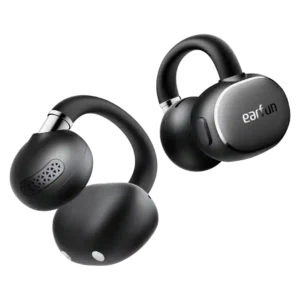
Best for lightweight all-day comfort, outstanding battery life, dependable physical controls, and premium features at a budget price. Skip it if you need deep bass, noise isolation, flawless high-volume sound,...
Pros: Overall satisfaction, Sound quality
Cons: Maximum volume clarity, Noise isolation (passive)

Choose these for secure, comfortable running with excellent outdoor awareness and improved bass. Skip them for noise isolation, swimming, or immersive music at a lower price.
Pros: Sound quality, Overall satisfaction
Cons: Volume output, Sound leakage