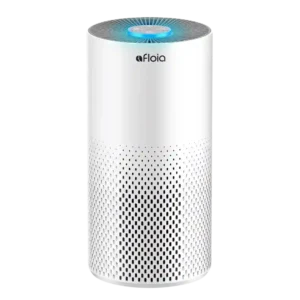
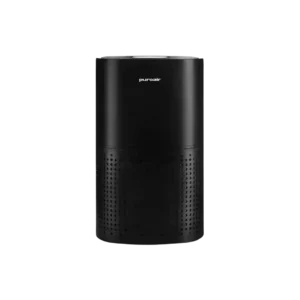
Afloia Kilo
Where It Has the Edge
No clear scored advantage over the other product.

Scorata scores summarize analyzed review evidence on a 1–5 scale; they are not laboratory measurements or a simple average of customer star ratings. Feature scores summarize the reviews covering that feature. The overall score averages feature scores within each review, then combines review averages. When both expert and customer evidence are available, those two groups receive equal weight. Products can have different review coverage, so small score gaps do not establish a winner.
Recommendations prioritize important features for the category, with a score of at least 3.5, a gap of at least 0.25 points and at least two supporting reviews per product. Features with widely varying scores or broad connectivity contexts are excluded from recommendations. These safeguards do not establish statistical significance.
Quick verdict
The available evidence supports the recommendation below, but does not establish an overall winner. Check the remaining features against your priorities.
There is not enough comparable review evidence to recommend Afloia Kilo over the other product.
Choose PuroAir 240 for reliability and support.
No clear scored advantage over the other product.
Scores are out of 5. Missing scores mean missing review evidence, not a missing feature.
Most owners describe a noticeable cleaner-air effect, especially in bedrooms and smaller living areas. A few disappointed buyers say the improvement was minor or hard to verify.
Most owners say rooms feel cleaner or fresher, and several report fast visible improvements. The main split comes from one independent test and one neighbor-smoke owner who felt performance did not match the hype.
Noise is strongly speed-dependent. Low and sleep modes are often praised as quiet, while high speed is repeatedly called loud or high-pitched.
Noise feedback is mostly positive on low, auto, and sleep modes, where owners often call it quiet enough for bedrooms. High or max speed can be noticeably loud.
Filter cost is a recurring annoyance. Several owners like the purifier but dislike paying for replacement filters or needing them often.
Filter cost divides reviewers. Some find replacements reasonable or discounted, while others call them expensive or feel the purifier pushes filter purchases.
Automatic behavior is a weak spot. One reviewer described inconsistent reactions to odors, and expert coverage says this basic Kilo lacks automatic air quality sensing.
Auto mode is widely liked when it ramps up for smoke, cooking, dust, or poorer air, then settles back down. It is one of the product's most appreciated convenience features.
Listing accuracy is mixed because some owners say it matches expectations, while expert reviews and buyers challenge large-room and quietness claims.
Listing accuracy is a concern in the most critical review, mainly around the advertised room coverage versus certified room-size guidance.
The carbon filter helps with lighter odors for some owners, but expert testing calls it too limited for tougher smells, smoke, and VOCs.
Activated carbon is a real strength when reviewers discuss cooking smells, mustiness, smoke, VOCs, and general freshness. One lab-style review still criticizes broader value, but hands-on tests and owners often say odor absorption works well.
Air-quality sensing is mostly a missing-feature concern rather than a strength. Buyers wanting sensor-based adjustments should look beyond the basic Kilo.
Sensor reactions are split. Some tests show fast, accurate color changes, while several owners say the light stayed green or failed to reflect real conditions.
Replacement-filter feedback is mixed but generally workable, with some owners finding filters easily and others asking where to get new ones.
Replacement filters are easy to find according to one tester, including Amazon availability.
The three-stage filter setup is viewed as practical and effective for the price, especially for dust, pet debris, and common indoor particles.
The three-stage filter stack is a recurring positive, with reviewers pointing to the pre-filter, HEPA layer, and activated carbon as a useful combination.
Reviewers and expert coverage distinguish this from certified True HEPA models. It can still clean many particles well, but buyers wanting strict True HEPA certification may want another unit.
The H14/true-HEPA claim is controversial. Some reviewers repeat fine-particle capture claims, but the toughest expert could not verify the third-party H14 documentation.
Filter life is mixed: some owners get several months, while others are surprised by early indicator warnings or frequent replacement needs in dusty pet homes.
Filter life is mixed. Some owners get several months or longer, while others complain the indicator asks for replacement after only two or three months.
The pre-filter is useful for larger debris and pet hair, but one expert would prefer a design that is easier to clean separately from the main filter.
Pre-filter feedback is mixed: reviewers like that it catches hair and larger debris, but the critical expert dislikes that it is not easy to clean separately.
Reliability is mixed. Many units work well for months or years, but defective arrivals, stopped lights, red indicator issues, and nonworking units appear often enough to matter.
Reliability is a strength in long-term owner videos and reviews, with several units running for months or years. One replaced unit tempers that with an early sensor problem.
Customer support stands out in a few reviews, especially quick replies, troubleshooting help, and a free replacement.
Customer support is a bright spot. Owners describe helpful, fast, thorough service for replacements, filter-light resets, and issue resolution.
Replacement experiences range from excellent support sending a working replacement to frustration with returns after defects or filter problems.
Replacement experiences are generally smooth when discussed, including easy filter installation and helpful support for replacement-filter indicators.
Arrival condition is mostly positive when mentioned, including packed-well and on-time delivery notes, though one owner received a unit that did not work.
Packaging and arrival condition are generally positive, with buyers reporting secure boxes, safe arrival, and no damage.
Warranty coverage is a plus in expert coverage, especially when registered, and helps offset some budget-brand concerns.
Warranty coverage and the warranty process are described positively, including a 2-year warranty mention and an easy company process.
Value is a major strength. Reviewers repeatedly connect good small-room performance with a low price, even when they note limits.
Value is sharply split. Many customers call it a good deal or worth the money, while the most critical tester says it is overpriced for its measured performance.
Reviewers mention this attribute in direct product use, with sentiment depending on room size, speed, and expectations.
Setup and controls are repeatedly described as easy, simple, intuitive, or no-brainer. Even first-time purifier owners usually found it approachable.
Air changes are favorable only when the room is small enough. The strongest support is around bedroom-sized spaces near the tested coverage range.
Air-change claims are a weak point. The harshest tester argues the advertised large-room claim amounts to too few hourly air changes for genuinely clean air in a large space.
VOC-related confidence is low because the carbon layer is described as too limited for strong gases or VOCs, even though basic filtration performs well for particles.
VOC and gas reduction are supported by video tests and carbon-filter discussion, though odor and gas cleanup takes longer than particle removal.
Reviewers mention this attribute in direct product use, with sentiment depending on room size, speed, and expectations.
Cord length gets a small but positive note from one tester who found it longer than some competing models.
Remote operation is only lightly mentioned, so it should not be treated as a major buying reason for this model.
Remote control is a miss for buyers who want app, Bluetooth, or remote-style operation. The unit relies on its top controls instead.
CADR is a limiting factor. Expert reviews frame the 82 CFM level as fine for small rooms but underpowered for larger spaces.
CADR is a major criticism in the toughest expert review, which says the measured rating is low for the price and room-size claims.
Real-time monitoring is not a meaningful strength here because the unit lacks an air-quality display, leaving users to judge changes by feel or the filter indicator.
Real-time monitoring is helpful when it reflects cooking or changing air, but some customers distrust the always-green reading.
Dust reduction gets frequent praise from pet owners and bedroom users, though a small number of reviewers say their filters collected little or that dust still escaped.
Dust removal is one of the clearest wins. Many owners say there is less dust on furniture, fewer floating particles, or visible dust captured by the filter.
Breathing relief is a strong owner-reported benefit, including easier breathing, less coughing, asthma comfort, and COPD-related comfort.
Breathing relief comes through strongly in customer reviews, including asthma, congestion, cough, and stuffy-nose improvements. Several owners describe the change as immediate or life-changing.
Child lock appears as a useful basic control in expert coverage, helping prevent accidental button presses.
The child lock is treated as a useful practical feature in setup walkthroughs, especially for keeping kids from changing settings.
The fan-speed choices are appreciated for simple control, although some owners wish the jump between medium and high were smoother or quieter.
Fan-speed options are useful for matching noise and cleaning needs. Reviewers like having multiple strengths, timer choices, and quiet modes.
The HEPA-type filter is credited with much of the unit’s particle-cleaning ability, though it is not treated as a premium certified filtration system.
HEPA filtration is mostly praised for fine-particle capture, smoke, pollen, allergens, and pet dander. One expert questions the H14 marketing, but most hands-on comments are positive.
PM2.5 testing in expert reviews supports good small-room particle reduction, making this one of the more credible performance claims.
PM2.5 testing is positive in the main video review, where readings dropped quickly during a controlled particle test.
Maintenance is usually described as simple, especially removing or changing filters, though cleaning the internal fan is a complaint for at least one owner.
Maintenance is usually described as straightforward, especially filter swaps and basic vacuuming. A few filter-alert and reset situations still required attention or support.
Odor control works for many light pet, cooking, and room smells, but it is not the product’s strongest trait. Strong odors and smoke are the most likely to disappoint.
Odor reduction is a strong everyday-use theme for cooking smells, pets, litter boxes, mustiness, and stale rooms. Strong neighbor smoke is the major odor case where it disappointed.
Reviewers mention this attribute in direct product use, with sentiment depending on room size, speed, and expectations.
Pet hair capture is mentioned less often than dander, but the clearest customer example reports much less fur on furniture.
Energy use is a quiet strength in expert testing, with low wattage and low monthly operating costs helping the value story.
Energy efficiency is praised by reviewers who saw low wattage or no noticeable change in their power bill, especially in auto mode.
The timer is useful for simple auto-off operation, but it does not replace full scheduling or app-based automation.
Timer and scheduling controls are basic but appreciated. Reviewers mention 2, 4, 6, and 8 hour shutoff options rather than full smart scheduling.
Allergy relief is a major positive theme, with many owners reporting less sneezing, congestion, sinus irritation, or seasonal discomfort after running it.
Allergy relief is one of the strongest customer themes. Many owners mention fewer symptoms, less congestion, easier breathing, and better mornings.
Particle cleaning is one of the stronger themes, with expert testing and owners pointing to visible reductions in airborne particles, dust, and general haze.
Particle removal performs well in many hands-on accounts, from floating particles to PM2.5 and PM10 tests. The dissent is mainly about price-adjusted performance.
Power consumption is low enough for continuous use, and expert reviews describe the monthly electricity cost as minimal.
Power consumption looks low in hands-on measurements, with reviewers comfortable running it continuously.
Smoke results are mixed: some owners say it helped with cigarette or wildfire smoke smells, while expert testing and other comments say heavy smoke is beyond its comfort zone.
Smoke removal is mixed by source: controlled tests and some owners report strong results, while a neighbor-smoke buyer says it did not solve marijuana odor.
Portability is positive where mentioned, with the compact body and light weight making it easy to move between rooms.
Portability is a plus because the unit is light enough to move and compact enough to shift between rooms.
Pollen relief is mentioned positively in allergy-season use, with reviewers saying the unit helped indoor pollen problems and related symptoms.
Pollen relief appears in both expert and owner comments, especially from allergy-sensitive buyers dealing with seasonal pollen.
Room temperature mixing can be a drawback for some owners, with comments that it blows cold air or makes a room feel cooler.
One owner says a closed room gets hot while the unit runs, so heat buildup may matter in smaller bedrooms.
Sleep mode is one of the best-liked features for bedrooms, with many reviewers saying it is quiet enough for overnight use.
Sleep mode is a consistent positive because it runs quietly and turns off lights. Bedroom owners often connect it with better sleep.
Air circulation helps some stuffy rooms feel fresher and moves a lot of air on higher settings, but stronger airflow usually comes with more noise.
Air circulation is usually praised, especially by reviewers who felt strong airflow or better room movement. One smoke-focused apartment owner felt suction was weak, so room layout and expectations matter.
Reviewers mention this attribute in direct product use, with sentiment depending on room size, speed, and expectations.
Overall satisfaction is high among customers, with many buying another unit or recommending it. Dissatisfaction clusters around sensor trust, smoke limits, and filter costs.
Pet dander feedback is mostly positive, especially from cat and dog households using the purifier in bedrooms or shared spaces.
Pet dander relief is a major reason buyers like the PuroAir 240. Cat and dog owners repeatedly report less dander, cleaner rooms, or easier breathing.
Documentation is mixed. Some find filter-changing instructions clear, while one owner was confused by wording around the power supply.
Documentation is inconsistent. Some reviewers found the guide clear and easy, while one owner complained there were no usable instructions.
Room coverage is one of the clearest tradeoffs: customers sometimes use it in larger areas, but expert testing points to small rooms as the realistic sweet spot.
Room coverage is the most contested claim. Many owners are happy in bedrooms, apartments, and open rooms, but the critical tester says the large-room marketing is overstated.
The light ring and indicator lights are often liked as a visual perk, but failures and confusing red blinking are also common complaints.
Indicator lights are useful for air quality and filter reminders, though one customer found the lights too bright and another questioned accuracy.
Mold feedback is limited but positive where mentioned, mostly from users who felt symptoms improved in a space they suspected had mold issues.
Mold-related feedback is limited but mildly positive, with one test noting small decreases and one owner viewing it as useful for suspected mold.
Build quality is acceptable for the price in expert testing but not premium. A few owners describe the shell as cheap or fan-like.
Build quality is mixed. Some owners describe a high-quality feel, while the most critical expert found cheaper-feeling filter materials compared with competitors.
Durability feedback ranges from long-running, no-issue use to defective units, light failures, and filter-indicator problems.
Durability is supported by long-term reviewers who kept the unit running for months or years. Reports of constant use without issues are reassuring.
Sleep benefits are often tied to cleaner air, allergy relief, and soft white noise, making bedrooms one of the best-supported use cases.
Sleep benefits show up in bedroom reviews, especially from people waking less congested, sleeping better, or enjoying quiet night mode.
Size feedback splits by expectation: many like the compact footprint, while some find it larger than expected or too small for the claimed coverage.
The size is generally a plus: compact, easy to place, and suitable for bedrooms, offices, apartments, and counters. A few buyers still found it large or tall.
The design is generally liked, with reviewers calling it sleek, modern, unobtrusive, or nice-looking enough to leave out.
Design feedback is mostly favorable: shoppers like the clean black look, compact styling, and unobtrusive shape. One reviewer wished there were more color options.
Smart features are mostly absent. Reviewers who want app controls, automation, or richer scheduling need the Kilo Plus or another smart purifier.
Smart features are limited. Auto mode is useful, but buyers wanting Wi-Fi, app control, or deeper smart-home features may be disappointed.
App connectivity is not available on the basic Kilo, which is a drawback for buyers who want phone control or smart routines.
App support is a drawback because reviewers repeatedly note that the PuroAir 240 does not include Wi-Fi or mobile-app control.
Humidity did not appear to be disturbed in one hands-on test, which is a useful comfort note for buyers worried about dry air.
The aromatherapy pad is divisive: some like having a scented-oil option, while others say fragrance is weak or wish the feature worked better.
Control placement is a small positive in expert coverage, with top controls described as responsive and well positioned.
Formaldehyde-related gas reduction appears in one controlled burnt-toast test, where levels dropped back to a healthier range after a longer run.
Initial smell is uncommon but meaningful when it appears, ranging from an unusual first-use smell to a serious burning-plastic complaint.
The lack of ionization is treated positively because it supports ozone-free operation and keeps the purifier mechanically filtered.
Ozone-free operation is a clear positive in expert coverage because the unit relies on mechanical filtration rather than ionization.
Power adapter wording caused confusion for one owner, who felt the instructions were unclear about the power supply.
Safety concerns are rare but serious, centered on a burning-plastic odor report after use.
Settings and light retention are a recurring annoyance, especially lights that turn off, stop working, or remain stuck on red.
UV-C is only useful here as an absence: expert coverage says the purifier does not use UV-C, which supports ozone-free operation but means no UV-C cleaning claim.
Display readability is mixed: expert coverage says indicators are clear, while some owners dislike small symbols, disappearing lights, or the lack of an air-quality display.
VOC or odor sensor behavior is not dependable in the comments that mention detection. The basic model is better understood as manual rather than sensor-driven.
The washable pre-filter is a plus in expert coverage because it catches larger debris before the main filter and can help preserve airflow.
The handle design helps with room-to-room use, and one detailed customer review specifically appreciated being able to move it easily.
Voice-assistant compatibility is not a strength. A long-term reviewer says Alexa-style scheduling and away-from-home checking are features buyers might miss.
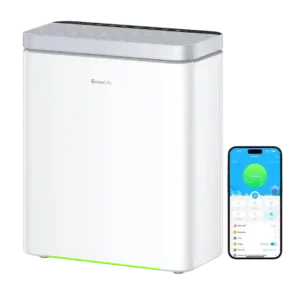
Choose the H7124 if you want a quiet smart purifier for odors, dust, pets, and app control. Skip it if you need foolproof Wi-Fi, wall-facing intake, UV light, or strong...
Pros: air purification performance, noise level
Cons: control placement
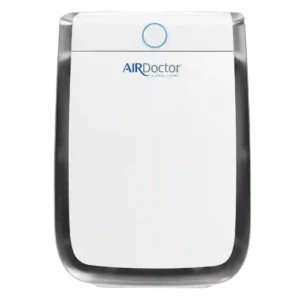
Best for strong room cleaning, allergy relief, odor control, and simple operation. Skip it if high filter costs, a larger footprint, or possible nighttime fan noise would bother you.
Pros: air purification performance, overall satisfaction
Cons: filter replacement cost
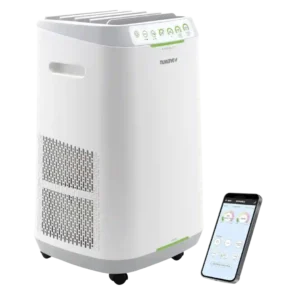
Choose this if you want strong odor, dust, smoke, and pet-air cleanup with washable filters. Skip it if turbo noise, Wi-Fi setup, or a high upfront price will bother you.
Pros: overall satisfaction, air purification performance
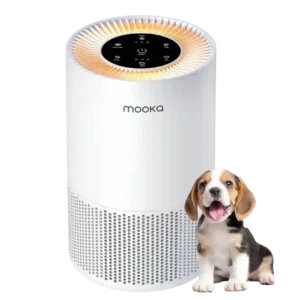
Best for a quiet, compact purifier that helps with dust, pet odors, and allergies. Skip it if you need verified smart sensing, strong aromatherapy, or guaranteed large-room coverage.
Pros: noise level, air purification performance
Cons: reliability