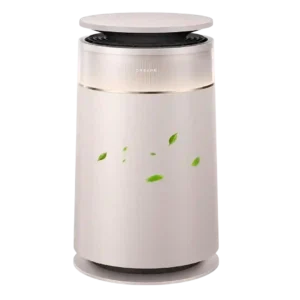
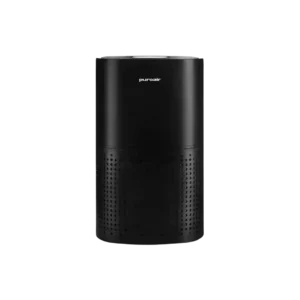
Dreame FP10
Where It Has the Edge
- smart features is 4.1 vs 3.0. Smart features are appealing when they work, especially pet weighing, air-quality stats, lights, and app-based customization. Some functionality...

Scorata scores summarize analyzed review evidence on a 1–5 scale; they are not laboratory measurements or a simple average of customer star ratings. Feature scores summarize the reviews covering that feature. The overall score averages feature scores within each review, then combines review averages. When both expert and customer evidence are available, those two groups receive equal weight. Products can have different review coverage, so small score gaps do not establish a winner.
Recommendations prioritize important features for the category, with a score of at least 3.5, a gap of at least 0.25 points and at least two supporting reviews per product. Features with widely varying scores or broad connectivity contexts are excluded from recommendations. These safeguards do not establish statistical significance.
Quick verdict
The review evidence points to a tradeoff: smart features versus noise level and ease of use. Choose according to which strengths matter more to you; the overall score alone does not settle that choice.
Choose Dreame FP10 for smart features.
Choose PuroAir 240 for noise level and ease of use.
Scores are out of 5. Missing scores mean missing review evidence, not a missing feature.
Most reviewers say the FP10 makes rooms feel fresher and cleaner, with experts measuring strong particle cleanup in tougher tests. The main dissent came from one customer who felt it acted like a fan rather than a purifier.
Most owners say rooms feel cleaner or fresher, and several report fast visible improvements. The main split comes from one independent test and one neighbor-smoke owner who felt performance did not match the hype.
Replacement filters are not cheap, but the two-year life softens the blow for reviewers who value fewer consumable purchases.
Filter cost divides reviewers. Some find replacements reasonable or discounted, while others call them expensive or feel the purifier pushes filter purchases.
Most reviewers say the FP10 is quiet in normal or sleep use. Pet mode, top speed, and air-quality spikes can become loud enough to bother some households.
Noise feedback is mostly positive on low, auto, and sleep modes, where owners often call it quiet enough for bedrooms. High or max speed can be noticeably loud.
The H14 HEPA layer is treated as a high-end filter stage, though experts also note real-room results do not match sealed-lab claims exactly.
The H14/true-HEPA claim is controversial. Some reviewers repeat fine-particle capture claims, but the toughest expert could not verify the third-party H14 documentation.
One buyer felt the cat-weighing and voice-control expectations were not clear before purchase, creating disappointment after setup.
Listing accuracy is a concern in the most critical review, mainly around the advertised room coverage versus certified room-size guidance.
Experts liked the rotating pre-filter concept because it catches hair before it reaches the main filter and helps keep airflow from dropping.
Pre-filter feedback is mixed: reviewers like that it catches hair and larger debris, but the critical expert dislikes that it is not easy to clean separately.
Auto and AI modes generally worked well, reacting to air conditions and even lowering airflow around pets. Cooking spikes can make auto mode ramp up loudly.
Auto mode is widely liked when it ramps up for smoke, cooking, dust, or poorer air, then settles back down. It is one of the product's most appreciated convenience features.
Long filter life is a major advantage, with experts and owners noting that the filter can stay cleaner because fur is diverted before it mats the HEPA pleats.
Filter life is mixed. Some owners get several months or longer, while others complain the indicator asks for replacement after only two or three months.
The carbon layer is mainly praised as part of the FP10's odor-control system, especially when paired with Dreame's added odor-neutralizing layer.
Activated carbon is a real strength when reviewers discuss cooking smells, mustiness, smoke, VOCs, and general freshness. One lab-style review still criticizes broader value, but hands-on tests and owners often say odor absorption works well.
The filtration stack is considered robust, with pre-filter, HEPA, carbon, and odor-focused layers working together for pet homes.
The three-stage filter stack is a recurring positive, with reviewers pointing to the pre-filter, HEPA layer, and activated carbon as a useful combination.
Sensor reactions were mixed: some owners saw believable responses to cooking, while expert criticism and one negative review questioned whether readings and reactions fully matched real air changes.
Sensor reactions are split. Some tests show fast, accurate color changes, while several owners say the light stayed green or failed to reflect real conditions.
Reliability has limited but important negative feedback from a customer who returned the unit after weeks of testing and seeing no filtration results.
Reliability is a strength in long-term owner videos and reviews, with several units running for months or years. One replaced unit tempers that with an early sensor problem.
Customer support feedback is sharply negative in the one review that discussed it, with the owner saying responses were generic and unhelpful.
Customer support is a bright spot. Owners describe helpful, fast, thorough service for replacements, filter-light resets, and issue resolution.
The only replacement-adjacent experience was negative, with one buyer unhappy about a late shipment and early disappointment.
Replacement experiences are generally smooth when discussed, including easy filter installation and helpful support for replacement-filter indicators.
Value depends heavily on pet needs. Reviewers often say it is expensive, but many still find the price justified if fur capture and reduced maintenance matter.
Value is sharply split. Many customers call it a good deal or worth the money, while the most critical tester says it is overpriced for its measured performance.
Most owners found setup and daily operation straightforward, especially through the app. A few caveats show up around app dependence, small buttons, and unclear protective-wrap removal.
Setup and controls are repeatedly described as easy, simple, intuitive, or no-brainer. Even first-time purifier owners usually found it approachable.
In real-room use, one expert found performance closer to several practical air changes per hour rather than marketing-style instant purification.
Air-change claims are a weak point. The harshest tester argues the advertised large-room claim amounts to too few hourly air changes for genuinely clean air in a large space.
Experts describe the CADR as appropriate for a high-end large-room purifier, while still grounding expectations in real room sizes and air changes.
CADR is a major criticism in the toughest expert review, which says the measured rating is low for the price and room-size claims.
The energy reporting feature drew criticism because one reviewer could not get it to work, leaving little confidence in that part of the app.
Energy efficiency is praised by reviewers who saw low wattage or no noticeable change in their power bill, especially in auto mode.
One customer felt the purifier helped cool the room, but this was a comfort impression rather than a widely repeated theme.
One owner says a closed room gets hot while the unit runs, so heat buildup may matter in smaller bedrooms.
Portability is mixed: the unit can be moved, but its size and weight make it better for a fixed spot than frequent room-to-room use.
Portability is a plus because the unit is light enough to move and compact enough to shift between rooms.
The app's live air-quality readings and trend information were useful to reviewers who wanted to see what the purifier was doing from their phone.
Real-time monitoring is helpful when it reflects cooking or changing air, but some customers distrust the always-green reading.
Pet households often noticed less dust settling around the room, though one negative review said dust seemed to move around the base instead of being captured.
Dust removal is one of the clearest wins. Many owners say there is less dust on furniture, fewer floating particles, or visible dust captured by the filter.
The only clear power-use note is the expert-reported full-speed draw, which positions it as a moderate appliance rather than a heavy power user.
Power consumption looks low in hands-on measurements, with reviewers comfortable running it continuously.
The cord is praised for being bite-resistant, which matters more for pet safety than for reach or placement flexibility.
Cord length gets a small but positive note from one tester who found it longer than some competing models.
The child lock is valued as part of the pet-safe design, helping prevent accidental button presses from children or curious paws.
The child lock is treated as a useful practical feature in setup walkthroughs, especially for keeping kids from changing settings.
Experts view the HEPA stage as a serious part of the filtration stack, especially for small airborne allergens and fine particles.
HEPA filtration is mostly praised for fine-particle capture, smoke, pollen, allergens, and pet dander. One expert questions the H14 marketing, but most hands-on comments are positive.
PM2.5 monitoring appears useful for tracking particulate spikes from candles, cooking, windows, and general indoor air changes.
PM2.5 testing is positive in the main video review, where readings dropped quickly during a controlled particle test.
Breathing relief shows up through allergy and asthma-related owner comments, with several people reporting less sneezing or more comfortable air.
Breathing relief comes through strongly in customer reviews, including asthma, congestion, cough, and stuffy-nose improvements. Several owners describe the change as immediate or life-changing.
This is the FP10's defining strength: reviewers repeatedly saw less floating hair, less fur buildup, and cleaner filters in homes with shedding pets. One negative owner said it failed to collect hair at all, but most accounts describe strong fur capture.
Pet hair capture is mentioned less often than dander, but the clearest customer example reports much less fur on furniture.
Reviewers liked having more fan-speed control than typical three- or four-speed purifiers, although top speeds bring more noise.
Fan-speed options are useful for matching noise and cleaning needs. Reviewers like having multiple strengths, timer choices, and quiet modes.
Smoke performance was a standout in expert testing, where match and incense smoke particles were cleared very effectively on both auto and high settings.
Smoke removal is mixed by source: controlled tests and some owners report strong results, while a neighbor-smoke buyer says it did not solve marijuana odor.
Several owners with allergies or asthma reported easier breathing, less sneezing, or noticeable relief after running the purifier around pets.
Allergy relief is one of the strongest customer themes. Many owners mention fewer symptoms, less congestion, easier breathing, and better mornings.
Scheduling is useful for pre-cleaning a room before guests or setting routines, but it appears as an app-centered convenience rather than a core reason to buy.
Timer and scheduling controls are basic but appreciated. Reviewers mention 2, 4, 6, and 8 hour shutoff options rather than full smart scheduling.
Sleep mode is consistently described as very quiet or nearly silent, with dimmed lighting making it easier to keep the purifier running overnight.
Sleep mode is a consistent positive because it runs quietly and turns off lights. Bedroom owners often connect it with better sleep.
Maintenance is one of the FP10's best-reviewed traits. Reviewers liked dumping a chamber or dust bin instead of pulling fur off a clogged filter by hand.
Maintenance is usually described as straightforward, especially filter swaps and basic vacuuming. A few filter-alert and reset situations still required attention or support.
The FP10 is repeatedly framed as a strong large-room purifier, with customers and experts using it in living rooms and open spaces. Smaller rooms may not need this much capacity.
Room coverage is the most contested claim. Many owners are happy in bedrooms, apartments, and open rooms, but the critical tester says the large-room marketing is overstated.
Customer satisfaction is mostly high, with many owners calling it easy to recommend or a strong daily addition. The main negative came from one buyer frustrated by missing features and one who returned it.
Overall satisfaction is high among customers, with many buying another unit or recommending it. Dissatisfaction clusters around sensor trust, smoke limits, and filter costs.
Odor control gets broad praise for pet smells, litter-box odors, cooking smells, and general room freshness. One dissatisfied owner reported no improvement with fish smells, but that was the clear outlier.
Odor reduction is a strong everyday-use theme for cooking smells, pets, litter boxes, mustiness, and stale rooms. Strong neighbor smoke is the major odor case where it disappointed.
Independent testing found strong particle removal, especially in smoke-heavy conditions where small and larger particles dropped sharply after a 30-minute run.
Particle removal performs well in many hands-on accounts, from floating particles to PM2.5 and PM10 tests. The dissent is mainly about price-adjusted performance.
Air movement is described as active and room-filling, helped by the 360-degree intake and LoopBoost circulation approach.
Air circulation is usually praised, especially by reviewers who felt strong airflow or better room movement. One smoke-focused apartment owner felt suction was weak, so room layout and expectations matter.
The lighting is generally liked as a subtle nightlight and air-quality cue, especially in pet spaces and living rooms.
Indicator lights are useful for air quality and filter reminders, though one customer found the lights too bright and another questioned accuracy.
Setup guidance is mixed: one owner found the instructions easy, while another said removing the protective wrap was not obvious at first.
Documentation is inconsistent. Some reviewers found the guide clear and easy, while one owner complained there were no usable instructions.
Pet dander comments are mostly positive, with reviewers tying the FP10 to cleaner air in homes with cats and dogs and one customer calling out cat dander effectiveness directly.
Pet dander relief is a major reason buyers like the PuroAir 240. Cat and dog owners repeatedly report less dander, cleaner rooms, or easier breathing.
The app is usually praised as easy and convenient, with remote control and monitoring being useful. A few reviewers disliked that self-cleaning and other features depend on it.
App support is a drawback because reviewers repeatedly note that the PuroAir 240 does not include Wi-Fi or mobile-app control.
Voice control is a mixed point: expert and owner reviews mention Alexa or Google support, but one customer said their unit did not have voice control.
Voice-assistant compatibility is not a strength. A long-term reviewer says Alexa-style scheduling and away-from-home checking are features buyers might miss.
Smart features are appealing when they work, especially pet weighing, air-quality stats, lights, and app-based customization. Some functionality requires accessories or the app.
Smart features are limited. Auto mode is useful, but buyers wanting Wi-Fi, app control, or deeper smart-home features may be disappointed.
Reviewers repeatedly call the FP10 big. Many forgive the footprint because it looks like furniture, but small homes and tight corners are not its natural fit.
The size is generally a plus: compact, easy to place, and suitable for bedrooms, offices, apartments, and counters. A few buyers still found it large or tall.
Build quality impressions are positive, with experts calling out sturdy materials, durable feel, and a stable pet-friendly base.
Build quality is mixed. Some owners describe a high-quality feel, while the most critical expert found cheaper-feeling filter materials compared with competitors.
Design is a major strength, with reviewers often describing the FP10 as sleek, minimal, elegant, or furniture-like instead of appliance-like.
Design feedback is mostly favorable: shoppers like the clean black look, compact styling, and unobtrusive shape. One reviewer wished there were more color options.
Humidity did not appear to be disturbed in one hands-on test, which is a useful comfort note for buyers worried about dry air.
The physical controls drew criticism for being small and hard to see, making the app feel more necessary than some users may want.
Formaldehyde-related gas reduction appears in one controlled burnt-toast test, where levels dropped back to a healthier range after a longer run.
Ionization was mentioned positively as an additional particle-capture feature, but reviewers did not deeply test or debate it.
Mold-related feedback is limited but mildly positive, with one test noting small decreases and one owner viewing it as useful for suspected mold.
Pollen relief appears in both expert and owner comments, especially from allergy-sensitive buyers dealing with seasonal pollen.
Remote control is a miss for buyers who want app, Bluetooth, or remote-style operation. The unit relies on its top controls instead.
One expert viewed UV as part of a broader advanced filter stack, but there was no independent pathogen test to prove real-world effectiveness.
VOC and gas reduction are supported by video tests and carbon-filter discussion, though odor and gas cleanup takes longer than particle removal.
Packaging and arrival condition are generally positive, with buyers reporting secure boxes, safe arrival, and no damage.
Warranty coverage and the warranty process are described positively, including a 2-year warranty mention and an easy company process.
The on-body display is a weak spot because one expert found the lack of visible air-quality readings and clear setting feedback disappointing.
Replacement filters are easy to find according to one tester, including Amazon availability.
VOC sensing was judged as limited for pet households because the monitored metrics may miss some larger pet-related pollutants.
Durability is supported by long-term reviewers who kept the unit running for months or years. Reports of constant use without issues are reassuring.
Sleep benefits show up in bedroom reviews, especially from people waking less congested, sleeping better, or enjoying quiet night mode.
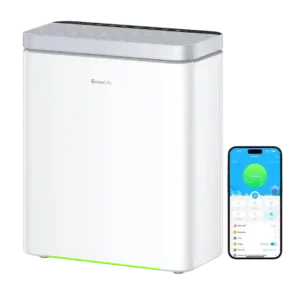
Choose the H7124 if you want a quiet smart purifier for odors, dust, pets, and app control. Skip it if you need foolproof Wi-Fi, wall-facing intake, UV light, or strong...
Pros: air purification performance, noise level
Cons: control placement
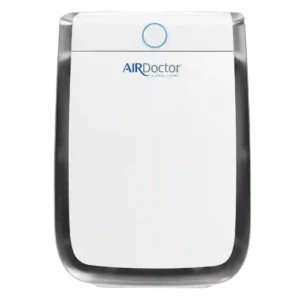
Best for strong room cleaning, allergy relief, odor control, and simple operation. Skip it if high filter costs, a larger footprint, or possible nighttime fan noise would bother you.
Pros: air purification performance, overall satisfaction
Cons: filter replacement cost
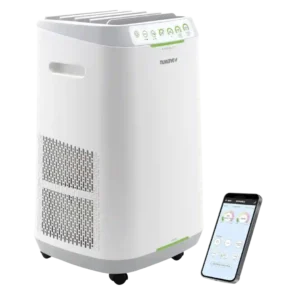
Choose this if you want strong odor, dust, smoke, and pet-air cleanup with washable filters. Skip it if turbo noise, Wi-Fi setup, or a high upfront price will bother you.
Pros: overall satisfaction, air purification performance
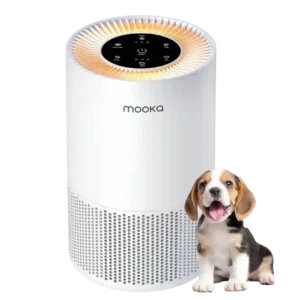
Best for a quiet, compact purifier that helps with dust, pet odors, and allergies. Skip it if you need verified smart sensing, strong aromatherapy, or guaranteed large-room coverage.
Pros: noise level, air purification performance
Cons: reliability