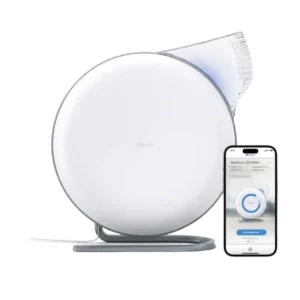
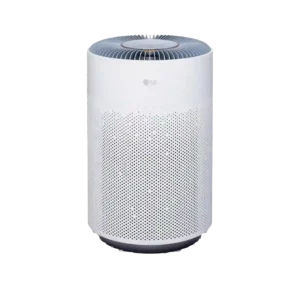
IQAir Atem Desk
Where It Has the Edge
- size and footprint is 4.2 vs 3.2. Many reviewers like the compact footprint, but size expectations vary. Some find it desk-perfect while others say it...

Scorata scores summarize analyzed review evidence on a 1–5 scale; they are not laboratory measurements or a simple average of customer star ratings. Feature scores summarize the reviews covering that feature. The overall score averages feature scores within each review, then combines review averages. When both expert and customer evidence are available, those two groups receive equal weight. Products can have different review coverage, so small score gaps do not establish a winner.
Recommendations prioritize important features for the category, with a score of at least 3.5, a gap of at least 0.25 points and at least two supporting reviews per product. Features with widely varying scores or broad connectivity contexts are excluded from recommendations. These safeguards do not establish statistical significance.
Quick verdict
The review evidence points to a tradeoff: size and footprint versus noise level and indicator lights. Choose according to which strengths matter more to you; the overall score alone does not settle that choice.
Choose IQAir Atem Desk for size and footprint.
Choose LG PuriCare 360 for noise level and indicator lights.
Scores are out of 5. Missing scores mean missing review evidence, not a missing feature.
Most reviewers say the Atem Desk noticeably improves the air around them, especially in offices, bedrooms, and close-range use. Negative comments usually involve heavy smoke, larger areas, or possible defective units.
Most reviewers say the LG noticeably improves indoor air and performs strongly in everyday rooms. A few use cases, such as 3D printing fumes or lingering dust in a large home, were less convincing.
Filter cost is a recurring downside, with customers calling replacements expensive. The cost matters most when filters need changing sooner than expected.
Replacement filters are considered expensive and sometimes hard to buy. This is one of the most practical ownership-cost complaints.
Quiet operation is one of the strongest positives, especially on low and medium. Noise complaints usually involve high speed, rattles, or defective fan behavior.
Quiet operation is one of the strongest points across the review set. Most owners find it whisper-quiet or barely noticeable, though turbo or Clean Booster mode can get loud.
The adjustable airflow is a major desk-use advantage because reviewers can aim clean air at their face or workspace. A few users wanted smoother adjustment or broader airflow.
The movable top outlet is useful when it oscillates and pushes air across the room. Expert feedback treats the 70-degree swing as one of the more distinctive airflow controls.
The lack of true air-quality-based auto mode is a drawback for reviewers expecting automatic adjustments. The Atem Desk is more manual than sensor-driven.
Auto mode is a major convenience win when it reacts to cooking, dust, or changing air quality and then settles back down. Reviewers repeatedly describe it as a set-and-forget feature.
Filter life depends heavily on use. Light-use and expert comments are more optimistic, while high-speed daily users report much shorter life.
Filter life earns both praise and frustration. Some owners say the filter lasts longer than expected, while another saw the remaining-life indicator drop quickly after only a few months.
One buyer felt misled because the unit required a separate filter to operate. This is isolated but severe for that customer.
Listing accuracy is mixed. One buyer said the unit was exactly as advertised, while another said it was not as described and did not connect to Wi-Fi.
Replacement-filter availability is the most repeated practical complaint. Many buyers say filters are hard to find, backordered, or unavailable on Amazon.
Replacement-filter availability is a recurring weak spot. Buyers complained that LG did not offer filters directly or that replacements were hard to find.
HyperHEPA and HEPA-style filtration are treated as core strengths, especially in expert and travel-focused reviews. Reviewers connect the filtration with cleaner personal air and particle capture.
True HEPA filtration is a key reason experts like the purifier’s cleaning ability. Praise centers on the large 360-degree HEPA filters and high-efficiency particle capture.
Reliability is a meaningful risk in customer reviews. Complaints include stopped units, broken plugs, weak connectors, and stand problems.
Reliability is mixed. Some buyers trust LG and call the product dependable, while the failed repair case is a serious negative signal.
Customer support draws repeated criticism in problem cases. Complaints mention disorganized replies, closed cases, and limited help after failures.
Customer support feedback is split sharply. One customer called it responsive, but several negative reviews describe unanswered requests or unresolved service problems.
Value is split: some buyers feel the premium price is worth it, while others cite filter costs, failures, small coverage, or support problems.
Value is highly context-dependent. Sale-price buyers often feel it is worth it, while experts and unhappy owners question the premium price and ongoing filter costs.
Replacement experiences are poor in several defect cases. Buyers mention returns, no replacement, or difficulty getting help.
The repair/replacement experience can be poor when something goes wrong. One owner waited through repair only to receive a product that still did not function properly.
Arrival condition varies, with some buyers reporting broken or poorly packed units and others noting smooth delivery. Damaged arrivals are uncommon but serious.
Arrival condition is mixed. One buyer praised the packaging, while another received a faulty device and never got a working unit after repair.
Setup and daily use are usually easy, though not always instantly intuitive. Some users struggled with controls, cord connection, or assembly details.
Basic setup and daily operation are usually easy, especially when users plug it in, start auto mode, and leave it alone. App setup is the main thing that complicates the experience.
Smoke removal may be limited for heavy smoke. One reviewer said strong moxibustion smoke still left the room smelling bad even after running the purifier on maximum.
Smoke handling is mixed. One customer cleared smoke odor quickly on turbo, while an expert noted only average smoke CADR and one user saw slow smoke detection.
The blue indicator light is useful for status but bothers some bedroom users. Light sensitivity is a real caveat for sleep setups.
Many buyers like the color light because it makes air quality easy to understand at a glance. The main drawback is that some top-panel controls or lights are hard to see or fully turn off.
HEPA filtration is mentioned positively by users looking for a medically recommended filter. It supports allergy-focused use, though only a small number of reviews discuss it directly.
HEPA-related feedback is mostly positive, tied to clean, fresh air and strong filtration. One negative owner review blamed the HEPA filter for a strong chemical smell.
Pet-related allergy comments are favorable, especially for cat and dog triggers. The Atem Desk helped some users tolerate pet-heavy rooms more comfortably.
Pet-related particle pickup is mixed. One user liked seeing pet dander pulled from the air, while another said purifier videos overpromise dog-hair and lint removal.
Coverage is context-dependent: the Atem Desk suits personal zones and small spaces, not whole-room expectations. Several reviewers warn about limited reach.
Room coverage is generally praised for large, open rooms and whole-apartment use. One expert review pushed back, saying its rated coverage looked small for such a big premium purifier.
Maintenance is mostly straightforward, but filter replacement and cleaning questions can frustrate owners. Long-term users pay close attention to filter upkeep.
Maintenance is usually described as easy, especially filter access, cleaning, and replacement. Even brief customer reviews highlight simple filter handling.
Portability is widely liked for offices, hotels, bedrooms, and travel. Some users still note it needs power and can take up luggage or desk space.
Portability depends on the model and user. One buyer found it lightweight enough to move between rooms, while others found the larger unit awkward and heavy.
The touch control is simple once learned, but the hidden side interaction can confuse some users. Minimalist controls work best for buyers who like a clean design.
Controls are serviceable but not universally loved. Some buyers liked the soft-touch keypad, while experts and customers found certain controls unintuitive or hard to see.
Dust feedback is mostly positive, with users seeing less dust on desks, in rooms, or around allergy triggers. One reviewer found dust capture only modest.
Dust removal is usually praised, especially by allergy sufferers and users monitoring dirty air. One buyer expected dog hair and lint pickup and was disappointed, and another still had dust in a large home.
Several users describe easier breathing from asthma, allergies, sinus issues, or stale air. These benefits are usually tied to close-range placement.
Several users connect the purifier with easier breathing, asthma support, or sinus relief. A chemical-smell complaint cuts the other direction, showing that filter odor can ruin the experience for sensitive users.
Fan-speed control is generally liked, especially where the app allows finer adjustment. A few users wanted stronger output or more top-end range.
Fan settings are appreciated by buyers who like having optional modes and speed control. Turbo can be loud, but high and auto settings often remain usable.
VOC feedback is negative in the one detailed sensitivity review. That buyer hoped for chemical-smell relief and felt the Atem made the problem worse.
VOC and gas reduction is discussed as part of the carbon/deodorization filtration system. One owner using 3D printers found it insufficient for that specialized fume-heavy use.
Overall satisfaction leans positive thanks to clean-feeling air, quiet operation, design, and portability. Dissatisfaction clusters around filters, smell, failures, and support.
Overall satisfaction is high among most customers, with many saying they love it, would buy again, or bought another. Dissatisfied owners tend to focus on smart-feature failures, odor, service, or value.
Virus-related confidence comes mainly from expert and COVID-era use cases around HyperHEPA filtration. Reviewers do not prove medical protection.
Virus-reduction confidence comes mainly from Safe Plus and ionizer discussions. Reviewers mention H1N1, bacteria, and virus-reduction claims as reassurance rather than everyday user testing.
Odor experiences are split: some users report clean air with no off-gassing, while chemically sensitive or unhappy buyers describe unpleasant smells.
Initial or filter-related smell is a real split. One user appreciated the lack of plastic odor, while others reported strong chemical or moldy smells that made the purifier unusable.
Allergy relief is one of the strongest patterns, with buyers reporting less sneezing, clearer sinuses, fewer headaches, or easier breathing. The praise is strongest when the purifier sits close to the user.
Allergy-related comments are very favorable, with buyers describing less sneezing, cleaner-feeling air, and even major relief at home. This is one of the clearest practical benefits in the reviews.
Dryness appears as a comfort tradeoff for overnight use. One reviewer liked the clean breeze but suggested lip balm or humidity support.
Dry-air comfort is a limitation rather than a strength. One expert preferred a Dyson humidifying model for dry months, making the LG better suited to purification than humidity support.
Reviewers like the focused stream of clean air around the face. It works best as a personal bubble rather than as general room circulation.
Reviewers liked the way the 360 design and booster fan move clean air around the room. Several comments describe air reaching corners, flowing broadly, or improving the feel of the whole space.
Odor performance is mixed, with everyday stale or sweat smells improving for some users while smoke and chemical odors disappoint others.
Odor reduction is usually excellent for cooking, pets, smoke smells, and household odors. A handful of negative reviews say it failed on odor problems or created an unpleasant smell itself.
Particle-removal feedback is strong where reviewers measured PM or particle reduction. It supports the Atem Desk's role as a close-range purifier.
Particle removal is supported by expert testing and customer comments about fewer particulates indoors. The strongest praise is tied to the 360-degree filter design and high-efficiency particle capture.
Pollen-sensitive users often report meaningful relief. The product is praised most when aimed directly at the user.
Pollen feedback is positive but limited. A buyer noticed the purifier respond in real time when windows were open on a high-pollen day.
Phone-based smart on/off is praised as convenient, but it depends on Bluetooth/app behavior. It is useful but not universally reliable.
Scheduling is a useful app feature for owners who want cleaner air at specific times. Reviewers liked setting it off at night or scheduling operation from the ThinQ app.
Durability concerns are limited but real, including a broken air guide. The product may still function, but fragile pieces hurt confidence.
Longer-term reliability looks good in a few brief owner comments, including a one-year positive report. The main counterweight is the faulty-device repair case.
Many reviewers like the compact footprint, but size expectations vary. Some find it desk-perfect while others say it is too large.
Size is the major physical tradeoff. Some buyers say it fits fine or looks good, but many call it big, bulky, or larger than expected.
Build quality is mixed: experts and many buyers praise premium construction, while some owners report cheap plastic, glue, plugs, or quality failures.
Build impressions are generally strong, with buyers calling it a quality LG product and praising good construction. One review disliked the manufacturing origin, but that was an outlier.
Sleep feedback is mostly positive, with users reporting cleaner breathing and better rest. Blue-light and filter-life issues are the main sleep-use drawbacks.
Sleep-related comfort is positive in the few reviews that mention it. Quiet operation and light control made it easy to use overnight or near light sleepers.
Design is a clear strength: reviewers call it stylish, modern, attractive, and office-friendly. Even several mixed reviews still like the look.
The design is a strength for many buyers, with praise for the modern white look and how it fits into living spaces. Its attractive shape helps offset the appliance-like size.
The Bluetooth app is useful for controls and convenience, but not perfect. Some reviewers liked it, while others reported connection or behavior quirks.
The app is polarizing: happy users found remote control and monitoring convenient, while others struggled with setup, QR pairing, or repeated connection failures. Smart-control value depends heavily on Wi-Fi setup success.
Smart features are useful when they work, especially pairing and automatic on/off. Bluetooth range, software updates, and lack of airplane mode hold them back.
Smart features are useful when stable, offering history, scheduling, remote control, and monitoring. The same feature set becomes a liability for buyers who hit app or Wi-Fi glitches.
Odor-focused filtration gets good marks, especially around kitchen smells and harmful gases. Buyers liked that the deodorizing layer works alongside the main particle filter rather than feeling like an afterthought.
The sensor usually impressed reviewers by reacting to cleaning products, cooking, odors, and changing air quality. One smoke-related review found detection slow, so it is not flawless.
Indicator readability is mixed. Color-coded air quality is easy to understand, but one customer and one expert complained about dim or incomplete light controls.
Filtration quality is widely praised, especially the multi-stage setup with pre-filter, HEPA, and deodorizing layers. Reviewers describe it as a serious system rather than a simple fan with a filter.
Washable or cleanable filter handling is mixed. Some users liked easy cleaning, while one buyer wished the filters were cleanable instead of replaceable.
Air change frequency drew direct praise from a customer who felt the unit refreshed the room at a satisfying pace. This was not a heavily discussed metric, but the available feedback is positive.
CADR feedback is lukewarm in the expert review that discussed it directly. The purifier may feel premium, but those numbers were described as merely average for the price.
Documentation drew criticism from a buyer trying to connect Wi-Fi. The manual did not clearly explain the setup path, forcing them to search elsewhere.
Formaldehyde reduction appears in one reviewed Safe Plus/deodorization filter discussion. It is presented as part of harmful-gas removal rather than a frequently tested buyer experience.
Ionization is treated as a health-oriented extra in video and article reviews. Reviewers present it as useful for reducing airborne germs and viruses, though it is discussed less than core filtration.
Power use gets limited but mixed comments. One buyer worried high speed would use a lot of electricity, while another liked that app control avoids running it all day.
Real-time monitoring is a standout smart feature when it works. Reviewers like seeing color changes, history, alerts, and live air-quality responses to cooking or dusty conditions.
The physical remote is a useful fallback when app control fails. An expert said it replicates most functions, though light control was incomplete.
The focused airflow can feel cooling, sometimes pleasantly and sometimes too chilly. This matters most when the purifier is aimed directly at the user.
One reviewer says the unit was approved for onboard use by an electrical team. Broader safety-certification experience is not discussed much.
Sleep mode and nighttime use are praised because the unit can run very quietly and turn off distracting lights. This makes it workable in bedrooms for many users.
The missing built-in handle is a notable ergonomic complaint. A buyer liked the cleaning power but said moving the unit would be much easier with a handle.
Voice-assistant support worked well with Google Assistant in expert testing. Alexa was less smooth because it confused the purifier with another appliance name.
Wi-Fi reliability is the weakest smart-home trait. Multiple buyers and one expert report failed setup, offline status, flaky modules, or repeated disconnects.
Warranty coverage is mentioned positively in one video review. Broader warranty outcomes are not well represented.
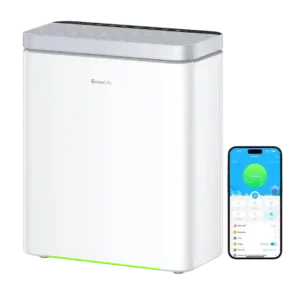
Choose the H7124 if you want a quiet smart purifier for odors, dust, pets, and app control. Skip it if you need foolproof Wi-Fi, wall-facing intake, UV light, or strong...
Pros: air purification performance, noise level
Cons: control placement
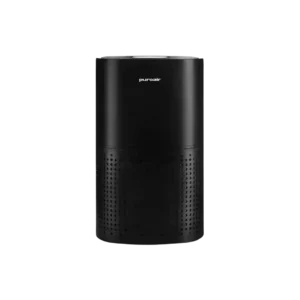
Best for quiet, simple cleaning in bedrooms or apartments. Skip it if you need verified large-room CADR value, app control, or guaranteed neighbor-smoke removal.
Pros: noise level, air purification performance
Cons: filter replacement cost, air quality sensor accuracy
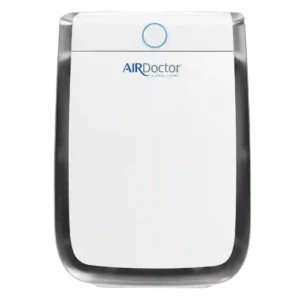
Best for strong room cleaning, allergy relief, odor control, and simple operation. Skip it if high filter costs, a larger footprint, or possible nighttime fan noise would bother you.
Pros: air purification performance, overall satisfaction
Cons: filter replacement cost
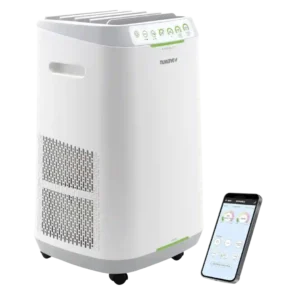
Choose this if you want strong odor, dust, smoke, and pet-air cleanup with washable filters. Skip it if turbo noise, Wi-Fi setup, or a high upfront price will bother you.
Pros: overall satisfaction, air purification performance