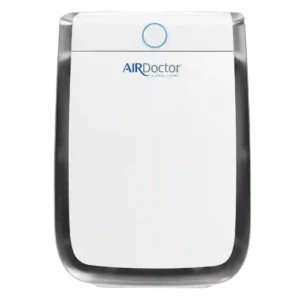
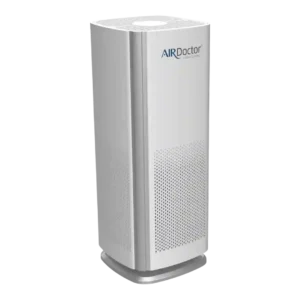
AirDoctor AD3500
Where It Has the Edge
No clear scored advantage over the other product.

Scorata scores summarize analyzed review evidence on a 1–5 scale; they are not laboratory measurements or a simple average of customer star ratings. Feature scores summarize the reviews covering that feature. The overall score averages feature scores within each review, then combines review averages. When both expert and customer evidence are available, those two groups receive equal weight. Products can have different review coverage, so small score gaps do not establish a winner.
Recommendations prioritize important features for the category, with a score of at least 3.5, a gap of at least 0.25 points and at least two supporting reviews per product. Features with widely varying scores or broad connectivity contexts are excluded from recommendations. These safeguards do not establish statistical significance.
Quick verdict
The available evidence supports the recommendation below, but does not establish an overall winner. Check the remaining features against your priorities.
There is not enough comparable review evidence to recommend AirDoctor AD3500 over the other product.
Choose AirDoctor AD1000 for design and appearance and sleep quality benefit.
No clear scored advantage over the other product.
Scores are out of 5. Missing scores mean missing review evidence, not a missing feature.
The AD3500 earns strong praise for noticeably improving home air quality, clearing irritants quickly, and performing well in daily use. Even brief customer comments describe it as wonderful or clearly effective.
Most feedback says the AD1000 cleans air effectively, with lab testing showing large particulate and PM2.5 reductions and customers describing cleaner air at home.
Noise is mostly acceptable, especially on low, but it depends on speed and sleep sensitivity. Some found it quiet or white-noise-like, while high speed and nighttime use can be noticeable.
Noise feedback is mostly favorable, especially at lower settings, but not unanimous: one customer found it too loud for a small child's bedroom.
The multi-stage filter stack is a core strength. Reviewers liked having a pre-filter, carbon/VOC filter, and UltraHEPA filter working together rather than relying on a single filter layer.
The AD1000 is described as a compact unit with four-part filtration, giving it more filtration depth than its simple exterior suggests.
Auto mode is one of the better-liked features because it reacts to changing air quality and reduces daily intervention. One tester noted it did not always jump to high when expected, so performance is strong but not flawless.
Auto mode is seen as genuinely useful, especially by a customer who liked that it handled air cleanup without extra button presses.
The carbon/VOC filter is viewed as useful for odors, gases, and household VOCs. It supports the purifier’s strong performance with smells from cooking, candles, cleaners, and similar sources.
The activated carbon filter is treated as useful for odors and VOCs, adding gas and smell control to the purifier's particle-focused performance.
The display is easy to understand thanks to color-coded air quality feedback and a prominent front light. Reviewers liked seeing air status at a glance.
Light dimming is appreciated for night use, with one customer specifically liking that the light does not stay on all night.
Reliability feedback is positive but limited. One expert described it as a set-and-forget unit that requires little daily attention.
Reliability is the clearest complaint area, with multiple customers saying the unit stopped working or would not power on.
Customer support is a concern in the expert roundup of negative owner feedback. The complaint pattern points to service issues rather than purifier performance itself.
Customer support is sharply split: one customer calls it phenomenal, while another describes a frustrating unresolved power issue.
Value is mixed because the purifier performs very well but costs a lot upfront and over time. Buyers who need strong filtration may find it worthwhile, while budget-focused shoppers may hesitate.
Value is split. Some buyers call it worth the investment, while others and the expert review point to high pricing for the coverage level.
Ease of use is one of the most consistent strengths. Setup is quick, controls are clear, and the purifier is simple enough to use without a phone or complex pairing.
Ease of use is a standout strength, with quick setup, simple controls, and customer praise for basic day-to-day operation.
Remote control is a strong perk of the 3500i version. App control lets users change power, speed, dimming, timer, and other settings from the phone.
Remote control is absent, and that missing wireless convenience is one of the expert review's main caveats.
Maintenance is one of the AD3500’s easier parts. Magnetic access, simple filter swaps, and vacuumable pre-filter cleaning make the purifier feel low-effort to keep running.
Maintenance comes across as normal for an air purifier, with quick setup and straightforward upkeep called out positively.
Fan speed control is easy to understand and useful, with four speeds repeatedly mentioned. Reviewers liked being able to run it quietly on low or push it harder during bad air events.
Fan speed feedback is mostly positive, though one customer notes noise becomes more noticeable at the highest setting.
Air-change comments are generally positive, especially for smaller rooms where the unit can circulate air more often. Larger spaces are still covered, but with a slower exchange rate.
The expert review praises the small unit's ability to cycle air multiple times per hour in a 285 sq. ft. space.
Scheduling is available through the connected app and was described as a nice convenience. The dinner-time boost example makes it feel practical for routine cooking odors or daily air-quality spikes.
Timers are a useful built-in control, especially since the unit does not offer app-based scheduling.
Odor control is consistently praised, especially for candle scent, smoke smell, cooking, cat litter changes, and general household odors. The carbon/VOC stage and fast response help it clear smells in minutes.
Odor control is tied to the carbon filter, which the expert review says helps eliminate odors along with VOCs.
The UltraHEPA filtration is presented as a premium advantage, especially for very fine particles. Testers emphasize its ability to retain tiny contaminants beyond a standard HEPA-style pitch.
The HEPA stage gets credit for capturing very small particles, and it is framed as the main working stage in the filtration stack.
Portability is a standout for such a powerful unit. Its light frame makes it practical to move between rooms rather than buying a separate purifier for every space.
Portability is a plus for a 10-pound purifier, with the expert review noting that the lightweight design makes it easy to move between rooms.
Air circulation is powerful and obvious. It helps clean rooms quickly, but the airflow can feel fan-like enough that placement matters near beds or curtains.
Air circulation gets enthusiastic customer praise, with one buyer describing the airflow power as a major reason it works well in rooms.
Coverage is strong for medium-large rooms and open areas, but expectations matter. It gets the most confident praise in smaller-to-medium spaces or when buyers understand that larger areas get fewer air changes.
Coverage is a frequent strength: the expert review says it handles a medium room well, and customers report good fit in bedrooms, offices, and apartments.
The top-mounted controls are clear and easy to reach. Physical buttons are labeled well enough that basic operation does not require app setup.
The top-mounted touch controls are considered robust and easy to access, helping offset the lack of wireless controls.
VOC handling is tied to the carbon/VOC filter, with testers calling out gases, odors, cooking, cleaners, hairspray, and renovation-related contaminants. The purifier is treated as useful for VOC-heavy household situations.
VOC control is presented as a benefit of the carbon filter rather than a separately tested result, so confidence is positive but narrower than for particles.
Indicator lights are useful but flexible. Reviewers liked the visual reminder, and the ability to dim or turn lights off helps in bedrooms or dark rooms.
The indicator lighting is useful and sleep-friendly: it shows current air quality and can be dimmed when the room needs to stay dark.
Particle-removal testing was a highlight, with the AD3500 producing impressive measured results in ambient air. It removed fine particles quickly enough to stand out as one of the product’s biggest strengths.
The strongest lab result is particle removal: airborne particulates dropped sharply in the one-hour test, giving this small purifier a performance-forward profile.
Overall satisfaction is very high across owner and video feedback. The product is repeatedly called a favorite, a must-have, or a clear five-star purifier.
Overall satisfaction is generally high, with several customers calling it excellent, awesome, or the best purifier they have used.
Breathing relief is a repeated benefit for asthma, COPD, allergy, and indoor-irritant concerns. Several users described the air feeling easier to breathe or symptoms easing quickly.
Breathing relief appears in customer feedback from a buyer who noticed less coughing after using the purifier.
Dust control comes through repeatedly, from dust-mite relief to visible dust and debris caught in the filter. Households dealing with dust, carpets, and pets saw the filter collect a lot of material.
A customer using it in a dusty bedroom saw dust and dirt captured within a week, making dust control one of the clearer real-world wins.
Allergy relief is a major draw. People with indoor allergies, dust sensitivity, and pet-related allergies described symptoms easing and the air feeling noticeably cleaner.
One customer says their allergies practically vanished after using the AD1000, adding a strong personal outcome alongside the lab particle results.
App connectivity is useful on the 3500i version, especially for phone control and monitoring. One reviewer liked the connected features, while another thought paying extra for Wi-Fi was not essential.
App connectivity is absent, and the expert review treats that as a clear limitation compared with more connected purifiers.
Smart features are useful for buyers who want app data and remote control, but not everyone sees them as necessary. The non-smart model is still liked, and the connected version adds graphs and monitoring for an extra cost.
Smart features are the main weak spot. The AD1000 keeps controls simple but skips wireless control, app support, and remote operation.
Appearance is functional rather than stylish. One reviewer disliked the mini-fridge-like look, while another found it not unattractive but still noticeable.
Design feedback is positive but restrained: shoppers liked the sleek, compact look and the way it blends into rooms.
Footprint feedback is mixed. One tester found it substantial and noticeable, while another liked that it does not take up too much space and fits well in a corner.
Reviewers repeatedly like the compact footprint. It is described as small, easy to hide, and still capable of covering useful spaces.
Durability has at least one concern: a mesh filter ripped during vacuuming. That suggests buyers should be gentle when cleaning the pre-filter setup.
Durability is mixed to negative because two customers report power-related failures within months or under two years.
Sleep-related feedback is mixed. Quiet operation can act like white noise, but high airflow and audible fan noise may bother light sleepers or require careful placement.
Sleep-related feedback is positive overall: the unit can run quietly at night, and one customer says they sleep much better with cleaner bedroom air.
Build quality is mostly positive, with high-quality-feeling plastic and liked magnetic access. One hands-on reviewer also praised the back-panel design.
Build quality receives strong expert scoring and one customer calls the unit well engineered, though long-term failure reports temper the broader durability picture.
Replacement filters are the biggest recurring cost complaint. Reviewers often still liked the performance, but the proprietary filters make long-term ownership feel expensive.
The air quality sensor is described as responsive, especially when dust, cooking, cat litter, or changing conditions affect the room. Reviewers liked that the purifier detects changes and adjusts itself.
Filter availability gets a clear positive note from the owner who liked being able to order replacements from Amazon. That makes ongoing maintenance feel less stressful.
Filter life is viewed as manageable: the UltraHEPA filter is treated as a yearly item, while the carbon/VOC filter needs more frequent replacement. Some owners try to stretch filter life by vacuuming the pre-filter.
Listing accuracy has limited but positive feedback from a customer who received what they expected.
The pre-filter does visible work, catching larger debris such as dust, hair, and pet mess before the finer filters. Several reviewers liked that it can be vacuumed to keep the system working well.
The filter gets high marks for going beyond a regular HEPA setup. The strongest comments treat UltraHEPA as a meaningful upgrade rather than just marketing language.
The sensor is weaker for VOC detail. One expert liked its particle responsiveness but noted that it does not provide granular VOC-specific detection.
Arrival feedback is limited but positive, with one customer noting the unit arrived promptly.
Filter replacement is straightforward thanks to magnetic access, labels, alerts, and simple panel removal. Reviewers repeatedly describe swaps as quick and low-confusion.
Warranty coverage is a weak point because the one-year warranty was called out as a con. It feels short compared with the product’s premium price.
Documentation is helpful on the 3500i setup, with detailed instructions and multiple quick-start guides. That makes the app-enabled model easier to get running.
Energy use is treated favorably in expert testing, with the AD3500 described as powerful without putting too much strain on the energy bill. It pairs strong airflow with reasonable efficiency expectations.
A couple of testers noticed chemical or acrid smells from the unit, with one reporting a strong odor right after opening the filter area. Another found the initial smell faded after some time, so this is more of an early-use caveat than a universal dealbreaker.
Mold spore reduction is mentioned as part of the UltraHEPA filter’s fine-particle capture. The product is described positively here, though the comments are not as extensive as dust, odor, or smoke feedback.
Pet-related filtration looks promising for homes with dogs, cats, and indoor animals. Reviewers point to captured pet-related particles and allergy relief rather than just a clean-sounding spec sheet.
Pollen is included among the fine contaminants the UltraHEPA stage is expected to capture. The available comments are positive but come mainly from one broader filtration-focused demonstration.
Electricity costs were described as modest compared with the filter and purchase costs. The bigger ownership expense is not power draw but replacement filters over time.
Real-time monitoring is simple and visible through the color-coded air quality indicator. The strongest praise is for being able to check air status without needing a smartphone.
Smoke removal is one of the clearest strengths. Match, incense, wildfire, and general smoke scenarios were described as areas where the AD3500 cleaned the air quickly and confidently.
Virus-reduction confidence is framed as peace of mind rather than lab proof in these reviews. Users liked running it during cold, flu, and school-season illness concerns.
The side ridges make carrying the AD3500 easier. They matter because the purifier is meant to move between rooms despite being sized for larger spaces.
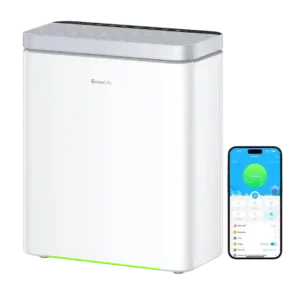
Choose the H7124 if you want a quiet smart purifier for odors, dust, pets, and app control. Skip it if you need foolproof Wi-Fi, wall-facing intake, UV light, or strong...
Pros: air purification performance, noise level
Cons: control placement
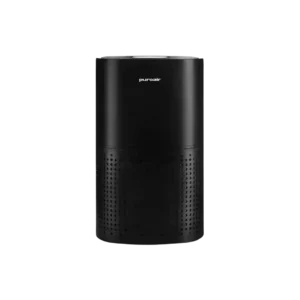
Best for quiet, simple cleaning in bedrooms or apartments. Skip it if you need verified large-room CADR value, app control, or guaranteed neighbor-smoke removal.
Pros: noise level, air purification performance
Cons: filter replacement cost, air quality sensor accuracy
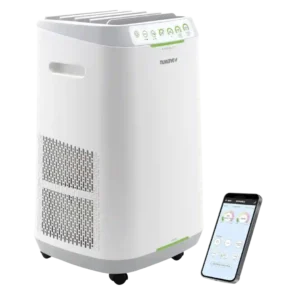
Choose this if you want strong odor, dust, smoke, and pet-air cleanup with washable filters. Skip it if turbo noise, Wi-Fi setup, or a high upfront price will bother you.
Pros: overall satisfaction, air purification performance
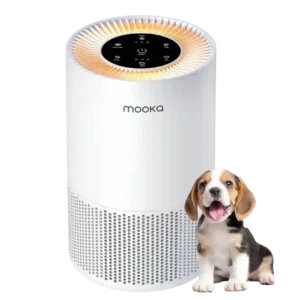
Best for a quiet, compact purifier that helps with dust, pet odors, and allergies. Skip it if you need verified smart sensing, strong aromatherapy, or guaranteed large-room coverage.
Pros: noise level, air purification performance
Cons: reliability