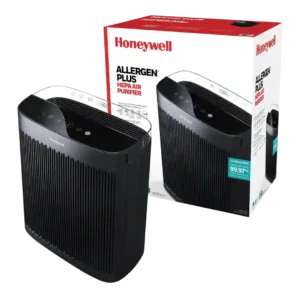
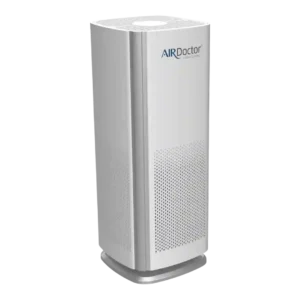
Honeywell HPA5200
Where It Has the Edge
No clear scored advantage over the other product.

Scorata scores summarize analyzed review evidence on a 1–5 scale; they are not laboratory measurements or a simple average of customer star ratings. Feature scores summarize the reviews covering that feature. The overall score averages feature scores within each review, then combines review averages. When both expert and customer evidence are available, those two groups receive equal weight. Products can have different review coverage, so small score gaps do not establish a winner.
Recommendations prioritize important features for the category, with a score of at least 3.5, a gap of at least 0.25 points and at least two supporting reviews per product. Features with widely varying scores or broad connectivity contexts are excluded from recommendations. These safeguards do not establish statistical significance.
Quick verdict
There is not enough consistent, comparable evidence for a clear recommendation. Use the feature details and supporting reviews to weigh the tradeoffs.
There is not enough comparable review evidence to recommend Honeywell HPA5200 over the other product.
There is not enough comparable review evidence to recommend AirDoctor AD1000 over the other product.
No clear scored advantage over the other product.
No clear scored advantage over the other product.
Scores are out of 5. Missing scores mean missing review evidence, not a missing feature.
Most buyers report cleaner air and effective operation, but several defective or dusty units produced strong negative scores.
Most feedback says the AD1000 cleans air effectively, with lab testing showing large particulate and PM2.5 reductions and customers describing cleaner air at home.
Noise is the most divided theme: many call it quiet, while sensitive users and defective-unit buyers call it too noisy or intolerable.
Noise feedback is mostly favorable, especially at lower settings, but not unanimous: one customer found it too loud for a small child's bedroom.
Listing accuracy is a repeated concern where buyers received the wrong item or felt filter information was misleading.
Listing accuracy has limited but positive feedback from a customer who received what they expected.
Charcoal or carbon filter evidence is mixed: one buyer appreciated pre-charcoal filter sheets, while another returned the unit because charcoal filters were not provided.
The activated carbon filter is treated as useful for odors and VOCs, adding gas and smell control to the purifier's particle-focused performance.
Display visibility is useful for some users, while another disliked lights that stayed too prominent.
Light dimming is appreciated for night use, with one customer specifically liking that the light does not stay on all night.
Auto mode received positive mention because it rarely needed to run on high.
Auto mode is seen as genuinely useful, especially by a customer who liked that it handled air cleanup without extra button presses.
Reliability is mixed to negative: many units work well, but multiple reviews report defects, no power, or early failure.
Reliability is the clearest complaint area, with multiple customers saying the unit stopped working or would not power on.
Customer support is sharply split, with fast replacement in some cases and repair or service frustration in others.
Customer support is sharply split: one customer calls it phenomenal, while another describes a frustrating unresolved power issue.
Arrival condition is a major weak spot in negative reviews, including returned, damaged, wrong, used, and defective units.
Arrival feedback is limited but positive, with one customer noting the unit arrived promptly.
Value is a strength, with buyers citing savings, low cost, and strong performance without overspending.
Value is split. Some buyers call it worth the investment, while others and the expert review point to high pricing for the coverage level.
Ease of use is consistently positive where mentioned, with users calling operation clear, concise, and easy.
Ease of use is a standout strength, with quick setup, simple controls, and customer praise for basic day-to-day operation.
Particle removal has one severe negative report of dust particles passing through and spreading around.
The strongest lab result is particle removal: airborne particulates dropped sharply in the one-hour test, giving this small purifier a performance-forward profile.
One defective/open-box unit had no intake or output, creating a very poor air circulation experience.
Air circulation gets enthusiastic customer praise, with one buyer describing the airflow power as a major reason it works well in rooms.
Control placement drew criticism from a user who wanted the filter indicator placed with the buttons.
The top-mounted touch controls are considered robust and easy to access, helping offset the lack of wireless controls.
VOC reduction has one negative feature-evidence mention because the enhanced odor and VOC filter was not included.
VOC control is presented as a benefit of the carbon filter rather than a separately tested result, so confidence is positive but narrower than for particles.
Dust evidence is mixed, ranging from less dust and strong outer-filter capture to one unit spreading dust particles.
A customer using it in a dusty bedroom saw dust and dirt captured within a week, making dust control one of the clearer real-world wins.
Maintenance ease is positive where mentioned, especially filter replacement being a snap.
Maintenance comes across as normal for an air purifier, with quick setup and straightforward upkeep called out positively.
Odor reduction is strong in the limited evidence, including no odor and odors pulled from an apartment.
Odor control is tied to the carbon filter, which the expert review says helps eliminate odors along with VOCs.
Portability is mixed, with praise for lighter weight and a handle but a complaint about hauling the heavy item for return.
Portability is a plus for a 10-pound purifier, with the expert review noting that the lightweight design makes it easy to move between rooms.
Overall satisfaction trends positive, with many repeat-purchase and love-it comments, but defective units create severe dissatisfaction.
Overall satisfaction is generally high, with several customers calling it excellent, awesome, or the best purifier they have used.
HEPA filtration has limited positive evidence tied to HEPA capabilities in a low-cost filter.
The HEPA stage gets credit for capturing very small particles, and it is framed as the main working stage in the filtration stack.
Indicator lights are mixed, praised for dimming and air-quality alerts but criticized for resetting to maximum brightness.
The indicator lighting is useful and sleep-friendly: it shows current air quality and can be dimmed when the room needs to stay dark.
Room coverage is positive in limited evidence, with users saying it handled a master bedroom, large room, or desired square footage.
Coverage is a frequent strength: the expert review says it handles a medium room well, and customers report good fit in bedrooms, offices, and apartments.
Several users connected the purifier with easier breathing, less stuffiness, and better allergy or asthma comfort.
One customer says their allergies practically vanished after using the AD1000, adding a strong personal outcome alongside the lab particle results.
Size and footprint drew a negative score from a user who returned it because it was too large.
Reviewers repeatedly like the compact footprint. It is described as small, easy to hide, and still capable of covering useful spaces.
Build quality is polarized, with some users calling it well constructed or sturdy and others calling it junk or poorly quality-controlled.
Build quality receives strong expert scoring and one customer calls the unit well engineered, though long-term failure reports temper the broader durability picture.
Sleep benefit is mixed: some users slept or woke better, while noisy units interfered with sleep.
Sleep-related feedback is positive overall: the unit can run quietly at night, and one customer says they sleep much better with cleaner bedroom air.
Design earns praise for furniture-like styling and a slick look, but one sensitive user strongly disliked the visible-light design.
Design feedback is positive but restrained: shoppers liked the sleek, compact look and the way it blends into rooms.
Durability concerns center on units that stopped working after about three months.
Durability is mixed to negative because two customers report power-related failures within months or under two years.
Filter cost is mixed: some users found filters reasonable or cheaper in groups, while another disliked needing multiple filters.
Filter availability is positive because Insight-series HEPA filters are interchangeable across sizes.
The AD1000 is described as a compact unit with four-part filtration, giving it more filtration depth than its simple exterior suggests.
Pre-filter evidence is mixed: one outer filter captured dust well, while another user found the first-stage filter perfunctory.
The expert review praises the small unit's ability to cycle air multiple times per hour in a 285 sq. ft. space.
Breathing relief appears in customer feedback from a buyer who noticed less coughing after using the purifier.
Fan speed feedback is mostly positive, though one customer notes noise becomes more noticeable at the highest setting.
Real-time air quality monitoring has limited positive evidence from a red light warning about poor air quality.
Remote control is absent, and that missing wireless convenience is one of the expert review's main caveats.
Timers are a useful built-in control, especially since the unit does not offer app-based scheduling.
App connectivity is absent, and the expert review treats that as a clear limitation compared with more connected purifiers.
Smart features are the main weak spot. The AD1000 keeps controls simple but skips wireless control, app support, and remote operation.
The handle design receives positive evidence from a buyer who liked that it was lightweight and had a handle.
Replacement and return experience is mixed, ranging from quick replacement to difficult returns and failed swap attempts.
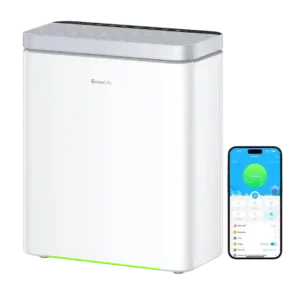
Choose the H7124 if you want a quiet smart purifier for odors, dust, pets, and app control. Skip it if you need foolproof Wi-Fi, wall-facing intake, UV light, or strong...
Pros: air purification performance, noise level
Cons: control placement
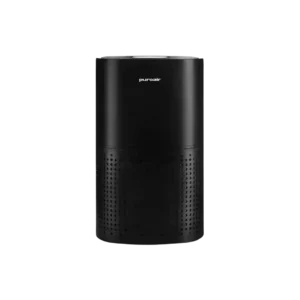
Best for quiet, simple cleaning in bedrooms or apartments. Skip it if you need verified large-room CADR value, app control, or guaranteed neighbor-smoke removal.
Pros: noise level, air purification performance
Cons: filter replacement cost, air quality sensor accuracy
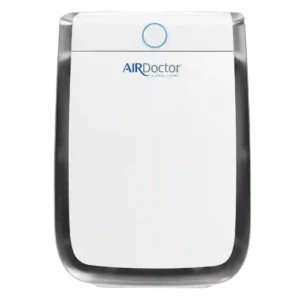
Best for strong room cleaning, allergy relief, odor control, and simple operation. Skip it if high filter costs, a larger footprint, or possible nighttime fan noise would bother you.
Pros: air purification performance, overall satisfaction
Cons: filter replacement cost
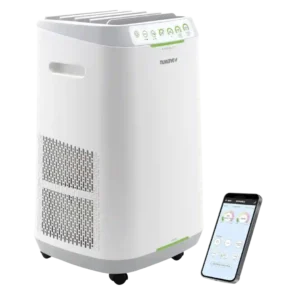
Choose this if you want strong odor, dust, smoke, and pet-air cleanup with washable filters. Skip it if turbo noise, Wi-Fi setup, or a high upfront price will bother you.
Pros: overall satisfaction, air purification performance