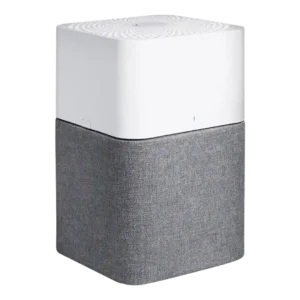
Blueair Blue Pure 211+ Auto
Where It Has the Edge
- power consumption is 4.3 vs 3.8. Power consumption evidence is positive, with reviewers praising low wattage and favorable electricity use versus competitors.

Scorata scores summarize analyzed review evidence on a 1–5 scale; they are not laboratory measurements or a simple average of customer star ratings. Feature scores summarize the reviews covering that feature. The overall score averages feature scores within each review, then combines review averages. When both expert and customer evidence are available, those two groups receive equal weight. Products can have different review coverage, so small score gaps do not establish a winner.
Recommendations prioritize important features for the category, with a score of at least 3.5, a gap of at least 0.25 points and at least two supporting reviews per product. Features with widely varying scores or broad connectivity contexts are excluded from recommendations. These safeguards do not establish statistical significance.
Quick verdict
The review evidence points to a tradeoff: power consumption versus display readability and real-time air quality monitoring. Choose according to which strengths matter more to you; the overall score alone does not settle that choice.
Choose Blueair Blue Pure 211+ Auto for power consumption.
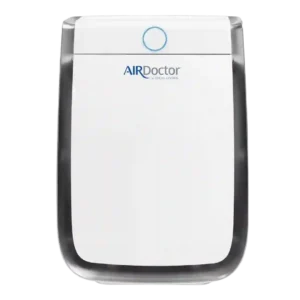
Choose AirDoctor AD3000 for display readability and real-time air quality monitoring.
Scores are out of 5. Missing scores mean missing review evidence, not a missing feature.
Reviewers repeatedly found the purifier effective at cleaning air in large rooms, though a few customers reported only average or disputed results.
Testing and most owners describe strong cleaning, with fast particle reductions and fresher-feeling rooms. A small set of customers say it made little difference or did not clean as expected.
Noise depends heavily on mode: low, auto, and night are often quiet, while high speed or defective fans can be loud.
Noise feedback is mixed but leans positive at low settings: many owners sleep with it on or call it quiet, while several find it too loud for bedrooms or high speed.
Filter replacement cost is one of the clearest ownership drawbacks, despite some owners finding the expense worthwhile.
Filter cost is the clearest recurring complaint: many owners call replacement filters pricey or expensive. A few accept the cost because genuine filters work or generic options exist.
True HEPA evidence is mostly negative because reviewers repeatedly note that the product does not use a true HEPA filter.
HouseFresh liked that AirDoctor uses HEPA-certified filters with more activated carbon than some budget alternatives.
Display readability is mixed to negative for bedrooms because multiple owners found lights too bright.
The air-quality display is easy to see from across the room, and one owner liked that it gets bright enough when needed.
The pre-filter is generally useful for visible dust and hair, but some reviewers question effectiveness or cleanliness over time.
The outer pre-filter appears useful for pet households, with one owner amazed by how much pet hair it collected.
Activated-carbon evidence is mixed, with praise for odor/VOC adsorption but criticism of limited carbon and non-independent replacement.
The carbon filter earns praise for using pelleted carbon, though expert context notes it is smaller than heavy-carbon specialty units.
Auto mode is mostly useful for smoke, cooking, and air-quality changes, but some owners report low-speed or failed-sensor behavior.
Auto mode is one of the most praised traits, with reviewers saying it ramps up for smoke, perfume, cooking, and poor air, then settles back down. One negative customer felt the unit reacted but still failed to clear odor.
The washable pre-filter is a clear maintenance strength and is repeatedly praised for simple washing and reuse.
Breathe Quality highlights the reusable washable pre-filter as a practical way to capture larger particles before they reach the main filters.
Handle design is weak because reviewers wanted handles and found the unit harder to move without them.
ModernCastle specifically praised the side handles as a thoughtful carrying aid.
Size and footprint are common drawbacks in small spaces, despite acceptable large-room use.
Size opinions vary. Experts like that it saves floor space for its power, but others call it stubby, bulky, or not small.
Build quality is generally positive in expert review but not a dominant theme.
Build quality is mostly praised, with comments about sturdy construction, tight sealing, and a well-made feel. One expert preferred the internal build more than the exterior design.
Design and appearance are strong overall, with repeated praise for the minimalist, stylish look and fabric covers.
Looks are mixed but mostly favorable from owners, who call it sleek, stylish, or nice-looking. One expert disliked the stubby appliance-like design.
Child-lock support is negative but limited to the criticized absence of the feature.
HouseFresh liked the control lock because it can prevent kids or pets from changing settings.
Scheduling is weak because reviewers missed timer or automatic-off options.
Scheduling feedback is positive where mentioned: the timer can shut the unit off, and one owner pairs timer use with sleep mode.
Sleep mode is mixed, with praise for quiet operation but criticism that it can be too weak or still too bright.
Sleep and dimming controls are appreciated for turning off lights and keeping rooms darker at night. One owner wished dimming worked better.
Portability is mixed to negative, with bulk, slippery fabric, and lack of handles offsetting a few lighter-weight comments.
Portability is a plus for a purifier this size, with handles, reasonable weight, and easy movement mentioned.
Fan-speed options are mixed to negative because simple controls are easy but reviewers wanted more speeds or disliked accidental changes.
HouseFresh liked the spread between fan speeds because it lets users balance cleaning power and sound.
Odor reduction is mixed: many owners praise cooking and pet odor removal, while heavier odor/VOC cases expose limits.
Odor control is a major strength for cooking, pets, weed, litter boxes, and basements. A few owners had the opposite experience, including weak odor improvement or a chemical smell from a filter.
Maintenance is generally easy through washable covers and accessible filters, though fan access is not equally serviceable.
Maintenance is widely described as easy, from filter replacement to vacuuming the outer filter and cleaning dust out of filters.
Energy efficiency is a strength in expert reviews, especially relative to performance and comparable large-room purifiers.
Energy use is a mild expert caveat, with HouseFresh noting it draws a little more than a comparable EverestAir.
HEPA-filtration evidence is mixed because measured HEPASilent performance is strong, but some reviewers dislike the non-HEPA/ionizing approach.
Experts like the UltraHEPA concept and filter size, but one customer reported a harsh chemical odor from the HEPA filter.
Power consumption evidence is positive, with reviewers praising low wattage and favorable electricity use versus competitors.
Power use is not the lowest, but expert estimates frame operating costs as manageable relative to its cleaning output.
Air-change support is positive but narrow, centered on one expert calling the ACH rating high.
Breathe Quality says the ACH is strong enough to refresh an appropriately sized room about every 12 minutes.
Pet dander evidence is positive overall, with owners reporting less dander, hair, and pet-related particles.
Pet households often report less dog hair, dander, and airborne particles, especially on outer filters. One cat owner felt it was not sensitive enough to catch cat hair.
Expert CADR evidence specifically praised smoke, dust, and pollen performance across categories.
Pollen feedback is limited but positive, with one owner saying their home had no pollen and felt like clean air.
Real-time monitoring is useful when lights and sensors respond clearly, but confidence drops when auto mode or pollution sensing misses events.
Owners appreciate seeing air-quality changes through front lights or quality-monitor indicators, especially when fires or room conditions worsen.
Smoke removal is mostly strong in expert tests and customer smoke events, though use around active smoking is less convincing.
Smoke performance is mostly praised for cooking, wildfire, chemical-treatment, and cigarette smells, with expert smoke testing also strong. Two customers said it failed with cigarette or cooking smoke.
Allergen-related outcomes are mostly positive, with customers reporting less sneezing, congestion, asthma trouble, or sinus irritation.
Allergy comments are consistently positive, including fewer stuffy mornings, fewer sinus problems, and relief for households with pets or dusty rooms.
CADR is a major strength, with expert reviewers praising top-tier or class-leading airflow for large spaces.
CADR is a clear expert strength: HouseFresh said the AHAM report matched testing, and ModernCastle measured 373 CFM for medium-to-large spaces.
Expert tests strongly support particle removal, including high particulate reduction and strong small-particle capture.
Expert tests measured sharp particulate drops, and users point to visible filter buildup as proof it captures fine debris. One expert thought the smallest-particle marketing overreaches but still called the trapping performance good.
Room coverage is strong, with reviewers consistently positioning the unit for living rooms, basements, offices, and open areas.
Reviewers generally find it well suited to bedrooms, living rooms, kitchens, and other medium-to-large areas. One expert frames coverage more conservatively than manufacturer claims, but still sees it as strong.
Ozone-free/ionizer evidence is cautiously positive from expert certification discussion, though other reviews raise ionizer concerns.
HouseFresh’s ozone check stayed around 0 to 0.1 PPM with ionization running, and the ionizer can be left off for sensitive users.
VOC reduction has limited but positive support from the combination carbon filter, balanced by separate carbon-limit concerns.
VOC feedback comes from a remodel user who liked having filtration aimed at renovation dust, allergens, and VOCs during poor indoor-air conditions.
Smart features are limited: the smart sensor helps, but reviewers miss broader smart/app functionality.
The standard AD3000 is intentionally basic. Experts mark it down for lacking bells and whistles, while one customer liked the automatic smart cleaning behavior.
App connectivity is weak because reviewers explicitly note no app support or missing app connectivity.
Experts consistently note that the AD3000 lacks app or Wi-Fi connectivity, so buyers wanting phone controls should look elsewhere or consider a different model.
Value is sharply split: performance can justify the price, but filter cost, failures, and premium pricing hurt owner value.
Value depends heavily on price. Many owners call it worth the money, while experts and dissatisfied customers warn that high purchase price and filters can sting.
Reliability is mixed: some owners report years of satisfaction or no problems, but several received units with dead fans or early shutdowns.
Customer service is split: one long-term owner calls it top notch, one expert says it is dedicated, but problem cases describe weak support or slow refund handling.
Arrival condition is a notable risk in a few reviews, with customers reporting nonfunctional or possibly used units out of the box.
Filter reset is described as easy once the user manually holds the right buttons.
Warranty impressions are mixed. One customer praised it, while others complained about Amazon warranty registration, a simple one-year term, or slow refund handling.
Ease of use is a consistent strength, from clear controls and simple setup to straightforward button operation and assembly.
One critical customer still acknowledged that the unit had strong power to move air.
One owner noticed they no longer woke up with a dry throat, suggesting a more comfortable-feeling sleep environment.
Several owners use it around smoke, pets, or breathing-related issues and say it helped them breathe more comfortably, though these are personal outcomes rather than medical proof.
The control panel is considered well-designed and clear enough to use without relying heavily on the manual.
Documentation feedback is mixed. One user liked simple step-by-step instructions, while another criticized missing dB operating levels.
Many pet and remodel households saw less dust, cleaner air, and filters catching debris. One dissatisfied owner said it did not pick up dust in their room.
One owner specifically appreciated that the purifier filters formaldehyde and said it refreshed bedroom air.
Indicator-light feedback is split: an expert liked the dimmer, while one customer wished the lights could be dimmed.
Mold-related feedback is negative and limited to one owner who hoped it would help after mold toxicity but said it did not.
Overall sentiment is strongly positive, with many customers calling it great, the best, or worth recommending. Negative satisfaction appears when units arrive defective, smell chemically, or fail to clean as expected.
The lack of a remote is a downside in expert testing, especially for buyers expecting connected convenience.
One owner complained that the purifier blows cold air, making lower-speed use more comfortable than higher settings.
Safety certification evidence is positive where reviewers cite AHAM, CARB, Energy Star, and allowed ozone values.
Sensor accuracy is polarizing: many owners trust it when it responds to fires, smoke, hairspray, or particles, while others say it stays blue or is not sensitive enough.
Availability looks better than the cost: experts and users point to genuine yearly sets and generic filter options.
Filter life is mixed. Some users confirm the carbon filter lasted about as expected, while others complain filters need frequent replacement.
Expert reviews describe a straightforward multi-stage setup using pre-filter, carbon, HEPA, and ionization, and they connect that configuration with strong performance.
Durability concerns come from a customer whose unit shut down after three months.
Sleep-related feedback is positive: owners mention less stuffiness, fewer coughing wake-ups, soothing sound, or better sleep with the unit running.
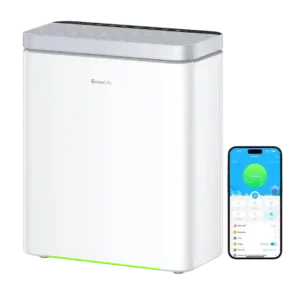
Choose the H7124 if you want a quiet smart purifier for odors, dust, pets, and app control. Skip it if you need foolproof Wi-Fi, wall-facing intake, UV light, or strong...
Pros: air purification performance, noise level
Cons: control placement
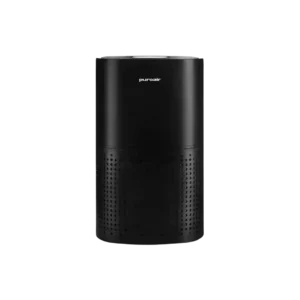
Best for quiet, simple cleaning in bedrooms or apartments. Skip it if you need verified large-room CADR value, app control, or guaranteed neighbor-smoke removal.
Pros: noise level, air purification performance
Cons: filter replacement cost, air quality sensor accuracy
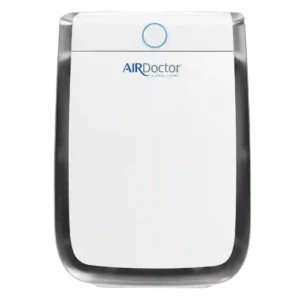
Best for strong room cleaning, allergy relief, odor control, and simple operation. Skip it if high filter costs, a larger footprint, or possible nighttime fan noise would bother you.
Pros: air purification performance, overall satisfaction
Cons: filter replacement cost
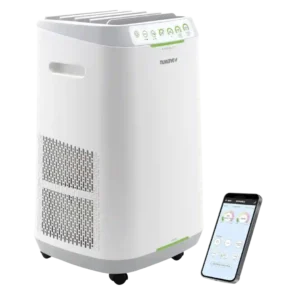
Choose this if you want strong odor, dust, smoke, and pet-air cleanup with washable filters. Skip it if turbo noise, Wi-Fi setup, or a high upfront price will bother you.
Pros: overall satisfaction, air purification performance