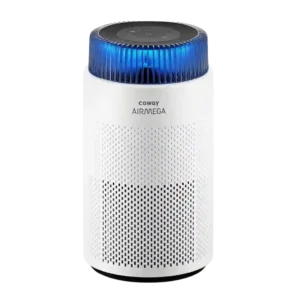
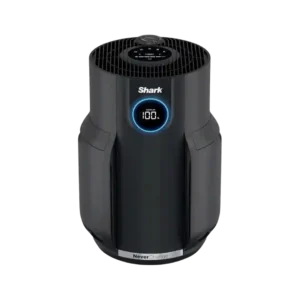
Coway Airmega 100
Where It Has the Edge
No clear scored advantage over the other product.

Scorata scores summarize analyzed review evidence on a 1–5 scale; they are not laboratory measurements or a simple average of customer star ratings. Feature scores summarize the reviews covering that feature. The overall score averages feature scores within each review, then combines review averages. When both expert and customer evidence are available, those two groups receive equal weight. Products can have different review coverage, so small score gaps do not establish a winner.
Recommendations prioritize important features for the category, with a score of at least 3.5, a gap of at least 0.25 points and at least two supporting reviews per product. Features with widely varying scores or broad connectivity contexts are excluded from recommendations. These safeguards do not establish statistical significance.
Quick verdict
The available evidence supports the recommendation below, but does not establish an overall winner. Check the remaining features against your priorities.
There is not enough comparable review evidence to recommend Coway Airmega 100 over the other product.
Choose Shark NeverChange Air Purifier, HP152 for activated carbon filter and odor reduction.
No clear scored advantage over the other product.
Scores are out of 5. Missing scores mean missing review evidence, not a missing feature.
Across six reviews, the Airmega 100 was judged a strong small-room performer, with test results described as outstanding, effective, best-used, or high-ranking.
Reviews generally find the purifier effective, especially in smoke and odor situations, though some lab and customer evidence says it is underpowered for the price or weak on dust.
Filter replacement cost was mostly positive because filters and running costs were considered low, though one review called the $39 cost a bit higher.
Replacement-cost sentiment is positive when reviewers focus on fewer filter purchases, but the need to replace sooner than five years tempers the benefit.
Noise level was mostly praised as quiet and bedroom-friendly, but HouseFresh reported whistling/grinding at low speed and louder high-speed behavior.
Noise is usually considered quiet or sleep-friendly at lower speeds, with higher settings becoming noticeable or noisy when air quality drops.
The pre-filter design drew a maintenance-related criticism because HouseFresh found regular vacuuming awkward.
The pre-filter is praised for catching larger dust, lint, hair, and pet hair while extending the main filter life.
Activated carbon performance was a weakness, with reviewers criticizing carbon-coated fabric versus pellet carbon and questioning long-term saturation.
Activated carbon is recognized as part of odor/VOC control, but one expert criticizes the amount as too small for serious odors or VOCs.
Display readability was mixed: one reviewer said the unit must be viewed nearby, while another found the LED readable from across the room.
The display is consistently described as clear and useful, with PM readouts, air-quality percentage, color cues, and dimming helping usability.
Sensor accuracy was praised by GearBrain as more precise than most air purifiers in the market.
Experts praise the laser/particle sensor system, while customer evidence shows occasional failures, stuck 100% readings, or false poor-air readings.
The overall filter-stage system earned praise from AirPurifierFirst, which was positively surprised by filter efficiency and performance.
Filtration-stage evidence is strong, with experts describing pre-filter, pet particle, carbon, and HEPA layers working together.
Filter life was mixed: one review liked the year-long replacement interval, while others expected earlier replacement or carbon saturation.
The long-life filter claim drives value, but several expert and customer reviews doubt the five-year lifespan in normal dusty, smoky, or pet homes.
Auto mode was generally well received, with reviews praising immediate airflow adjustment, a decent sensor-driven mode, and time/energy savings.
Auto mode is often praised for reacting to smoke, cooking, and air-quality shifts, but some owners distrust eco mode or report stuck readings.
The True HEPA filter was credited as a key reason for excellent particle-removal performance.
True HEPA or HEPA 13 references are positive, with reviewers linking the filter to high-quality air cleaning.
Fan speed options were mixed: one review liked the four speeds, while HouseFresh said too few speed steps hurt quiet-speed performance.
Fan speed options are well covered, with five speeds, auto, and manual control supporting different noise and cleaning needs.
Odor reduction was mixed: reviewers noted help with kitchen or light odors, but clear limitations with strong or heavier odors.
Odor reduction is widely praised for cooking, pets, litter, and stale rooms, but several reviewers dislike the scent cartridge or say it masks rather than removes odors.
Smoke removal was mixed-positive: it handled light smoke or smoke particles, but one review framed carbon performance as only okay.
Smoke response is one of the most consistent strengths, with reviewers saying auto mode reacts quickly to cooking smoke, cigarettes, wildfire smoke, and similar events.
Maintenance ease was mixed: setup and filter replacement were simple, but HouseFresh found regular vacuuming awkward.
Maintenance is usually considered easy because the side filters or pre-filters can be wiped, vacuumed, rinsed, or accessed without much trouble.
Real-time air quality monitoring was mixed, with praise for feedback and color-coded readings but concern that visibility can require being near the unit.
Real-time air-quality feedback is a major satisfaction driver because users can see the display change as conditions improve or worsen.
Particle removal evidence was consistently positive, including an excellent particle test, 93% improvement, and competitive measured results.
Particle-removal evidence is strong in lab tests, with expert testing showing large PM and AQI reductions, but speed varies by room and fan setting.
Pet-related filtration was supported by GearBrain’s recommendation for pet households seeking efficient air purification.
Pet-related feedback is mostly positive for dander and pet smells, though pet hair pickup is a weak point in at least one detailed owner review.
Portability was positive thanks to the lightweight body and side-table-friendly size.
Reviews provide opinionated evidence for this attribute.
Scheduling options had limited but positive support because one review found the classic timer useful.
Scheduling is limited to timer-style controls, but reviewers consider the timer useful for overnight or away-from-home use.
Sleep mode was divided: several reviews found it quiet enough for sleep, while HouseFresh criticized slow air cleaning in sleep mode.
Sleep-related feedback is positive where the unit has dimming, quiet low speeds, or sleep mode, though one expert wanted a dedicated sleep mode.
Allergen reduction evidence was positive in GearBrain’s review, tied to pollen/allergen cleaning and more comfortable rest.
Allergy and breathing feedback is strongly positive across owners and experts, with repeated reports of less coughing, sneezing, congestion, and easier breathing.
Air changes per hour received limited positive support from one review calling the 4.8 ACH level an industry standard.
Air-change evidence is positive at the smaller recommended room size, but experts warn usable space shrinks at higher ACH targets or quieter speeds.
Power consumption was consistently favorable, with reviewers emphasizing very low monthly or annual operating costs.
Power consumption is low in expert testing, supporting inexpensive continuous use.
HEPA filtration was praised as the critical part of the filtration system in AirPurifierFirst’s review.
HEPA filtration is consistently treated as a strength for allergens, smoke, dust, and fine particles.
Dust removal was supported by GearBrain’s outcome-based note that it reduces dust accumulation and improves room cleanliness.
Dust feedback is mixed: many owners report less dust, while some say auto/eco mode does little for visible dust unless run manually.
Indicator lights were a strength, with praise for the night light, color-coding, and design-enhancing light ring.
Reviews provide opinionated evidence for this attribute.
Energy efficiency was a consistent strength, with reviews citing impressive performance per watt, low energy use, and lower electricity costs.
Energy efficiency is a strength, with experts praising low operating cost and eco behavior.
Child lock was scored positively for convenience and household safety.
Child lock is treated as a useful control feature for preventing accidental changes by children or pets.
Ozone-free operation was strongly supported by safety-oriented comments about no ozone production and zero ozone emissions.
Ozone-free operation is strong, with expert testing finding no measurable ozone and noting no ozone-producing ionizer behavior.
Pollen removal was supported by GearBrain’s allergy-season assessment that it purifies air of pollen and allergens.
Pollen evidence is positive through HEPA/PM10 references and customer reports of reduced pollen or allergy symptoms.
PM2.5 detection was praised for specific sensitivity that helped make the sensor more precise.
PM detection is a strength because experts describe real-time PM1, PM2.5, and PM10 detection.
Room coverage was strong for small rooms and sometimes slightly larger spaces, but Vice warned it is not suited to living rooms.
Room-fit evidence is positive for bedrooms, offices, apartments, and medium rooms, but lab evidence warns coverage depends on desired air changes.
Build quality was only middling, with AirPurifierFirst describing the plastic and build quality as okay.
Build quality is generally positive in expert testing, though side intake guards and base security create durability concerns.
Handle design was a weakness because the lack of carrying handles made room-to-room movement harder.
Handle and grip design are recurring negatives, with reviewers wanting a carry handle or finding the base awkward when moving the unit.
Design and appearance were generally praised as stylish, compact, cool, or impressive, with one review finding it conventional.
Reviews provide opinionated evidence for this attribute.
Size and footprint were generally positive for compact placement, though one review noted the unit is taller than direct competitors.
The size is often praised as compact or bedroom-friendly, though some owners find specific units larger or smaller than expected.
Smart features were mixed: reviewers liked useful advanced features and auto mode, but criticized the lack of broader smart connectivity.
Smart features are mixed: onboard sensors and eco mode are appreciated, but owners miss better plug/app behavior.
App connectivity was a repeated weakness, with reviewers wanting app support or finding no-app monitoring limiting.
App connectivity is a weakness because experts note the absence of app or Wi-Fi controls at this price.
Value for money was strong overall due to price-to-value and low running costs, with the main caveat being a higher upfront price in one review.
Value is mixed: many owners call it worth the money, while some experts and users think price is high relative to cleaning power.
Reviews provide opinionated evidence for this attribute.
Customer support evidence is mixed, with one owner helped through a minor issue and another reporting a poor support call.
Reviews provide opinionated evidence for this attribute.
The scent or odor-neutralizer feature is polarizing: some like the fresher smell, while others find it strong, chemical, or headache-inducing.
CADR evidence is mixed to negative: one expert calls 97 CFM modest and another says the unit is underpowered for its price.
Documentation is weak where an owner says there were no instructions beyond a quick-start guide.
Mold-spore evidence is limited but positive where HEPA capability or mold-allergy use is discussed.
Reviews provide opinionated evidence for this attribute.
Safety evidence is limited but positive, centered on CARB certification and no measurable ozone production.
VOC evidence is mixed to weak: carbon exists, but experts warn the carbon amount and lack of VOC sensing limit serious VOC use.
Durability evidence is mixed because experts praise construction but some customers report failure or fragile intake pieces.
Filter availability is mixed: one expert could not find dedicated replacement filters, while one owner says filters are easy to source.
VOC sensor evidence is negative because the sensor does not measure VOCs and may not drive auto mode in VOC-polluted spaces.
The washable pre-filter is a clear maintenance strength and is repeatedly tied to easier upkeep.
Wi-Fi reliability is only represented by absence of Wi-Fi/app connectivity, not by functioning wireless reliability.
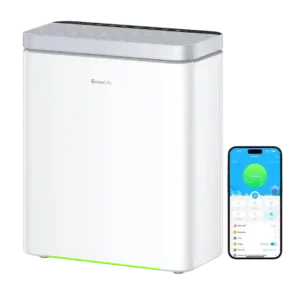
Choose the H7124 if you want a quiet smart purifier for odors, dust, pets, and app control. Skip it if you need foolproof Wi-Fi, wall-facing intake, UV light, or strong...
Pros: air purification performance, noise level
Cons: control placement
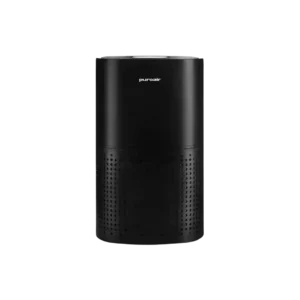
Best for quiet, simple cleaning in bedrooms or apartments. Skip it if you need verified large-room CADR value, app control, or guaranteed neighbor-smoke removal.
Pros: noise level, air purification performance
Cons: filter replacement cost, air quality sensor accuracy
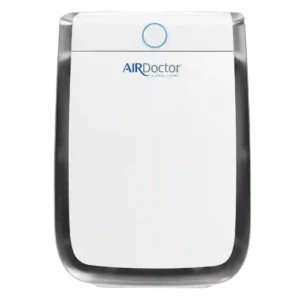
Best for strong room cleaning, allergy relief, odor control, and simple operation. Skip it if high filter costs, a larger footprint, or possible nighttime fan noise would bother you.
Pros: air purification performance, overall satisfaction
Cons: filter replacement cost
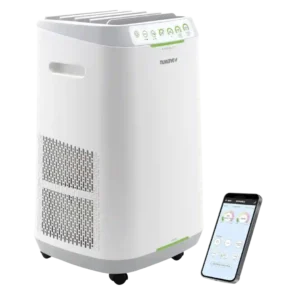
Choose this if you want strong odor, dust, smoke, and pet-air cleanup with washable filters. Skip it if turbo noise, Wi-Fi setup, or a high upfront price will bother you.
Pros: overall satisfaction, air purification performance