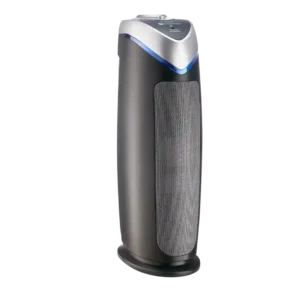
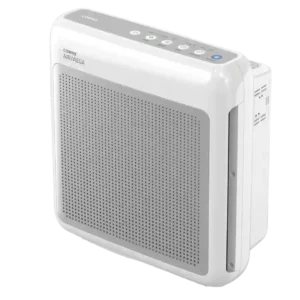
GermGuardian AC4825
Where It Has the Edge
No clear scored advantage over the other product.

Scorata scores summarize analyzed review evidence on a 1–5 scale; they are not laboratory measurements or a simple average of customer star ratings. Feature scores summarize the reviews covering that feature. The overall score averages feature scores within each review, then combines review averages. When both expert and customer evidence are available, those two groups receive equal weight. Products can have different review coverage, so small score gaps do not establish a winner.
Recommendations prioritize important features for the category, with a score of at least 3.5, a gap of at least 0.25 points and at least two supporting reviews per product. Features with widely varying scores or broad connectivity contexts are excluded from recommendations. These safeguards do not establish statistical significance.
Quick verdict
The available evidence supports the recommendation below, but does not establish an overall winner. Check the remaining features against your priorities.
There is not enough comparable review evidence to recommend GermGuardian AC4825 over the other product.
Choose Coway Airmega 200M for air purification performance and filter replacement cost.
No clear scored advantage over the other product.
Scores are out of 5. Missing scores mean missing review evidence, not a missing feature.
Air cleaning results range from weak against newer rivals to excellent in several small-room tests, so performance is best viewed as solid but space-dependent.
Reviewers generally praise particulate cleaning and real-world air improvement, though one measured review notes performance drops at quieter lower fan speeds.
Filter replacement cost varies by reviewer, from fairly cheap compared with some rivals to expensive when annual maintenance is considered.
Filter replacement cost is consistently positive, with reviewers citing reasonable, cheap, or market-leading annual filter costs.
Noise feedback is mixed: many found it quiet or acceptable, but several noted high-speed or low-speed optimization problems and bedroom caveats.
Noise is the most mixed attribute: low speeds are often quiet or silent, but high speed is repeatedly called loud, distracting, or vacuum-like.
The lack of a washable pre-filter is a repeated drawback because users must replace rather than wash the carbon/pre-filter layer.
The washable pre-filter is praised for catching larger debris while being washable or vacuumable, which can reduce inner-filter workload.
Pre-filter quality is criticized because the carbon layer doubles as the pre-filter and is described as thin, low-carbon, or poorly made.
The pre-filter is praised for catching cat fur, visible junk, hair, and larger particles before they reach the main filters.
Filter-stage evidence is mixed: one review liked the affordable four-stage setup, while another criticized the unit for having only three technologies.
Reviewers speak positively about the multi-stage filter system, calling the filters central to performance and strong for the budget class.
Activated carbon feedback is mostly negative from testing-oriented reviewers, who repeatedly called the treated or fibrous carbon layer low quality, though one review credited it with odor help.
The carbon filter receives mixed evidence: one reviewer says it helps deodorize gases, while another criticizes the fabric carbon versus pelleted options.
Filter life is mixed to negative: some users can maintain filters with vacuuming, but several reviewers criticized short life or clogging of the carbon/pre-filter.
Filter life is mixed: annual HEPA replacement is considered standard, but the carbon filter can need more frequent replacement; prefilter cleaning may extend life.
Filter availability is praised because replacement filters are easy to obtain from the product family and manufacturer ecosystem.
Filter availability looks positive in the reviewed evidence because OEM, generic, and third-party options are described as cheap or plentiful.
The true HEPA filter is a recurring strength, though one review called its quality merely fair and others praised true HEPA at the budget price.
True HEPA comments are positive, with reviewers linking the filter to strong performance and robust particle filtration.
Reliability evidence is limited and mixed, with one reviewer noting some reports of units burning out despite many positive owner reviews.
Reliability sentiment is positive: reviewers call it reliable, solid, and working as advertised.
Value is sharply context-dependent: it can be a good buy for simple small-room particle cleaning, but several reviewers prefer newer or higher-featured alternatives.
Value is generally strong thanks to effective cleaning and low filter costs, though comparisons to cheaper or better alternatives create some caveats.
Sleep mode is a weakness because reviewers explicitly said the unit would benefit from one and called its absence a bedroom drawback.
Sleep-related use is generally positive because reviewers cite quiet low modes and the ability to keep the room dark or comfortable overnight.
CADR-related evidence is negative, with reviewers saying measured performance or motor size disappointed relative to the CADR provided.
Reviewers generally judge the CADR/airflow as strong for the price and room class, with multiple comments calling it powerful.
Real-time air quality monitoring is a weakness because reviewers noted the unit cannot detect air quality and leaves users guessing about fan speed.
Real-time monitoring is treated positively through the color-coded pollution indicator and owner confirmation that the sensor reacts.
Power consumption is a recurring concern, with reviewers citing high electricity costs, high monthly usage, or higher draw than rivals.
Power consumption depends heavily on fan speed, with very low draw at lower settings but a sharp jump on the highest setting.
Energy efficiency trends negative overall, especially against newer or higher-CFM models, despite one review rating it average in class.
Energy efficiency is mixed: several reviewers praise low/Eco-mode consumption, while one criticizes the annual cost at full blast.
Particle removal is the AC4825's most credible strength, with several tests showing meaningful particulate reductions, though some reviewers found it slower or below the 99.97% promise.
Lab-style and reviewer measurements are strongly positive, with smoke/particle tests showing fast PM and large-particle reduction.
Odor reduction is the biggest split: some reviewers found odors improved, while several testing-focused reviews said the carbon stage is weak for gas and odor control.
Odor results are mixed: some reviewers report cooking or wildfire smells disappearing, while others say smells linger or fabric carbon is weaker.
Fan speed options are simple and useful, with one review specifically praising the three-speed controls as easy to use.
Fan controls are mixed: some reviewers like the range, while others want an extra intermediate quiet-powerful speed.
Room coverage is a clear limitation: the unit is mainly suitable for small rooms, with better results when kept near the recommended square footage.
Room coverage is viewed as good for medium spaces, bedrooms, kitchens, and living rooms, but less suitable for larger rooms above roughly 400 square feet.
Portability is a plus because reviewers repeatedly described it as light, easy to transport, or equipped with a usable handle.
Portability is mixed-positive: built-in handles and low weight help, but it is still a stationary appliance without wheels.
Indicator lights are mixed: one reviewer warned the always-on light could bother dark-room users, while another found illumination not too bright.
Indicator lights are mostly helpful and clear, though one reviewer says timer-based filter reminders are less accurate than runtime-based tracking.
Pet-related particle evidence is limited but positive, with one reviewer calling it great for a home with a dog.
One reviewer with a shedding cat says the prefilter reduced vacuuming frequency, supporting pet hair/dander usefulness.
Smoke removal is mixed: some testing and owner comments were positive, but carbon limitations made smoke or incense-related performance slower in other evidence.
Smoke performance is mostly positive, with clear rooms and wildfire/cooking smoke improvement, though smell control is a separate mixed point.
Dust removal receives positive owner-style and review evidence, with reviewers noting visible dust capture and cleaner air in homes with dust concerns.
One owner-reviewer reports noticeably less dust in the living room after use.
Allergen reduction is a positive use case in the review set, especially for small rooms and users concerned about allergies.
The clinical-style review recommends it especially for allergy sufferers, tying the cleaner air benefits to allergen relief.
HEPA filtration is praised as an industry-standard particle approach, especially impressive at this price point.
Reviewers praise the HEPA filtration as well made and high performing, including strong True HEPA-based particle capture.
Maintenance is generally easy for filter access and replacement, though long-term upkeep still adds cost.
Maintenance and setup are mostly easy, though one reviewer warns that correct filter installation matters for proper operation.
Ozone-free operation receives strong positive evidence from one reviewer who explicitly said the ozone-free claim is true.
Ozone evidence is positive across ionizer discussions, with reviewers citing zero or very low ozone and reassurance about safety.
Safety certifications receive positive evidence from one reviewer who treated the certifications as a quality guarantee.
Certification-related evidence is positive, especially around low ozone and performance reassurance.
Durability evidence is moderate: one review said it is not among the most durable, while another called the unit well made.
Durability evidence is limited but very positive, with one reviewer describing the unit as built to last.
Build quality is generally good for the price, with reviewers calling it well made or solid while recognizing its budget tier.
Build quality evidence is limited but positive, with one reviewer describing the plastic as harder and more durable than expected.
Design opinions vary from old-fashioned or obvious-looking to attractive and easy to fit into rooms.
Design opinions are mixed, ranging from understated or nice to uglier, cheap-looking, or merely unobtrusive.
Size and footprint are strong positives for small spaces, with reviewers praising the slim tower shape and small floor space.
Size and footprint receive positive comments for compactness, nice proportions, and a light package for the output.
Smart features are limited; reviewers described the unit as basic and lacking automatic or real-time functions.
Smart features are limited; reviewers often accept that tradeoff, but the lack of Wi-Fi/app control is noted as a reason some buyers should avoid it.
Sensor evidence is positive where reviewers tested or compared it, including comments that it works and is more advanced than budget models.
Auto and Eco behavior is consistently praised as set-and-forget, useful, and effective for adjusting or pausing based on air quality.
Display readability evidence is limited but negative, with a tester finding the UV-C status hard to see in bright light.
App connectivity scores low because reviewers identify smartphone control and Wi-Fi smart home connectivity as missing or a skip reason.
Handle design is consistently positive where mentioned, with reviewers saying built-in or solid handles make room-to-room moves easier.
Pollen removal is supported by reviewer praise that the unit gets rid of pollen alongside dust in normal room use.
Scheduling is viewed positively where evaluated, especially the simple one-, four-, and eight-hour timer that does not require an app.
Reviewers repeatedly criticized the optional UV-C stage as poorly implemented or minimally useful; only one test saw a tiny added air-quality improvement.
VOC reduction is consistently weak where tested or discussed, mainly because reviewers criticized the thin treated-carbon layer.
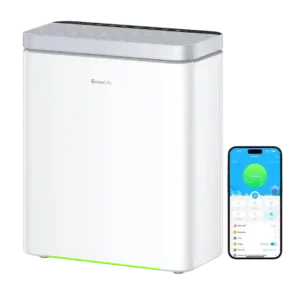
Choose the H7124 if you want a quiet smart purifier for odors, dust, pets, and app control. Skip it if you need foolproof Wi-Fi, wall-facing intake, UV light, or strong...
Pros: air purification performance, noise level
Cons: control placement
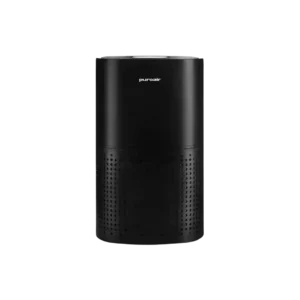
Best for quiet, simple cleaning in bedrooms or apartments. Skip it if you need verified large-room CADR value, app control, or guaranteed neighbor-smoke removal.
Pros: noise level, air purification performance
Cons: filter replacement cost, air quality sensor accuracy
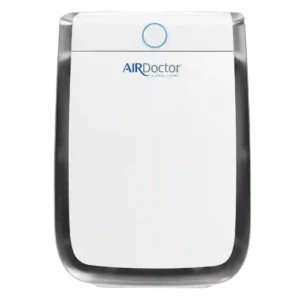
Best for strong room cleaning, allergy relief, odor control, and simple operation. Skip it if high filter costs, a larger footprint, or possible nighttime fan noise would bother you.
Pros: air purification performance, overall satisfaction
Cons: filter replacement cost
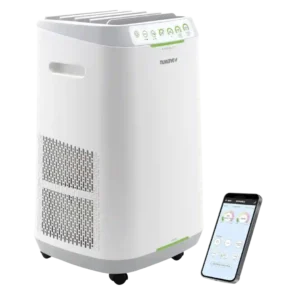
Choose this if you want strong odor, dust, smoke, and pet-air cleanup with washable filters. Skip it if turbo noise, Wi-Fi setup, or a high upfront price will bother you.
Pros: overall satisfaction, air purification performance