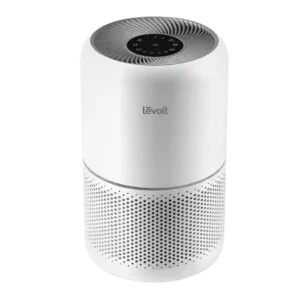
Levoit Core 300-P
Where It Has the Edge
- scheduling options is 3.8 vs 1.0. Scheduling is mixed: reviewers like the timer, but some wish it offered longer or more flexible schedules.

Scorata scores summarize analyzed review evidence on a 1–5 scale; they are not laboratory measurements or a simple average of customer star ratings. Feature scores summarize the reviews covering that feature. The overall score averages feature scores within each review, then combines review averages. When both expert and customer evidence are available, those two groups receive equal weight. Products can have different review coverage, so small score gaps do not establish a winner.
Recommendations prioritize important features for the category, with a score of at least 3.5, a gap of at least 0.25 points and at least two supporting reviews per product. Features with widely varying scores or broad connectivity contexts are excluded from recommendations. These safeguards do not establish statistical significance.
Quick verdict
The review evidence points to a tradeoff: scheduling options versus air purification performance and noise level. Choose according to which strengths matter more to you; the overall score alone does not settle that choice.
Choose Levoit Core 300-P for scheduling options.
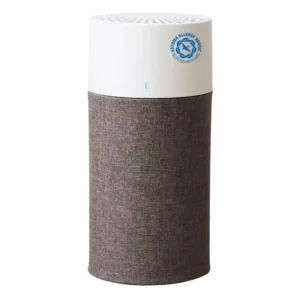
Choose Blueair Blue Pure 311 Auto for air purification performance and noise level.
Scores are out of 5. Missing scores mean missing review evidence, not a missing feature.
Most reviewers found the Core 300-P effective for everyday small-room purification, though one major review criticized its performance versus stronger competitors.
Reviewers consistently found the purifier effective, with lab and home-use evidence describing fast room cleaning, strong airflow, and noticeable air-quality improvement.
Noise opinions vary by speed: sleep and low are widely praised, while high speed is sometimes called loud or noisy.
Noise was a major strength across reviews, with most calling it quiet or virtually silent; one user still noticed slight buzzing.
Filter costs are generally considered reasonable, helped by affordable genuine and generic filters, though replacements still add to annual cost.
Filter cost opinions were mixed, ranging from fair or cheap long-term costs to criticism that replacement filters raise ownership cost.
Auto mode scores poorly because reviewers repeatedly note that the standard Core 300-P lacks automatic air-quality-based fan adjustment.
Auto mode was repeatedly praised for useful, responsive adjustment and for reducing the need for user intervention.
True-HEPA sentiment is split, with some reviews treating the filter as a plus and others criticizing or questioning Levoit’s true-HEPA claims.
True HEPA evidence was a common caveat, with critical reviews saying the unit lacks a conventional HEPA filter despite some positive HEPA-language claims elsewhere.
Filtration-stage feedback is positive overall, with reviewers generally liking the three-stage setup and its broad all-around performance.
Filtration-stage feedback was polarized, with praise for the system overall but criticism of lower filter quality and proprietary filtration.
Reviewers like the pelleted or granular activated carbon for the price, but several say the carbon amount is too limited for heavy gases or odors.
Activated carbon feedback was divided, with some odor praise but repeated criticism that the carbon layer is thin or weak for gases.
Pre-filter quality is mixed: some praise its particle capture, while others dislike that it is not removable or call it poorly made.
Pre-filter opinions were mixed: reviewers liked the attractive, washable fabric options, but some disliked visible dirt and wear.
Display and control readability are consistently praised as intuitive, clearly labeled, responsive, and easy to use.
Display readability was praised in the one review that evaluated it, saying the indicator was visible from a distance.
Filter-life evidence is mixed, with reviewers accepting six-to-eight-month replacement but noting more frequent replacement than annual norms.
Filter-life evidence was generally positive, with twice-yearly replacement described as manageable and one user finding the filter still clean after constant use.
Mold evidence is negative and limited, with one reviewer advising against this model for significant mold problems.
Mold-related removal was supported by reviews that described effective pollutant reduction including mold or mold-related particles.
Scheduling is mixed: reviewers like the timer, but some wish it offered longer or more flexible schedules.
Scheduling was a clear weakness where reviewed, because the absence of a timer was criticized as a major downside.
Energy efficiency is a weakness because reviewers say the older motor uses more power than newer Core 300S-style alternatives.
Energy efficiency received strong agreement, with reviewers repeatedly praising low energy use and favorable efficiency ratios.
Power consumption is commonly criticized, especially relative to newer models and the purifier’s size/performance.
Power consumption was generally seen as low or efficient, with only operating costs affected by filter pricing rather than electricity use.
Real-time monitoring is a weakness because reviewers note the lack of a sensor or air-quality display on the standard model.
Real-time monitoring was supported by the LED display keeping users updated about air quality.
HEPA filtration receives a low score from one critical review that says the unit does not actually have a HEPA filter.
HEPA-related evidence was mixed: HEPASilent performance was praised, while critical reviews disliked the nontraditional/proprietary filter approach.
Maintenance is mostly praised as easy, especially filter replacement, though one reviewer disliked the base/filter design.
Maintenance opinions were split: some found filter changes very easy, while others found cleaning or replacing filters time-consuming and awkward.
CADR sentiment is mixed: some praise the price-to-CADR ratio, while others say newer or similar-size rivals outperform it.
CADR and fan power were praised as strong for the price and segment, especially around the roughly 250 CFM class.
VOC evidence is mixed and mostly cautious: reviewers credit the carbon filter for some VOC help, but warn it is not enough for serious VOC loads.
VOC reduction was a weak point in critical reviews because the carbon media was considered limited for volatile organic compounds.
Allergen evidence is mostly positive for pollen, dust, pets, and sinus comfort, with one skeptical review saying noticeable allergy relief may be hit or miss.
Allergen-related evidence was positive, especially for households dealing with pollen, dust, and related allergy symptoms.
Smoke evidence is mixed: some tests and home reports praise fast smoke clearing, while one reviewer says it is not suitable for cigarette smoke.
Smoke-related evidence was positive for particle reduction and wildfire-smoke help, though odor/VOC performance remained a separate concern.
Room coverage is strong for bedrooms and small rooms but weak for whole-house or larger-area expectations.
Coverage evidence supports medium rooms, larger bedrooms, offices, and dens; the strongest guidance avoids treating it as a large-space purifier.
Ozone-free operation has limited but positive evidence from one reviewer who valued its purely mechanical filtration.
One review strongly praised the lack of harmful ionizer-style features as a modern air purifier advantage.
Particle-removal evidence is mostly positive, with several tests reporting strong PM and particulate reductions, while one reviewer doubted its high-grade filtration.
Particle removal was one of the strongest areas, with multiple reviews reporting near-complete particulate reduction or fast clearing in controlled tests.
Indicator and display lights are a strength, especially the lights-off function and filter-change reminder for bedroom use.
Indicator lights were praised in one review for dimming fully in low/manual use, helping bedroom usability.
Fan speed feedback is mixed: many like the simple options, but some consider three speeds limited compared with newer models.
Fan speed feedback was mixed: one reviewer disliked having only three speeds, while another found the speed interface intuitive.
Odor control is generally praised for pets, kitchens, and mild smells, but reviewers caution that heavy odors and gases need more carbon.
Odor results were mixed: some reviews praised cooking-odor or basement-smell reduction, while one lab review said smoky odor removal was weak.
Dust removal is consistently praised in home use, with reviewers seeing reduced buildup, captured dust, and cleaner pet-heavy rooms.
Dust removal was described positively as part of broader allergen and particle reduction.
Pollen removal evidence is positive but limited, mostly tied to allergy-focused use and broad particle-removal claims.
Pollen removal was described positively in allergy-focused and user-style reviews.
Portability is praised because the unit is compact, fairly light, and easy to move between rooms.
Portability was praised because the unit is light and compact, though one review noted the lack of handles.
Pet-related evidence is favorable, with reviewers citing pet allergy filters, dog hair, pet rooms, and noticeable air improvement around pets.
Pet dander removal was supported by one review that grouped it with other pollutants the purifier effectively removes.
Sleep mode is one of the strongest features, repeatedly described as nearly silent, whisper quiet, or bedroom-friendly.
Sleep use was supported by quiet low-speed operation and dim/no-light behavior in manual low mode.
Smart features are a consistent weakness; reviewers repeatedly describe the Core 300-P as basic or outdated without sensors, app control, or automation.
Smart-feature evidence centered on the built-in sensor and auto behavior, which reviewers found useful rather than app-heavy.
Durability evidence is strong but limited, with long-term reviews saying performance and motor behavior held up over years.
Durability evidence was mixed, with brand-quality praise offset by concern that the exposed fabric pre-filter can show wear.
Build quality is mixed, with one long-term reviewer praising solidity and another criticizing the base/filter design.
Build quality was mixed, with one review praising high-quality construction while another warned the plastic structure could be damaged by misalignment.
Design is mostly praised as sleek, modern, compact, unobtrusive, and décor-friendly.
Design feedback was mostly positive for its sleek, décor-friendly look, though one review noted the fabric exterior creates handling and purification tradeoffs.
Size and footprint are praised as compact and unobtrusive, though coverage limitations remain tied to its small form.
Reviewers liked the compact footprint and room-friendly size, especially for bedrooms and home offices where the larger Blueair models may be too bulky.
Value is generally strong because of low upfront price and good small-room performance, but some reviewers prefer newer models for long-term costs.
Value was mixed: several reviewers called it a strong deal for performance, while others downgraded it for filter quality, cost, or missing features.
Reliability is mostly positive across long-term and lab reviews, though one user reported an early squeaking issue that required support.
Air-change evidence is limited but positive from one reviewer who praised a fast full-room cycle for a 300-square-foot room.
Child lock feedback is positive, especially for homes with young children or pets that might press controls.
App connectivity scores low because the standard Core 300-P lacks app support, Wi-Fi, and remote control, unlike the 300S.
Filter availability is a major strength, with reviewers citing genuine choices, pet filters, and broad third-party availability.
The washable pre-filter was praised for easy cleaning, immediate contaminant removal, and helping extend primary filter life.
The only handle-specific evidence was a portability caveat that the unit lacks carrying handles.
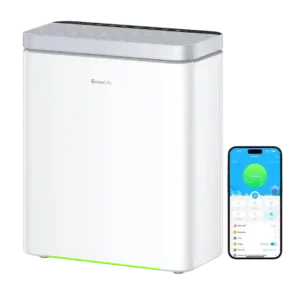
Choose the H7124 if you want a quiet smart purifier for odors, dust, pets, and app control. Skip it if you need foolproof Wi-Fi, wall-facing intake, UV light, or strong...
Pros: air purification performance, noise level
Cons: control placement
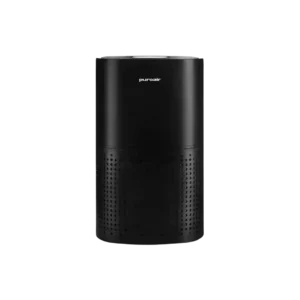
Best for quiet, simple cleaning in bedrooms or apartments. Skip it if you need verified large-room CADR value, app control, or guaranteed neighbor-smoke removal.
Pros: noise level, air purification performance
Cons: filter replacement cost, air quality sensor accuracy
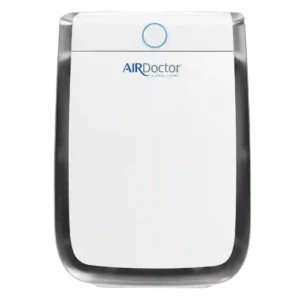
Best for strong room cleaning, allergy relief, odor control, and simple operation. Skip it if high filter costs, a larger footprint, or possible nighttime fan noise would bother you.
Pros: air purification performance, overall satisfaction
Cons: filter replacement cost
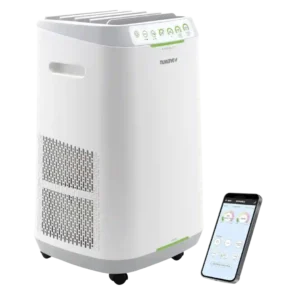
Choose this if you want strong odor, dust, smoke, and pet-air cleanup with washable filters. Skip it if turbo noise, Wi-Fi setup, or a high upfront price will bother you.
Pros: overall satisfaction, air purification performance