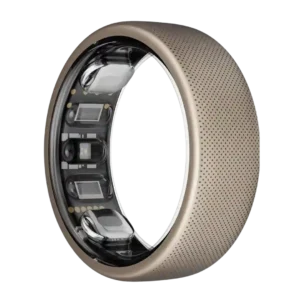
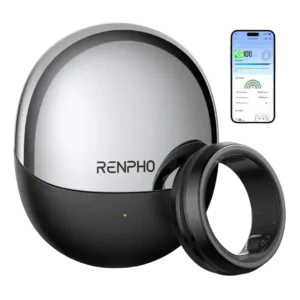
Amazfit Helio Ring
Where It Has the Edge
No clear scored advantage over the other product.

Scorata scores summarize analyzed review evidence on a 1–5 scale; they are not laboratory measurements or a simple average of customer star ratings. Feature scores summarize the reviews covering that feature. The overall score averages feature scores within each review, then combines review averages. When both expert and customer evidence are available, those two groups receive equal weight. Products can have different review coverage, so small score gaps do not establish a winner.
Recommendations prioritize important features for the category, with a score of at least 3.5, a gap of at least 0.25 points and at least two supporting reviews per product. Features with widely varying scores or broad connectivity contexts are excluded from recommendations. These safeguards do not establish statistical significance.
Quick verdict
The available evidence supports the recommendation below, but does not establish an overall winner. Check the remaining features against your priorities.
There is not enough comparable review evidence to recommend Amazfit Helio Ring over the other product.
Choose Renpho Lynx Smart Ring for battery life and charging convenience.
No clear scored advantage over the other product.
Scores are out of 5. Missing scores mean missing review evidence, not a missing feature.
Heart-rate accuracy split sharply by use case: resting or running data could be strong, but several reviewers found intensive workouts, cycling, or spikes unreliable.
Heart rate accuracy split reviewers: some saw solid rest or device-comparison results, while intense interval training was described as unreliable.
Sleep tracking was usually considered a strength for duration, scores, naps, and overnight insights, though a few reviewers found overestimation or weaker detail.
Sleep tracking accuracy was generally liked for basic use and sleep/wake detection, but one critical review found wake detection and deep-sleep labeling unreliable.
Recovery insights were often useful for sleep-and-recovery focused users, but some reviewers criticized weak sensitivity or confusing recovery/readiness signals.
Recovery insights were mixed: reviewers liked HRV-style recovery cues, but several complained that Renpho gave too little interpretation or personalized guidance.
Distance tracking received a single positive accuracy assessment during walking and biking tests against established fitness trackers.
Distance tracking drew a clear concern in one running comparison, where the Lynx reported a shorter distance than the Garmin reference device.
Automatic workout detection was consistently criticized or absent, with reviewers repeatedly noting that workouts must be started manually.
Automatic workout detection was inconsistent across evidence: one review called the lack of detection a major oversight, while others liked passive walk or run logging.
Sleep-stage tracking was less trusted than overall sleep tracking, with several reviewers warning that stages were overestimated, unreliable, or hard to trust.
Sleep stage tracking was a common strength for casual insight, though reviewers cautioned that stage-level numbers should be treated as a guideline rather than laboratory truth.
Step counting was often close to watches or competing rings, though one reviewer reported inaccurate step tracking and another treated it as only approximate.
Step counts were one of the most repeated accuracy concerns: one review saw close results, while several others reported overcounting or inconsistent step data.
Stress tracking was divisive: some reviewers found emotional-response detection accurate or useful, while others found it confusing, unhelpful, or poorly aligned.
Stress tracking was consistently appreciated as a passive awareness tool, especially when tied to timelines, HRV, or prompts to slow down.
Resting heart-rate and HRV tracking were consistently praised or found close to comparison devices, making this one of the more reliable health metrics.
Resting heart rate tracking received positive evidence in one comparison-heavy review, where the reviewer said the tracked metrics were extremely close to reference devices.
Blood oxygen tracking was viewed as broadly in line with expectations or comparable devices where reviewers discussed it with sentiment.
Blood oxygen tracking was viewed positively where evaluated, with one review calling readings consistent with pulse oximeters and another finding metrics very close to comparison devices.
Workout mode variety was a repeated weakness because the ring supports only a handful of modes and often pushes users toward an Amazfit watch for broader tracking.
Workout mode variety was consistently limited; reviewers repeatedly noted that the ring covers only a narrow set of exercise types or fewer modes than competing wearables.
Fitness coaching was not valued highly; reviewers questioned what the paid coaching added or found the advice trivial.
Fitness coaching was weak: reviewers wanted more practical guidance, richer recommendations, or AI-style coaching instead of generic app feedback.
Workout tracking accuracy was mixed to weak overall, with good results in some running or supported-workout tests but significant gaps, dropouts, and limited exercise support.
Workout tracking accuracy was mixed, with runs described as workable by one reviewer but HIIT, distance, calories, and syncing raising concerns in other tests.
Calorie tracking drew qualified feedback, with one reviewer seeing higher calorie burn than Apple Watch and another finding passive calorie estimates modest unless workouts were recorded.
Calorie estimates were treated as rough guidance at best, with reviewers noting mismatches against other devices and at least one run estimate that seemed low.
General activity tracking was mixed: some reviewers found useful or accurate daily health data, while others said daytime activity tracking was basic, incomplete, or not a standalone fitness-tracker replacement.
Reviewers found general activity tracking useful for trends and basic monitoring, but accuracy was uneven, with one lab-style review calling tracking a major weak spot.
Battery life was the most repeated concern, commonly landing around two to four days and often falling short of competitors or reviewer expectations.
Battery life was the clearest consensus strength, with almost every reviewer praising week-plus performance, even when one reviewer raised long-term degradation concerns.
Charging convenience was mostly criticized because the puck or dock required precise alignment, lacked a case-style approach, or was easy to disturb.
Charging convenience was a major strength thanks to the portable case, USB-C charging, and travel-friendly charging setup.
Charging speed was generally acceptable, with reviewers describing roughly 1.4 hours to under two hours as relatively quick or reasonable.
Charging speed received one clear positive evaluation, with the full charge time described as wonderfully fast.
Comfort was a major strength, with many reviewers finding the ring lightweight, unobtrusive, comfortable for sleep, and easy to forget during daily wear.
Comfort was polarizing: some reviewers forgot the ring was there, while others found it chunky, clunky, or unpleasant for all-day wear.
Size options were a major weakness, with reviewers repeatedly calling the limited size range restrictive or excluding smaller and larger hands.
Size options were adequate for many adults but repeatedly criticized for whole-size-only choices and a limited 6-to-13 range.
Design and appearance were widely praised for the titanium look, subtle pattern, minimalist style, and wearable jewelry-like profile.
Design and appearance were mixed: some found the ring sleek or stylish, while others called it utilitarian, masculine, cheap, or too basic.
Fit depended heavily on finger size: reviewers with a good size liked the fit, but others struggled with looseness, tightness, orientation, or lack of sizing kit.
Fit was mostly positive when using the sizing kit, but reviewers warned that Renpho's ring sizing differs from normal jewelry and can be tricky.
Durability was mostly positive for scratches and everyday wear, though several reviewers still warned about surface marks or removing it for rough activities.
Durability was a major strength, with reviewers reporting little wear, no scratches, and confidence using it through daily activities.
Build quality was broadly strong, with titanium construction and well-made hardware praised across multiple reviews.
Build quality was usually strong due to the titanium construction, though one reviewer felt the hardware looked or felt less premium than rivals.
Water resistance was a strong point, with reviewers repeatedly using the ring for showers, swimming, washing up, or general water exposure without issues.
Water resistance was one of the strongest areas, with reviewers comfortably wearing the ring around water and describing the protection as dependable in daily use.
Overall reliability was mixed to weak, with good performance in some tests but repeated concerns about beta feel, faulty units, app dependence, and inconsistent operation.
Overall reliability was positive for everyday passive use, though one critical review said the product did not fully live up to its promise.
Subscription value was generally favorable after free or non-required services, but some reviewers disliked upsells or earlier premium feature confusion.
Subscription value was a near-unanimous advantage; reviewers repeatedly praised getting full app access without monthly fees or paywalls.
Value for money was mixed but often positive at discounted prices or in bundles; negative reviews argued the feature set and reliability did not justify the price.
Value for money was usually praised because of the price, case, and no subscription, but a critical review questioned value due to design and performance issues.
Data syncing ranged from seamless multi-device aggregation to unpredictable Apple Health, Garmin, Strava, or Bluetooth-related failures.
Data syncing reliability was generally solid once the app was opened, but manual syncing, delayed updates, and occasional workout-sync failures limited the experience.
Activity reminders were weakly supported because one reviewer noted the ring would not prompt users to stand up.
Activity reminders were praised in one review where the ring worked better than other devices as a quiet reminder to stay active.
Health trend insights were useful when presented clearly and actionably, but some reviewers wanted deeper guidance or found AI insights too basic.
Health trend insights were useful for broad patterns, but depth varied; reviewers liked trend awareness while criticizing Renpho's limited explanation and lifestyle guidance.
Readiness scores were helpful for some reviewers but inconsistent for others, especially when compared with Garmin, Oura, Samsung, or Whoop-style readiness metrics.
Readiness or Health Index scoring was easy to understand for some users, but another reviewer found the percentage confusing and poorly explained.
Weight was widely praised; reviewers repeatedly described the ring as light, low-profile, or easy to wear overnight.
Weight was consistently praised, with reviewers describing the ring as light, lightweight, or much lighter than expected.
Google Fit compatibility had limited but positive evidence through easy syncing with popular third-party fitness apps.
Google Fit compatibility received positive evidence in one review that said cross-platform health integration helped create a more complete wellness picture.
Bluetooth reliability was mixed: one reviewer praised reliable connection, but others reported disconnections or poor phone-to-ring connectivity.
Bluetooth reliability was strong where tested, with reviewers reporting quick loading, zero glitches, and no connectivity issues.
Customization options had limited positive evidence from the app layout being customizable to the reviewer's preferences.
Customization options were limited, with reviewers wanting more elegant, playful, or broader styling choices despite acknowledging a basic range of options.
Apple Health compatibility was mixed because one reviewer saw Apple Health integration fail to register activity while another praised easy syncing with popular apps.
Apple Health compatibility was viewed positively as part of a broader integration story that made health data easier to unify across apps.
Third-party app compatibility was useful when syncing worked, but one review reported unpredictable integrations across Apple Health, Garmin, and Strava.
Third-party app compatibility was considered a strength, especially when reviewers valued syncing with broader health ecosystems and other RENPHO or health apps.
App alerts were inconsistent: emotional and battery alerts could be useful, but multiple reviewers complained about missing or inadequate notifications.
App alerts were a repeated limitation, with reviewers wanting low-battery or real-time alerts and noting that the ring provides little immediate notification feedback.
The app user interface was generally considered easy to navigate or clean, though one reviewer noted its design borrowed heavily from another app.
The user interface was mostly easy to navigate and understand, though several reviewers felt it was underdeveloped or less polished than premium competitors.
Companion app quality was one of the most divided areas, with praise for clean layouts and easy navigation but criticism of clutter, upsells, confusion, and lack of polish.
Companion app quality was functional and accessible, but not premium; reviewers praised clarity while criticizing the lack of polish, nuance, and deeper insights.
Pairing and connection reliability had limited positive evidence from reviewers who found connection or syncing solid once set up.
Pairing reliability was praised across setup experiences, though one review noted the connection could take a few seconds each morning.
Review contexts may differ, so use caution when interpreting the score gap.
GPS accuracy had one mixed assessment, where the phone-based GPS was considered usable but not great.
Connected GPS reliability was limited by phone dependence and connection issues, including one review that lost ring connection during a ride.
Goal tracking was positively received in one review, where daily faces and progress feedback felt encouraging rather than harsh.
Menstrual cycle tracking was treated as a useful inclusion, though one review noted limited sharing with popular women’s health apps.
Pace tracking received a single mixed note, with pace reported slightly faster than the Apple Watch.
Route tracking was useful only when the phone was present, and one reviewer explicitly complained that forgetting the phone means no map.
Swimming tracking received only negative workout-mode evidence, with one review saying swim analytics were not meaningfully covered beyond waterproof protection.
Breathing exercises had limited but positive-to-mixed evidence, with one reviewer liking free guided breathing and another saying it helped them unwind.
Data privacy received limited but positive evidence from one reviewer who appreciated the ring's low-distraction, subscription-free style of tracking.
The ring locating feature had limited evidence and was judged as potentially useful but not proven, essentially better than having no locator.
Sleep apnea monitoring was viewed as a useful or interesting sleep-breathing feature, though several mentions framed it as beta or risk insight rather than diagnosis.
Strava compatibility was mixed, with one reviewer reporting failed registration and others noting useful linking or export to Strava-like platforms.
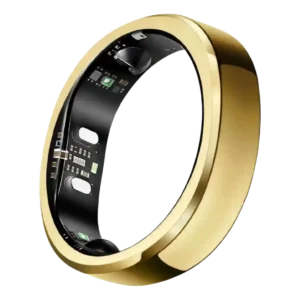
Best for long battery life, comfort, sleep/apnea insights, haptic health nudges, and no subscription. Skip it for serious workout heart-rate accuracy, full phone notifications, or a true silent alarm.
Pros: battery life, app alerts
Cons: alarm function, workout mode variety
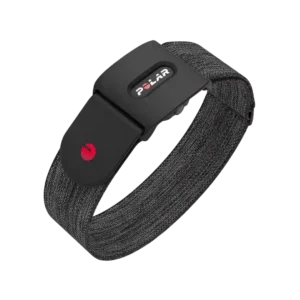
Best for chest-strap-like heart-rate data in a comfortable armband with long battery life. Skip it if you need smartwatch features, effortless app guidance, built-in GPS, or flawless high-intensity lifting response.
Pros: heart rate accuracy, value for money
Cons: charging convenience, fit
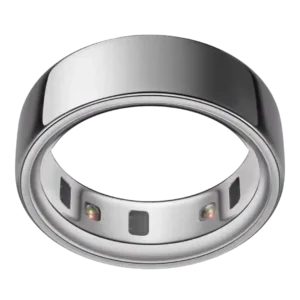
Best for comfortable, screen-free sleep and recovery insight with a polished app. Skip it if you want subscription-free value, serious training metrics, or a ring that stays pristine.
Pros: battery life, sleep tracking accuracy
Cons: subscription value, workout tracking accuracy
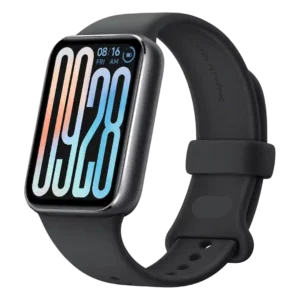
Best for a bright screen, long battery life, strong value and casual fitness tracking. Skip it if you need dependable sports-watch accuracy, richer smartwatch replies, or polished sleep-stage data.
Pros: value for money, battery life
Cons: smartphone notifications, companion app quality