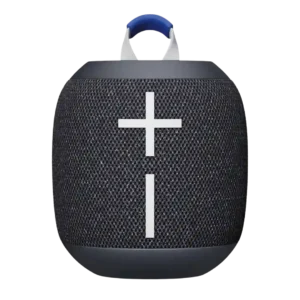
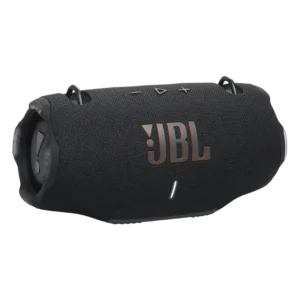
Ultimate Ears Wonderboom 4 Speaker
Where It Has the Edge
- Weight convenience is 4.6 vs 2.3. Portability was a consistent strength, with reviewers praising the light weight, bag-friendly size, and easy carry for hikes,...

Scorata scores summarize analyzed review evidence on a 1–5 scale; they are not laboratory measurements or a simple average of customer star ratings. Feature scores summarize the reviews covering that feature. The overall score averages feature scores within each review, then combines review averages. When both expert and customer evidence are available, those two groups receive equal weight. Products can have different review coverage, so small score gaps do not establish a winner.
Recommendations prioritize important features for the category, with a score of at least 3.5, a gap of at least 0.25 points and at least two supporting reviews per product. Features with widely varying scores or broad connectivity contexts are excluded from recommendations. These safeguards do not establish statistical significance.
Quick verdict
The review evidence points to a tradeoff: Weight convenience versus EQ customization and Charging time. Choose according to which strengths matter more to you; the overall score alone does not settle that choice.
Choose Ultimate Ears Wonderboom 4 Speaker for Weight convenience.
Choose JBL Xtreme 4 for EQ customization and Charging time.
Scores are out of 5. Missing scores mean missing review evidence, not a missing feature.
App support was one of the weaker areas: reviewers noted that Boom app support was missing or limited, reducing EQ and remote-control options.
The app experience was praised as easy to navigate and user-friendly in the review that directly evaluated it.
EQ customization was a recurring weakness: reviewers criticized missing app EQ, limited modes, and Outdoor/Podcast settings that often hurt sound quality or felt unnecessary.
EQ customization was a strength, with multiple reviews praising the five-band EQ and the ability to tailor the sound.
Bluetooth stability was mostly strong, with reviewers noting stable or drop-free connections, although one reviewer experienced Samsung phone audio cutouts.
Bluetooth stability was praised in the review that directly said dropouts and lag were not an issue.
Bluetooth range was viewed positively, with reviewers citing long-range performance and enough distance for normal portable use.
Bluetooth range was praised in the one range test, where the reviewer reached a long distance before disconnecting.
Codec support was limited; reviewers noted SBC-only or no hi-res codec support, while also framing that as typical for this class.
Bluetooth codec support was a weak point where reviewers criticized SBC-only playback and the lack of high-end codecs.
Multipoint support was treated as convenient, especially for switching between two devices or shared listening.
Multipoint was positively assessed for seamless switching between two devices.
On-device controls were praised as simple, obvious, and satisfying, especially the large volume buttons and straightforward playback controls.
On-device controls were praised as simple, big, and easy to use.
Omnidirectional sound was a major strength, with reviewers praising the 360-degree output and the freedom from careful speaker positioning.
Omnidirectional sound was weak, with one reviewer describing the speaker as fairly mono-directional.
Low-volume performance was praised by one reviewer who valued that the speaker can get impressively quiet as well as loud.
Low-volume performance was a weakness in comparative reviews, where rivals or the Xtreme 3 sounded fuller at lower volume.
Stereo imaging evidence was positive in one review, which described paired Wonderboom speakers as proper two-channel left/right audio.
Stereo separation was a recurring weakness: reviewers described the sound as narrow or limited from the single-box layout, with stereo pairing helping only if a second speaker is used.
Reviewers treated the lack of a wired input as a clear limitation for anyone who wants to hard-wire an audio source.
Wired input was a drawback where reviewers missed or criticized the removed 3.5 mm analog input.
Portability was a consistent strength, with reviewers praising the light weight, bag-friendly size, and easy carry for hikes, camping, and travel.
Weight convenience was a common portability weakness, with reviewers calling the speaker heavy, bulky, awkward, or only partly easy to transport.
The strap drew criticism in one review, where it was described as not especially useful.
The strap was often praised for quality and comfort, but several reviewers wanted a true handle for quick one-handed moves.
The microphone was a clear limitation because reviewers noted there is no mic for phone calls.
Microphone support was a limitation when reviewers noted the lack of a built-in mic for hands-free or voice-call use.
Backward and cross-generation pairing evidence was positive, with reviewers noting Wonderboom 3 and 4 units can pair for stereo sound.
Backward compatibility evidence was mixed: one review said it fit existing JBL ecosystems, while another criticized incompatibility with Xtreme 3 direct pairing.
High-volume performance was mixed: several reviewers heard harshness, strain, or collapsing sound at the top end, while two found distortion well controlled even near maximum volume.
Most reviews praised its ability to stay clear at loud volumes, but some measurement-focused reviewers heard noticeable distortion or harshness when pushed very hard.
Voice clarity was useful in Podcast Mode for some reviewers, but one found the same mode made audiobook voices thin and less expressive.
Voice and vocal clarity were a strength, with reviewers hearing clean vocals, clear mids, and articulate spoken-word performance.
Reviewers generally found the Wonderboom 4 surprisingly loud for its compact size, with enough output for rooms and casual outdoor use, though one reviewer said it is not suitable for truly large groups.
Reviewers consistently found the Xtreme 4 loud enough for parties and outdoor use, though a few noted quality loss or harshness near the top of the volume range.
Dynamic headroom was moderately positive in one review, which found the speaker could handle complex tracks at higher volumes despite some distortion caveats.
Dynamic performance was praised for force, precision, and cleaner bass impact, especially when compared with smaller or older speakers.
Detail retrieval was stronger than expected for the size, with reviewers hearing separation, production details, and consistency across complex tracks.
Detail retrieval was praised as excellent or high, especially for the money and speaker class.
Everyday usability was strong because reviewers repeatedly described the speaker as simple, rugged, portable, and convenient for daily and outdoor use.
Everyday use was praised for hassle-free operation, versatility, and all-round outdoor-friendly practicality.
Control responsiveness was mostly positive thanks to easy-to-press physical buttons, although one review noted a slight learning curve with the unmarked top controls.
Physical controls were viewed positively, with reviewers praising straightforward operation and clicky feedback.
Inter-speaker connectivity was praised for stereo pairing, louder playback, and added detail when using two Wonderboom speakers.
Inter-speaker connectivity ranged from seamless and stable to limited or clunky depending on whether reviewers used Auracast, PartyBoost, or app-based pairing.
Most reviewers praised the tonal balance, noting punchy bass, clear mids and highs, and a sound profile that feels unusually full for a small speaker.
Sound balance drew strong praise for clear mids, crisp highs and punchy bass, but some reviewers found the default tuning bass-heavy, treble-heavy, brittle, or less full at lower volumes.
Float capability was useful around pools and beaches, but reviewers noted limitations: it may not play properly while floating and can tip over in water.
Float capability was mostly positive in dunk tests, though one reviewer disliked the orientation when floating.
The overall presentation was praised as balanced, clean, and surprisingly complete, with reviewers describing the soundstage and general output as cohesive for the size.
Cohesion was a strength, with reviewers praising clarity, solidity, coherent presentation, and separated elements in the mix.
Dust resistance was positively framed as part of the speaker’s top-tier IP67 outdoor protection.
Dust resistance was positively discussed as part of the Xtreme 4's rugged outdoor readiness.
Build construction was highly rated, with reviewers describing the package as well constructed, solid, durable, and premium-feeling for a small speaker.
Construction quality was widely praised as rugged, premium, solid, and able to withstand outdoor abuse.
The battery/status light was viewed as useful because it makes it clear when the speaker needs recharging.
Status indicators were useful for battery visibility, with reviewers noting handy LED and app-based battery information.
Sustainability received modest positive comments for recycled plastic and recycled fabric materials.
Sustainability was praised for recycled materials, eco-conscious construction, and replaceable-battery longevity.
USB-C charging was widely welcomed as a practical upgrade from MicroUSB and one of the clearest improvements over the previous model.
USB-C charging was mixed: one reviewer liked charger flexibility, while another disliked how easily the exposed port could be contaminated.
Charging time was mixed: one reviewer saw the 2.5-hour recharge as acceptable, while another complained that topping up takes a while without fast charging.
Charging was praised for useful fast-charge claims, especially short top-ups delivering extra play time.
Battery life was consistently positive, with reviewers generally confirming or exceeding the 14-hour claim and calling it enough for regular portable use.
Battery life was one of the strongest points, repeatedly praised for 24-hour playback, replaceability, and meaningful gains over prior models.
Separate value judgments were favorable, with reviewers calling the speaker a good buy or a strong value when factoring in sound, build, and durability.
Value for money was split but leaned cautious: sale pricing or strong features helped, while full price and modest upgrade gains hurt the case.
Setup was praised as very simple across reviews, including quick Bluetooth pairing and no app-required hoops.
Pairing and setup were repeatedly described as easy or super simple.
The design was liked for its simplicity, with the physical layout reducing the chance of pressing the wrong button.
Design opinion split between rugged, useful evolution and criticism that the speaker is not especially pretty or refined.
Durability was a major strength, with reviewers repeatedly calling the speaker rugged, drop-proof, and able to handle rough portable use.
Reviewers praised rugged drop/knock protection, describing the speaker as able to handle knocks, drops, bumps and outdoor abuse.
Water resistance was praised as a practical outdoor strength, with reviewers pointing to IP67 protection and use around showers, pools, and beaches.
Water resistance was broadly praised for outdoor confidence and successful dunk tests, though one reviewer reported concern about water remaining inside.
Power behavior was a tradeoff: several reviewers heard better output plugged in, while others questioned or disliked the AC-versus-battery power gap.
Energy-saving Playtime Boost was useful for extra run time but often criticized for stripping bass or reducing sound quality.
Google Fast Pair was praised in one Android-focused review because pairing with a Pixel phone happened instantly.
The power bank function was considered useful for topping up phones and gear during outdoor use.
Remote usability was weak because one reviewer specifically noted that the speaker cannot be turned on or off remotely.
Bluetooth connectivity itself was praised as quick and easy in the review that directly tested connection setup.
Review contexts may differ, so use caution when interpreting the score gap.
Multi-speaker pairing worked well in some tests, but opinions were mixed because app-based pairing and older-speaker workflows could feel clunky.
Smart-feature expectations were limited; one review framed the Xtreme 4 as not feature-rich beyond its focused Bluetooth-speaker role.
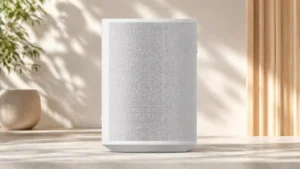
Best for rich, room-filling stereo sound, easy Sonos expansion and flexible Bluetooth/AirPlay playback. Skip it if Google Assistant, Dolby Atmos or true battery-powered portability is essential.
Pros: Bass performance, Overall sound quality
Cons: Google, Wired input
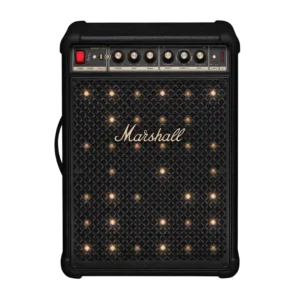
Best for powerful 360° sound, exceptional battery life, premium styling, and flexible mic/instrument inputs. Skip it if you want a light, inexpensive speaker or deep app-based control.
Pros: Battery life (if portable), Weight convenience
Cons: App reliability, Remote control usability
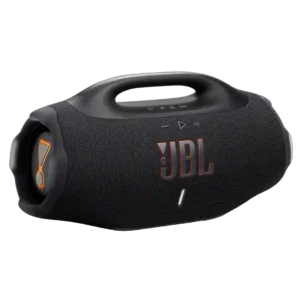
Choose the Boombox 4 if you want huge bass, extreme outdoor volume, long battery life, IP68 durability, and a replaceable battery in a carryable boombox. Skip it if price, lighter...
Pros: Overall satisfaction, Overall sound quality
Cons: Energy efficiency, Microphone
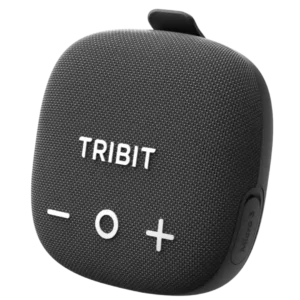
Choose the StormBox Micro 3 for rugged travel, magnetic mounting, long battery life, strong value, and surprisingly full sound. Skip it if you need premium codecs, aux input, refined detail,...
Pros: Magnetic mounting, Frequency response balance
Cons: Backwards compatibility, Distortion at high volume