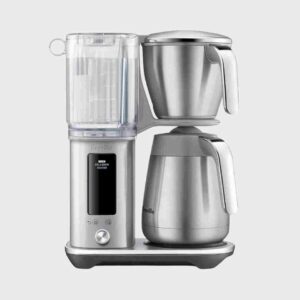
Breville Luxe Drip Coffee Machine
Where It Has the Edge
- Assembly and Setup is 4.5 vs 4.1. Setup and first use were generally described as simple, straightforward, and beginner friendly, with the main caveat that...

Scorata scores summarize analyzed review evidence on a 1–5 scale; they are not laboratory measurements or a simple average of customer star ratings. Feature scores summarize the reviews covering that feature. The overall score averages feature scores within each review, then combines review averages. When both expert and customer evidence are available, those two groups receive equal weight. Products can have different review coverage, so small score gaps do not establish a winner.
Recommendations prioritize important features for the category, with a score of at least 3.5, a gap of at least 0.25 points and at least two supporting reviews per product. Features with widely varying scores or broad connectivity contexts are excluded from recommendations. These safeguards do not establish statistical significance.
Quick verdict
The review evidence points to a tradeoff: Assembly and Setup versus Filter and Capacity. Choose according to which strengths matter more to you; the overall score alone does not settle that choice.
Choose Breville Luxe Drip Coffee Machine for Assembly and Setup.
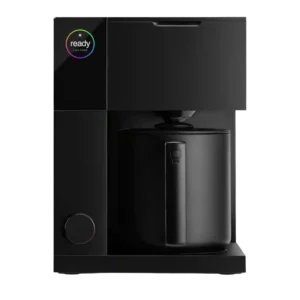
Choose Fellow Aiden Precision Coffee Maker for Filter and Capacity.
Scores are out of 5. Missing scores mean missing review evidence, not a missing feature.
The water system and maintenance were frequently praised for a removable, easy-fill, easy-clean tank and simple cleaning, though leftover water and marking quirks were concerns.
Water handling and maintenance were mixed: some reviewers found cleaning and descaling easy, while others criticized filling mess, low-water alerts, condensation, mildew risk, and poor water-level visibility.
Pot brewing was praised through the programmable timer and the ability to wake up to a fresh-brewed pot.
Pot function was mixed, with praise for a functional thermal carafe and heat retention in some tests but repeated concern over heat loss and batch mixing.
Carafe and cup handling were major strengths, especially the thermal carafe, clean pouring, leak improvements, heat retention, and direct-to-mug brewing.
Cup and carafe handling was split: reviewers liked easy pouring, auto-stop, and heat retention, but criticized carafe concentration gradients, splashing, and uneven big-batch serving.
Capacity is strong for full hot batches and the large tank, but cold brew capacity drew limitations because some reviewers noted smaller maximum output.
Capacity evidence was generally favorable across single-cup and larger-batch use, though reviewers warned that larger pots expose heat-retention and carafe-mixing limitations.
SCA-related recognition was viewed positively as reassurance that the brewer can meet serious coffee standards.
Recognition evidence came from Good Housekeeping noting the Aiden's Kitchen Gear Awards placement.
Cold brew evidence was mostly positive for real, clean, rounded cold brew, but some reviewers thought it was unnecessary, limited in volume, or not rewarding enough.
Cold-brew performance was praised as nice, tasty, smooth, faster than overnight steeping, and in one case less bitter than a traditional fridge method.
Heating and temperature control were praised where discussed, with PID control and steady brew temperatures viewed as major reasons for consistent extraction.
Heating performance was strongly praised for accurate temperature delivery, rapid heating, and temperature changes between pulses.
Overall experience was highly positive, with reviewers emphasizing ease, low effort, confidence, and enjoyable daily use despite a few quirks.
Overall user experience was polarized: many reviewers loved the ease and results, while others found the interface and workflow frustrating.
Automation was praised for one-touch brewing, delayed start, sensing or simplifying brew choices, and reducing guesswork without removing all customization.
Automation and sensors were a core strength, with praise for roast-based profiles, even water distribution, guided prompts, scheduling, dose calculation, and error prevention.
Reviewers liked the included extras when they judged them, especially the filter options, water filter, and dosing scoop, with accessories described as generous and useful for setup.
The clearest accessory praise was Good Housekeeping listing the included cone and flat baskets as a pro.
Speed was one of the strongest themes, with several reviewers emphasizing very fast full-pot or single-cup brewing; a few noted flavor adjustments may be needed for small batches.
Speed evidence was mostly positive, citing quick hot brews, saved steps, scheduling convenience, and faster cold brew, though one reviewer noted the best profiles can be slow.
Filter flexibility was well liked, especially the cone and flat-bottom options, reusable mesh filter, and the ability to tune flavor, though water markings depend on the filter setup.
Filter and basket evidence was positive, with optimized basket options, edge-to-edge water distribution, and easy sourcing of generic filters.
Evidence supports the main claims around real cold brew, speed without sacrificing quality, and carafe heat retention, although one first-look source was more cautious than hands-on reviews.
Accuracy-of-claims evidence was strong, with reviewers saying the engineering and temperature accuracy backed up the precision claims.
Hot brewing earned consistently high marks for even extraction, smooth flavor, reliable defaults, and balanced cups, with small-batch speed sometimes requiring grind adjustments.
Reviewers consistently praised the Aiden's coffee quality, describing clean, flavorful, balanced, pour-over-like, and technically consistent results across single-cup and batch use.
Common design flaws included a poor manual, small or unclear water-tank details, leftover reservoir water, noise, learning curve, and an underwhelming cold-brew capacity for some users.
Design-flaw evidence centered on carafe mixing, awkward menu/dial behavior, condensation or venting, splashing, and water-level visibility.
Build quality was mostly seen as premium and sturdy, though one owner disliked the remaining plastic and wanted a glass water tank.
Build quality drew the sharpest split: some reviews found it robust or durable, while many criticized the plastic body, lightweight feel, panel gaps, or premium-price mismatch.
Design and ergonomics were praised for a modern, polished look and clearer interface, balanced by comments that the machine is still fairly large.
Reviewers often liked the sleek Fellow aesthetic and compact cube design, but some complained about cabinet clearance, bland plastic styling, and reservoir ergonomics.
Setup and first use were generally described as simple, straightforward, and beginner friendly, with the main caveat that some users needed the manual or clearer instructions.
Setup and early use were generally described as quick, easy, or guided, but some reviewers still noted a customization learning curve.
Value was mixed: reviewers often praised performance and competition, but several called it expensive or not the cheapest option.
Value was mixed: some reviewers felt the premium price was justified by smart brewing and taste, while others questioned it because of plastic materials and software issues.
App and connectivity evidence was mixed-to-negative overall: some liked Fellow Drops or phone-based profile editing, but many criticized incomplete, useless, or troublesome app behavior.
Consumables were mixed: a no-pod workflow was strongly praised, while one review noted that included paper filters eventually need replacement.
Beverage quality was strongly positive across hot drip and tasted cups, with reviewers describing the coffee as excellent, balanced, layered, and better than older machines.
The dose guidance was repeatedly praised for telling users how much coffee to add or grind; no reviewer evaluated an integrated grinder because the Aiden does not include one.
Hot-water evidence was limited but positive, with one reviewer using it as a faster-than-kettle hot-water feature.
Grounds cleanup was generally praised through straightforward disposal, basket auto-stop, and no-drip basket design.
Milk and frothing were only lightly evaluated; one owner noted the lack of a built-in frother but did not personally consider it a major drawback.
Popularity evidence was limited but positive, with Food & Wine noting repeated sellouts shortly after launch.
Portability evidence was limited to one reviewer who considered the Aiden small and lightweight enough for travel.
One review praised the pump-based system for keeping flow rate consistent across pulse cycles.
Warranty evidence was limited and negative-leaning because one review said the two-year warranty was not industry leading.
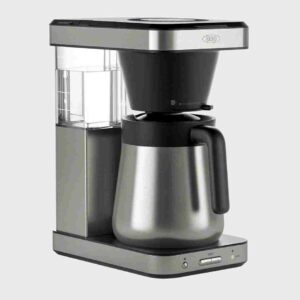
Choose the OXO Brew 8-Cup if you want fast, consistent drip coffee in small or full batches. Skip it if you need programming, app controls, a larger pot, or the...
Pros: Brewing performance and consistency, Overall user experience
Cons: Design flaws
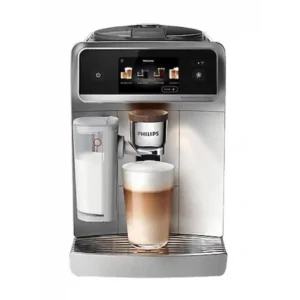
Best for effortless, highly personalized hot and cold coffee in a busy multi-drinker home. Skip it if counter space is tight, you demand silky adjustable microfoam, or the premium price...
Pros: Automation and sensors, Overall user experience
Cons: Design flaws, Mess-free used-puck disposal
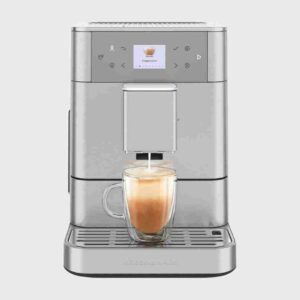
Choose the KitchenAid KF6 for rich espresso, quiet operation, easy cleaning, and strong value in a super-automatic. Skip it if dense cappuccino foam, plant-milk presets, touchscreen controls, or an included...
Pros: Water system, maintenance and descaling, Overall user experience
Cons: Accessories, Design flaws
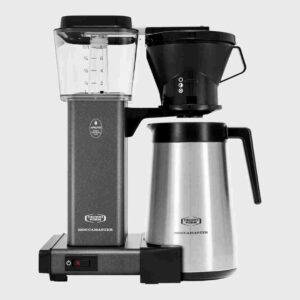
Choose the Moccamaster KBT for fast, excellent drip coffee, durable build, and a thermal carafe that keeps coffee hot. Skip it if you need programmability, a compact footprint, or a...
Pros: Brewing performance and consistency, Espresso and beverage quality
Cons: Automation and sensors, Design flaws